VS

Suzuki Swift vs Kia Picanto comparison

Compare performance (82 HP vs 68 HP), boot space and price (17,100 £ vs 15,300 £ ) at a glance. Find out which car is the better choice for you – Suzuki Swift or Kia Picanto?

Suzuki Swift vs Kia Picanto: Key differences

Suzuki Swift

4.5 (3 Reviews)
rate
  • a bit more power
  • markedly more efficient
  • barely lighter
details

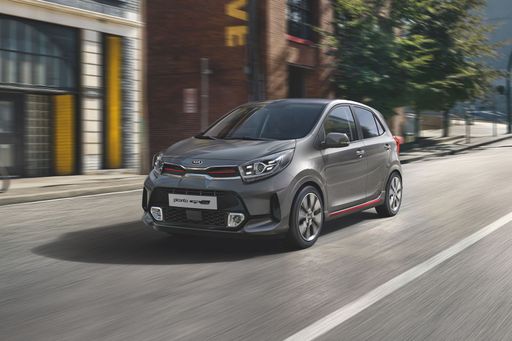
Kia Picanto

4.5 (3 Reviews)
rate
  • moderately cheaper
details

All details on performance, efficiency, range and trunk space can be found in the technical comparison below – including user reviews for both models.

By Achim Sedelmaier

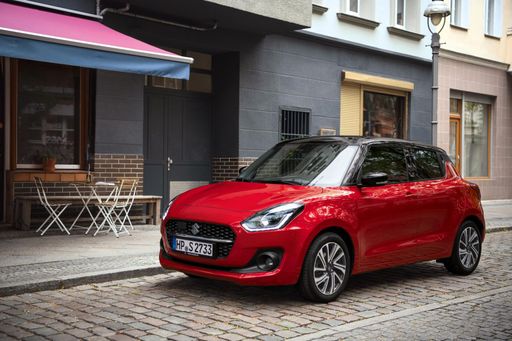
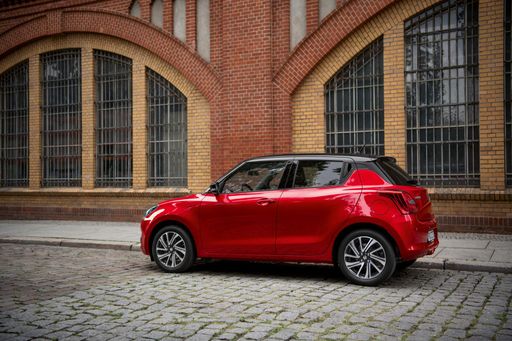
Swift

The automotive landscape is ever-evolving, and among the compact hatchback segment, the Kia Picanto and Suzuki Swift stand out as two popular contenders. Each offers its own set of innovations, performance metrics, and features, appealing to different segments of drivers. This article explores the key technical aspects, innovations, and overall user experience of these two vehicles, providing a comprehensive comparison for potential buyers.
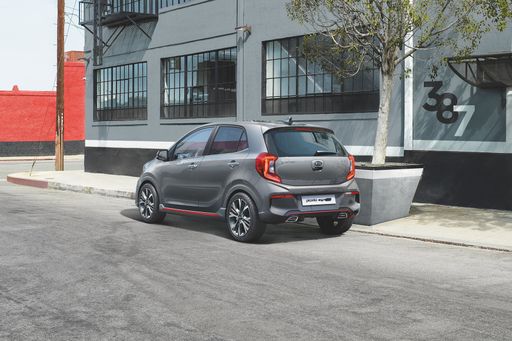
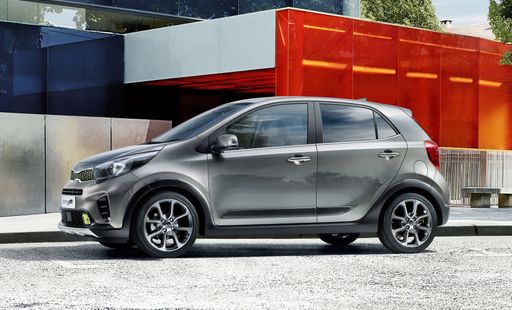
Picanto

Performance and Engine Specifications

The Kia Picanto is available with two petrol engine options. The 1.0L three-cylinder engine produces 63 HP, while the more powerful 1.2L four-cylinder option delivers 79 HP. The Picanto's performance is complemented by choices of a manual or automated manual transmission, helping it achieve a quick 0-100 km/h acceleration in as little as 13.1 seconds. Additionally, the Picanto boasts a top speed of 145 km/h with a torque range of 95 Nm to 115 Nm.

In comparison, the Suzuki Swift features a single 1.2L three-cylinder petrol engine generating 82 HP, paired with either a manual gearbox or a CVT. The Swift is slightly quicker with a 0-100 km/h time of 10.9 seconds. The Swift’s top speed reaches 170 km/h and provides a torque output of 112 Nm, making it slightly more powerful in terms of acceleration compared to its Kia rival.

Swift

Fuel Efficiency

Fuel efficiency is a crucial consideration for buyers in this segment. The Kia Picanto sacrifices a tad more in this department with a consumption rate ranging between 5.2 to 5.7 L/100km. This is slightly less appealing when juxtaposed against the Suzuki Swift’s figures, which provide an efficient consumption rate of 4.4 to 4.9 L/100km. Thus, in terms of fuel economy, the Swift gains an advantage, underscoring its suitability for cost-conscious drivers.

Picanto

Interior and Comfort

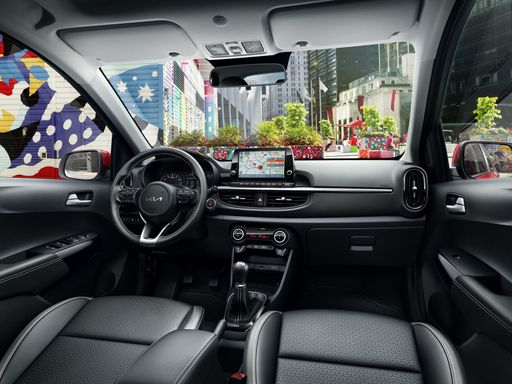
Inside the cabin, both vehicles offer practical yet contemporary designs. The Kia Picanto can comfortably seat four to five passengers and features a trunk capacity of 255 L, which is slightly smaller than the Suzuki Swift’s 265 L. The Picanto measures 3605 mm in length and 1595 mm in width, whereas the Swift stretches out to 3860 mm in length and 1735 mm in width, offering slightly more room for both passengers and cargo.

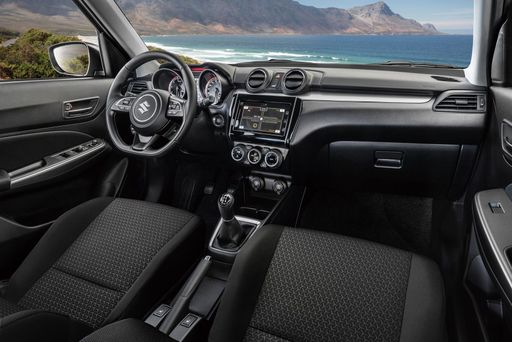
The interior of the Swift also reflects a modern approach with a focus on ergonomics and driver comfort, providing ample space for five passengers. Moreover, the Suzuki Swift is renowned for its user-friendly infotainment system, which includes a touchscreen interface, Bluetooth connectivity, and smartphone integration, putting it ahead in technology integration.

Swift

Safety and Technology Innovations

When it comes to safety, both manufacturers have incorporated innovative features. The Kia Picanto benefits from a standard suite of airbags, Electronic Stability Control (ESC), and advanced braking technology, ensuring a safe drive. Additionally, the Picanto’s CO2 emissions rate ranges from 118 to 130 g/km, achieving a CO2 efficiency class of D.

On the other hand, the Suzuki Swift boasts an impressive safety rating with its advanced safety features. The Swift’s CO2 emissions are more efficient, ranging from 98 to 110 g/km, placing it in the CO2 efficiency class C. Features like adaptive cruise control, autonomous emergency braking, and lane departure warning are available, providing peace of mind for modern-day drivers.

Picanto

Conclusion

In conclusion, both the Kia Picanto and Suzuki Swift present strong arguments for consideration in the hatchback category. The Picanto stands out with its charming design, sufficient performance, and compact sizing suitable for urban environments; however, it falls short in fuel efficiency compared to the Swift. Meanwhile, the Suzuki Swift excels in power, fuel economy, safety features, and overall interior space. Ultimately, the choice will depend on individual priorities—whether it's spirited performance and safety or compact maneuverability and efficient driving. Both cars are commendable options in their own right, catering to diverse preferences in today’s automotive market.

Here’s where it gets real: The technical differences in detail

Swift

Costs and Efficiency:

Price and efficiency are often the first things buyers look at. Here it becomes clear which model has the long-term edge – whether at the pump, the plug, or in purchase price.

Kia Picanto is moderately cheaper – starting at 15,300 £ , while the Suzuki Swift costs 17,100 £ . That’s a price difference of around 1,842 £.

Fuel consumption also shows a difference: the Suzuki Swift uses 4.4 L/100km and is markedly more efficient than the Kia Picanto with 5.5 L/100km. The difference is about 1.1 L/100km.

Picanto

Engine and Performance:

Power, torque and acceleration say a lot about how a car feels on the road. This is where you see which model delivers more driving dynamics.

When it comes to engine power, the Suzuki Swift offers a bit more power – delivering 82 HP compared to 68 HP. That’s roughly 14 HP more horsepower.

There’s also a difference in torque: the Suzuki Swift delivers slightly more torque with 112 Nm compared to 96 Nm. That’s about 16 Nm more.

Swift

Space and Everyday Use:

Cabin size, boot volume and payload all play a role in everyday practicality. Here, comfort and flexibility make the difference.

Both vehicles offer seating for 5 people.

In terms of curb weight, Suzuki Swift is barely lighter – 1,069 kg compared to 1,124 kg. The difference is around 55 kg.

When it comes to payload, the Kia Picanto carries a bit more – 332 kg compared to 296 kg. That’s a difference of about 36 kg.

Who wins the race in the data check?

The Suzuki Swift is decisively ahead in the objective data comparison.
This result only shows which model scores more points on paper – not which of the two cars feels right for you.

from £17,100
Swift

Suzuki Swift

  • Engine Type : Petrol MHEV
  • Transmission : Manuel, Automatic
  • Drive Type : Front-Wheel Drive, All-Wheel Drive
  • Power HP : 82 HP
  • Consumption L/100km : 4.4 - 4.9 L/100km
Suzuki Swift
Kia Picanto

Costs and Consumption

View detailed analysis

Engine and Performance

View detailed analysis

Dimensions and Body

View detailed analysis

Suzuki Swift

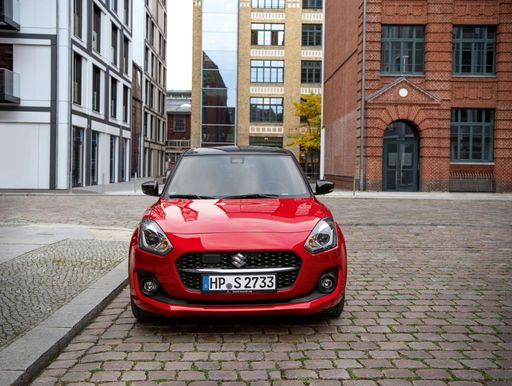
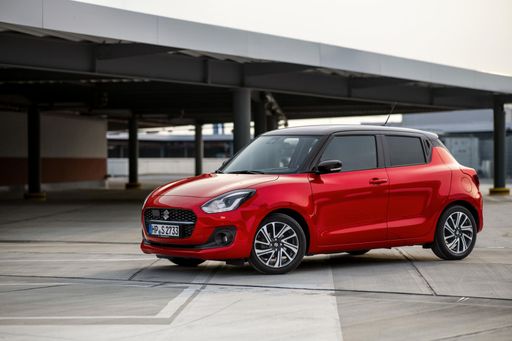
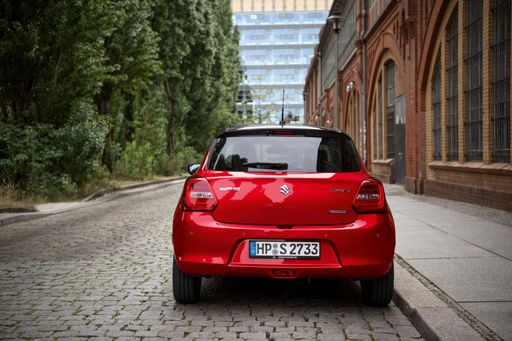
The Suzuki Swift is a cheeky little hatch that turns city streets into its playground with lively handling and a grin-inducing drive. Practical enough for daily chores, thrifty to run and kinder on your wallet than many rivals, it's a sensible pick for buyers who want fun without drama.

details

Kia Picanto

Kia Picanto is a cheeky city hatch that squeezes surprising style, practicality and a smile-inducing drive into a pocket-friendly package. It’s ideal for urban buyers who want fuss-free running, effortless parking and a car that punches above its class without pretending to be anything it’s not.

details
Suzuki Swift
Kia Picanto

Costs and Consumption

Price
17,100 - 21,200 £
Price
15,300 - 19,300 £
Consumption L/100km
4.4 - 4.9 L/100km
Consumption L/100km
5.5 - 5.9 L/100km
Consumption kWh/100km
-
Consumption kWh/100km
-
Electric Range
-
Electric Range
-
Battery Capacity
-
Battery Capacity
-
co2
98 - 110 g/km
co2
126 - 134 g/km
Fuel tank capacity
-
Fuel tank capacity
-

Dimensions and Body

Body Type
Hatchback
Body Type
Hatchback
Seats
5
Seats
4 - 5
Doors
-
Doors
-
Curb weight
1,069 - 1,145 kg
Curb weight
1,124 - 1,131 kg
Trunk capacity
-
Trunk capacity
-
Length
-
Length
-
Width
1,735 mm
Width
1,595 mm
Height
-
Height
-
Max trunk capacity
-
Max trunk capacity
-
Payload
282 - 296 kg
Payload
253 - 332 kg

Engine and Performance

Engine Type
Petrol MHEV
Engine Type
Petrol
Transmission
Manuel, Automatic
Transmission
Manuel, Automatic
Transmission Detail
Manual Gearbox, CVT
Transmission Detail
Manual Gearbox, Automated Manual
Drive Type
Front-Wheel Drive, All-Wheel Drive
Drive Type
Front-Wheel Drive
Power HP
82 HP
Power HP
68 HP
Acceleration 0-100km/h
-
Acceleration 0-100km/h
14.6 - 17.2 s
Max Speed
-
Max Speed
-
Torque
112 Nm
Torque
96 Nm
Number of Cylinders
3
Number of Cylinders
3
Power kW
61 kW
Power kW
50 kW
Engine capacity
1,197 cm3
Engine capacity
998 cm3

General

Model Year
2025
Model Year
2025
CO2 Efficiency Class
C
CO2 Efficiency Class
D
Brand
Suzuki
Brand
Kia
DriveDuel uses data analysis and artificial intelligence to evaluate vehicle data and create content. Content is regularly reviewed and improved. The displayed prices are estimates based on German list prices, adjusted to the respective country’s VAT. Country-specific registration taxes are not included. This information is not legally binding.