VS

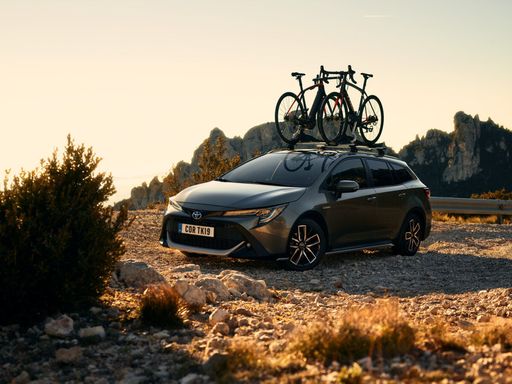
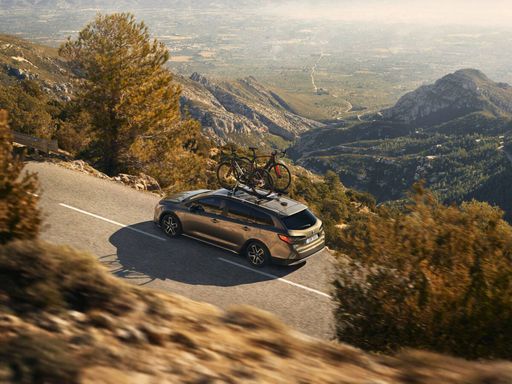
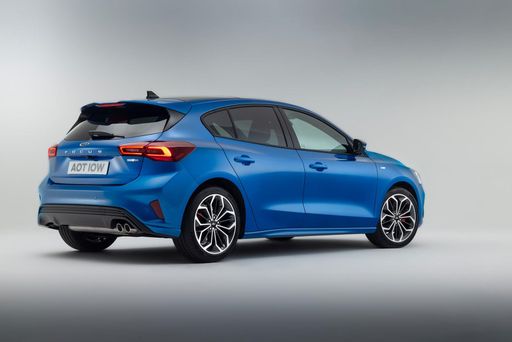
Toyota Corolla vs Ford Focus comparison

Compare performance (178 HP vs 280 HP), boot space and price (28,600 £ vs 27,500 £ ) at a glance. Find out which car is the better choice for you – Toyota Corolla or Ford Focus?

Toyota Corolla vs Ford Focus: Key differences

Toyota Corolla

5 (1 Reviews)
rate
  • a bit more efficient

Ford Focus

4.6 (1 Reviews)
rate
  • barely cheaper
  • markedly more power
  • markedly quicker 0–100 km/h
  • very slightly lighter
  • marginally more trunk space

All details on performance, efficiency, range and trunk space can be found in the technical comparison below – including user reviews for both models.

Corolla

Introduction

The compact car segment is fiercely competitive, with models like the Ford Focus and the Toyota Corolla consistently vying for consumer attention. While both vehicles are known for their reliability and efficiency, they offer distinct attributes that cater to different preferences. This article provides a detailed comparison of the Ford Focus and Toyota Corolla, focusing on technical aspects and innovations that set them apart in the automotive landscape.

Focus

Body Design and Dimensions

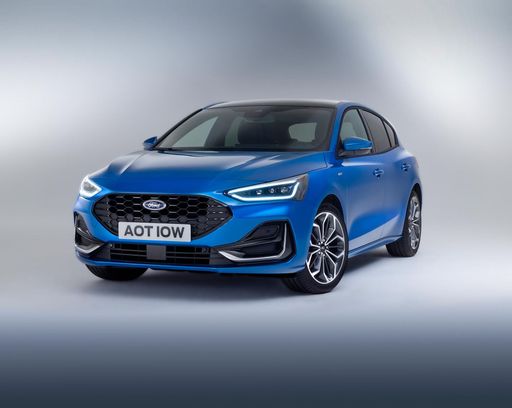
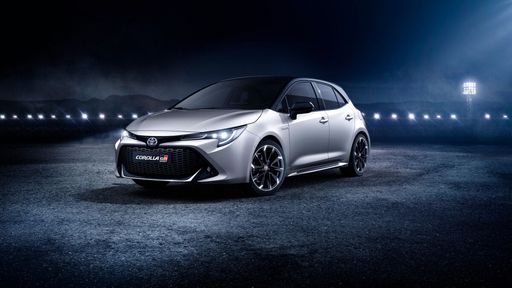
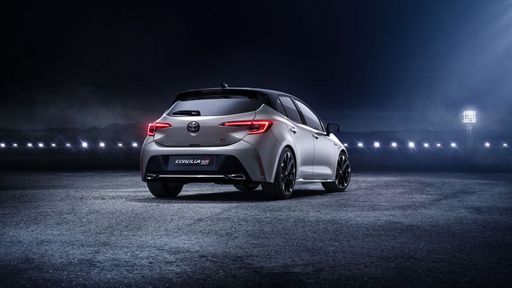
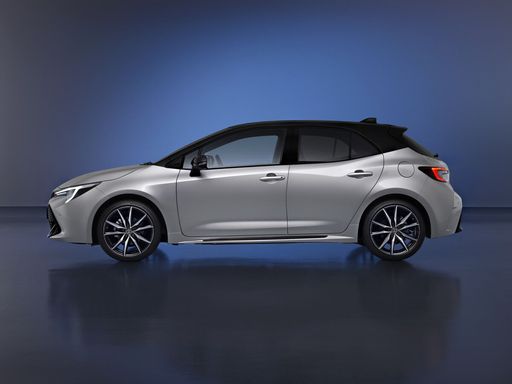
Both the Ford Focus and Toyota Corolla are offered in hatchback form, a popular choice for urban drivers seeking versatility. The Focus measures 4392 mm in length, while the Corolla is slightly shorter at 4370 mm. In terms of width, the Focus is broader at 1825 mm compared to the Corolla’s 1790 mm. Height-wise, the Corolla stands at 1435 mm, marginally lower than the Focus, which ranges from 1440 mm to 1482 mm, depending on the variant.

Corolla

Engine and Performance

The Ford Focus offers a range of engine types, including petrol, diesel, and a petrol mild-hybrid (MHEV), with outputs ranging from 115 to 280 HP. In contrast, the Toyota Corolla features a full hybrid engine, delivering between 140 to 196 HP. The Focus has a broader array of options, but the Corolla’s hybrid system is designed for maximum fuel efficiency.

Acceleration is another area where these two cars diverge. The Focus boasts impressive figures, achieving 0-100 km/h in as little as 5.7 seconds for its high-performance variant, while the Corolla reaches the mark in 7.5 seconds. Fuel consumption is also noteworthy; the Focus consumes up to 8 L/100 km, whereas the Corolla excels with figures as low as 4.4 L/100 km, showcasing its efficiency in everyday driving.

Focus

Transmission Options

The Focus provides customers with a choice between manual and various automatic transmissions, including a dual-clutch automatic. This flexibility appeals to a wider audience, particularly those who enjoy a more engaged driving experience. On the other hand, the Corolla exclusively features a continuously variable transmission (CVT), contributing to a smoother driving experience but lacking the options available in the Focus.

Corolla

Technology and Innovations

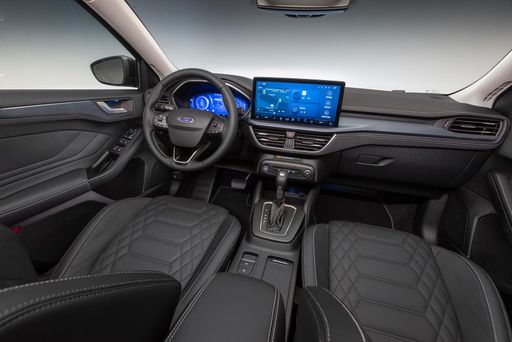
Both vehicles come equipped with modern infotainment systems. The Ford Focus integrates Ford’s SYNC 4 system, featuring a large touchscreen interface that supports Apple CarPlay and Android Auto. It also offers advanced driver-assistance features like adaptive cruise control and lane-keeping assist.

The Toyota Corolla, while slightly behind in terms of screen size, makes up for it with its comprehensive safety suite known as Toyota Safety Sense. This includes adaptive cruise control, lane departure alert, and a pre-collision system that can detect pedestrians. The Corolla's emphasis on safety offers peace of mind, making it a solid choice for family-oriented buyers.

Focus

Interior Comfort and Cargo Space

When it comes to passenger and cargo space, the Focus generally excels. It can comfortably seat up to five passengers and provides a trunk capacity of 392 liters, significantly more than the Corolla’s 361 liters. Both vehicles offer thoughtful interior design and materials, ensuring comfort on longer journeys; however, the Focus edges out with slightly more legroom and headroom.

Corolla

Environmental Impact

With increasing awareness of environmental issues, the CO2 emissions of these vehicles are critical. The Toyota Corolla shines with emissions as low as 100 g/km thanks to its hybrid engine, placing it in one of the better efficiency classes (C). The Ford Focus, while offering multiple engine options, ranges from 117 to 183 g/km in CO2 emissions, depending on the engine variant, which places it in a less favorable class (D and G).

Conclusion

In conclusion, the choice between the Ford Focus and Toyota Corolla boils down to the individual driver’s priorities. If performance, a variety of engine options, and cargo capacity are high on the list, the Ford Focus is a compelling option. On the other hand, if fuel efficiency and safety are paramount, the Toyota Corolla stands out with its hybrid technology and comprehensive safety features. Both cars bring unique strengths to the table, ensuring that consumers have great options in the competitive compact car market.

Here’s where it gets real: The technical differences in detail

Corolla

Costs and Efficiency:

Price and efficiency are key factors when choosing a car – and this is often where the real differences emerge.

Ford Focus is barely cheaper – starting at 27,500 £ , while the Toyota Corolla costs 28,600 £ . That’s a price difference of around 1,063 £.

Fuel consumption also shows a difference: the Toyota Corolla uses 4.4 L/100km and is a bit more efficient than the Ford Focus with 4.9 L/100km. The difference is about 0.5 L/100km.

Focus

Engine and Performance:

Under the bonnet, it becomes clear which model is tuned for sportiness and which one takes the lead when you hit the accelerator.

When it comes to engine power, the Ford Focus offers markedly more power – delivering 280 HP compared to 178 HP. That’s roughly 102 HP more horsepower.

When accelerating from 0 to 100 km/h, the Ford Focus is markedly quicker – completing the sprint in 5.7 s, while the Toyota Corolla takes 7.5 s. That’s about 1.8 s quicker.

Looking at top speed, the Ford Focus is noticeably faster – reaching 250 km/h, while the Toyota Corolla tops out at 180 km/h. The difference is around 70 km/h.

Corolla

Space and Everyday Use:

Cabin size, boot volume and payload all play a role in everyday practicality. Here, comfort and flexibility make the difference.

Both vehicles offer seating for 5 people.

In terms of curb weight, Ford Focus is very slightly lighter – 1,330 kg compared to 1,420 kg. The difference is around 90 kg.

Looking at boot space, the Ford Focus offers marginally more boot space – 392 L compared to 361 L. That’s a difference of about 31 L.

For maximum load capacity, the Ford Focus offers noticeably more capacity – up to 1,354 L, about 302 L more than the Toyota Corolla.

When it comes to payload, the Ford Focus carries somewhat more – 560 kg compared to 450 kg. That’s a difference of about 110 kg.

Who wins the race in the data check?

The Ford Focus is decisively ahead in the objective data comparison.
This result only shows which model scores more points on paper – not which of the two cars feels right for you.

from £27,500
Focus

Ford Focus

  • Engine Type : Petrol MHEV, Diesel, Petrol
  • Transmission : Manuel, Automatic
  • Drive Type : Front-Wheel Drive
  • Power HP : 115 - 280 HP
  • Consumption L/100km : 4.9 - 8 L/100km
Toyota Corolla
Ford Focus

Costs and Consumption

View detailed analysis

Engine and Performance

View detailed analysis

Dimensions and Body

View detailed analysis

Toyota Corolla

The Toyota Corolla remains the steady, no-nonsense compact that puts reliability and low running costs at the top of your shopping list, with a comfortable, well-built interior that won't embarrass you at the supermarket. It won't set your pulse racing, but it's an honest, easy-to-live-with car that makes smart sense for buyers who want dependability and sensible value with a dash of modern tech.

details

Ford Focus

The Ford Focus remains a clever all‑rounder that balances sharp handling with everyday comfort, making it a strong choice whether your commute is city streets or country lanes. Its practical cabin and sensible running costs mean you’ll spend more time enjoying the drive and less time worrying about ownership, with a playful streak underfoot that keeps things interesting.

details
Toyota Corolla
Ford Focus

Costs and Consumption

Price
28,600 - 34,900 £
Price
27,500 - 42,700 £
Consumption L/100km
4.4 L/100km
Consumption L/100km
4.9 - 8 L/100km
Consumption kWh/100km
-
Consumption kWh/100km
-
Electric Range
-
Electric Range
-
Battery Capacity
-
Battery Capacity
-
co2
100 g/km
co2
117 - 183 g/km
Fuel tank capacity
43 L
Fuel tank capacity
52 L

Dimensions and Body

Body Type
Hatchback
Body Type
Hatchback
Seats
5
Seats
5
Doors
5
Doors
5
Curb weight
1,420 - 1,460 kg
Curb weight
1,330 - 1,529 kg
Trunk capacity
313 - 361 L
Trunk capacity
392 L
Length
4,370 mm
Length
4,382 - 4,397 mm
Width
1,790 mm
Width
1,825 - 1,844 mm
Height
1,435 mm
Height
1,438 - 1,482 mm
Max trunk capacity
1,004 - 1,052 L
Max trunk capacity
1,354 L
Payload
400 - 450 kg
Payload
495 - 560 kg

Engine and Performance

Engine Type
Full Hybrid
Engine Type
Petrol MHEV, Diesel, Petrol
Transmission
Automatic
Transmission
Manuel, Automatic
Transmission Detail
CVT
Transmission Detail
Manual Gearbox, Dual-Clutch Automatic, Automatic Gearbox
Drive Type
Front-Wheel Drive
Drive Type
Front-Wheel Drive
Power HP
140 - 178 HP
Power HP
115 - 280 HP
Acceleration 0-100km/h
7.5 - 9.2 s
Acceleration 0-100km/h
5.7 - 11.8 s
Max Speed
180 km/h
Max Speed
186 - 250 km/h
Torque
-
Torque
170 - 420 Nm
Number of Cylinders
4
Number of Cylinders
3 - 4
Power kW
103 - 131 kW
Power kW
85 - 206 kW
Engine capacity
1,798 - 1,987 cm3
Engine capacity
999 - 2,261 cm3

General

Model Year
2,025
Model Year
2,022 - 2,024
CO2 Efficiency Class
C
CO2 Efficiency Class
D, G
Brand
Toyota
Brand
Ford
DriveDuel uses data analysis and artificial intelligence to evaluate vehicle data and create content. Content is regularly reviewed and improved. The displayed prices are estimates based on German list prices, adjusted to the respective country’s VAT. Country-specific registration taxes are not included. This information is not legally binding.