VS

Toyota Proace City vs Fiat Doblò comparison

Compare performance (136 HP vs 130 HP), boot space and price (20,800 £ vs 25,800 £ ) at a glance. Find out which car is the better choice for you – Toyota Proace City or Fiat Doblò?

Toyota Proace City vs Fiat Doblò: Key differences

Toyota Proace City

  • clearly cheaper
  • barely more power
  • very slightly more efficient
  • a bit lighter
details

Fiat Doblò

details

By Achim Sedelmaier

Proace City

Fiat Doblò VS Toyota Proace City: practical vans compared for real buyers

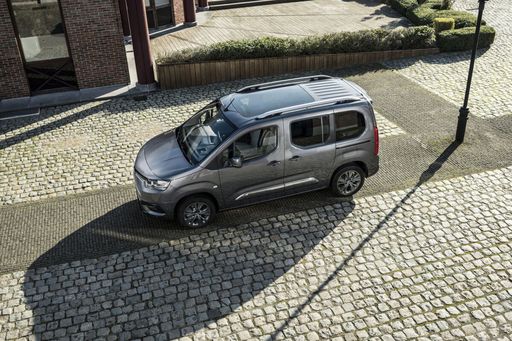
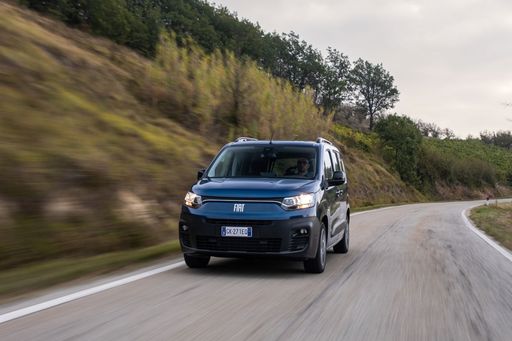
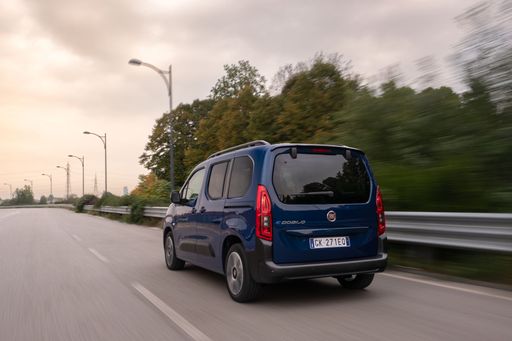
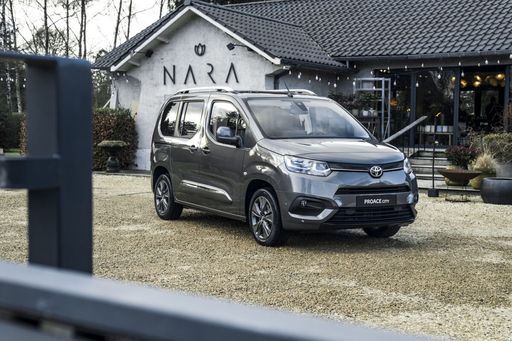
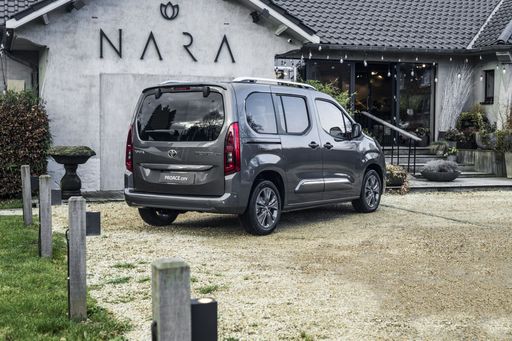
Fiat Doblò VS Toyota Proace City brings together two high‑roof practicalists that look similar on paper but behave differently in daily life. The Fiat Doblò leans hard into raw utility: boxy cargo space, easy access and simple, robust finishes. The Toyota Proace City aims to blend that same usefulness with a slightly more finished experience, newer infotainment and broader seating choices. Choosing between them is about whether you value maximum load‑area and straightforward function (Doblò) or a more versatile family layout and modern features (Proace City).
Doblò

On the road: character and driving manners

Behind the wheel, the Fiat Doblò feels like a sensible workhorse — steady, spurstable and tuned for carrying loads rather than corner carving. The Toyota Proace City is more comfort‑biased, with a softer ride that masks imperfections but lets the body roll more in quick changes of direction. Doblò’s diesel variants can sound and feel more mechanical at higher speeds, which makes motorway stints feel utilitarian rather than refined. Proace City generally delivers a gentler highway experience and, depending on engine choice, better real‑world economy; the trade‑off is less steering feedback for drivers who want engagement.

Proace City

Comfort and long‑distance usability

For long trips the Toyota Proace City often feels the kinder companion thanks to wider rear seating and the option for a more spacious rear layout, so passengers suffer less on hours of motorway driving. The Fiat Doblò compensates with a highly compliant suspension that soaks up bumps, but its rear seats are narrower and adults can find legroom tight on extended runs. Noise is a dividing line: electric or well‑insulated Proace City variants are relatively quiet, whereas Doblò diesel versions are notably noisier under load. In short, choose Doblò if cushioning and load comfort matter most; choose Proace City if rear passenger space and quieter cruising are priorities.

Doblò

Practicality and everyday usability

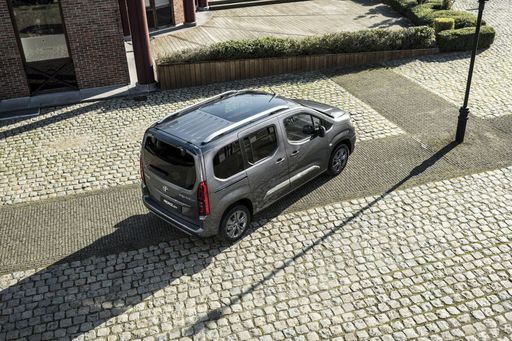
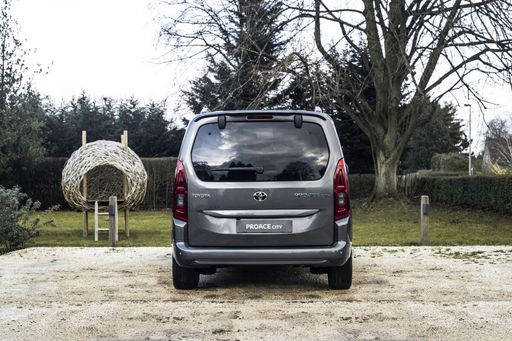
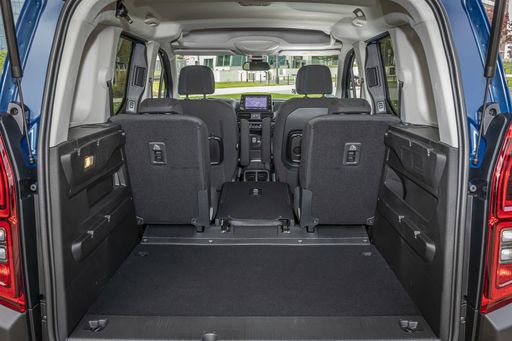
When it comes to turning theory into real life, the Fiat Doblò’s cuboid boot and two sliding doors make loading awkwardly shaped items and fitting child seats straightforward and efficient. The Toyota Proace City matches that with a low loading sill and a very usable flat floor, but it adds true family flexibility—wider rear seats, three Isofix points and optional extra seats for seven‑person use. Doblò’s interior layout prioritises cargo anchoring and durability, which is perfect for tradespeople and dog owners; Proace City prioritises modularity and ease of family life, especially when you need to switch between kit and people. Both are excellent at city drops and supermarket runs, yet the Proace City’s slightly higher perceived polish makes routine use feel less like work.

Proace City

Cabin feel, tech and perceived quality

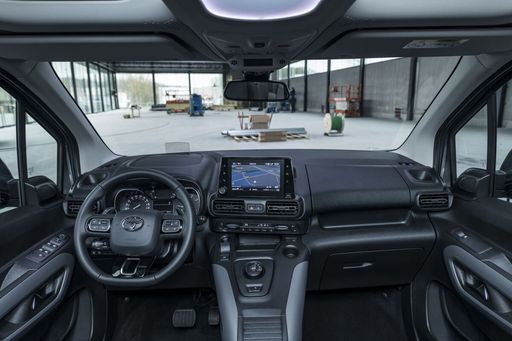
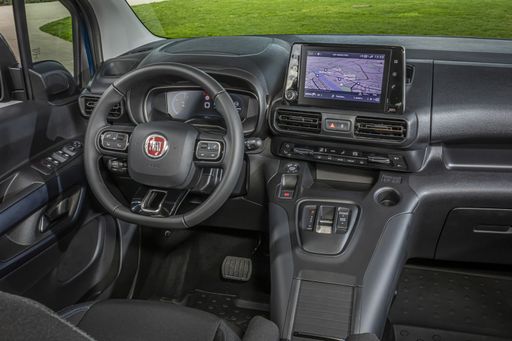
Neither the Fiat Doblò nor the Toyota Proace City pretends to be a premium salon — hard plastics and practical trims dominate both cabins — but they do that practicality in different styles. The Doblò projects a utilitarian, no‑frills vibe: surfaces that shrug off abuse but don’t invite lingering in the car. The Proace City’s recent updates bring a more modern touchscreen and cleaner instrument layout, which makes the interior feel younger and more useable for tech‑minded families. If cabin ambience and up‑to‑date connectivity are important, Proace City has the edge; if you want a cabin that survives muddy boots and constant loading, the Doblò’s toughness will appeal.

Doblò

Which buyer should pick which car?

If your week is measured in loads, dog crates, DIY trips and the need to cram a surprising amount into a boxy rear, the Fiat Doblò is the pragmatic choice: it sacrifices polish for pure utility. If your priority is carrying three child seats comfortably, swapping between passengers and kit, and having a slightly more modern cabin with broader seating choices, the Toyota Proace City will suit you better. Both cars are family‑oriented and highly usable in urban and suburban life, but the decision narrows to cargo‑first (Doblò) versus flexible family‑first with more creature comforts (Proace City). Below we move into the technical comparison so you can match engines, consumption and dimensions to the real‑world trade‑offs you just read about.

Here’s where it gets real: The technical differences in detail

Proace City

Costs and Efficiency:

Looking at overall running costs, both models reveal some interesting differences in everyday economy.

Toyota Proace City is clearly cheaper – starting at 20,800 £ , while the Fiat Doblò costs 25,800 £ . That’s a price difference of around 4,977 £.

Fuel consumption also shows a difference: the Toyota Proace City uses 5.3 L/100km and is very slightly more efficient than the Fiat Doblò with 5.5 L/100km. The difference is about 0.2 L/100km.

Doblò

Engine and Performance:

Under the bonnet, it becomes clear which model is tuned for sportiness and which one takes the lead when you hit the accelerator.

When it comes to engine power, the Toyota Proace City offers barely more power – delivering 136 HP compared to 130 HP. That’s roughly 6 HP more horsepower.

Both models offer the same torque – 300 Nm.

Proace City

Space and Everyday Use:

Beyond pure performance, interior space and usability matter most in daily life. This is where you see which car is more practical and versatile.

Seats: Toyota Proace City offers more seats – 7 vs 5.

In terms of curb weight, Toyota Proace City is a bit lighter – 1,366 kg compared to 1,530 kg. The difference is around 164 kg.

When it comes to payload, the Fiat Doblò carries very slightly more – 840 kg compared to 829 kg. That’s a difference of about 11 kg.

Who wins the race in the data check?

The Toyota Proace City is decisively ahead in the objective data comparison.
This result only shows which model scores more points on paper – not which of the two cars feels right for you.

from £20,800
Proace City

Toyota Proace City

  • Engine Type Electric, Petrol, Diesel
  • Transmission Automatic, Manuel
  • Drive Type Front-Wheel Drive
  • Power HP 102 - 136 HP
  • Consumption L/100km 5.3 - 6.3 L/100km
  • Consumption kWh/100km 18.1 kWh/100km
  • Electric Range 343 km
Toyota Proace City
Fiat Doblò

Costs and Consumption

View detailed analysis

Engine and Performance

View detailed analysis

Dimensions and Body

View detailed analysis

Toyota Proace City

The Toyota Proace City is a clever compact workhorse that blends van practicality with passenger comfort, turning daily deliveries or weekend DIY runs into a surprisingly civilised affair. It won't set your pulse racing, but its easy driving manners, flexible interior and low-hassle ownership make it a smart pick for buyers who value usefulness over flash.

details

Fiat Doblò

The Fiat Doblò is Fiat’s pragmatic workhorse that doubles as a family companion—deceptively roomy, easy to live with and built to swallow awkward loads without drama. It won’t win style prizes, but its sensible packaging, no-nonsense character and low-stress ownership make it a very practical choice for buyers who prefer usefulness over flash.

details
Toyota Proace City
Fiat Doblò

Costs and Consumption

Price
20,800 - 44,100 £
Price
25,800 - 29,600 £
Consumption L/100km
5.3 - 6.3 L/100km
Consumption L/100km
5.5 - 5.8 L/100km
Consumption kWh/100km
18.1 kWh/100km
Consumption kWh/100km
-
Electric Range
343 km
Electric Range
-
Battery Capacity
-
Battery Capacity
-
co2
0 - 146 g/km
co2
144 - 152 g/km
Fuel tank capacity
-
Fuel tank capacity
-

Dimensions and Body

Body Type
High Roof Estate
Body Type
High Roof Estate
Seats
5 - 7
Seats
5
Doors
-
Doors
-
Curb weight
1,366 - 1,664 kg
Curb weight
1,530 - 1,658 kg
Trunk capacity
322 - 912 L
Trunk capacity
-
Length
-
Length
-
Width
1,848 mm
Width
1,848 mm
Height
-
Height
-
Max trunk capacity
-
Max trunk capacity
-
Payload
525 - 829 kg
Payload
722 - 840 kg

Engine and Performance

Engine Type
Electric, Petrol, Diesel
Engine Type
Diesel
Transmission
Automatic, Manuel
Transmission
Manuel, Automatic
Transmission Detail
Reduction Gearbox, Manual Gearbox, Automatic Gearbox
Transmission Detail
Manual Gearbox, Automatic Gearbox
Drive Type
Front-Wheel Drive
Drive Type
Front-Wheel Drive
Power HP
102 - 136 HP
Power HP
102 - 130 HP
Acceleration 0-100km/h
11.5 - 13.2 s
Acceleration 0-100km/h
-
Max Speed
-
Max Speed
-
Torque
205 - 300 Nm
Torque
250 - 300 Nm
Number of Cylinders
3 - 4
Number of Cylinders
4
Power kW
75 - 100 kW
Power kW
75 - 96 kW
Engine capacity
1,199 - 1,499 cm3
Engine capacity
1,499 cm3

General

Model Year
2,025 - 2,026
Model Year
2025
CO2 Efficiency Class
A, E
CO2 Efficiency Class
E
Brand
Toyota
Brand
Fiat
DriveDuel uses data analysis and artificial intelligence to evaluate vehicle data and create content. Content is regularly reviewed and improved. The displayed prices are estimates based on German list prices, adjusted to the respective country’s VAT. Country-specific registration taxes are not included. This information is not legally binding.