VS

Toyota RAV4 vs Audi Q5 comparison

Compare performance (309 HP vs 367 HP), boot space and price (37,700 £ vs 46,400 £ ) at a glance. Find out which car is the better choice for you – Toyota RAV4 or Audi Q5?

Toyota RAV4 vs Audi Q5: Key differences

Toyota RAV4

4.8 (8 Reviews)
rate
  • clearly cheaper
  • considerably more efficient
  • clearly more electric range
  • somewhat lighter
details

Audi Q5

4.4 (6 Reviews)
rate
  • a bit more power
  • markedly quicker 0–100 km/h
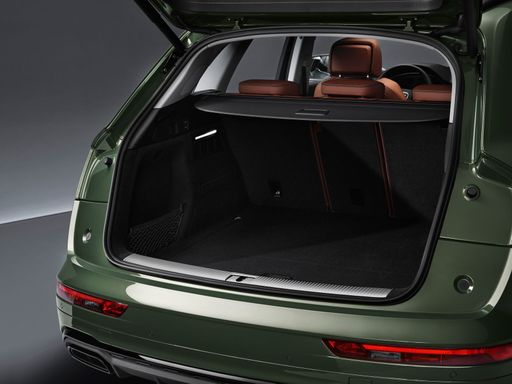
  • only slightly more trunk space
details

All details on performance, efficiency, range and trunk space can be found in the technical comparison below – including user reviews for both models.

By Achim Sedelmaier

RAV4

Audi Q5 vs. Toyota RAV4: A Clash of SUV Titans

The SUV market is bustling with options, yet two models consistently stand out: the Audi Q5 and the Toyota RAV4. Both vehicles offer distinctive features that cater to varying consumer needs, but how do they truly compare when put side by side? In this article, we'll explore the key technical aspects and innovative features of these impressive SUVs.
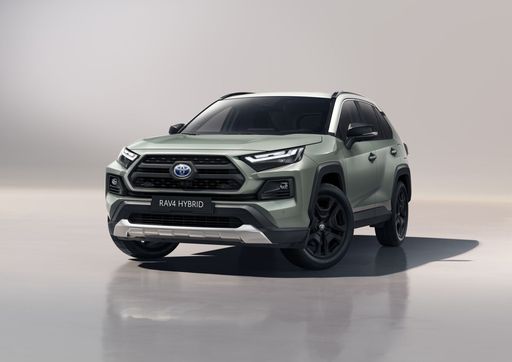
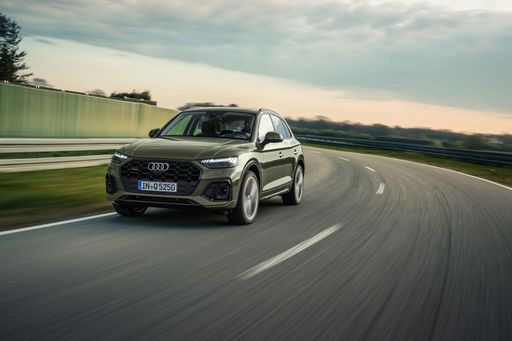
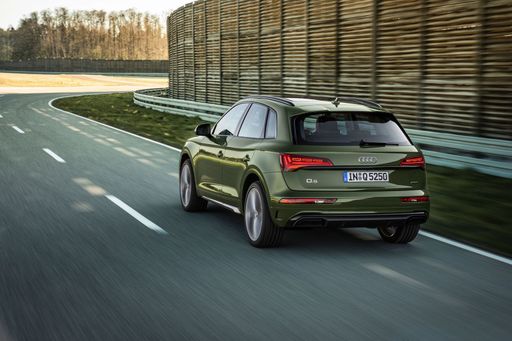
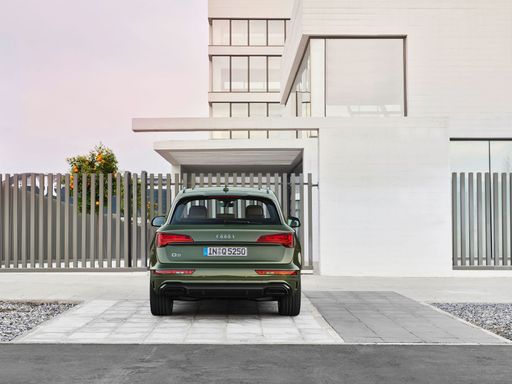
Q5

Under the Hood

The Audi Q5 offers a range of engine options, including Diesel and Petrol Mild Hybrid Electric Vehicles (MHEV) as well as a Plugin Hybrid variant. This diversity allows the Q5 to deliver power outputs ranging from 163 HP to a robust 367 HP. Highlighting its versatility, the Audi Q5 also offers both All-Wheel Drive and Front-Wheel Drive configurations, coupled with an advanced automatic dual-clutch transmission.

On the other hand, the Toyota RAV4 keeps its focus on hybrid technology with Full Hybrid and Plugin Hybrid options. These engines provide between 218 HP and 306 HP, powered by a Continuously Variable Transmission (CVT) system that promises a seamless driving experience. Notably, the RAV4 offers an impressive electric range of 75 km, perfect for eco-conscious drivers.

RAV4

Performance and Efficiency

When it comes to fuel efficiency, the RAV4 takes a leading position with consumption figures as low as 5.6 L/100 km for hybrids and a remarkable 1 L/100 km for the plugin hybrid, highlighting its eco-friendly credentials. The Audi Q5 offers a range from 5.6 L/100 km to 8.4 L/100 km, dependent on the chosen engine configuration. The Q5 Plugin Hybrid boasts a modest electric range of up to 62 km, appealing to urban commuters.

Q5

Acceleration and Speed

Acceleration and top speed are crucial for those seeking performance. The Audi Q5 can accelerate from 0-100 km/h in a thrilling 4.5 seconds in its high-power variant and offers top speeds up to 250 km/h. Meanwhile, the RAV4 completes the 0-100 km/h dash in around 6 to 8.4 seconds with a maximum speed limited to 180 km/h, prioritizing efficiency over outright speed.

RAV4

Dimensions and Practicality

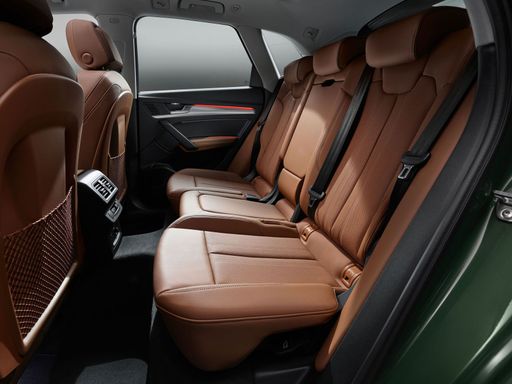
Both SUVs feature a spacious interior and practical design. The Audi Q5 offers a trunk capacity ranging from 455 L to 520 L, while the Toyota RAV4 provides slightly more room at 580 L. Cargo needs are further complemented by both models’ seating capacities of five, ensuring comfortable journeys for all passengers.

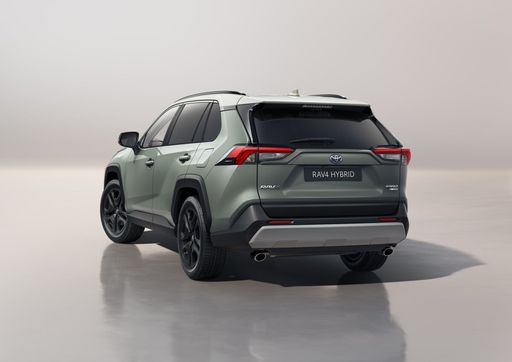
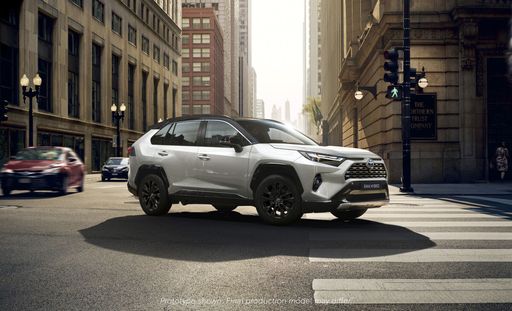
The Audi Q5's slightly larger body, measuring up to 4717 mm in length, gives it a more robust presence compared to the RAV4's 4600 mm. While the Q5 has a width of up to 1900 mm and a height of 1662 mm, the RAV4's dimensions are 1855 mm wide and 1685 mm tall, making it slightly taller and narrower.

Q5

Innovations and Technology

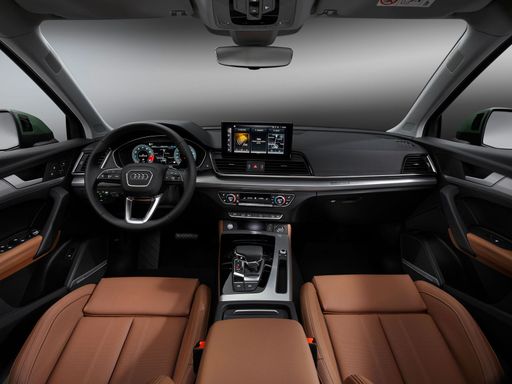
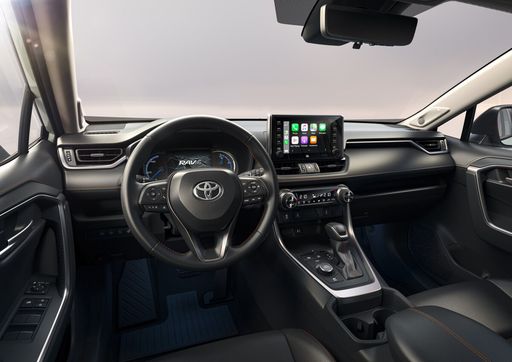
Technology is a hallmark of both SUVs, with Audi Q5 featuring the latest in infotainment and driver assistance systems. Its dual-clutch transmission and responsive powertrains offer a premium driving experience. Moreover, the Q5's multiple engine options cater to driver preferences for power or efficiency.

The Toyota RAV4, renowned for its reliability, embraces hybrid technology fully, enabling drivers to enjoy reduced emissions with the Plugin Hybrid's CO2 emissions as low as 22 g/km. In terms of technological convenience, the RAV4’s CVT optimizes the balance between performance and fuel efficiency.

RAV4

Final Verdict

Deciding between the Audi Q5 and Toyota RAV4 ultimately comes down to individual priorities. The Q5 attracts drivers seeking performance diversity, luxurious features, and adaptability. In contrast, the RAV4 appeals to those prioritizing hybrid efficiency, practicality, and advanced eco-friendly features. Whichever SUV you choose, both are sure to enhance your driving experience with their respective advancements and philosophies.

Here’s where it gets real: The technical differences in detail

RAV4

Costs and Efficiency:

Price and efficiency are key factors when choosing a car – and this is often where the real differences emerge.

Toyota RAV4 is clearly cheaper – starting at 37,700 £ , while the Audi Q5 costs 46,400 £ . That’s a price difference of around 8,666 £.

Fuel consumption also shows a difference: the Toyota RAV4 uses 1.3 L/100km and is considerably more efficient than the Audi Q5 with 2.5 L/100km. The difference is about 1.2 L/100km.

As for electric range, the Toyota RAV4 offers clearly more range – reaching up to 137 km, about 37 km more than the Audi Q5.

Q5

Engine and Performance:

Power, torque and acceleration say a lot about how a car feels on the road. This is where you see which model delivers more driving dynamics.

When it comes to engine power, the Audi Q5 offers a bit more power – delivering 367 HP compared to 309 HP. That’s roughly 58 HP more horsepower.

When accelerating from 0 to 100 km/h, the Audi Q5 is markedly quicker – completing the sprint in 4.5 s, while the Toyota RAV4 takes 5.8 s. That’s about 1.3 s quicker.

RAV4

Space and Everyday Use:

Beyond pure performance, interior space and usability matter most in daily life. This is where you see which car is more practical and versatile.

Both vehicles offer seating for 5 people.

In terms of curb weight, Toyota RAV4 is somewhat lighter – 1,655 kg compared to 1,910 kg. The difference is around 255 kg.

Looking at boot space, the Audi Q5 offers only slightly more boot space – 520 L compared to 514 L. That’s a difference of about 6 L.

When it comes to payload, the Toyota RAV4 carries very slightly more – 610 kg compared to 565 kg. That’s a difference of about 45 kg.

Who wins the race in the data check?

The Toyota RAV4 is clearly superior overall in the objective data comparison.
This result only shows which model scores more points on paper – not which of the two cars feels right for you.

from £37,700
RAV4

Toyota RAV4

  • Engine Type : Full Hybrid, Plugin Hybrid
  • Transmission : Automatic
  • Drive Type : Front-Wheel Drive, All-Wheel Drive
  • Power HP : 185 - 309 HP
  • Consumption L/100km : 1.3 - 5.3 L/100km
  • Electric Range : 133 - 137 km
Toyota RAV4
Audi Q5

Costs and Consumption

View detailed analysis

Engine and Performance

View detailed analysis

Dimensions and Body

View detailed analysis

Toyota RAV4

The Toyota RAV4 is a well-rounded compact SUV that pairs everyday practicality with a comfortable, composed ride and generous cargo space, making it a sensible choice for families and active lifestyles. Its strong reputation for reliability, efficient drivetrains, and straightforward technology gives it wide appeal whether you value economy, comfort, or capability.

details

Audi Q5

The Audi Q5 is a refined compact luxury SUV that blends a plush, well-appointed interior with confident, composed handling suited to everyday driving. It’s a strong choice if you want a comfortable, technology-rich cabin and a practical, upscale package that feels polished on both city streets and longer trips.

details
Toyota RAV4
Audi Q5

Costs and Consumption

Price
37,700 - 54,200 £
Price
46,400 - 79,600 £
Consumption L/100km
1.3 - 5.3 L/100km
Consumption L/100km
2.5 - 8.3 L/100km
Consumption kWh/100km
-
Consumption kWh/100km
-
Electric Range
133 - 137 km
Electric Range
92 - 100 km
Battery Capacity
-
Battery Capacity
-
co2
30 - 121 g/km
co2
56 - 189 g/km
Fuel tank capacity
-
Fuel tank capacity
-

Dimensions and Body

Body Type
SUV
Body Type
SUV
Seats
5
Seats
5
Doors
-
Doors
-
Curb weight
1,655 - 1,960 kg
Curb weight
1,910 - 2,245 kg
Trunk capacity
446 - 514 L
Trunk capacity
433 - 520 L
Length
-
Length
-
Width
1,880 mm
Width
1,900 mm
Height
-
Height
-
Max trunk capacity
-
Max trunk capacity
-
Payload
515 - 610 kg
Payload
490 - 565 kg

Engine and Performance

Engine Type
Full Hybrid, Plugin Hybrid
Engine Type
Plugin Hybrid, Petrol MHEV, Diesel MHEV
Transmission
Automatic
Transmission
Automatic
Transmission Detail
CVT
Transmission Detail
Dual-Clutch Automatic
Drive Type
Front-Wheel Drive, All-Wheel Drive
Drive Type
All-Wheel Drive, Front-Wheel Drive
Power HP
185 - 309 HP
Power HP
204 - 367 HP
Acceleration 0-100km/h
5.8 - 8 s
Acceleration 0-100km/h
4.5 - 8.6 s
Max Speed
-
Max Speed
-
Torque
-
Torque
340 - 580 Nm
Number of Cylinders
4
Number of Cylinders
4 - 6
Power kW
136 - 227 kW
Power kW
150 - 270 kW
Engine capacity
2,487 cm3
Engine capacity
1,968 - 2,995 cm3

General

Model Year
2026
Model Year
2025
CO2 Efficiency Class
C, D, B
CO2 Efficiency Class
B, E, F, G
Brand
Toyota
Brand
Audi
DriveDuel uses data analysis and artificial intelligence to evaluate vehicle data and create content. Content is regularly reviewed and improved. The displayed prices are estimates based on German list prices, adjusted to the respective country’s VAT. Country-specific registration taxes are not included. This information is not legally binding.