VS

Toyota RAV4 vs Renault Rafale comparison

Compare performance (309 HP vs 300 HP), boot space and price (37,700 £ vs 37,700 £ ) at a glance. Find out which car is the better choice for you – Toyota RAV4 or Renault Rafale?

Toyota RAV4 vs Renault Rafale: Key differences

Toyota RAV4

4.7 (11 Reviews)
rate
  • only slightly cheaper
  • barely more power
  • considerably more efficient
  • visibly more electric range
  • a bit quicker 0–100 km/h
  • only slightly lighter
details

Renault Rafale

4.9 (9 Reviews)
rate
  • somewhat more trunk space
details

All details on performance, efficiency, range and trunk space can be found in the technical comparison below – including user reviews for both models.

By Achim Sedelmaier

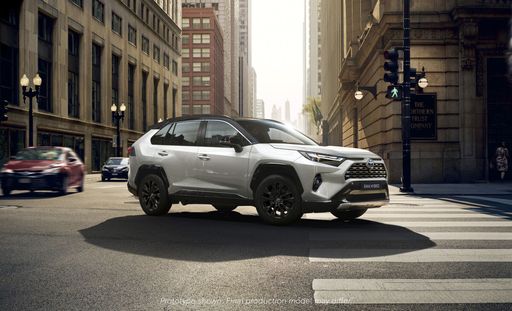
RAV4

Introduction: A Clash of Titans

The automotive market is constantly evolving, and two prominent contenders in the SUV segment have emerged: the Renault Rafale and the Toyota RAV4. With each offering a unique set of capabilities, technologies, and design philosophies, this comparison will explore how these vehicles stack up against each other in various aspects such as performance, efficiency, and technology.
Rafale

Design and Dimensions

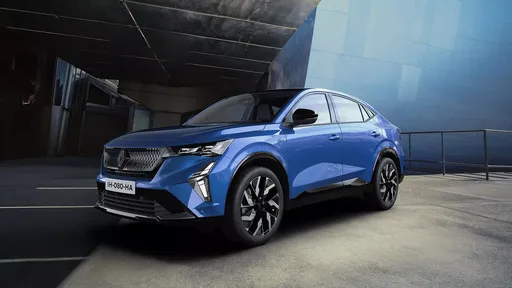
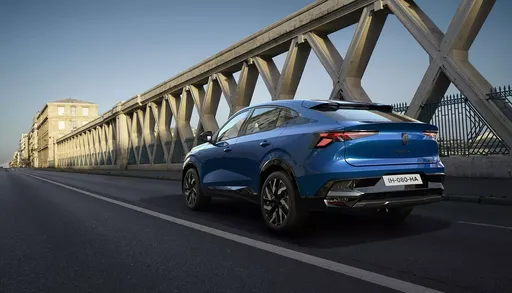
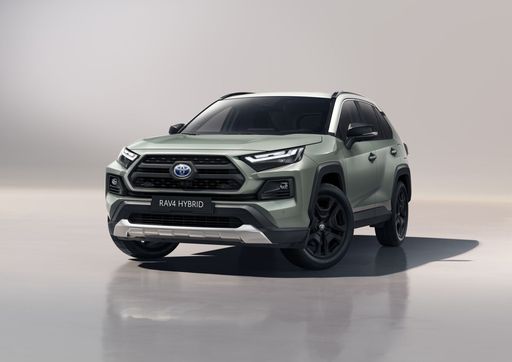
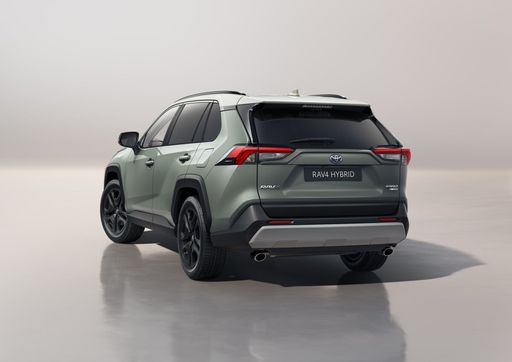
Starting with aesthetics, both vehicles showcase distinctive styling that appeals to modern SUV buyers. The Renault Rafale measures 4710 mm in length, 1886 mm in width, and stands at 1613 mm tall, making it slightly larger than the Toyota RAV4, which comes in at 4600 mm long, 1855 mm wide, and 1685 mm high. The Rafale’s more pronounced width contributes to a confident stance, while the RAV4's bold lines give it a rugged SUV appearance.

RAV4

Powertrains and Performance

Both the Rafale and RAV4 feature hybrid powertrains, with the Rafale offering options of a Full Hybrid and a Plugin Hybrid, delivering up to 300 HP and 221 kW. The Toyota RAV4, on the other hand, produces between 218 HP and a maximum of 306 HP, depending on the variant. Acceleration from 0 to 100 km/h is slightly better in the Rafale with figures of 6.4 seconds for the Plugin Hybrid variant compared to the RAV4's 6 seconds in its most powerful form.

Rafale

Fuel Efficiency and Emissions

Efficiency is a key consideration for eco-conscious consumers. The Rafale boasts an impressive consumption rate as low as 4.7 L/100km with CO2 emissions of just 106 g/km. The RAV4, while slightly less fuel-efficient, delivers a competitive consumption rate of 5.6 L/100km with emissions of 126 g/km. The Rafale's electric range is noteworthy, allowing for up to 97 km on electric power alone, while the RAV4 achieves 75 km.

RAV4

Interior Space and Comfort

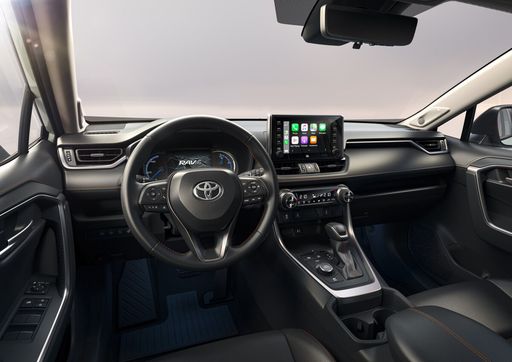
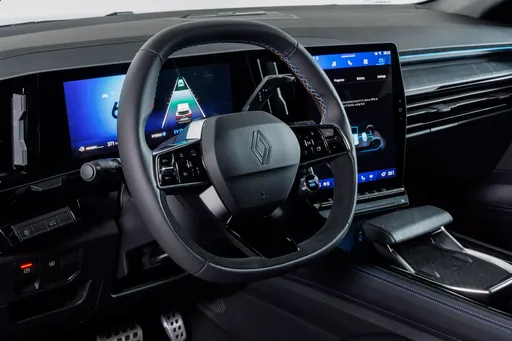
Both SUVs comfortably seat five passengers, but the Rafale takes a slight edge in cargo space, offering 627 L in the trunk compared to the 580 L of the RAV4. This added space makes the Rafale a more practical choice for families or those needing extra storage. Both vehicles feature modern interiors with infotainment systems designed to cater to the needs of tech-savvy drivers, including large touchscreen displays and smartphone connectivity.

Rafale

Driving Experience and Technology

The driving dynamics of both SUVs are enhanced by their respective automatic transmissions—Renault's conventional gearbox and Toyota’s CVT. The compatibility of the powertrains with front-wheel drive configurations contributes to their overall performance. However, the RAV4 offers an All-Wheel Drive option, making it a versatile choice for various driving conditions.

RAV4

Safety Technologies

In terms of safety, both the Rafale and RAV4 are packed with advanced safety features. They include adaptive cruise control, lane-keeping assistance, and multiple airbags. The reputation of Toyota for reliability and longevity further bolsters the RAV4's standing in this category, while Renault has also made significant strides in safety, earning commendations for its advanced driver-assistance systems.

Conclusion: Choosing Between Rafale and RAV4

In conclusion, both the Renault Rafale and the Toyota RAV4 have their strengths and cater to different customer preferences. The Rafale excels in efficiency and cargo space, while the RAV4 provides a robust performance with additional driving options thanks to its All-Wheel Drive capability. Ultimately, your choice will depend on your specific driving needs, brand loyalty, and which features resonate more with your lifestyle. Whichever you choose, both SUVs represent a solid choice in today's competitive automotive landscape.

Here’s where it gets real: The technical differences in detail

RAV4

Costs and Efficiency:

Price and efficiency are key factors when choosing a car – and this is often where the real differences emerge.

Toyota RAV4 is only slightly cheaper – starting at 37,700 £ , while the Renault Rafale costs 37,700 £ . That’s a price difference of around 9 £.

Fuel consumption also shows a difference: the Toyota RAV4 uses 1.3 L/100km and is considerably more efficient than the Renault Rafale with 2 L/100km. The difference is about 0.7 L/100km.

As for electric range, the Toyota RAV4 offers visibly more range – reaching up to 137 km, about 40 km more than the Renault Rafale.

Rafale

Engine and Performance:

Power, torque and acceleration say a lot about how a car feels on the road. This is where you see which model delivers more driving dynamics.

When it comes to engine power, the Toyota RAV4 offers barely more power – delivering 309 HP compared to 300 HP. That’s roughly 9 HP more horsepower.

When accelerating from 0 to 100 km/h, the Toyota RAV4 is a bit quicker – completing the sprint in 5.8 s, while the Renault Rafale takes 6.4 s. That’s about 0.6 s quicker.

RAV4

Space and Everyday Use:

Beyond pure performance, interior space and usability matter most in daily life. This is where you see which car is more practical and versatile.

Both vehicles offer seating for 5 people.

In terms of curb weight, Toyota RAV4 is only slightly lighter – 1,655 kg compared to 1,734 kg. The difference is around 79 kg.

Looking at boot space, the Renault Rafale offers somewhat more boot space – 627 L compared to 514 L. That’s a difference of about 113 L.

When it comes to payload, the Toyota RAV4 carries clearly more – 610 kg compared to 444 kg. That’s a difference of about 166 kg.

Who wins the race in the data check?

The Toyota RAV4 is far ahead overall in the objective data comparison.
This result only shows which model scores more points on paper – not which of the two cars feels right for you.

from £37,700
RAV4

Toyota RAV4

  • Engine Type Full Hybrid, Plugin Hybrid
  • Transmission Automatic
  • Drive Type Front-Wheel Drive, All-Wheel Drive
  • Power HP 185 - 309 HP
  • Consumption L/100km 1.3 - 5.3 L/100km
  • Electric Range 133 - 137 km
Toyota RAV4
Renault Rafale

Costs and Consumption

View detailed analysis

Engine and Performance

View detailed analysis

Dimensions and Body

View detailed analysis

Toyota RAV4

The Toyota RAV4 is a well-rounded compact SUV that pairs everyday practicality with a comfortable, composed ride and generous cargo space, making it a sensible choice for families and active lifestyles. Its strong reputation for reliability, efficient drivetrains, and straightforward technology gives it wide appeal whether you value economy, comfort, or capability.

details

Renault Rafale

The Renault Rafale dresses bold coupé-inspired lines around a practical crossover body, turning heads without trying too hard. Inside it serves up a comfortable, well-equipped cabin and engaging driving manners, making it a clever choice for buyers who want a bit of panache with their daily commute.

details
Toyota RAV4
Renault Rafale

Costs and Consumption

Price
37,700 - 54,200 £
Price
37,700 - 49,700 £
Consumption L/100km
1.3 - 5.3 L/100km
Consumption L/100km
2 - 5 L/100km
Consumption kWh/100km
-
Consumption kWh/100km
-
Electric Range
133 - 137 km
Electric Range
97 km
Battery Capacity
-
Battery Capacity
-
co2
30 - 121 g/km
co2
43 - 108 g/km
Fuel tank capacity
-
Fuel tank capacity
-

Dimensions and Body

Body Type
SUV
Body Type
SUV
Seats
5
Seats
5
Doors
-
Doors
-
Curb weight
1,655 - 1,960 kg
Curb weight
1,734 - 2,025 kg
Trunk capacity
446 - 514 L
Trunk capacity
539 - 627 L
Length
-
Length
-
Width
1,880 mm
Width
1,886 mm
Height
-
Height
-
Max trunk capacity
-
Max trunk capacity
-
Payload
515 - 610 kg
Payload
415 - 444 kg

Engine and Performance

Engine Type
Full Hybrid, Plugin Hybrid
Engine Type
Full Hybrid, Plugin Hybrid
Transmission
Automatic
Transmission
Automatic
Transmission Detail
CVT
Transmission Detail
Automatic Gearbox
Drive Type
Front-Wheel Drive, All-Wheel Drive
Drive Type
Front-Wheel Drive, All-Wheel Drive
Power HP
185 - 309 HP
Power HP
200 - 300 HP
Acceleration 0-100km/h
5.8 - 8 s
Acceleration 0-100km/h
6.4 - 8.9 s
Max Speed
-
Max Speed
-
Torque
-
Torque
-
Number of Cylinders
4
Number of Cylinders
3
Power kW
136 - 227 kW
Power kW
147 - 221 kW
Engine capacity
2,487 cm3
Engine capacity
1,199 cm3

General

Model Year
2026
Model Year
2025
CO2 Efficiency Class
C, D, B
CO2 Efficiency Class
C, B
Brand
Toyota
Brand
Renault
DriveDuel uses data analysis and artificial intelligence to evaluate vehicle data and create content. Content is regularly reviewed and improved. The displayed prices are estimates based on German list prices, adjusted to the respective country’s VAT. Country-specific registration taxes are not included. This information is not legally binding.