VS

Toyota Yaris vs Audi A1 comparison

Compare performance (280 HP vs 207 HP), boot space and price (21,900 £ vs 20,000 £ ) at a glance. Find out which car is the better choice for you – Toyota Yaris or Audi A1?

Toyota Yaris vs Audi A1: Key differences

Toyota Yaris

3.9 (3 Reviews)
rate
  • visibly more power
  • visibly more efficient
  • somewhat quicker 0–100 km/h
  • only slightly lighter
details

Audi A1

2.4 (1 Reviews)
rate
  • very slightly cheaper
  • slightly more trunk space
details

All details on performance, efficiency, range and trunk space can be found in the technical comparison below – including user reviews for both models.

By Achim Sedelmaier

Yaris

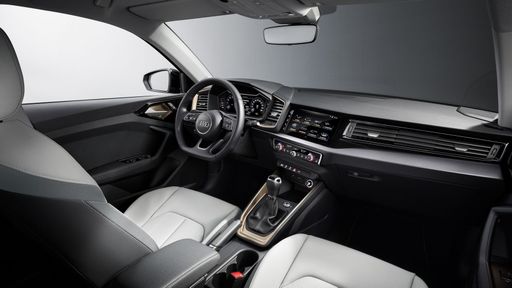
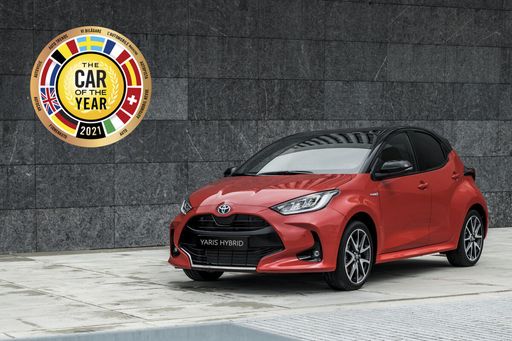
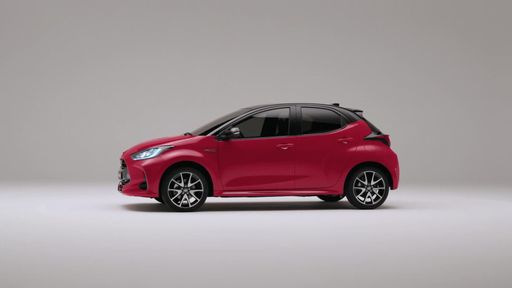
Audi A1 VS Toyota Yaris — a compact clash of premium feel against hybrid efficiency

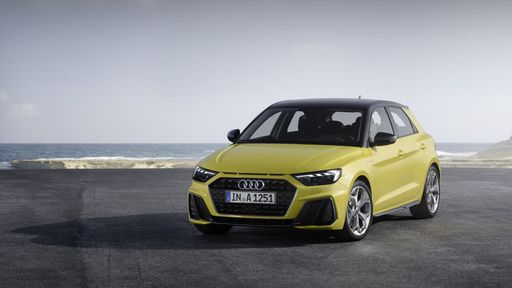
The Audi A1 and Toyota Yaris represent two very different answers to the same urban‑friendly brief: compact footprint, five doors and low running fuss. The A1 trades on an upscale cabin vibe, crisp digital displays and a taut chassis that feels grown‑up on faster roads. The Yaris leans into hybrid economy, generous safety kit and an easy, low‑stress driving interface that saves money in daily traffic. This comparison focuses on how those different choices actually play out for real buyers, not on headline specs. Read on to judge whether you want a more premium‑feeling compact or a practical, thriftier city car.
A1

Character and driving feel

The Audi A1 feels like a shrunk‑down premium hatch: precise steering, secure body control and a drivetrain tuned for composed progress rather than theatrical shove. The Toyota Yaris, by contrast, is engineered around efficiency and urban agility — light on its feet, often gliding on electric power and masking city traffic stress. That makes the A1 more satisfying on long sweepers and high‑speed stretches, while the Yaris is more relaxed in stop‑and‑go and tight parking situations. Each has trade‑offs: Audi’s sharper setup can feel firm over poor surfaces, and Toyota’s hybrid system can appear sonically and emotionally distant when you ask for hard acceleration. Your choice depends on whether you prioritize engagement and composure or everyday ease and thrift.

Yaris

Comfort and long‑distance behavior

On motorway runs the Audi A1 projects more composure — it tracks steadily and the seating lets you settle in — but that composure is tempered by tyre and road noise, particularly with larger wheels or sportier suspension. The Toyota Yaris is surprisingly calm in city cruising thanks to frequent EV operation, yet under sustained motorway loads the hybrid’s e‑CVT feel and three‑cylinder acoustics become more noticeable and less relaxing. For passengers, the A1’s seats and front ergonomics feel a touch more premium; rear legroom in both is limited, but the Yaris’s rear is clearly the tighter of the two. In short: pick the A1 if regular longer drives are a priority, pick the Yaris if most miles will be urban and efficiency matters more than serene high‑speed refinement.

A1

City friendliness and running costs

In the urban arena the Toyota Yaris is the natural specialist: tiny turning circle, frequent electric‑only running and a safety/assist package that reduces daily friction and fuel bills. The Audi A1 is also city‑capable — compact and well‑connected — but ownership costs tend to be higher and desirable tech features can sit on the options list. The Yaris delivers lower real‑world consumption without changing driver habits, which is a big practical gain for commuting and short trips. Conversely, the A1 rewards buyers who value sharper controls, more convincing digital displays and a stronger sense of premium brand identity during everyday driving.

Practicality, cabin feel and usability

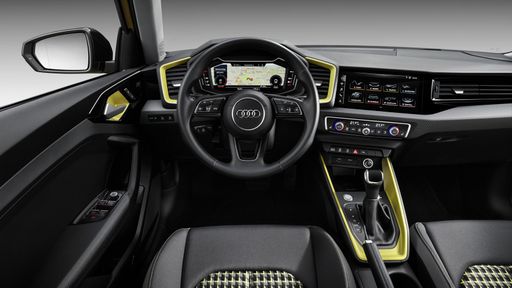
Both cars are pragmatic, but they deliver it differently: the Audi A1 offers a larger, more usable boot and a cabin that aims for premium presentation, even if some lower trim areas reveal harder plastics. The Toyota Yaris’s luggage space is smaller and taller, which limits bulky loads, and rear access is narrower, making family use more awkward. Infotainment in the A1 leans on a polished digital cockpit and tactile software, while the Yaris benefits from a recent upgrade that brings larger screens and quicker connectivity — the experience feels simpler and very functional. Overall, the A1 is better if you need everyday luggage flexibility and a more upmarket cabin; the Yaris is cleaner around town but compromises on space and some interior niceties.

Who each car suits and how to decide before you dive into the specs

If you want a compact that feels more premium, carries luggage better and behaves like a small adult saloon on faster roads, the Audi A1 will suit you best; it rewards buyers who care about cabin finish, infotainment polish and a firmer, planted ride. If your priorities are lowest possible running costs, stress‑free city driving, and a strong safety/assist package out of the box, the Toyota Yaris is a smarter practical bet. Neither choice is universally superior; it’s a matter of whether you prefer Audi’s refinement and luggage practicality or Toyota’s hybrid thrift and everyday ease. The technical comparison that follows will quantify those trade‑offs so you can match features and running costs to the driving profile you actually live with.

Here’s where it gets real: The technical differences in detail

Yaris

Costs and Efficiency:

When it comes to price and running costs, the biggest differences usually appear. This is often where you see which car fits your budget better in the long run.

Audi A1 is very slightly cheaper – starting at 20,000 £ , while the Toyota Yaris costs 21,900 £ . That’s a price difference of around 1,886 £.

Fuel consumption also shows a difference: the Toyota Yaris uses 3.8 L/100km and is visibly more efficient than the Audi A1 with 5.2 L/100km. The difference is about 1.4 L/100km.

A1

Engine and Performance:

Power, torque and acceleration are the classic benchmarks for car enthusiasts – and here, some clear differences start to show.

When it comes to engine power, the Toyota Yaris offers visibly more power – delivering 280 HP compared to 207 HP. That’s roughly 73 HP more horsepower.

When accelerating from 0 to 100 km/h, the Toyota Yaris is somewhat quicker – completing the sprint in 5.5 s, while the Audi A1 takes 6.5 s. That’s about 1 s quicker.

There’s also a difference in torque: the Toyota Yaris delivers moderately more torque with 390 Nm compared to 320 Nm. That’s about 70 Nm more.

Yaris

Space and Everyday Use:

Beyond pure performance, interior space and usability matter most in daily life. This is where you see which car is more practical and versatile.

Both vehicles offer seating for 5 people.

In terms of curb weight, Toyota Yaris is only slightly lighter – 1,090 kg compared to 1,175 kg. The difference is around 85 kg.

Looking at boot space, the Audi A1 offers slightly more boot space – 335 L compared to 286 L. That’s a difference of about 49 L.

When it comes to payload, the Toyota Yaris carries moderately more – 525 kg compared to 470 kg. That’s a difference of about 55 kg.

Who wins the race in the data check?

The Toyota Yaris is clearly superior overall in the objective data comparison.
This result only shows which model scores more points on paper – not which of the two cars feels right for you.

from £21,900
Yaris

Toyota Yaris

  • Engine Type : Full Hybrid, Petrol
  • Transmission : Automatic, Manuel
  • Drive Type : Front-Wheel Drive, All-Wheel Drive
  • Power HP : 116 - 280 HP
  • Consumption L/100km : 3.8 - 8.7 L/100km
Toyota Yaris
Audi A1

Costs and Consumption

View detailed analysis

Engine and Performance

View detailed analysis

Dimensions and Body

View detailed analysis

Toyota Yaris

The Toyota Yaris is a sprightly city hatch that packs clever packaging, surprising comfort and fuel-sipping manners into a neat, easy-to-park package. It rewards sensible buyers with low running costs, friendly ergonomics and a forgiving drive, delivered with Japanese reliability and just enough personality to make errands feel a little less ordinary.

details

Audi A1

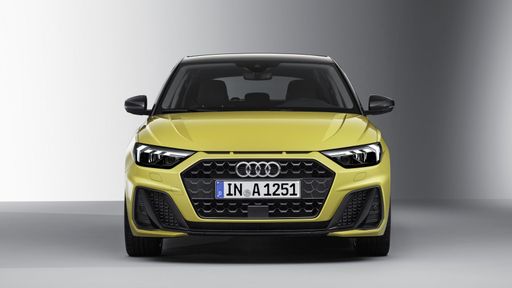
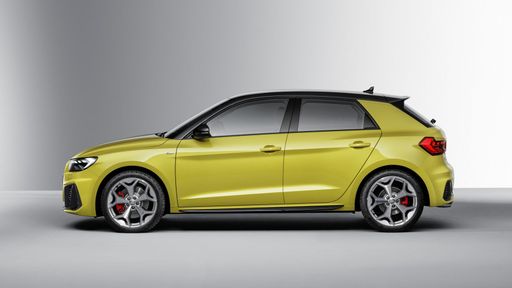
The Audi A1 is a compact premium hatch that wraps Audi's polished design and surprisingly grown-up cabin into a city-friendly package. It’s poised and fun to drive, a smart pick for buyers who want luxury flair without the fuss of a bigger car — and it makes tight parking feel almost enjoyable.

details
Toyota Yaris
Audi A1

Costs and Consumption

Price
21,900 - 40,800 £
Price
20,000 - 28,800 £
Consumption L/100km
3.8 - 8.7 L/100km
Consumption L/100km
5.2 - 6.4 L/100km
Consumption kWh/100km
-
Consumption kWh/100km
-
Electric Range
-
Electric Range
-
Battery Capacity
-
Battery Capacity
-
co2
87 - 197 g/km
co2
118 - 146 g/km
Fuel tank capacity
-
Fuel tank capacity
-

Dimensions and Body

Body Type
Hatchback
Body Type
Hatchback
Seats
4 - 5
Seats
5
Doors
-
Doors
-
Curb weight
1,090 - 1,356 kg
Curb weight
1,175 - 1,365 kg
Trunk capacity
141 - 286 L
Trunk capacity
335 L
Length
-
Length
-
Width
1,745 - 1,805 mm
Width
1,740 - 1,756 mm
Height
-
Height
-
Max trunk capacity
-
Max trunk capacity
-
Payload
289 - 525 kg
Payload
410 - 470 kg

Engine and Performance

Engine Type
Full Hybrid, Petrol
Engine Type
Petrol
Transmission
Automatic, Manuel
Transmission
Manuel, Automatic
Transmission Detail
CVT, Manual Gearbox
Transmission Detail
Manual Gearbox, Dual-Clutch Automatic
Drive Type
Front-Wheel Drive, All-Wheel Drive
Drive Type
Front-Wheel Drive
Power HP
116 - 280 HP
Power HP
95 - 207 HP
Acceleration 0-100km/h
5.5 - 9.7 s
Acceleration 0-100km/h
6.5 - 11.5 s
Max Speed
-
Max Speed
-
Torque
390 Nm
Torque
175 - 320 Nm
Number of Cylinders
3
Number of Cylinders
3 - 4
Power kW
85 - 206 kW
Power kW
70 - 152 kW
Engine capacity
1,490 - 1,618 cm3
Engine capacity
999 - 1,984 cm3

General

Model Year
2026
Model Year
2025
CO2 Efficiency Class
B, G
CO2 Efficiency Class
D, E
Brand
Toyota
Brand
Audi
DriveDuel uses data analysis and artificial intelligence to evaluate vehicle data and create content. Content is regularly reviewed and improved. The displayed prices are estimates based on German list prices, adjusted to the respective country’s VAT. Country-specific registration taxes are not included. This information is not legally binding.