
 Deutschland
 France
 Nederland
 Great Britain
 Sverige
 Danmark
 Suomi
Suomi Italia
 Polska
 España
VS
Toyota Yaris vs Ferrari Purosangue - Differences and prices compared
Compare performance (280 HP vs 725 HP), boot space and price (21900 £ vs 324700 £ ) at a glance. Find out which car is the better choice for you – Toyota Yaris or Ferrari Purosangue?
Yaris
Costs and Efficiency:
Price and efficiency are key factors when choosing a car – and this is often where the real differences emerge.
Toyota Yaris has a decisively advantage in terms of price – it starts at 21900 £ , while the Ferrari Purosangue costs 324700 £ . That’s a price difference of around 302891 £.
Fuel consumption also shows a difference: Toyota Yaris manages with 3.80 L and is therefore convincingly more efficient than the Ferrari Purosangue with 17.10 L. The difference is about 13.30 L per 100 km.
Yaris
Engine and Performance:
Under the bonnet, it becomes clear which model is tuned for sportiness and which one takes the lead when you hit the accelerator.
When it comes to engine power, the Ferrari Purosangue has a significantly edge – offering 725 HP compared to 280 HP. That’s roughly 445 HP more horsepower.
In acceleration from 0 to 100 km/h, the Ferrari Purosangue is clearly quicker – completing the sprint in 3.30 s, while the Toyota Yaris takes 5.50 s. That’s about 2.20 s faster.
In terms of top speed, the Ferrari Purosangue performs noticeable better – reaching 312 km/h, while the Toyota Yaris tops out at 230 km/h. The difference is around 82 km/h.
There’s also a difference in torque: Ferrari Purosangue pulls convincingly stronger with 692 Nm compared to 390 Nm. That’s about 302 Nm difference.
Space and Everyday Use:
Cabin size, boot volume and payload all play a role in everyday practicality. Here, comfort and flexibility make the difference.
Seats: Toyota Yaris offers a bit more seating capacity – 5 vs 4.
In curb weight, Toyota Yaris is significantly lighter – 1090 kg compared to 2033 kg. The difference is around 943 kg.
In terms of boot space, the Ferrari Purosangue offers distinct more room – 473 L compared to 286 L. That’s a difference of about 187 L.
Who wins the race in the data check?
The Toyota Yaris is clearly superior overall in the objective data comparison.
This result only shows which model scores more points on paper – not which of the two cars feels right for you.
Toyota Yaris
Ferrari Purosangue
Costs and Consumption
View detailed analysis
View detailed analysis
Engine and Performance
View detailed analysis
View detailed analysis
Dimensions and Body
View detailed analysis
View detailed analysis
from about £21,900
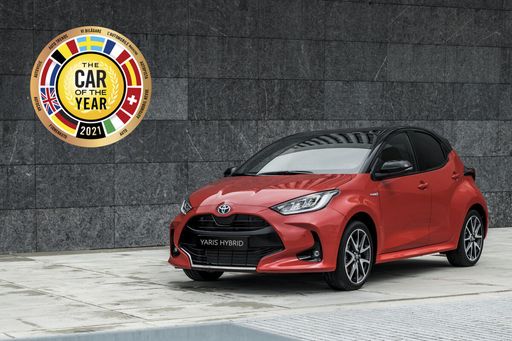
Toyota Yaris
Toyota Yaris
3.9 (3 Reviews)
The Toyota Yaris is a sprightly city hatch that packs clever packaging, surprising comfort and fuel-sipping manners into a neat, easy-to-park package. It rewards sensible buyers with low running costs, friendly ergonomics and a forgiving drive, delivered with Japanese reliability and just enough personality to make errands feel a little less ordinary.
details
Ferrari Purosangue
4.4 (1 Reviews)
Ferrari Purosangue flips the script on what a Ferrari can be, marrying the brand's savage performance and intoxicating exhaust note with the space and practicality of a usable grand tourer. For buyers who crave supercar drama without sacrificing everyday comfort, the Purosangue offers theatrical driving thrills and enough presence to stop traffic at the valet.
details
Toyota Yaris
Ferrari Purosangue
Costs and Consumption |
|
|---|---|
|
Price
21900 - 46700 £
|
Price
324700 £
|
|
Consumption L/100km
3.8 - 9.5 L
|
Consumption L/100km
17.10 L
|
|
Consumption kWh/100km
-
|
Consumption kWh/100km
-
|
|
Electric Range
-
|
Electric Range
-
|
|
Battery Capacity
-
|
Battery Capacity
-
|
|
co2
87 - 215 g/km
|
co2
389 g/km
|
|
Fuel tank capacity
36 - 50 L
|
Fuel tank capacity
100 L
|
Dimensions and Body |
|
|---|---|
|
Body Type
Hatchback
|
Body Type
SUV
|
|
Seats
4 - 5
|
Seats
4
|
|
Doors
3 - 5
|
Doors
5
|
|
Curb weight
1090 - 1356 kg
|
Curb weight
2033 kg
|
|
Trunk capacity
141 - 286 L
|
Trunk capacity
473 L
|
|
Length
3940 - 3995 mm
|
Length
4973 mm
|
|
Width
1745 - 1805 mm
|
Width
2028 mm
|
|
Height
1455 - 1500 mm
|
Height
1589 mm
|
|
Max trunk capacity
935 L
|
Max trunk capacity
-
|
|
Payload
289 - 525 kg
|
Payload
-
|
Engine and Performance |
|
|---|---|
|
Engine Type
Full Hybrid, Petrol
|
Engine Type
Petrol
|
|
Transmission
Automatic, Manuel
|
Transmission
Automatic
|
|
Transmission Detail
CVT, Manual Gearbox, Automatic Gearbox
|
Transmission Detail
Dual-Clutch Automatic
|
|
Drive Type
Front-Wheel Drive, All-Wheel Drive
|
Drive Type
All-Wheel Drive
|
|
Power HP
116 - 280 HP
|
Power HP
725 HP
|
|
Acceleration 0-100km/h
5.5 - 9.7 s
|
Acceleration 0-100km/h
3.30 s
|
|
Max Speed
175 - 230 km/h
|
Max Speed
312 km/h
|
|
Torque
390 Nm
|
Torque
692 Nm
|
|
Number of Cylinders
3
|
Number of Cylinders
12
|
|
Power kW
85 - 206 kW
|
Power kW
533 kW
|
|
Engine capacity
1490 - 1618 cm3
|
Engine capacity
6496 cm3
|
General |
|
|---|---|
|
Model Year
2024 - 2025
|
Model Year
2023
|
|
CO2 Efficiency Class
B, G
|
CO2 Efficiency Class
G
|
|
Brand
Toyota
|
Brand
Ferrari
|
Is the Toyota Yaris offered with different drivetrains?
The Toyota Yaris is offered with Front-Wheel Drive or All-Wheel Drive.
The prices shown are estimates based on German list prices, adjusted for local VAT. Local registration taxes (e.g. NoVA, BPM or CO2 malus) are not included. This information is not legally binding.