
 Deutschland
 France
 Nederland
 Great Britain
 Sverige
 Norge
Norge Danmark
 Suomi
Suomi Italia
 Polska
 España
VS
Volvo S60 vs BYD Seal 6 – Differences & prices compared
S60
@ Volvo Cars
Costs and Efficiency:
Price and efficiency are key factors when choosing a car – and this is often where the real differences emerge.
BYD Seal 6 has a to a small extent advantage in terms of price – it starts at 36800 £, while the Volvo S60 costs 42500 £. That’s a price difference of around 5666 £.
Fuel consumption also shows a difference: Volvo S60 manages with 0.70 L and is therefore clearly more efficient than the BYD Seal 6 with 1.70 L. The difference is about 1 L per 100 km.
As for range, the BYD Seal 6 performs slight better – achieving up to 100 km, about 6 km more than the Volvo S60.
S60
@ Volvo Cars
Engine and Performance:
Under the bonnet, it becomes clear which model is tuned for sportiness and which one takes the lead when you hit the accelerator.
When it comes to engine power, the Volvo S60 has a decisively edge – offering 455 HP compared to 212 HP. That’s roughly 243 HP more horsepower.
In acceleration from 0 to 100 km/h, the Volvo S60 is decisively quicker – completing the sprint in 4.60 s, while the BYD Seal 6 takes 8.50 s. That’s about 3.90 s faster.
There’s no difference in top speed – both reach 180 km/h.
S60
@ Volvo Cars
Space and Everyday Use:
Cabin size, boot volume and payload all play a role in everyday practicality. Here, comfort and flexibility make the difference.
Both vehicles offer seating for 5 people.
In curb weight, BYD Seal 6 is hardly perceptible lighter – 1710 kg compared to 1715 kg. The difference is around 5 kg.
In terms of boot space, the BYD Seal 6 offers a bit more room – 500 L compared to 427 L. That’s a difference of about 73 L.
When it comes to payload, Volvo S60 barely noticeable takes the win – 475 kg compared to 435 kg. That’s a difference of about 40 kg.
Who comes out on top?
Overall, the Volvo S60 shows itself to be outperforms in nearly all aspects and secures the title of DriveDuel Champion.
It convinces with the more balanced overall package and proves to be the more versatile choice for everyday use.
Volvo S60
BYD Seal 6
Costs and Consumption
View detailed analysis
View detailed analysis
Engine and Performance
View detailed analysis
View detailed analysis
Dimensions and Body
View detailed analysis
View detailed analysis
from about £42,500
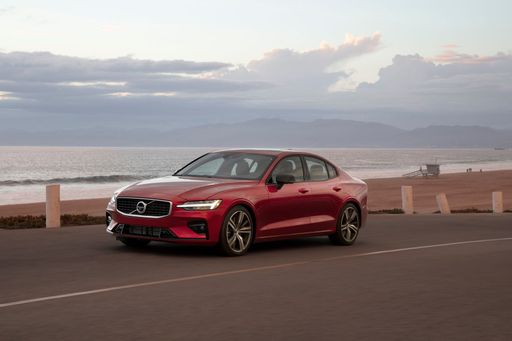 @ Volvo Cars
Volvo S60
Volvo S60
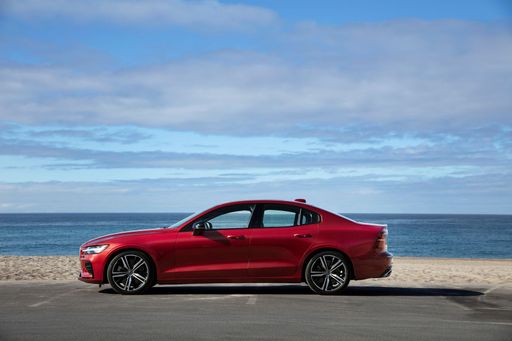
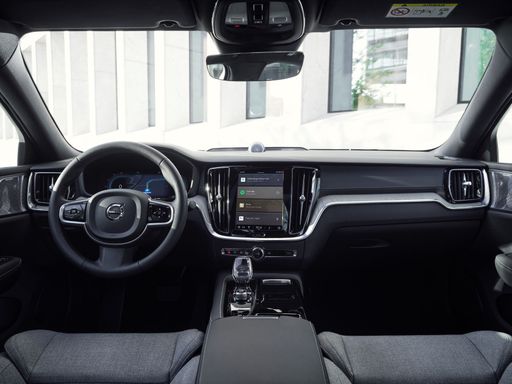
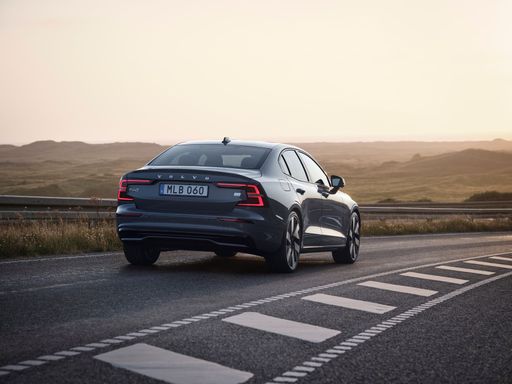
The Volvo S60 wears Scandinavian understatement like a tailored suit, pairing a serene cabin with composed handling that makes the daily commute feel unexpectedly civilized. For buyers after executive looks, rock‑solid safety and practical versatility — with a dash of discreet luxury — it's a persuasive pick that doesn't need to shout for attention.
details
@ Volvo Cars
 @ Volvo Cars
 @ Volvo Cars
 @ Volvo Cars
BYD Seal 6
The BYD Seal 6 is a captivating electric sedan that captures attention with its sleek design and modern aerodynamics. With a strong focus on sustainability, it offers an impressive electric driving experience, combining efficiency with cutting-edge technology. The Seal 6 stands out in the EV market for its luxurious interior and innovative features, making it a strong contender for drivers looking to embrace the future of transportation.
details
Volvo S60
BYD Seal 6
|
@ Volvo Cars
|
|
|
|
|
Costs and Consumption |
|
|---|---|
|
Price
42500 - 65100 £
|
Price
36800 - 42800 £
|
|
Consumption L/100km
0.7 - 7.1 L
|
Consumption L/100km
1.7 - 2.6 L
|
|
Consumption kWh/100km
-
|
Consumption kWh/100km
-
|
|
Electric Range
94 km
|
Electric Range
50 - 100 km
|
|
Battery Capacity
14.70 kWh
|
Battery Capacity
-
|
|
co2
16 - 161 g/km
|
co2
38 - 60 g/km
|
|
Fuel tank capacity
60 L
|
Fuel tank capacity
65 L
|
Dimensions and Body |
|
|---|---|
|
Body Type
Sedan
|
Body Type
Estate
|
|
Seats
5
|
Seats
5
|
|
Doors
4
|
Doors
5
|
|
Curb weight
1715 - 2039 kg
|
Curb weight
1710 - 1805 kg
|
|
Trunk capacity
390 - 427 L
|
Trunk capacity
500 L
|
|
Length
4778 mm
|
Length
4840 mm
|
|
Width
1850 mm
|
Width
1875 mm
|
|
Height
1431 mm
|
Height
1505 mm
|
|
Max trunk capacity
-
|
Max trunk capacity
1535 L
|
|
Payload
461 - 475 kg
|
Payload
435 kg
|
Engine and Performance |
|
|---|---|
|
Engine Type
Petrol MHEV, Plugin Hybrid
|
Engine Type
Plugin Hybrid
|
|
Transmission
Automatic
|
Transmission
Automatic
|
|
Transmission Detail
Automatic Gearbox
|
Transmission Detail
CVT
|
|
Drive Type
Front-Wheel Drive, All-Wheel Drive
|
Drive Type
Front-Wheel Drive
|
|
Power HP
197 - 455 HP
|
Power HP
184 - 212 HP
|
|
Acceleration 0-100km/h
4.6 - 7.9 s
|
Acceleration 0-100km/h
8.5 - 8.9 s
|
|
Max Speed
180 km/h
|
Max Speed
180 km/h
|
|
Torque
300 - 709 Nm
|
Torque
-
|
|
Number of Cylinders
4
|
Number of Cylinders
4
|
|
Power kW
145 - 335 kW
|
Power kW
135 - 156 kW
|
|
Engine capacity
1969 cm3
|
Engine capacity
1498 cm3
|
General |
|
|---|---|
|
Model Year
2022 - 2024
|
Model Year
2025
|
|
CO2 Efficiency Class
E, F, B
|
CO2 Efficiency Class
B
|
|
Brand
Volvo
|
Brand
BYD
|
Is the Volvo S60 offered with different drivetrains?
Available configurations include Front-Wheel Drive or All-Wheel Drive.
The prices and data displayed are estimates based on German list prices and may vary by country. This information is not legally binding.