VS

Volvo XC40 vs Mercedes GLB comparison

Compare performance (197 HP vs 354 HP), boot space and price (41,900 £ vs 43,200 £ ) at a glance. Find out which car is the better choice for you – Volvo XC40 or Mercedes GLB?

Volvo XC40 vs Mercedes GLB: Key differences

Volvo XC40

5 (6 Reviews)
rate
  • barely cheaper
  • marginally lighter
details

Mercedes GLB

3.6 (4 Reviews)
rate
  • significantly more power
  • slightly more efficient
  • clearly quicker 0–100 km/h
details

All details on performance, efficiency, range and trunk space can be found in the technical comparison below – including user reviews for both models.

By Achim Sedelmaier

XC40

The Battle of Compact SUVs: Mercedes GLB vs Volvo XC40

In the crowded market of compact SUVs, two contenders from luxury marques are making waves: the Mercedes GLB and the Volvo XC40. Both proudly wear their brands' badges and offer a compelling mix of performance, style, and innovation. But what truly sets them apart? Let's take a deep dive into the technical aspects and innovations offered by these models!
GLB

Design and Dimensions

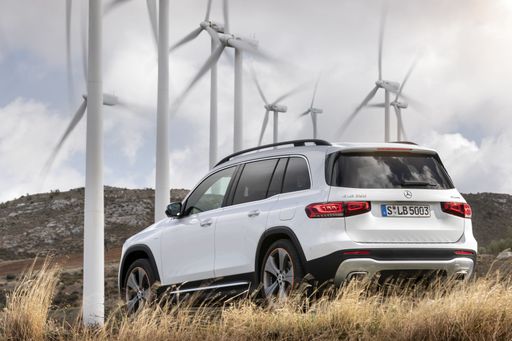
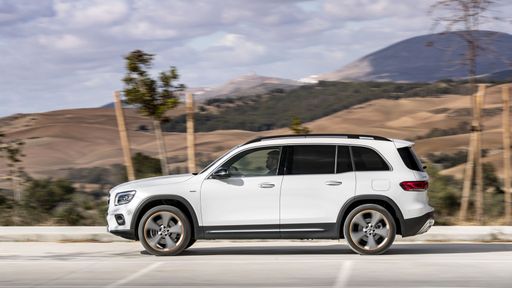
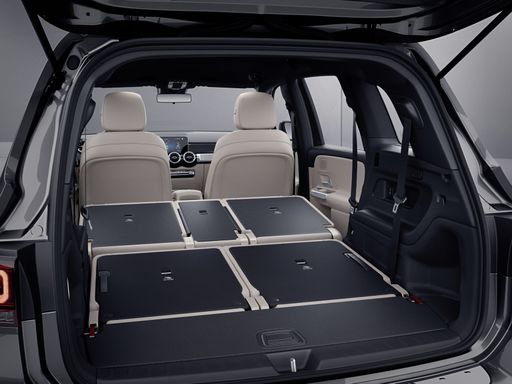
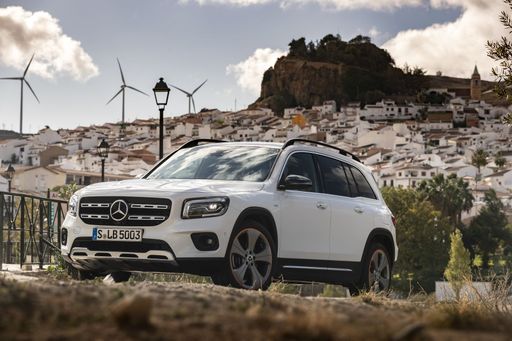
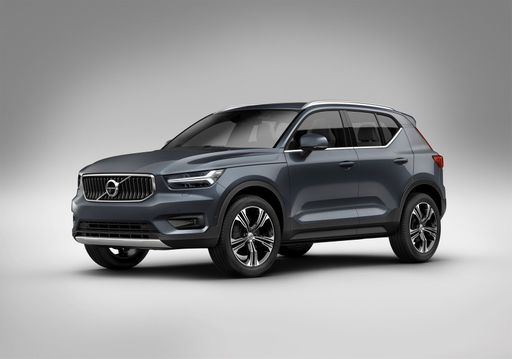
The Mercedes GLB and Volvo XC40 both adopt the SUV body type with subtle differences in design and dimensions that cater to different consumer tastes. The Mercedes GLB is notably longer with a length of up to 4650 mm compared to the XC40's 4425 mm, offering a roomier feel that's ideal for families needing extra trunk capacity, which totals up to 570 liters against XC40's 452 liters.

The width on the XC40 is slightly more generous at 1863 mm compared to the GLB's 1850 mm, likely contributing to a more solid stance on the road. Both models sport five doors, making them versatile and accessible for daily use.

XC40

Performance and Power

The Mercedes GLB offers a wide range of power options, from a modest 116 horsepower up to a robust 320 horsepower, with varied acceleration rates starting at 11.5 and speeding down to a swift 5.5 seconds from 0-100 km/h. This power diversity is mirrored in its torque, which ranges from 230 to 400 Nm, ensuring a drive catered to different performance preferences.

On the other hand, the Volvo XC40 keeps it simple with two main power outputs at 163 and 197 horsepower, achieving decent acceleration from 0-100 km/h in 8.6 and 7.6 seconds, respectively. With torque hovering around 265 to 300 Nm, the XC40 promises a balanced ride, staying competitive even with slightly lower output figures in comparison to the GLB's top specs.

GLB

Engine Efficiency

Efficiency lies at the heart of every modern vehicle's performance metrics. The GLB and XC40 have adapted to environmentally-conscious norms with their Petrol Mild Hybrid Electric Vehicle (MHEV) engines. The GLB's consumption varies based on the model configuration from 5.8 to 9 L/100 km. Primed with efficiency in mind, the XC40 offers a competitive fixed consumption rate of 6.5 L/100 km.

In CO2 efficiency, the GLB models range across classes E, F, and G reflecting diverse emissions levels, while the XC40 scores an E, showing a progressive edge in reducing emissions with its uniformed approach.

XC40

Drive Types and Transmission

The GLB showcases versatility with front-wheel and all-wheel drive options, suiting various driving needs from everyday commutes to more adventurous terrains. Its dual-clutch automatic transmission ensures a seamless driving experience, crucial in any luxury compact SUV.

The XC40 sticks to a front-wheel-drive layout, providing a straightforward approach optimized for urban and suburban driving environments. Like the GLB, it features a dual-clutch automatic transmission, marking its capabilities in offering a smooth transition between gears.

GLB

Technological Edge and Innovations

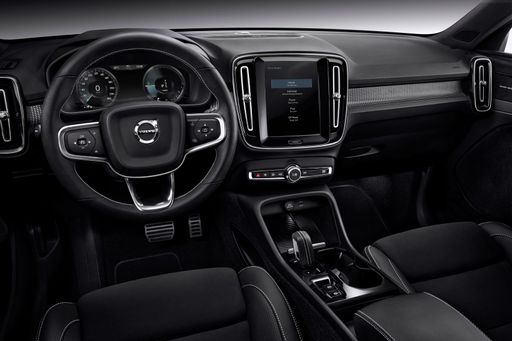
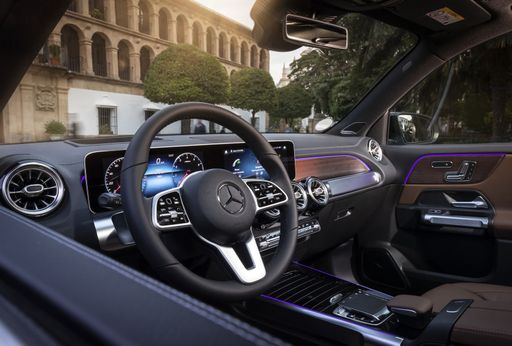
Mercedes GLB boosts its claim with an innovative cockpit embedded with the latest MBUX (Mercedes-Benz User Experience) technology, transforming the dashboard into an interactive interface that revolutionizes the driving experience. Volvo, not one to be outdone, equips the XC40 with its heralded Volvo On Call system, integrating telematics for safety, connectivity, and convenience.

XC40

Conclusion: A Choice Defined By Needs

Both the Mercedes GLB and Volvo XC40 offer exceptional designs, responsive performance, and modern innovations, each tailored to specific market needs. The GLB shines with its variety of performance options and expansive space, while the XC40 appeals with its smart efficiency and straightforward elegance. Choosing between them boils down to individual preferences, where luxury, style, and cutting-edge technology ride hand-in-hand with either choice.

Here’s where it gets real: The technical differences in detail

XC40

Costs and Efficiency:

Looking at overall running costs, both models reveal some interesting differences in everyday economy.

Volvo XC40 is barely cheaper – starting at 41,900 £ , while the Mercedes GLB costs 43,200 £ . That’s a price difference of around 1,292 £.

Fuel consumption also shows a difference: the Mercedes GLB uses 5.7 L/100km and is slightly more efficient than the Volvo XC40 with 6.5 L/100km. The difference is about 0.8 L/100km.

GLB

Engine and Performance:

Under the bonnet, it becomes clear which model is tuned for sportiness and which one takes the lead when you hit the accelerator.

When it comes to engine power, the Mercedes GLB offers significantly more power – delivering 354 HP compared to 197 HP. That’s roughly 157 HP more horsepower.

When accelerating from 0 to 100 km/h, the Mercedes GLB is clearly quicker – completing the sprint in 5.5 s, while the Volvo XC40 takes 7.6 s. That’s about 2.1 s quicker.

There’s also a difference in torque: the Mercedes GLB delivers considerably more torque with 515 Nm compared to 300 Nm. That’s about 215 Nm more.

XC40

Space and Everyday Use:

Beyond pure performance, interior space and usability matter most in daily life. This is where you see which car is more practical and versatile.

Both vehicles offer seating for 5 people.

In terms of curb weight, Volvo XC40 is marginally lighter – 1,688 kg compared to 1,840 kg. The difference is around 152 kg.

When it comes to payload, the Volvo XC40 carries marginally more – 532 kg compared to 505 kg. That’s a difference of about 27 kg.

Who wins the race in the data check?

The Mercedes GLB holds a decisive overall lead in the objective data comparison.
This result only shows which model scores more points on paper – not which of the two cars feels right for you.

from £43,200
GLB

Mercedes GLB

  • Engine Type : Electric, Full Hybrid
  • Transmission : Automatic
  • Drive Type : Rear-Wheel Drive, All-Wheel Drive
  • Power HP : 156 - 354 HP
  • Consumption L/100km : 5.7 - 6.1 L/100km
  • Consumption kWh/100km : 15.4 - 15.9 kWh/100km
  • Electric Range : 431 - 631 km
Volvo XC40
Mercedes GLB

Costs and Consumption

View detailed analysis

Engine and Performance

View detailed analysis

Dimensions and Body

View detailed analysis

Volvo XC40

The Volvo XC40 blends Scandinavian design with practical versatility, offering a compact luxury crossover that feels composed and easy to live with. It’s refined and focused on safety with a high-quality interior, making it a smart choice for daily city driving and weekend escapes.

details

Mercedes GLB

The Mercedes GLB is a compact luxury SUV that blends smart packaging with a polished, composed driving experience. Its flexible interior and premium feel make it a sensible pick for buyers who want Mercedes comfort and practicality in a smaller footprint.

details
Volvo XC40
Mercedes GLB

Costs and Consumption

Price
41,900 - 46,100 £
Price
43,200 - 62,400 £
Consumption L/100km
6.5 L/100km
Consumption L/100km
5.7 - 6.1 L/100km
Consumption kWh/100km
-
Consumption kWh/100km
15.4 - 15.9 kWh/100km
Electric Range
-
Electric Range
431 - 631 km
Battery Capacity
-
Battery Capacity
-
co2
148 g/km
co2
0 - 138 g/km
Fuel tank capacity
-
Fuel tank capacity
-

Dimensions and Body

Body Type
SUV
Body Type
SUV
Seats
5
Seats
5
Doors
-
Doors
-
Curb weight
1,688 kg
Curb weight
1,840 - 2,280 kg
Trunk capacity
-
Trunk capacity
540 L
Length
-
Length
-
Width
1,863 mm
Width
1,861 mm
Height
-
Height
-
Max trunk capacity
-
Max trunk capacity
-
Payload
532 kg
Payload
485 - 505 kg

Engine and Performance

Engine Type
Petrol MHEV
Engine Type
Electric, Full Hybrid
Transmission
Automatic
Transmission
Automatic
Transmission Detail
Dual-Clutch Automatic
Transmission Detail
Reduction Gearbox
Drive Type
Front-Wheel Drive
Drive Type
Rear-Wheel Drive, All-Wheel Drive
Power HP
163 - 197 HP
Power HP
156 - 354 HP
Acceleration 0-100km/h
7.6 - 8.6 s
Acceleration 0-100km/h
5.5 - 9.7 s
Max Speed
-
Max Speed
-
Torque
265 - 300 Nm
Torque
280 - 515 Nm
Number of Cylinders
4
Number of Cylinders
4
Power kW
120 - 145 kW
Power kW
115 - 260 kW
Engine capacity
1,969 cm3
Engine capacity
1,499 cm3

General

Model Year
2026
Model Year
2026
CO2 Efficiency Class
E
CO2 Efficiency Class
A, D, E
Brand
Volvo
Brand
Mercedes-Benz
DriveDuel uses data analysis and artificial intelligence to evaluate vehicle data and create content. Content is regularly reviewed and improved. The displayed prices are estimates based on German list prices, adjusted to the respective country’s VAT. Country-specific registration taxes are not included. This information is not legally binding.