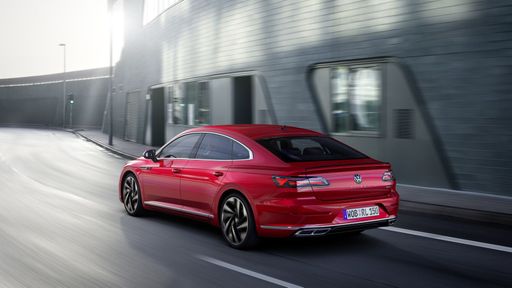
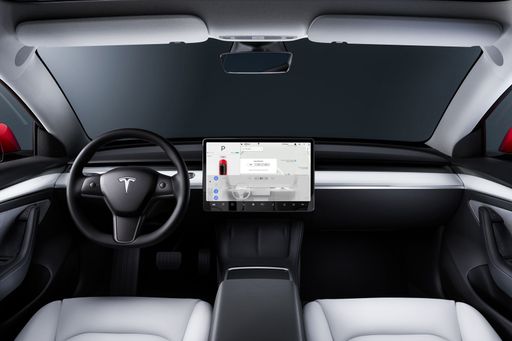
@ Volkswagen AG / VW Media
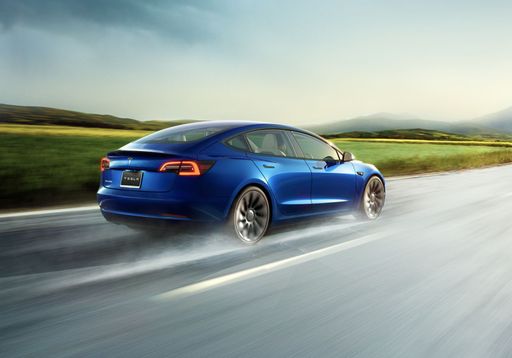
@ Tesla, Inc.
VS

VW Arteon vs Tesla Model 3 – Which model is better for everyday use?

Everyday use, family trips or long-distance drives – here’s where the differences show.
Discover whether VW Arteon or Tesla Model 3 fits your lifestyle better.

VW Arteon

5 (1 Reviews)
rate

Tesla Model 3

1 (1 Reviews)
rate
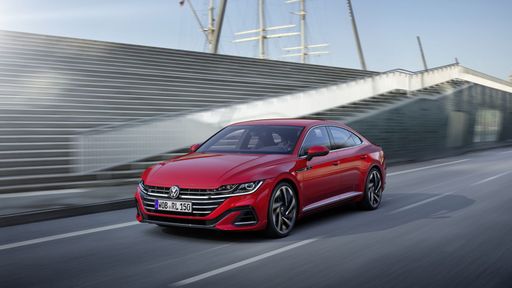
Arteon @ Volkswagen AG / VW Media

Volkswagen Arteon vs. Tesla Model 3: Clash of the Titans

In today's rapidly evolving automotive industry, two contenders stand out for their innovative engineering and design: the Volkswagen Arteon and the Tesla Model 3. While one is a refined European classic focusing on traditional efficiency, the other is a Silicon Valley marvel redefining the future of mobility. Let’s explore how these two vehicles measure up on various fronts.
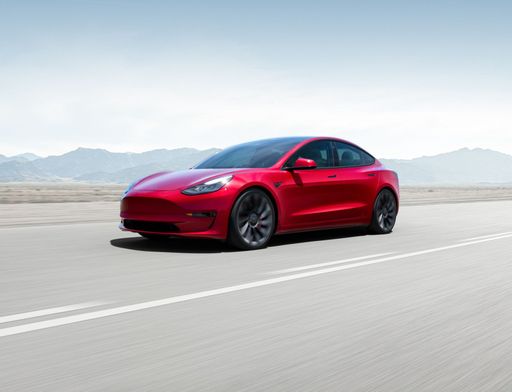
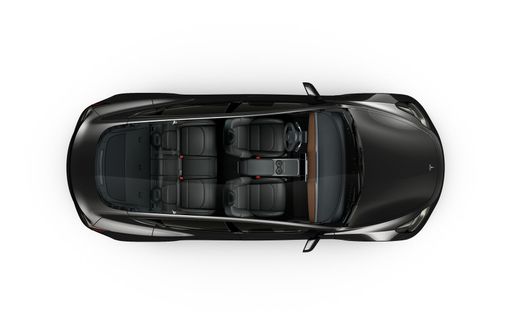
Model 3 @ Tesla, Inc.

Design and Aesthetics

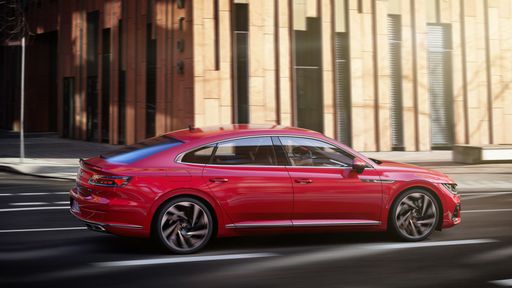
Both the VW Arteon and the Tesla Model 3 offer distinct visual appeals. The Arteon, with its sporty wagon body type, exudes sophistication and a classic European elegance. It boasts a length of 4866 mm, a width of 1871 mm, and a height of 1451 mm. The Model 3, with its sleek hatchback profile, embodies Tesla's minimalist design philosophy, measuring 4720 mm in length, 1850 mm in width, and a slightly lower height of 1441 mm. Both vehicles come with five doors and accommodate five passengers, catering well to both family and leisure needs.

Arteon @ Volkswagen AG / VW Media

Power and Performance

Looking under the hood, or rather at the power units, reveals stark differences. The VW Arteon offers a variety of petrol and diesel engines with outputs ranging from 150 to 320 HP. The 0-100 km/h acceleration times lie between 4.9 to 9.4 seconds, depending on the engine choice. Torque figures range between 320 to 420 Nm, providing substantial pulling power for enthusiasts.

On the other hand, the Tesla Model 3 comes equipped with electric motors, delivering between 283 to 460 HP, with instantaneous torque available in models offering up to 723 Nm. The Model 3 can dazzle any speed enthusiast with its breathtaking acceleration, clocking 0-100 km/h in just 3.1 seconds, while still maintaining an impressive maximum speed of 262 km/h.

Model 3 @ Tesla, Inc.

Efficiency and Range

Efficiency is where the distinctions become more apparent. The Arteon, powered by either diesel or petrol, offers a consumption range of 5.1 to 8.6 L/100 km. In terms of emissions, it ranges between 133 to 195 g/km CO2, placing it in efficiency classes D to G. With a fuel tank capacity of 66 liters, it offers excellent long-distance travel capabilities.

The Model 3 revolutionizes efficiency with zero emissions and electricity consumption of 12.5 to 16.5 kWh/100 km. It features an electric range between 513 km to a remarkable 702 km on a single charge, supported by battery capacities of 62 kWh and 79 kWh. It stands uncontested in the CO2 efficiency class A, marking it as an environmentally conscious choice.

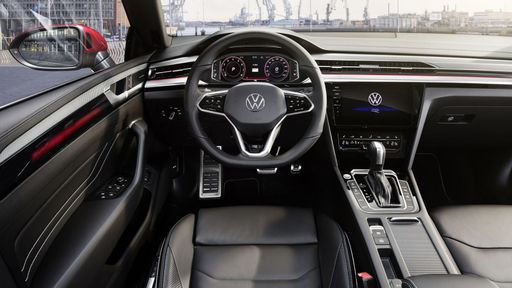
Arteon @ Volkswagen AG / VW Media

Practicality and Innovation

Both the VW Arteon and Tesla Model 3 present strong cases for practicality. The Arteon’s larger trunk capacity at 590 liters, combined with its spacious payload options of up to 569 kg, makes it ideal for those needing extra room for luggage and cargo. Contrast that with the Model 3, offering a slightly larger trunk at 594 liters and a lighter payload capacity between 313 kg and 333 kg, leveraging its compact electric drivetrain to maximize interior space.

Innovation remains a highlight for Tesla, with its commitment to seamlessly integrating technology into the driving experience. The Model 3 is inherently built around Tesla's cutting-edge software, ensuring effortless updates and added features over time. The Arteon, however, holds its own with premium materials and build quality, appealing to those who value a tactile, refined touch.

Model 3 @ Tesla, Inc.

The Final Verdict

In the contest of VW Arteon vs. Tesla Model 3, the choice often boils down to personal preferences. The Arteon stands as a testimony to traditional luxury and established engineering excellence, suited for those who appreciate the dynamism of conventional powertrains and classic aesthetics. Meanwhile, the Model 3 takes the crown for tech-driven efficiency and forward-thinking innovation, a dream for those eager to embrace the electric future. Ultimately, both vehicles showcase exemplary qualities that continue to captivate automotive enthusiasts globally.

Here’s where it gets real: The technical differences in detail

Arteon @ Volkswagen AG / VW Media

Costs and Efficiency:

Price and efficiency are key factors when choosing a car – and this is often where the real differences emerge.

Tesla Model 3 has a noticeable advantage in terms of price – it starts at 34300 £, while the VW Arteon costs 43300 £. That’s a price difference of around 9004 £.

Model 3 @ Tesla, Inc.

Engine and Performance:

Under the bonnet, it becomes clear which model is tuned for sportiness and which one takes the lead when you hit the accelerator.

When it comes to engine power, the Tesla Model 3 has a evident edge – offering 460 HP compared to 320 HP. That’s roughly 140 HP more horsepower.

In acceleration from 0 to 100 km/h, the Tesla Model 3 is clearly quicker – completing the sprint in 3.10 s, while the VW Arteon takes 4.90 s. That’s about 1.80 s faster.

In terms of top speed, the Tesla Model 3 performs barely noticeable better – reaching 262 km/h, while the VW Arteon tops out at 250 km/h. The difference is around 12 km/h.

There’s also a difference in torque: Tesla Model 3 pulls clearly perceptible stronger with 660 Nm compared to 420 Nm. That’s about 240 Nm difference.

Space and Everyday Use:

Beyond pure performance, interior space and usability matter most in daily life. This is where you see which car is more practical and versatile.

Both vehicles offer seating for 5 people.

In curb weight, VW Arteon is slightly lighter – 1607 kg compared to 1822 kg. The difference is around 215 kg.

In terms of boot space, the Tesla Model 3 offers barely noticeable more room – 594 L compared to 590 L. That’s a difference of about 4 L.

When it comes to payload, VW Arteon significantly takes the win – 569 kg compared to 333 kg. That’s a difference of about 236 kg.

Who wins the race?

The Tesla Model 3 proves to be leaves the rival little chance and therefore becomes our DriveDuel Champion!
Tesla Model 3 is the better all-rounder in this comparison.

VW Arteon
Tesla Model 3

Costs and Consumption

View detailed analysis

Engine and Performance

View detailed analysis

Dimensions and Body

View detailed analysis
from about £34,300
Model 3 @ Tesla, Inc.

Tesla Model 3

  • Engine Type : Electric
  • Transmission : Automatic
  • Drive Type : Rear-Wheel Drive, All-Wheel Drive
  • Power HP : 283 - 460 HP
  • Consumption kWh/100km : 13.2 - 16.7 kWh
  • Electric Range : 550 - 750 km

VW Arteon

5 (1 Reviews)
rate

The VW Arteon cuts a fastback silhouette that manages to look more expensive than it is, with a cabin that feels calm, roomy and smartly finished. It blends relaxed long distance comfort with a touch of sporting poise, making it a clever choice for buyers who want grand touring polish without shouting for attention.

details

Tesla Model 3

1 (1 Reviews)
rate

The Tesla Model 3 slices through daily commuting with a silent, confident shove that makes petrolheads reassess their life choices, while its minimalist cabin feels more like a slick gadget gallery than a traditional car interior. For buyers after a fuss-free, tech-forward electric with plenty of grin factor and low running drama, it’s hard to beat—just don't be surprised when the car updates itself overnight.

details
VW Arteon
Tesla Model 3
Arteon @ Volkswagen AG / VW Media
Model 3 @ Tesla, Inc.

Costs and Consumption

Price
43300 - 60800 £
Price
34300 - 50100 £
Consumption L/100km
5.1 - 8.6 L
Consumption L/100km
-
Consumption kWh/100km
-
Consumption kWh/100km
13.2 - 16.7 kWh
Electric Range
-
Electric Range
550 - 750 km
Battery Capacity
-
Battery Capacity
64.5 - 83 kWh
co2
133 - 195 g/km
co2
0 g/km
Fuel tank capacity
66 L
Fuel tank capacity
-

Dimensions and Body

Body Type
Estate
Body Type
Sedan
Seats
5
Seats
5
Doors
5
Doors
4
Curb weight
1607 - 1773 kg
Curb weight
1822 - 1929 kg
Trunk capacity
590 L
Trunk capacity
594 L
Length
4866 mm
Length
4720 - 4724 mm
Width
1871 mm
Width
1850 mm
Height
1434 - 1451 mm
Height
1431 - 1440 mm
Max trunk capacity
1632 L
Max trunk capacity
-
Payload
467 - 569 kg
Payload
303 - 333 kg

Engine and Performance

Engine Type
Diesel, Petrol
Engine Type
Electric
Transmission
Automatic
Transmission
Automatic
Transmission Detail
Dual-Clutch Automatic
Transmission Detail
Reduction Gearbox
Drive Type
Front-Wheel Drive, All-Wheel Drive
Drive Type
Rear-Wheel Drive, All-Wheel Drive
Power HP
150 - 320 HP
Power HP
283 - 460 HP
Acceleration 0-100km/h
4.9 - 9.4 s
Acceleration 0-100km/h
3.1 - 6.1 s
Max Speed
216 - 250 km/h
Max Speed
201 - 262 km/h
Torque
320 - 420 Nm
Torque
420 - 660 Nm
Number of Cylinders
4
Number of Cylinders
-
Power kW
110 - 235 kW
Power kW
208 - 338 kW
Engine capacity
1968 - 1984 cm3
Engine capacity
-

General

Model Year
2024
Model Year
2025
CO2 Efficiency Class
D, E, F, G
CO2 Efficiency Class
A
Brand
VW
Brand
Tesla
What drivetrain options does the VW Arteon have?

The VW Arteon is available as Front-Wheel Drive or All-Wheel Drive.

The prices and data displayed are estimates based on German list prices and may vary by country. This information is not legally binding.