
 Deutschland
 France
 Nederland
 Great Britain
 Sverige
 Norge
Norge Danmark
 Suomi
Suomi Italia
 Polska
 España
VS
VW Golf vs Porsche Cayenne – Which model is better for everyday use?
Everyday use, family trips or long-distance drives – here’s where the differences show.
Discover whether VW Golf or Porsche Cayenne fits your lifestyle better.
Golf
@ Volkswagen AG / VW Media
Costs and Efficiency:
Price and efficiency are often the first things buyers look at. Here it becomes clear which model has the long-term edge – whether at the pump, the plug, or in purchase price.
VW Golf has a clearly advantage in terms of price – it starts at 25200 £, while the Porsche Cayenne costs 87000 £. That’s a price difference of around 61805 £.
Fuel consumption also shows a difference: VW Golf manages with 1.10 L and is therefore clearly more efficient than the Porsche Cayenne with 4 L. The difference is about 2.90 L per 100 km.
As for range, the VW Golf performs clearly better – achieving up to 143 km, about 60 km more than the Porsche Cayenne.
Cayenne
@ Dr. Ing. h.c. F. Porsche AG
Engine and Performance:
Power, torque and acceleration are the classic benchmarks for car enthusiasts – and here, some clear differences start to show.
When it comes to engine power, the Porsche Cayenne has a clearly edge – offering 739 HP compared to 333 HP. That’s roughly 406 HP more horsepower.
In acceleration from 0 to 100 km/h, the Porsche Cayenne is distinct quicker – completing the sprint in 3.60 s, while the VW Golf takes 4.60 s. That’s about 1 s faster.
In terms of top speed, the Porsche Cayenne performs slightly better – reaching 305 km/h, while the VW Golf tops out at 270 km/h. The difference is around 35 km/h.
There’s also a difference in torque: Porsche Cayenne pulls decisively stronger with 950 Nm compared to 420 Nm. That’s about 530 Nm difference.
Golf
@ Volkswagen AG / VW Media
Space and Everyday Use:
Whether family car or daily driver – which one offers more room, flexibility and comfort?
Both vehicles offer seating for 5 people.
In curb weight, VW Golf is significantly lighter – 1307 kg compared to 2130 kg. The difference is around 823 kg.
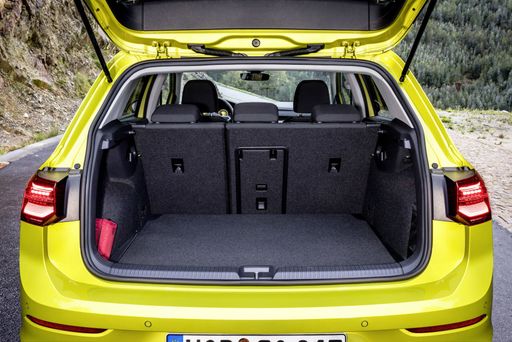
In terms of boot space, the Porsche Cayenne offers clearly more room – 772 L compared to 381 L. That’s a difference of about 391 L.
In maximum load capacity, the Porsche Cayenne performs evident better – up to 1708 L, which is about 471 L more than the VW Golf.
When it comes to payload, Porsche Cayenne evident takes the win – 705 kg compared to 508 kg. That’s a difference of about 197 kg.
Who wins the race?
The VW Golf proves to be dominates this comparison and therefore becomes our DriveDuel Champion!
VW Golf is the better all-rounder in this comparison.
from about £25,200
 @ Volkswagen AG / VW Media
VW Golf
VW Golf
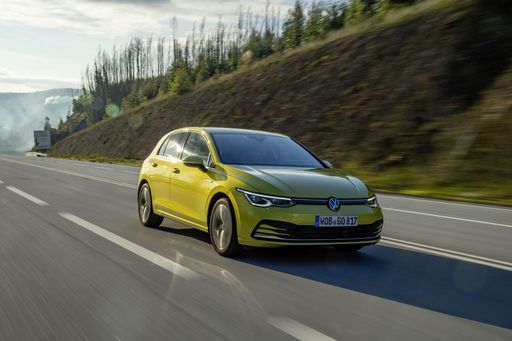
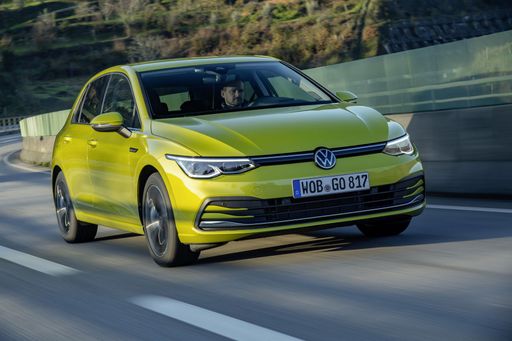
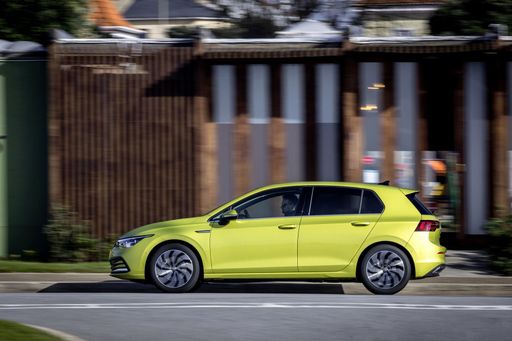
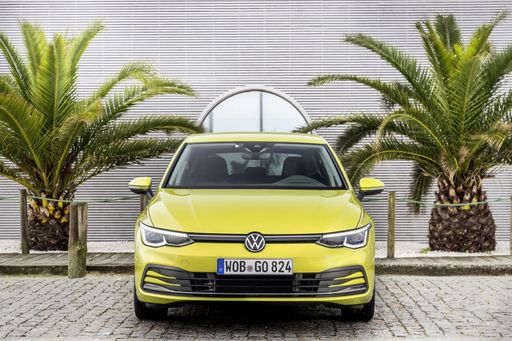
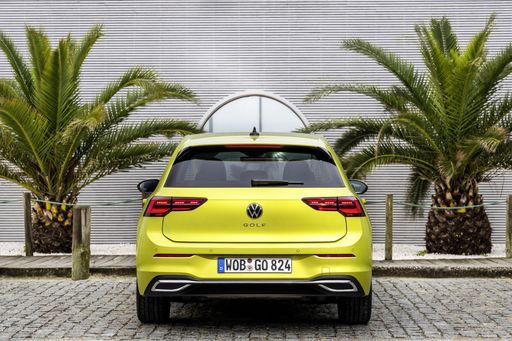
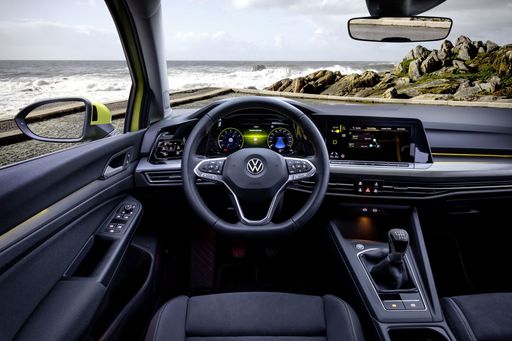
The VW Golf remains the everyman’s favourite — cleverly balanced, composed and just posh enough to feel grown-up without pretending to be something it’s not. It slips through town and eats up longer trips with a refined cabin, practical layout and a kindly, capable character that turns everyday driving into something a little bit special.
details
@ Volkswagen AG / VW Media
 @ Volkswagen AG / VW Media
 @ Volkswagen AG / VW Media
 @ Volkswagen AG / VW Media
 @ Volkswagen AG / VW Media
 @ Volkswagen AG / VW Media
 @ Volkswagen AG / VW Media
Porsche Cayenne
Few SUVs blend athletic poise and Teutonic precision like the Porsche Cayenne, putting genuine sports‑car feeling into a roomy, everyday package. If you want a practical family hauler that still makes you grin every time you merge, the Cayenne delivers — turning errands into an excuse for a spirited drive.
details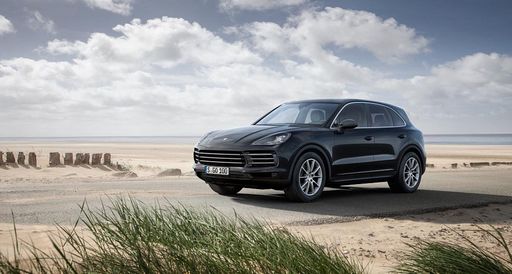 @ Dr. Ing. h.c. F. Porsche AG
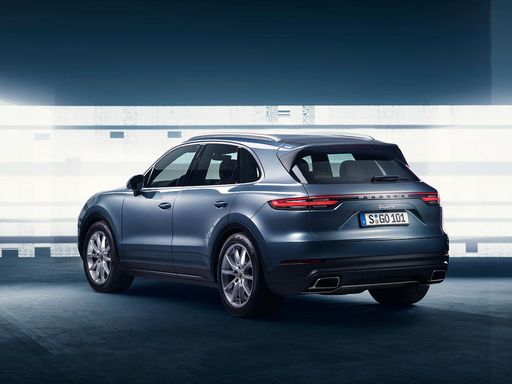 @ Dr. Ing. h.c. F. Porsche AG
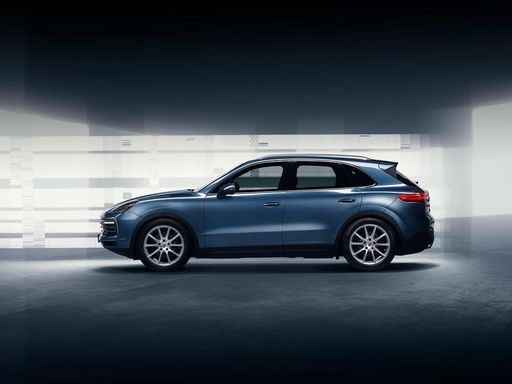 @ Dr. Ing. h.c. F. Porsche AG
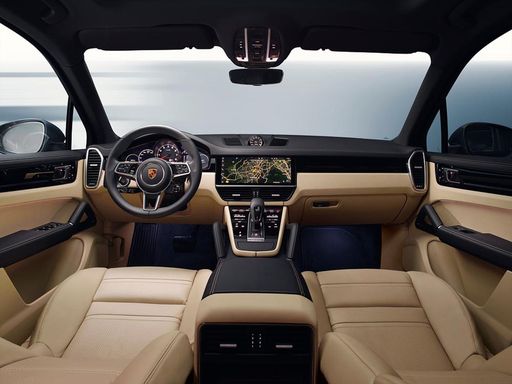 @ Dr. Ing. h.c. F. Porsche AG
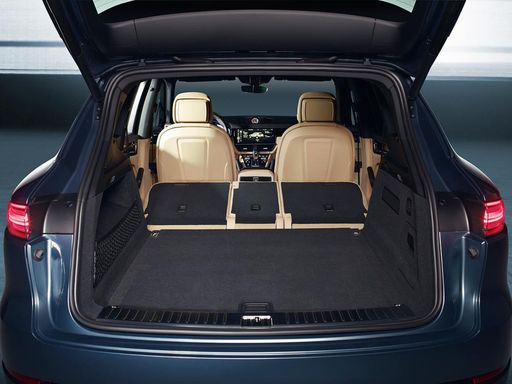 @ Dr. Ing. h.c. F. Porsche AG
VW Golf
Porsche Cayenne
|
@ Volkswagen AG / VW Media
|
@ Dr. Ing. h.c. F. Porsche AG
|
|
|
|
Costs and Consumption |
|
|---|---|
|
Price
25200 - 47600 £
|
Price
87000 - 186400 £
|
|
Consumption L/100km
1.1 - 8.1 L
|
Consumption L/100km
4 - 12.2 L
|
|
Consumption kWh/100km
-
|
Consumption kWh/100km
-
|
|
Electric Range
131 - 143 km
|
Electric Range
74 - 83 km
|
|
Battery Capacity
19.70 kWh
|
Battery Capacity
21.80 kWh
|
|
co2
25 - 184 g/km
|
co2
90 - 277 g/km
|
|
Fuel tank capacity
40 - 55 L
|
Fuel tank capacity
70 - 90 L
|
Dimensions and Body |
|
|---|---|
|
Body Type
Hatchback
|
Body Type
SUV
|
|
Seats
5
|
Seats
4 - 5
|
|
Doors
5
|
Doors
5
|
|
Curb weight
1307 - 1662 kg
|
Curb weight
2130 - 2670 kg
|
|
Trunk capacity
273 - 381 L
|
Trunk capacity
434 - 772 L
|
|
Length
4282 - 4296 mm
|
Length
4930 mm
|
|
Width
1789 mm
|
Width
1983 - 1989 mm
|
|
Height
1454 - 1483 mm
|
Height
1652 - 1698 mm
|
|
Max trunk capacity
1129 - 1237 L
|
Max trunk capacity
1344 - 1708 L
|
|
Payload
438 - 508 kg
|
Payload
365 - 705 kg
|
Engine and Performance |
|
|---|---|
|
Engine Type
Petrol MHEV, Petrol, Diesel, Plugin Hybrid
|
Engine Type
Petrol, Plugin Hybrid
|
|
Transmission
Automatic, Manuel
|
Transmission
Automatic
|
|
Transmission Detail
Dual-Clutch Automatic, Manual Gearbox
|
Transmission Detail
Automatic Gearbox
|
|
Drive Type
Front-Wheel Drive, All-Wheel Drive
|
Drive Type
All-Wheel Drive
|
|
Power HP
116 - 333 HP
|
Power HP
353 - 739 HP
|
|
Acceleration 0-100km/h
4.6 - 10.2 s
|
Acceleration 0-100km/h
3.6 - 6 s
|
|
Max Speed
202 - 270 km/h
|
Max Speed
248 - 305 km/h
|
|
Torque
220 - 420 Nm
|
Torque
500 - 950 Nm
|
|
Number of Cylinders
4
|
Number of Cylinders
6 - 8
|
|
Power kW
85 - 245 kW
|
Power kW
260 - 544 kW
|
|
Engine capacity
1498 - 1984 cm3
|
Engine capacity
2995 - 3996 cm3
|
General |
|
|---|---|
|
Model Year
2024 - 2025
|
Model Year
2025
|
|
CO2 Efficiency Class
D, F, G, C, B
|
CO2 Efficiency Class
G, B, C
|
|
Brand
VW
|
Brand
Porsche
|
What drivetrain options does the VW Golf have?
The VW Golf is available as Front-Wheel Drive or All-Wheel Drive.
The prices and data displayed are estimates based on German list prices and may vary by country. This information is not legally binding.