VS

VW Golf vs SEAT Ibiza comparison

Compare performance (325 HP vs 150 HP), boot space and price (28,300 £ vs 16,800 £ ) at a glance. Find out which car is the better choice for you – VW Golf or SEAT Ibiza?

VW Golf vs SEAT Ibiza: Key differences

VW Golf

4.6 (1 Reviews)
rate
  • considerably more power
  • clearly more efficient
  • substantially quicker 0–100 km/h
  • barely more trunk space
details

SEAT Ibiza

  • considerably cheaper
  • a bit lighter
details

By Achim Sedelmaier

Golf

SEAT Ibiza VS VW Golf — overview

SEAT Ibiza VS VW Golf: this pairing pits a cheeky, space‑optimised small hatchback against a more refined compact reference. The SEAT Ibiza leans into city friendliness, interior volume for its class and a keen chassis feel, while the VW Golf favours noise suppression, longer‑distance composure and a clearer tech experience. Price and personality diverge too—Ibiza usually undercuts the Golf and trades some polish for value and liveliness. Below we unpack how those differences show up in everyday driving, comfort, practicality and cabin quality so you can decide which fits your routine.
Ibiza

Character and driving dynamics

Driving character could not be more different: the SEAT Ibiza is quick‑steering, eager through bends and rewarding when you want involvement, whereas the VW Golf prefers to be predictable, neutral and composed. Ibiza’s setup rewards small‑road enthusiasm with sharper turn‑in and a more connected feel, but that comes at the cost of firmer suspension feedback on rough surfaces. The Golf’s chassis and engine choices are tuned toward refinement, so acceleration feels stronger and more effortless in everyday overtakes, and the car resists being unsettled at speed. If you enjoy throwing a car down a country road the Ibiza will put a smile on your face; if you want assured stability and less input from the car, the Golf will feel like the safer, quieter companion.

Golf

Comfort and long‑distance behavior

On motorways the VW Golf clearly pulls ahead: its cabin stays quieter and its suspension soaks long stretches with a steadier gait than the SEAT Ibiza. The Ibiza’s seats are supportive for spirited driving and short trips, yet its firmer setup and smaller engines can make high‑speed cruising noisier and slightly more tiring. Golf buyers will notice fewer intrusive road and engine sounds, plus the option of adaptive damping that smooths rough surfaces without sacrificing control. That difference becomes obvious on long trips where Golf passengers settle more easily and the car’s composure reduces fatigue.

Ibiza

City friendliness and practicality

In town the SEAT Ibiza feels purpose‑built: compact external dimensions, excellent rear legroom for the class and a capacious, well‑shaped boot make it a very practical small car. The VW Golf is still city capable, but its slightly larger footprint and higher list price position it more as a do‑it‑all compact that leans toward comfort and tech rather than pure thrift. Golf’s parking aids and cameras take the sting out of tight garages and reverse maneuvers, while Ibiza’s natural visibility and lighter steering make everyday parking effortless. If urban practicality and a sharper price point matter most, Ibiza wins on usable space per pound; if you want more driver assistance and convenience tech in the city, Golf earns its keep.

Golf

Cabin feel and perceived quality

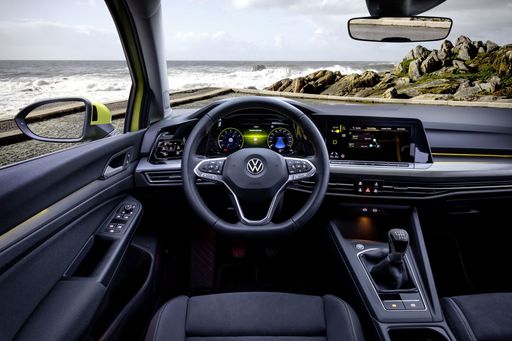
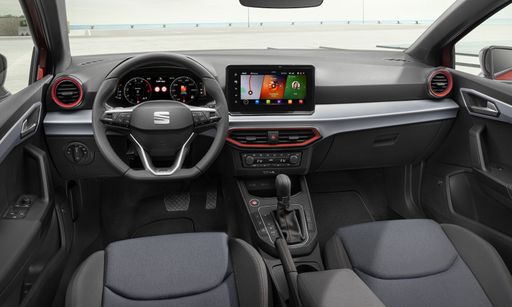
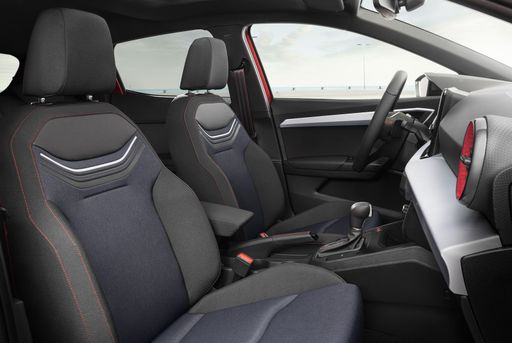
Open both doors and you’ll read the difference: the VW Golf’s cabin leans toward muted refinement with cleaner surfaces and a more modern infotainment feel, while the SEAT Ibiza keeps things straightforward with pleasing touches but more visible hard plastics. Golf’s electronics feel faster and its controls include more subtle lighting and tactile feedback that lift the perceived quality even when some rear areas use simpler materials. Ibiza counters with thoughtful physical controls where they matter, such as true climate dials and an uncomplicated layout that’s easier to use on the move. That makes Ibiza’s physical controls a selling point for drivers who dislike hunting through menus, whereas Golf’s polish rewards those who value a higher‑tech cabin.

Ibiza

Buyer fit and what to compare next

Who should choose which? If you prioritise bang‑for‑buck, city practicality and a lively driving character, the SEAT Ibiza suits younger families and cost‑aware owners who want more space without stepping up to a larger car. If your daily routine includes long motorway runs, you care about low cabin noise, and you want a smoother, more refined experience with advanced driver aids, the VW Golf is the better match despite a higher purchase cost. Both cars have sensible rear seats and practical boots, but the trade is clear: Ibiza saves money and gives you class‑leading usable volume, Golf spends more to deliver quieter cruising, faster tech and broader engine choices. Below the technical comparison breaks down the specific differences in powertrains, consumption and dimensions so you can match those concrete numbers to the everyday impressions above.

Here’s where it gets real: The technical differences in detail

Golf

Costs and Efficiency:

When it comes to price and running costs, the biggest differences usually appear. This is often where you see which car fits your budget better in the long run.

SEAT Ibiza is considerably cheaper – starting at 16,800 £ , while the VW Golf costs 28,300 £ . That’s a price difference of around 11,439 £.

Fuel consumption also shows a difference: the VW Golf uses 1.1 L/100km and is clearly more efficient than the SEAT Ibiza with 5 L/100km. The difference is about 3.9 L/100km.

Ibiza

Engine and Performance:

Power, torque and acceleration are the classic benchmarks for car enthusiasts – and here, some clear differences start to show.

When it comes to engine power, the VW Golf offers considerably more power – delivering 325 HP compared to 150 HP. That’s roughly 175 HP more horsepower.

When accelerating from 0 to 100 km/h, the VW Golf is substantially quicker – completing the sprint in 5.3 s, while the SEAT Ibiza takes 8.1 s. That’s about 2.8 s quicker.

There’s also a difference in torque: the VW Golf delivers considerably more torque with 420 Nm compared to 250 Nm. That’s about 170 Nm more.

Golf

Space and Everyday Use:

Cabin size, boot volume and payload all play a role in everyday practicality. Here, comfort and flexibility make the difference.

Both vehicles offer seating for 5 people.

In terms of curb weight, SEAT Ibiza is a bit lighter – 1,111 kg compared to 1,307 kg. The difference is around 196 kg.

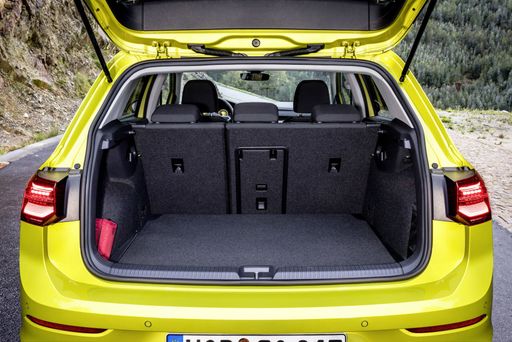
Looking at boot space, the VW Golf offers barely more boot space – 381 L compared to 355 L. That’s a difference of about 26 L.

When it comes to payload, the SEAT Ibiza carries barely more – 522 kg compared to 508 kg. That’s a difference of about 14 kg.

Who wins the race in the data check?

The VW Golf is clearly superior overall in the objective data comparison.
This result only shows which model scores more points on paper – not which of the two cars feels right for you.

from £28,300
Golf

VW Golf

  • Engine Type : Petrol, Petrol MHEV, Diesel, Plugin Hybrid
  • Transmission : Manuel, Automatic
  • Drive Type : Front-Wheel Drive, All-Wheel Drive
  • Power HP : 116 - 325 HP
  • Consumption L/100km : 1.1 - 7.6 L/100km
  • Electric Range : 131 - 143 km
VW Golf
SEAT Ibiza

Costs and Consumption

View detailed analysis

Engine and Performance

View detailed analysis

Dimensions and Body

View detailed analysis

VW Golf

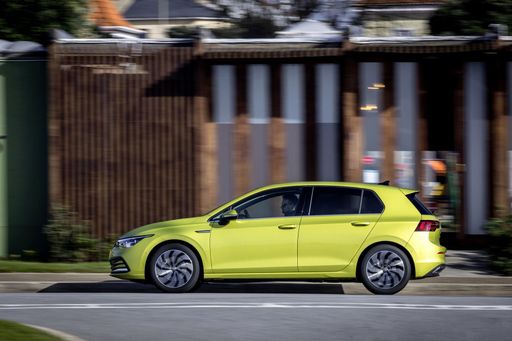
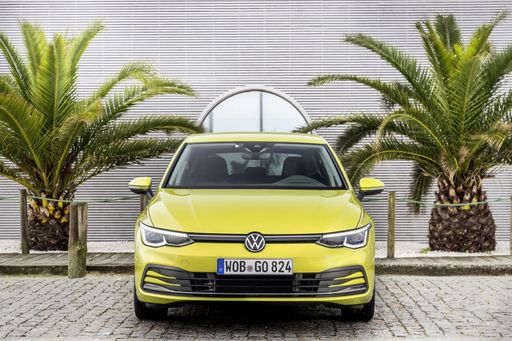
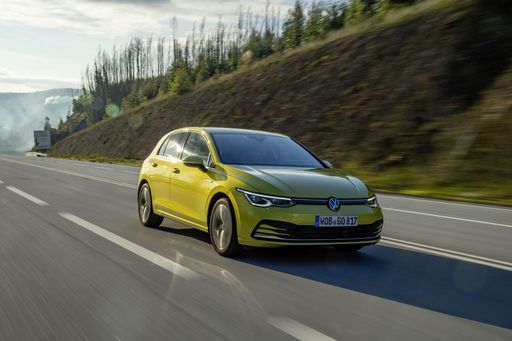
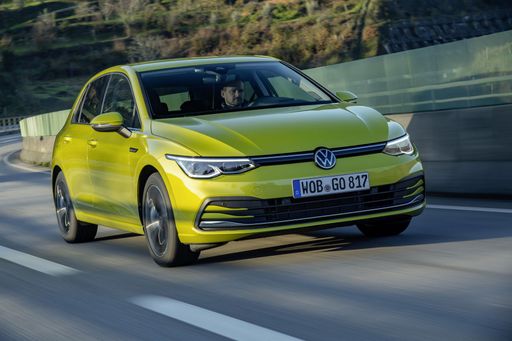
The VW Golf remains the everyman’s favourite — cleverly balanced, composed and just posh enough to feel grown-up without pretending to be something it’s not. It slips through town and eats up longer trips with a refined cabin, practical layout and a kindly, capable character that turns everyday driving into something a little bit special.

details

SEAT Ibiza

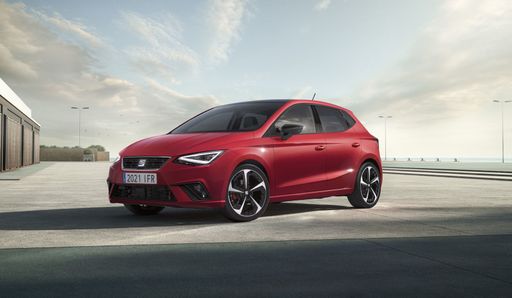
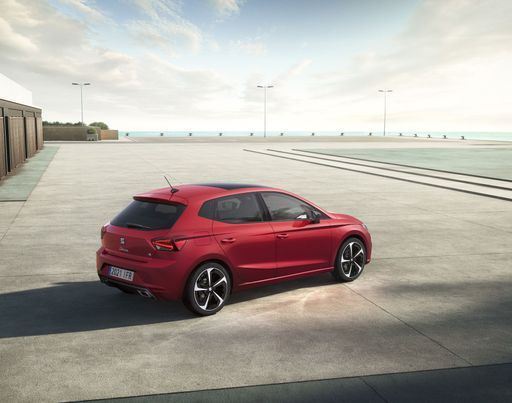
The SEAT Ibiza is a cheeky, well-priced hatchback that blends sharp styling with a grown-up driving character, making it a smart choice for city commuters who still want a bit of fun. Inside it's practical and neatly finished, with sensible kit and easygoing manners that make everyday life less fussy — a car that doesn't try too hard but gets the job done with a smile.

details
VW Golf
SEAT Ibiza

Costs and Consumption

Price
28,300 - 46,700 £
Price
16,800 - 28,800 £
Consumption L/100km
1.1 - 7.6 L/100km
Consumption L/100km
5 - 5.7 L/100km
Consumption kWh/100km
-
Consumption kWh/100km
-
Electric Range
131 - 143 km
Electric Range
-
Battery Capacity
-
Battery Capacity
-
co2
25 - 173 g/km
co2
114 - 128 g/km
Fuel tank capacity
-
Fuel tank capacity
-

Dimensions and Body

Body Type
Hatchback
Body Type
Hatchback
Seats
5
Seats
5
Doors
-
Doors
-
Curb weight
1,307 - 1,662 kg
Curb weight
1,111 - 1,231 kg
Trunk capacity
273 - 381 L
Trunk capacity
355 L
Length
-
Length
-
Width
1,789 mm
Width
1,780 mm
Height
-
Height
-
Max trunk capacity
-
Max trunk capacity
-
Payload
438 - 508 kg
Payload
489 - 522 kg

Engine and Performance

Engine Type
Petrol, Petrol MHEV, Diesel, Plugin Hybrid
Engine Type
Petrol
Transmission
Manuel, Automatic
Transmission
Manuel, Automatic
Transmission Detail
Manual Gearbox, Dual-Clutch Automatic
Transmission Detail
Manual Gearbox, Dual-Clutch Automatic
Drive Type
Front-Wheel Drive, All-Wheel Drive
Drive Type
Front-Wheel Drive
Power HP
116 - 325 HP
Power HP
80 - 150 HP
Acceleration 0-100km/h
5.3 - 10.2 s
Acceleration 0-100km/h
8.1 - 15.3 s
Max Speed
-
Max Speed
-
Torque
220 - 420 Nm
Torque
95 - 250 Nm
Number of Cylinders
4
Number of Cylinders
3 - 4
Power kW
85 - 239 kW
Power kW
59 - 110 kW
Engine capacity
1,498 - 1,984 cm3
Engine capacity
999 - 1,498 cm3

General

Model Year
2025
Model Year
2025
CO2 Efficiency Class
D, C, F, B
CO2 Efficiency Class
D, C
Brand
VW
Brand
SEAT
DriveDuel uses data analysis and artificial intelligence to evaluate vehicle data and create content. Content is regularly reviewed and improved. The displayed prices are estimates based on German list prices, adjusted to the respective country’s VAT. Country-specific registration taxes are not included. This information is not legally binding.