VS

VW Golf vs Skoda Scala comparison

Compare performance (333 HP vs 150 HP), boot space and price (25,200 £ vs 21,400 £ ) at a glance. Find out which car is the better choice for you – VW Golf or Skoda Scala?

VW Golf vs Skoda Scala: Key differences

VW Golf

4.6 (1 Reviews)
rate
  • substantially more power
  • clearly more efficient
  • clearly quicker 0–100 km/h

Skoda Scala

4.9 (7 Reviews)
rate
  • somewhat cheaper
  • marginally lighter
  • a bit more trunk space

All details on performance, efficiency, range and trunk space can be found in the technical comparison below – including user reviews for both models.

Golf

Head-to-head: Skoda Scala VS VW Golf in the compact hatchback ring

The Skoda Scala VS VW Golf comparison puts two very familiar compact hatchbacks under the same spotlight: one plays the sensible everyman, the other leans on refinement and brand cachet. If you’re shopping this segment you want clarity on how each car behaves day-to-day — not a laundry list of specs — and that’s exactly what this duel delivers. Think of the Scala as the practical, no-nonsense choice and the Golf as the polished alternative that asks a little more in return. Below we’ll make those differences feel tangible so you can match car to lifestyle, not just to lines on a spec sheet.
Scala

Character clash: understated practicality vs polished personality

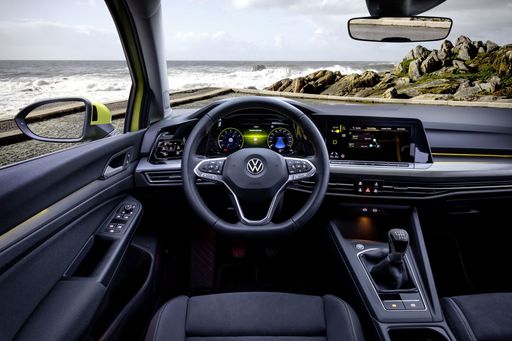
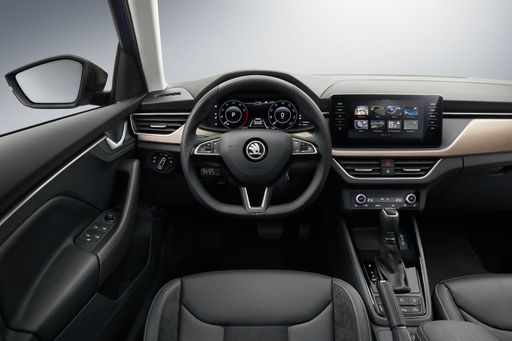
The Skoda Scala wears functionality like a badge of honour — unfussy surfaces, honest packaging and a focus on usable room rather than flair — while the VW Golf projects a more composed, cultivated persona that’s about refinement as much as utility. Driving the Scala feels straightforward and friendly, the kind of car that doesn’t demand attention but reliably gets the job done. The Golf, by contrast, arrives with tighter finishes and a slightly more grown-up cabin ambience that makes routine trips feel a touch more special. Those differences aren’t just cosmetic: they shape who feels at home in each cockpit every day.

Golf

How they live in the real world: city squeeze, school runs and motorway miles

For urban errands and family shuffles the Skoda Scala’s space-first approach and user-friendly practicality make life easier — more visible boot room and clever storage mean fewer compromises on groceries, strollers or weekend kit. The VW Golf tends to reward longer runs and faster roads with a steadier, more composed ride and controls that feel deliberately sorted for cruising and confidence at speed. In town the Scala’s straightforward layout feels forgiving; on open roads the Golf’s composure and refinement are more reassuring. Both are usable every day, but the Scala tilts toward hands-on practicality while the Golf leans toward relaxed control and polish.

Scala

Buying for image: sensible smarts or subtle status?

Pick the Skoda Scala if you want a car that quietly makes sense — it’s the kind of purchase you can justify at the kitchen table: practical, economical and unfussy. Choose the VW Golf if part of the decision is about presentation and perceived quality; the Golf reads as a small step up in brand stature and interior finish, which matters when first impressions count. Neither is ostentatious, but the Scala sells competence, the Golf sells a more premium slice of compact-hatch life. Your choice says less about need and more about whether you prize utility or the small pleasures of a nicer cabin and badge recognition.

Golf

Who should seriously consider the Skoda Scala?

The Skoda Scala is a natural for the rational and the pragmatist buyer: commuters who want low fuss and families who need adaptable space without a premium price hangover. If durability, everyday usability and sensible packaging top your checklist, the Scala’s character will feel reassuringly familiar. It’s the car that quietly reduces friction — fewer rituals, more practical results — which is exactly the appeal for people valuing logic over lipstick. Even buyers tempted by the Golf will appreciate the Scala’s common-sense charm when real life gets busy.

Scala

Who should lean toward the VW Golf (and why the Scala still deserves a look)

The VW Golf will attract the tech-minded and style-conscious driver who values a composed cabin, refined finishes and systems that feel a step ahead in day-to-day polish. If you want a compact hatchback that doubles as a comfortable long-distance companion and offers a smarter first impression, the Golf fits that brief. That said, the Skoda Scala remains a strong counterpoint for buyers who prefer straightforward space and everyday practicality over subtle status, so it’s worth holding both in equal regard during your test drives. Read on to the detailed breakdown to see how these real-world impressions map to the exact differences that matter on paper.

Here’s where it gets real: The technical differences in detail

Golf

Costs and Efficiency:

Looking at overall running costs, both models reveal some interesting differences in everyday economy.

Skoda Scala is somewhat cheaper – starting at 21,400 £ , while the VW Golf costs 25,200 £ . That’s a price difference of around 3,767 £.

Fuel consumption also shows a difference: the VW Golf uses 1.1 L/100km and is clearly more efficient than the Skoda Scala with 5 L/100km. The difference is about 3.9 L/100km.

Scala

Engine and Performance:

Power, torque and acceleration are the classic benchmarks for car enthusiasts – and here, some clear differences start to show.

When it comes to engine power, the VW Golf offers substantially more power – delivering 333 HP compared to 150 HP. That’s roughly 183 HP more horsepower.

When accelerating from 0 to 100 km/h, the VW Golf is clearly quicker – completing the sprint in 4.6 s, while the Skoda Scala takes 8.2 s. That’s about 3.6 s quicker.

Looking at top speed, the VW Golf is somewhat faster – reaching 270 km/h, while the Skoda Scala tops out at 221 km/h. The difference is around 49 km/h.

There’s also a difference in torque: the VW Golf delivers substantially more torque with 420 Nm compared to 250 Nm. That’s about 170 Nm more.

Golf

Space and Everyday Use:

Cabin size, boot volume and payload all play a role in everyday practicality. Here, comfort and flexibility make the difference.

Both vehicles offer seating for 5 people.

In terms of curb weight, Skoda Scala is marginally lighter – 1,199 kg compared to 1,307 kg. The difference is around 108 kg.

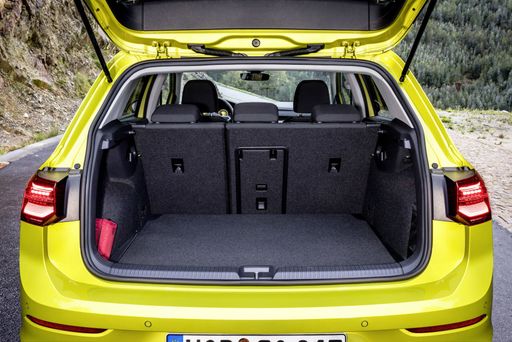
Looking at boot space, the Skoda Scala offers a bit more boot space – 467 L compared to 381 L. That’s a difference of about 86 L.

For maximum load capacity, the Skoda Scala offers moderately more capacity – up to 1,410 L, about 173 L more than the VW Golf.

When it comes to payload, the VW Golf carries a bit more – 508 kg compared to 431 kg. That’s a difference of about 77 kg.

Who wins the race in the data check?

The VW Golf stands well ahead of its rival in the objective data comparison.
This result only shows which model scores more points on paper – not which of the two cars feels right for you.

from £25,200
Golf

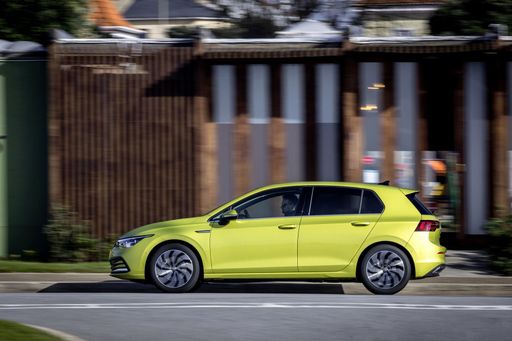
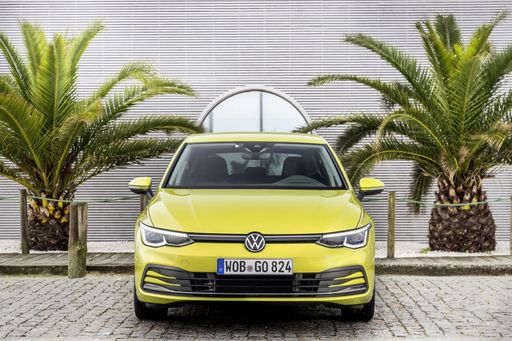
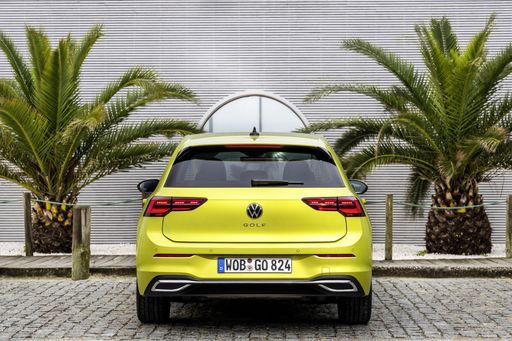
VW Golf

  • Engine Type : Petrol MHEV, Petrol, Diesel, Plugin Hybrid
  • Transmission : Automatic, Manuel
  • Drive Type : Front-Wheel Drive, All-Wheel Drive
  • Power HP : 116 - 333 HP
  • Consumption L/100km : 1.1 - 8.1 L/100km
  • Electric Range : 131 - 143 km
VW Golf
Skoda Scala

Costs and Consumption

View detailed analysis

Engine and Performance

View detailed analysis

Dimensions and Body

View detailed analysis

VW Golf

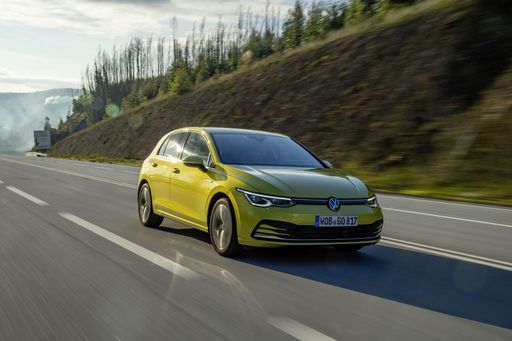
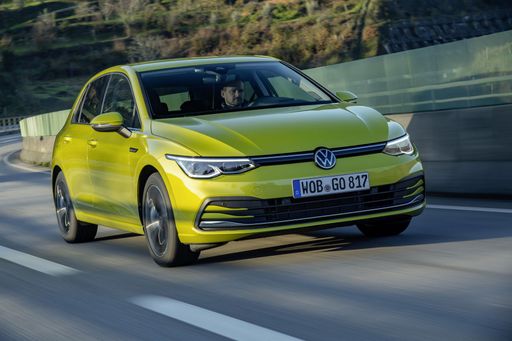
The VW Golf remains the everyman’s favourite — cleverly balanced, composed and just posh enough to feel grown-up without pretending to be something it’s not. It slips through town and eats up longer trips with a refined cabin, practical layout and a kindly, capable character that turns everyday driving into something a little bit special.

details

Skoda Scala

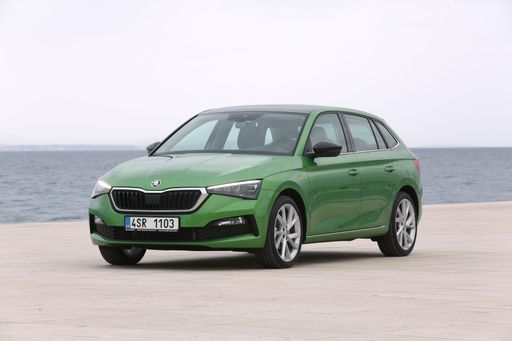
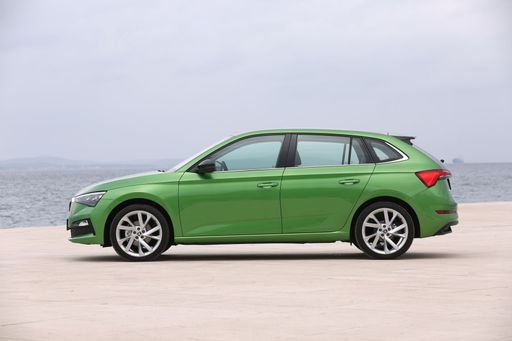
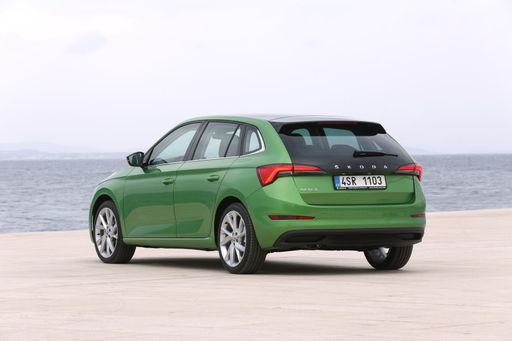
The Skoda Scala is a tidy, no-nonsense hatch that wraps clever packaging and composed manners into a compact, grown-up package. It’s the sensible choice for buyers who want everyday practicality with a dash of style and personality—no drama, just reliable charm.

details
VW Golf
Skoda Scala

Costs and Consumption

Price
25,200 - 47,600 £
Price
21,400 - 31,500 £
Consumption L/100km
1.1 - 8.1 L/100km
Consumption L/100km
5 - 5.6 L/100km
Consumption kWh/100km
-
Consumption kWh/100km
-
Electric Range
131 - 143 km
Electric Range
-
Battery Capacity
19.7 kWh
Battery Capacity
-
co2
25 - 184 g/km
co2
114 - 126 g/km
Fuel tank capacity
40 - 55 L
Fuel tank capacity
50 L

Dimensions and Body

Body Type
Hatchback
Body Type
Hatchback
Seats
5
Seats
5
Doors
5
Doors
5
Curb weight
1,307 - 1,662 kg
Curb weight
1,199 - 1,271 kg
Trunk capacity
273 - 381 L
Trunk capacity
467 L
Length
4,282 - 4,296 mm
Length
4,362 mm
Width
1,789 mm
Width
1,793 mm
Height
1,454 - 1,483 mm
Height
1,514 mm
Max trunk capacity
1,129 - 1,237 L
Max trunk capacity
1,410 L
Payload
438 - 508 kg
Payload
403 - 431 kg

Engine and Performance

Engine Type
Petrol MHEV, Petrol, Diesel, Plugin Hybrid
Engine Type
Petrol
Transmission
Automatic, Manuel
Transmission
Manuel, Automatic
Transmission Detail
Dual-Clutch Automatic, Manual Gearbox
Transmission Detail
Manual Gearbox, Dual-Clutch Automatic
Drive Type
Front-Wheel Drive, All-Wheel Drive
Drive Type
Front-Wheel Drive
Power HP
116 - 333 HP
Power HP
95 - 150 HP
Acceleration 0-100km/h
4.6 - 10.2 s
Acceleration 0-100km/h
8.2 - 10.8 s
Max Speed
203 - 270 km/h
Max Speed
192 - 221 km/h
Torque
220 - 420 Nm
Torque
175 - 250 Nm
Number of Cylinders
4
Number of Cylinders
3 - 4
Power kW
85 - 245 kW
Power kW
70 - 110 kW
Engine capacity
1,498 - 1,984 cm3
Engine capacity
999 - 1,498 cm3

General

Model Year
2,024 - 2,025
Model Year
2,025
CO2 Efficiency Class
D, F, G, C, B
CO2 Efficiency Class
C, D
Brand
VW
Brand
Skoda
DriveDuel uses data analysis and artificial intelligence to evaluate vehicle data and create content. Content is regularly reviewed and improved. The displayed prices are estimates based on German list prices, adjusted to the respective country’s VAT. Country-specific registration taxes are not included. This information is not legally binding.