VS

VW ID.7 vs Renault Scénic comparison

Compare performance (340 HP vs 218 HP), boot space and price (46,400 £ vs 34,600 £ ) at a glance. Find out which car is the better choice for you – VW ID.7 or Renault Scénic?

VW ID.7 vs Renault Scénic: Key differences

VW ID.7

4 (4 Reviews)
rate
  • noticeably more power
  • visibly more efficient
  • somewhat more electric range
  • considerably quicker 0–100 km/h

Renault Scénic

5 (1 Reviews)
rate
  • markedly cheaper
  • slightly lighter
  • very slightly more trunk space

All details on performance, efficiency, range and trunk space can be found in the technical comparison below – including user reviews for both models.

ID.7

As the automotive landscape evolves towards electrification, the competition between electric vehicles intensifies. In this comparative analysis, we pit the Renault Scénic against the VW ID.7. Both vehicles stand out in their respective classes, showcasing advanced technology, impressive range, and innovative features. Let’s delve into their specifications and innovations to see which model emerges as the frontrunner.
Scénic

Design and Dimensions

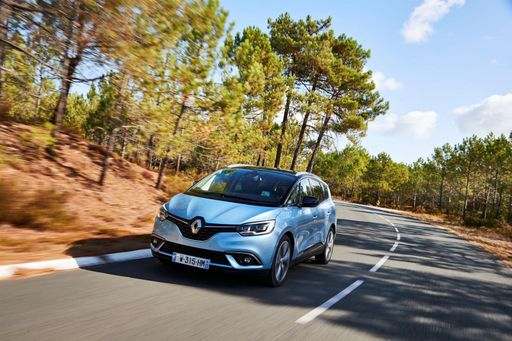
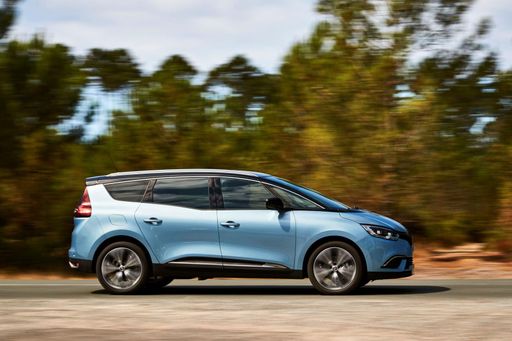
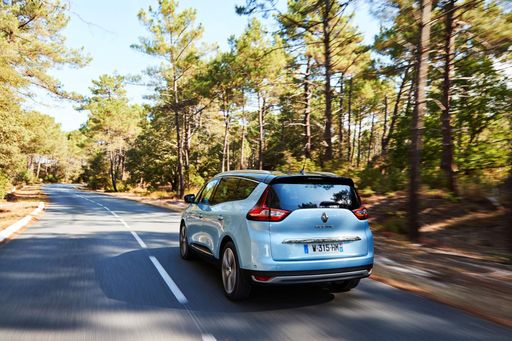
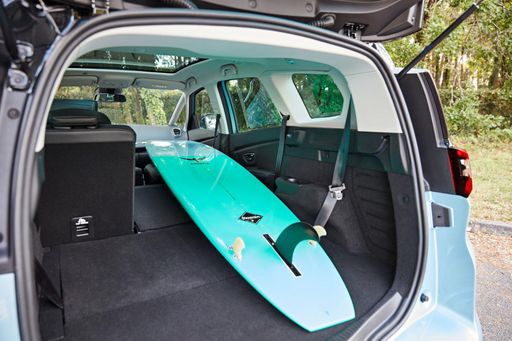
Starting with design, the Renault Scénic embraces the aesthetics of an SUV, combining a robust stance with functional elegance. Measuring 4,470 mm in length, 1,864 mm in width, and 1,571 mm in height, it offers a spacious interior suited for family use. With a trunk capacity ranging from 545 liters, it provides ample storage for weekend getaways.

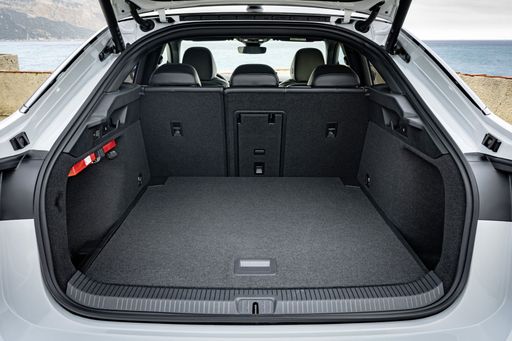
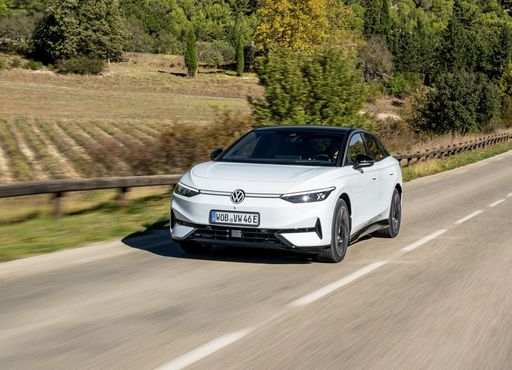
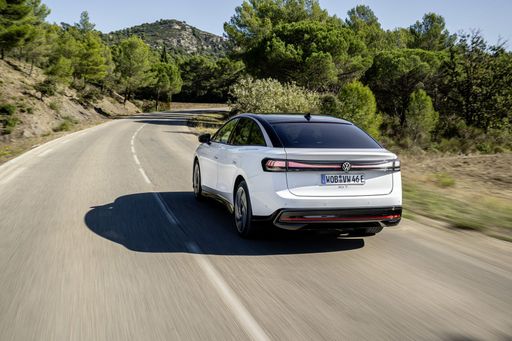
In contrast, the VW ID.7, a sleek hatchback, measures a more extended 4,961 mm in length and 1,862 mm in width, making it a visually striking option on the road. Despite being a hatchback, it features a respectable trunk capacity of 532 liters, ideal for daily errands or road trips. Its aerodynamic profile is designed not just for looks but also for efficiency.

ID.7

Powertrains and Performance

The Renault Scénic is prepared for the electric revolution with two variants offering power outputs of 170 HP and 220 HP. Both models come equipped with a front-wheel-drive system and an automatic transmission featuring a reduction gearbox. The Scénic boasts acceleration figures of 8.6 seconds for the base model and 7.9 seconds for the more powerful variant, with maximum speeds of 150 km/h and 170 km/h respectively.

Conversely, the VW ID.7 packs a punch with up to 340 HP, available in both rear-wheel and all-wheel drive configurations. The acceleration is stellar, with times as low as 5.4 seconds to reach 100 km/h, capped by a top speed of 180 km/h. The ID.7’s torque outshines the Scénic, delivering an impressive 679 Nm compared to the Scénic's maximum of 300 Nm.

Scénic

Electric Range and Efficiency

Range is a critical aspect of any electric vehicle, and here, the Renault Scénic manages distances of 420 km to 598 km on a single charge, depending on the variant. Its energy consumption is rated at 16.7 to 17.6 kWh/100km, showcasing its efficiency in urban and highway conditions.

The VW ID.7 excels in this area, offering a remarkable electric range from 595 km to 709 km, depending on the battery configuration, which includes a choice of 77 kWh or 86 kWh batteries. The ID.7 showcases an impressive energy consumption of 13.6 to 16.2 kWh/100km, marking it as one of the most efficient electric vehicles available.

ID.7

Technological Innovations

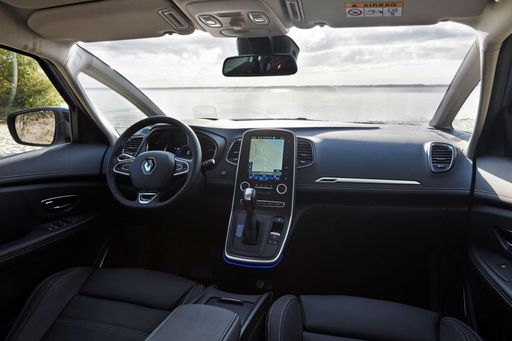
Both vehicles come with a suite of tech features that enhance the driving experience. The Renault Scénic is equipped with an intuitive infotainment system and driver-assist technologies aimed at improving safety and convenience. Its spacious interior allows for flexible seating arrangements, catering to various passenger and cargo needs.

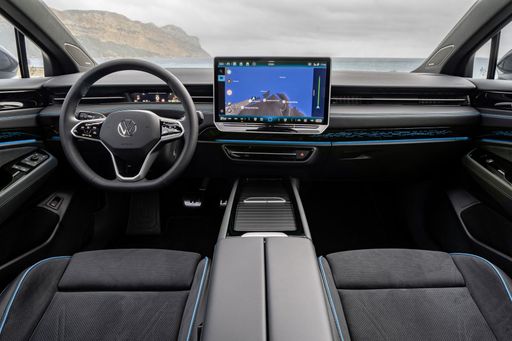
On the other hand, the VW ID.7 boasts an advanced digital cockpit, featuring a high-resolution infotainment display and a comprehensive suite of driver assistance systems. VW's ID. software ensures over-the-air updates, maintaining vehicle performance and technology relevance over time.

Scénic

Conclusion: A Battle of Electric Innovation

Choosing between the Renault Scénic and the VW ID.7 ultimately depends on individual needs. The Scénic serves as a practical choice for families seeking an SUV with ample space and decent electric performance. In contrast, the ID.7 appeals to those who prioritize cutting-edge technology, outstanding efficiency, and exhilarating performance.

Both models are credible contenders in the electric vehicle market, pushing the boundaries of innovation. As the transition to electric continues, each manufacturer’s response shapes a thrilling future for automotive enthusiasts.

Here’s where it gets real: The technical differences in detail

ID.7

Costs and Efficiency:

Price and efficiency are key factors when choosing a car – and this is often where the real differences emerge.

Renault Scénic is markedly cheaper – starting at 34,600 £ , while the VW ID.7 costs 46,400 £ . That’s a price difference of around 11,747 £.

In terms of energy consumption, the VW ID.7 is visibly more efficient: consuming 13.6 kWh/100km compared to 16.6 kWh/100km for the Renault Scénic. That’s a difference of about 3 kWh/100km.

As for electric range, the VW ID.7 offers somewhat more range – reaching up to 708 km, about 110 km more than the Renault Scénic.

Scénic

Engine and Performance:

Power, torque and acceleration say a lot about how a car feels on the road. This is where you see which model delivers more driving dynamics.

When it comes to engine power, the VW ID.7 offers noticeably more power – delivering 340 HP compared to 218 HP. That’s roughly 122 HP more horsepower.

When accelerating from 0 to 100 km/h, the VW ID.7 is considerably quicker – completing the sprint in 5.4 s, while the Renault Scénic takes 7.9 s. That’s about 2.5 s quicker.

Looking at top speed, the VW ID.7 is very slightly faster – reaching 180 km/h, while the Renault Scénic tops out at 170 km/h. The difference is around 10 km/h.

There’s also a difference in torque: the VW ID.7 delivers substantially more torque with 679 Nm compared to 300 Nm. That’s about 379 Nm more.

ID.7

Space and Everyday Use:

Beyond pure performance, interior space and usability matter most in daily life. This is where you see which car is more practical and versatile.

Both vehicles offer seating for 5 people.

In terms of curb weight, Renault Scénic is slightly lighter – 1,822 kg compared to 2,180 kg. The difference is around 358 kg.

Looking at boot space, the Renault Scénic offers very slightly more boot space – 545 L compared to 532 L. That’s a difference of about 13 L.

For maximum load capacity, the Renault Scénic offers very slightly more capacity – up to 1,670 L, about 84 L more than the VW ID.7.

When it comes to payload, the Renault Scénic carries slightly more – 518 kg compared to 465 kg. That’s a difference of about 53 kg.

Who wins the race in the data check?

The VW ID.7 is far ahead overall in the objective data comparison.
This result only shows which model scores more points on paper – not which of the two cars feels right for you.

from £46,400
ID.7

VW ID.7

  • Engine Type : Electric
  • Transmission : Automatic
  • Drive Type : Rear-Wheel Drive, All-Wheel Drive
  • Power HP : 286 - 340 HP
  • Consumption kWh/100km : 13.6 - 16.2 kWh/100km
  • Electric Range : 594 - 708 km
VW ID.7
Renault Scénic

Costs and Consumption

View detailed analysis

Engine and Performance

View detailed analysis

Dimensions and Body

View detailed analysis

VW ID.7

VW ID.7 arrives as Volkswagen's electric grand tourer, pairing a low-slung, aerodynamic silhouette with a calm, understated interior that prioritizes comfort and space. It’s a sensible choice for buyers who want a relaxed, high-tech cruiser that covers motorway miles with poise rather than bravado.

details

Renault Scénic

The Renault Scénic is a quietly clever family MPV that balances everyday practicality with unexpected flair, offering a roomy, flexible cabin that makes school runs and weekend escapes less of a chore. It won't dazzle like a sports car, but its composed ride, sensible tech and thoughtful storage solutions make it a superbly pragmatic choice for buyers who prefer substance with a wink.

details
VW ID.7
Renault Scénic

Costs and Consumption

Price
46,400 - 54,200 £
Price
34,600 - 44,000 £
Consumption L/100km
-
Consumption L/100km
-
Consumption kWh/100km
13.6 - 16.2 kWh/100km
Consumption kWh/100km
16.6 - 17.5 kWh/100km
Electric Range
594 - 708 km
Electric Range
420 - 598 km
Battery Capacity
77 - 86 kWh
Battery Capacity
-
co2
0 g/km
co2
0 g/km
Fuel tank capacity
-
Fuel tank capacity
-

Dimensions and Body

Body Type
Hatchback
Body Type
SUV
Seats
5
Seats
5
Doors
5
Doors
5
Curb weight
2,180 - 2,325 kg
Curb weight
1,822 - 1,927 kg
Trunk capacity
532 L
Trunk capacity
545 L
Length
4,961 mm
Length
4,470 mm
Width
1,862 mm
Width
1,864 mm
Height
1,535 - 1,536 mm
Height
1,571 mm
Max trunk capacity
1,586 L
Max trunk capacity
1,670 L
Payload
460 - 465 kg
Payload
514 - 518 kg

Engine and Performance

Engine Type
Electric
Engine Type
Electric
Transmission
Automatic
Transmission
Automatic
Transmission Detail
Reduction Gearbox
Transmission Detail
Reduction Gearbox
Drive Type
Rear-Wheel Drive, All-Wheel Drive
Drive Type
Front-Wheel Drive
Power HP
286 - 340 HP
Power HP
170 - 218 HP
Acceleration 0-100km/h
5.4 - 6.6 s
Acceleration 0-100km/h
7.9 - 8.6 s
Max Speed
180 km/h
Max Speed
150 - 170 km/h
Torque
545 - 679 Nm
Torque
280 - 300 Nm
Number of Cylinders
-
Number of Cylinders
-
Power kW
210 - 250 kW
Power kW
125 - 160 kW
Engine capacity
-
Engine capacity
-

General

Model Year
2,023 - 2,024
Model Year
2,025
CO2 Efficiency Class
A
CO2 Efficiency Class
A
Brand
VW
Brand
Renault
DriveDuel uses data analysis and artificial intelligence to evaluate vehicle data and create content. Content is regularly reviewed and improved. The displayed prices are estimates based on German list prices, adjusted to the respective country’s VAT. Country-specific registration taxes are not included. This information is not legally binding.