VS

VW Passat vs Toyota Corolla Touring Sports comparison

Compare performance (272 HP vs 178 HP), boot space and price (36,500 £ vs 29,600 £ ) at a glance. Find out which car is the better choice for you – VW Passat or Toyota Corolla Touring Sports?

VW Passat vs Toyota Corolla Touring Sports: Key differences

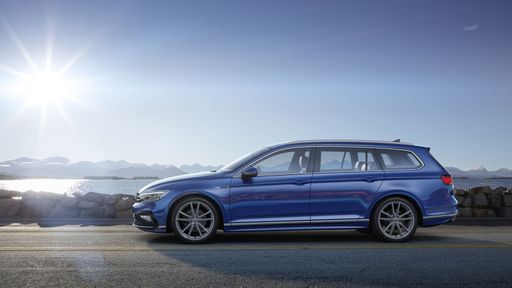
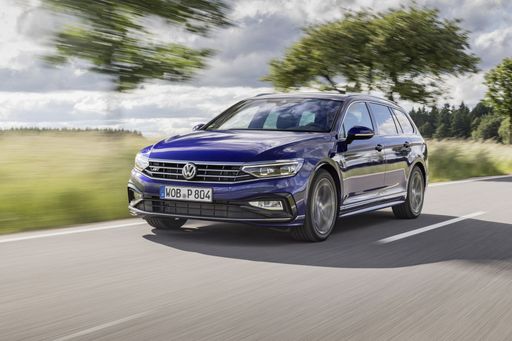
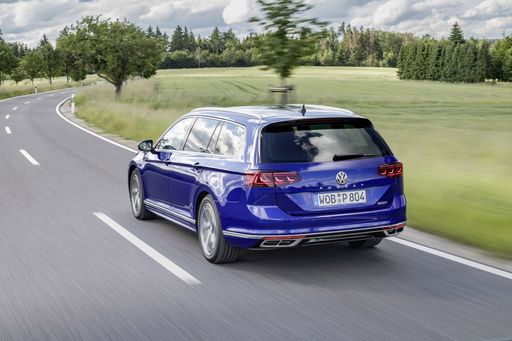
VW Passat

5 (3 Reviews)
rate
  • noticeably more power
  • clearly more efficient
  • barely quicker 0–100 km/h
  • somewhat more trunk space
details

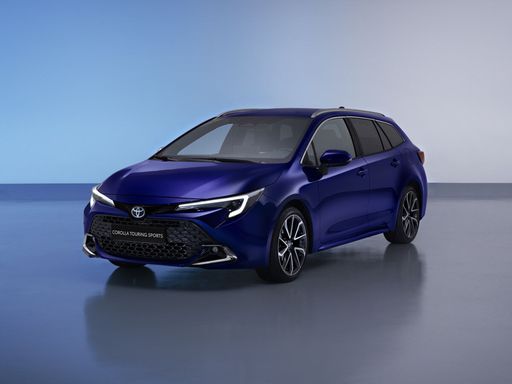
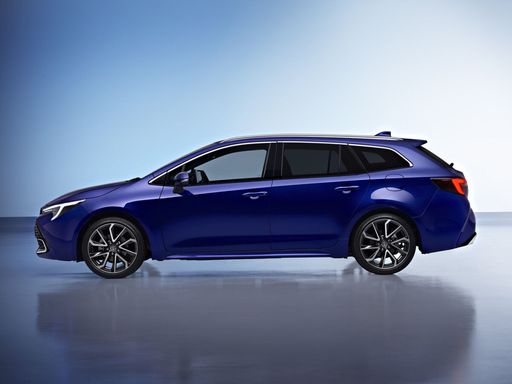
Toyota Corolla Touring Sports

4.4 (2 Reviews)
rate
  • visibly cheaper
  • marginally lighter
details

All details on performance, efficiency, range and trunk space can be found in the technical comparison below – including user reviews for both models.

By Achim Sedelmaier

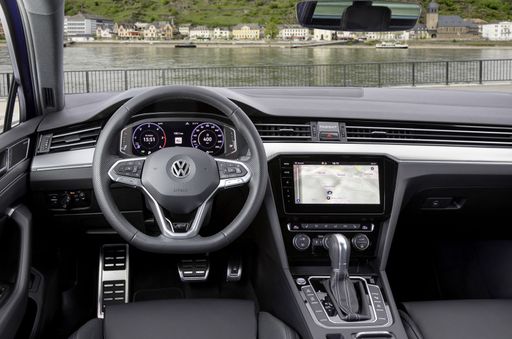
Passat

The Versatile Wagons: Toyota Corolla Touring Sports vs. VW Passat

In the realm of family-friendly, practical, and reliable wagons, both the Toyota Corolla Touring Sports and the VW Passat stand out as exemplary contenders. They blend utility with advanced technology, but how do they stack up against each other in terms of performance, design, and innovation? Let's dive into a comparison of these two automotive stalwarts.
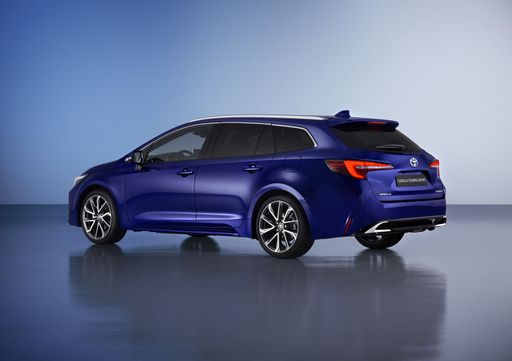
Corolla Touring Sports

Engine Choices and Efficiency

The Toyota Corolla Touring Sports is equipped with a full hybrid engine. This efficient setup comes in two variants offering 140 HP and 196 HP with fuel consumption as low as 4.4 L/100km. It combines a 4-cylinder engine boasting a displacement between 1798 cm³ to 1987 cm³ with a CVT automatic transmission, providing smooth transitions and a stress-free driving experience. The hybrid powertrain is efficient, with CO2 emissions at just 100 g/km, aligning with its C CO2 efficiency class.

On the other hand, the VW Passat provides a broad spectrum of engine types ranging from plug-in hybrids to traditional petrol and diesel options. Notably, the plug-in hybrid version offers an incredible electric range of up to 126 km and outstanding fuel economy of 0.4 L/100km. The power output varies from 122 HP to an impressive 272 HP, while maintaining CO2 emissions in a wide span of 8 to 183 g/km, depending on the model. Additionally, the Passat's plug-in variant is paired with a dual-clutch automatic transmission that delivers a more engaging drive.

Passat

Performance and Driving Dynamics

When it comes to acceleration, the Corolla Touring Sports accelerates from 0-100 km/h between 9.2 to 7.5 seconds. It offers a balanced ride with front-wheel drive contributing to its proficient handling. The maximum speed peaks at 180 km/h, which is suitable for most urban and suburban driving scenarios.

In contrast, the VW Passat exhibits robust performance capabilities, with its most potent version accelerating from 0-100 km/h in just 5.8 seconds reaching top speeds up to 250 km/h. It also has the flexibility of both front-wheel and all-wheel drive configurations catering to diverse driving needs.

Corolla Touring Sports

Interior Space and Practicality

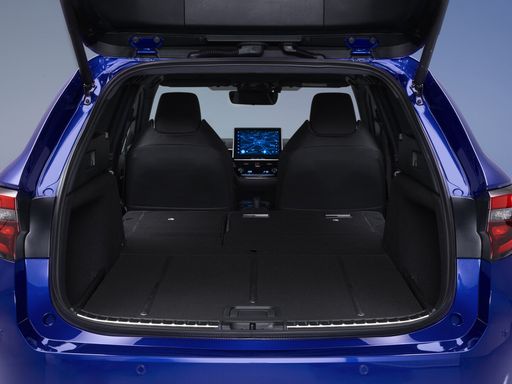
Space and function are crucial in wagon design, and both models cater well to family and cargo needs. The Corolla Touring Sports offers a generous trunk capacity of 596 to 581 liters, and is suitable for a comfortable family collective traveling experience, while seating up to five passengers.

The VW Passat edges slightly ahead in cargo space with trunk options stretching from 510 to 690 liters. It also seats five passengers but places greater emphasis on luxurious and spacious interiors, which is especially evident in its longer body length of 4917 mm as opposed to the Corolla's 4650 mm.

Passat

Cutting-Edge Features and Innovations

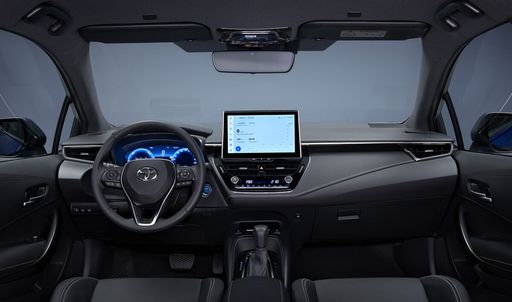
Both models are fitted with state-of-the-art features, but with slightly different focuses. The Corolla Touring Sports leverages Toyota's hybrid technology, offering seamless merging of a petrol engine and electric motor ensuring low emissions and energy efficiency. The broader deployment of such technology ensures that the Corolla is as environmentally friendly as it is reliable.

The VW Passat has made its mark with its plug-in hybrid capabilities, and advanced technological features including its dual-clutch transmission and AI-driven driver assists which enhance an already elevated driving experience. The plethora of engine options also presents more scalability for different consumer needs and regulatory restrictions.

Corolla Touring Sports

Verdict

The Toyota Corolla Touring Sports and the VW Passat both offer compelling packages for savvy wagon consumers. While the Corolla Touring Sports presents a more budget-conscious hybrid solution, the VW Passat impresses with its power, range of engine options, and luxurious offerings. Ultimately, your choice between these two may depend on whether you value eco-efficiency and simplicity or a high-end driving experience with varied power options.

Here’s where it gets real: The technical differences in detail

Passat

Costs and Efficiency:

Looking at overall running costs, both models reveal some interesting differences in everyday economy.

Toyota Corolla Touring Sports is visibly cheaper – starting at 29,600 £ , while the VW Passat costs 36,500 £ . That’s a price difference of around 6,857 £.

Fuel consumption also shows a difference: the VW Passat uses 1.2 L/100km and is clearly more efficient than the Toyota Corolla Touring Sports with 4.4 L/100km. The difference is about 3.2 L/100km.

Corolla Touring Sports

Engine and Performance:

Power, torque and acceleration say a lot about how a car feels on the road. This is where you see which model delivers more driving dynamics.

When it comes to engine power, the VW Passat offers noticeably more power – delivering 272 HP compared to 178 HP. That’s roughly 94 HP more horsepower.

When accelerating from 0 to 100 km/h, the VW Passat is barely quicker – completing the sprint in 7.1 s, while the Toyota Corolla Touring Sports takes 7.5 s. That’s about 0.4 s quicker.

Passat

Space and Everyday Use:

Whether family car or daily driver – which one offers more room, flexibility and comfort?

Both vehicles offer seating for 5 people.

In terms of curb weight, Toyota Corolla Touring Sports is marginally lighter – 1,485 kg compared to 1,573 kg. The difference is around 88 kg.

Looking at boot space, the VW Passat offers somewhat more boot space – 690 L compared to 596 L. That’s a difference of about 94 L.

When it comes to payload, the VW Passat carries markedly more – 577 kg compared to 440 kg. That’s a difference of about 137 kg.

Who wins the race in the data check?

The VW Passat is clearly superior overall in the objective data comparison.
This result only shows which model scores more points on paper – not which of the two cars feels right for you.

from £36,500
Passat

VW Passat

  • Engine Type : Petrol MHEV, Diesel, Plugin Hybrid
  • Transmission : Automatic
  • Drive Type : Front-Wheel Drive, All-Wheel Drive
  • Power HP : 122 - 272 HP
  • Consumption L/100km : 1.2 - 5.8 L/100km
  • Electric Range : 124 - 135 km
VW Passat
Toyota Corolla Touring Sports

Costs and Consumption

View detailed analysis

Engine and Performance

View detailed analysis

Dimensions and Body

View detailed analysis

VW Passat

The VW Passat is the grown-up family car that gets the basics absolutely right — roomy, comfortable and built to handle weekday commutes and weekend getaways without fuss. It won't set your pulse racing, but its calm composure and sensible packaging make it boring in the best possible way: a dependable, no‑drama choice for buyers who value practicality over flash.

details

Toyota Corolla Touring Sports

The Toyota Corolla Touring Sports is a sensible yet stylish estate that blends everyday practicality with Toyota's trademark reliability, making it the kind of car that quietly gets on with family life without drama. Inside it's cleverly packaged for luggage and kids' gear and feels calm and comfortable on the road — sensible rather than flashy, but with enough character to make daily drives more enjoyable.

details
VW Passat
Toyota Corolla Touring Sports

Costs and Consumption

Price
36,500 - 58,500 £
Price
29,600 - 36,400 £
Consumption L/100km
1.2 - 5.8 L/100km
Consumption L/100km
4.4 L/100km
Consumption kWh/100km
-
Consumption kWh/100km
-
Electric Range
124 - 135 km
Electric Range
-
Battery Capacity
-
Battery Capacity
-
co2
28 - 153 g/km
co2
100 g/km
Fuel tank capacity
-
Fuel tank capacity
43 L

Dimensions and Body

Body Type
Estate
Body Type
Estate
Seats
5
Seats
5
Doors
-
Doors
5
Curb weight
1,573 - 1,858 kg
Curb weight
1,485 - 1,515 kg
Trunk capacity
510 - 690 L
Trunk capacity
581 - 596 L
Length
-
Length
4,650 mm
Width
1,849 mm
Width
1,790 mm
Height
-
Height
1,435 mm
Max trunk capacity
-
Max trunk capacity
1,591 - 1,606 L
Payload
501 - 577 kg
Payload
400 - 440 kg

Engine and Performance

Engine Type
Petrol MHEV, Diesel, Plugin Hybrid
Engine Type
Full Hybrid
Transmission
Automatic
Transmission
Automatic
Transmission Detail
Dual-Clutch Automatic
Transmission Detail
CVT
Drive Type
Front-Wheel Drive, All-Wheel Drive
Drive Type
Front-Wheel Drive
Power HP
122 - 272 HP
Power HP
140 - 178 HP
Acceleration 0-100km/h
7.1 - 10.7 s
Acceleration 0-100km/h
7.5 - 9.2 s
Max Speed
-
Max Speed
180 km/h
Torque
250 - 400 Nm
Torque
-
Number of Cylinders
4
Number of Cylinders
4
Power kW
90 - 200 kW
Power kW
103 - 131 kW
Engine capacity
1,498 - 1,968 cm3
Engine capacity
1,798 - 1,987 cm3

General

Model Year
2,024 - 2,025
Model Year
2025
CO2 Efficiency Class
D, E, B
CO2 Efficiency Class
C
Brand
VW
Brand
Toyota
DriveDuel uses data analysis and artificial intelligence to evaluate vehicle data and create content. Content is regularly reviewed and improved. The displayed prices are estimates based on German list prices, adjusted to the respective country’s VAT. Country-specific registration taxes are not included. This information is not legally binding.