VS

VW Polo vs Hyundai i10 comparison

Compare performance (207 HP vs 90 HP), boot space and price (17,300 £ vs 14,600 £ ) at a glance. Find out which car is the better choice for you – VW Polo or Hyundai i10?

VW Polo vs Hyundai i10: Key differences

VW Polo

4.1 (3 Reviews)
rate
  • substantially more power
  • significantly quicker 0–100 km/h
  • markedly more trunk space
details

Hyundai i10

5 (1 Reviews)
rate
  • a bit cheaper
  • only slightly more efficient
  • moderately lighter
details

All details on performance, efficiency, range and trunk space can be found in the technical comparison below – including user reviews for both models.

By Achim Sedelmaier

Polo

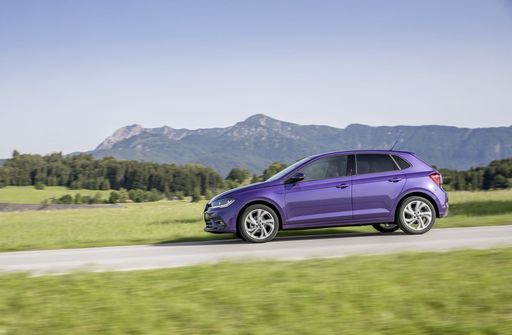
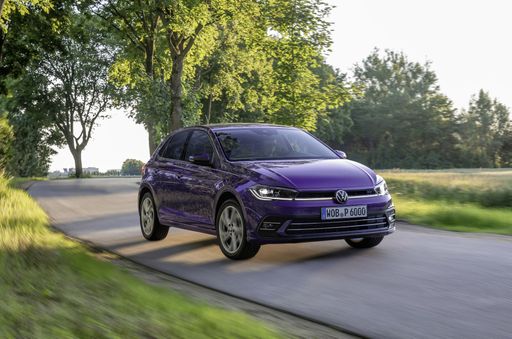
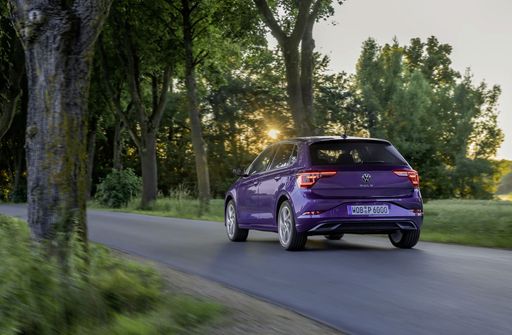
In the competitive landscape of small hatchbacks, the Hyundai i10 and VW Polo stand out as two strong contenders. While both cars cater to urban dwellers who appreciate compactness without compromising on functionality, they each bring distinct characteristics and technological innovations to the table. This article dives into a comprehensive comparison to help potential buyers make an informed decision.
i10

Design and Dimensions

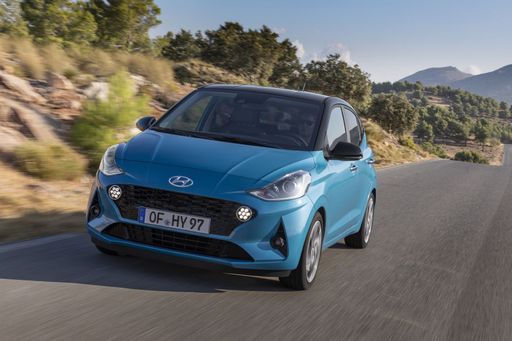
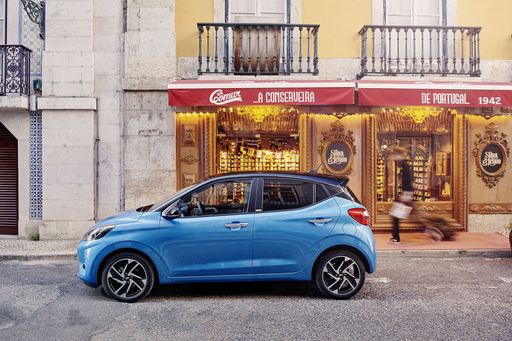
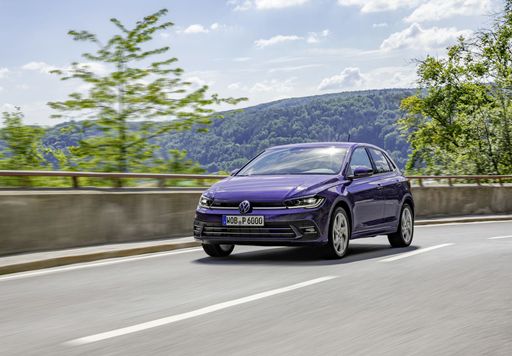
Starting with the dimensions, the Hyundai i10 measures 3,670 mm in length and 1,680 mm in width, while the VW Polo is larger at 4,074 mm long and 1,751 mm wide. The increased size of the Polo naturally translates to a more spacious interior and a trunk capacity of 351 liters, compared to the i10's 252 liters. Despite its smaller size, the i10's compact nature makes it easy to navigate through narrow streets and tight parking spots, a significant advantage in urban environments.

Polo

Powertrain Options

Under the hood, the engine configurations diverge significantly. The Hyundai i10 offers a range of petrol engines, with power outputs ranging from 63 HP to 90 HP and engine capacities of up to 1.2 liters. The i10 also prides itself on its fuel efficiency, with consumption ratings between 4.9 to 5.4 L/100km. On the flip side, the VW Polo boasts a broader range of engines, offering outputs from 80 HP up to a powerful 207 HP with a larger 2.0-liter engine option in its GTI variant. This diversity allows for a tailored driving experience depending on the buyer’s performance preferences.

i10

Transmission and Performance

Both models come equipped with manual and automatic transmission options. The i10 features a standard manual gearbox and an automated manual, while the Polo implements a more sophisticated dual-clutch automatic system, providing a smoother and quicker shift experience. In terms of acceleration, the i10 can reach 100 km/h in as little as 11.4 seconds, while the swiftest Polo can do so in a rapid 6.5 seconds, appealing to those who prioritize performance.

Polo

Fuel Efficiency and CO2 Emissions

When it comes to fuel consumption, the i10 excels with a lower average of 5.2 L/100km across its variants, whereas the Polo varies from 5.2 to 6.5 L/100km depending on the engine option selected. Emission ratings also vary, with the i10 achieving a CO2 output ranging from 111 to 122 g/km, while the Polo's emissions are higher, peaking at 149 g/km for its sportiest model. Buyers mindful of environmental impact may prefer the i10 for its better efficiency.

i10

Interior and Innovations

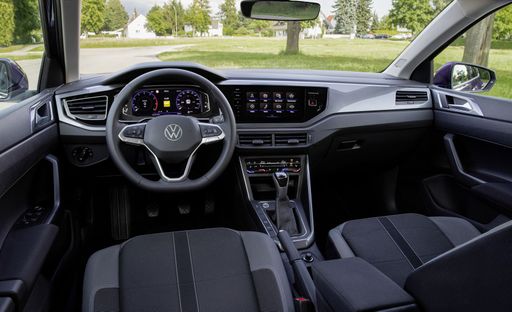
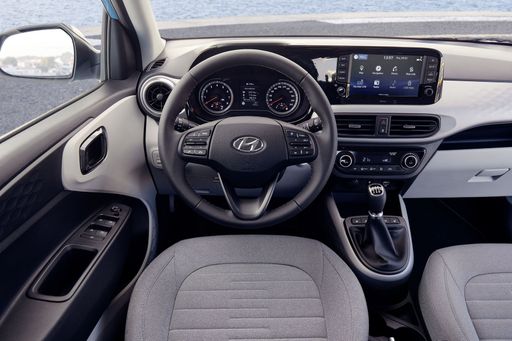
The interior of both cars features modern amenities, but the Polo typically boasts a more premium feel with higher quality materials and advanced infotainment systems. The latest Polo incorporates a fully digital cockpit and innovative connectivity options, including integration with smartphone apps. Meanwhile, the i10 offers a user-friendly infotainment system with essential features and solid build quality that make it a practical choice.

Polo

Safety Features

Safety is a paramount concern for compact car buyers, and both models come with a host of features. The Polo, with its advanced driver-assistance systems, provides higher marks in crash safety ratings. Meanwhile, the i10 also includes essential safety features, such as airbags and stability control, making it a reliable option for city driving.

i10

Conclusion

In conclusion, the choice between the Hyundai i10 and VW Polo ultimately comes down to personal preference and priorities. The i10 shines with its compact size, fuel efficiency, and affordability, making it a superb choice for city dwellers. On the other hand, the VW Polo's performance, space, and premium features make it suitable for individuals seeking a sportier drive. Regardless of your choice, both vehicles stand as strong candidates in the competitive hatchback segment, appealing to a wide variety of drivers.

Here’s where it gets real: The technical differences in detail

Polo

Costs and Efficiency:

Price and efficiency are often the first things buyers look at. Here it becomes clear which model has the long-term edge – whether at the pump, the plug, or in purchase price.

Hyundai i10 is a bit cheaper – starting at 14,600 £ , while the VW Polo costs 17,300 £ . That’s a price difference of around 2,696 £.

Fuel consumption also shows a difference: the Hyundai i10 uses 4.9 L/100km and is only slightly more efficient than the VW Polo with 5.1 L/100km. The difference is about 0.2 L/100km.

i10

Engine and Performance:

Power, torque and acceleration say a lot about how a car feels on the road. This is where you see which model delivers more driving dynamics.

When it comes to engine power, the VW Polo offers substantially more power – delivering 207 HP compared to 90 HP. That’s roughly 117 HP more horsepower.

When accelerating from 0 to 100 km/h, the VW Polo is significantly quicker – completing the sprint in 6.5 s, while the Hyundai i10 takes 11.4 s. That’s about 4.9 s quicker.

There’s also a difference in torque: the VW Polo delivers clearly more torque with 320 Nm compared to 172 Nm. That’s about 148 Nm more.

Polo

Space and Everyday Use:

Whether family car or daily driver – which one offers more room, flexibility and comfort?

Both vehicles offer seating for 5 people.

In terms of curb weight, Hyundai i10 is moderately lighter – 996 kg compared to 1,143 kg. The difference is around 147 kg.

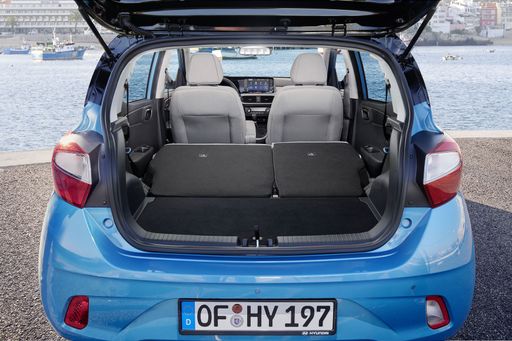
Looking at boot space, the VW Polo offers markedly more boot space – 351 L compared to 252 L. That’s a difference of about 99 L.

When it comes to payload, the VW Polo carries barely more – 457 kg compared to 423 kg. That’s a difference of about 34 kg.

Who wins the race in the data check?

The VW Polo is decisively ahead in the objective data comparison.
This result only shows which model scores more points on paper – not which of the two cars feels right for you.

from £17,300
Polo

VW Polo

  • Engine Type : Petrol
  • Transmission : Manuel, Automatic
  • Drive Type : Front-Wheel Drive
  • Power HP : 80 - 207 HP
  • Consumption L/100km : 5.1 - 6.5 L/100km
VW Polo
Hyundai i10

Costs and Consumption

View detailed analysis

Engine and Performance

View detailed analysis

Dimensions and Body

View detailed analysis

VW Polo

The Polo is a small car with surprisingly grown-up refinement, delivering comfortable packaging, crisp handling and a build quality that punches above its class. For buyers who want a practical, fuss-free hatch that still feels a little premium, it’s a sensible, slightly cheeky choice you’ll enjoy every day.

details

Hyundai i10

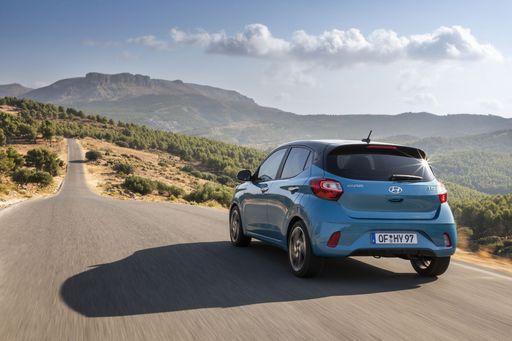
The Hyundai i10 is a cheeky city car that squeezes big-car confidence into a pocket-friendly package, carving through tight streets with surprising composure and sensible practicality. For buyers after low fuss, sensible equipment and wallet-friendly running costs, it's a smart, no-nonsense pick that makes sense whether you're a first-time driver or need a reliable second car.

details
VW Polo
Hyundai i10

Costs and Consumption

Price
17,300 - 30,800 £
Price
14,600 - 19,000 £
Consumption L/100km
5.1 - 6.5 L/100km
Consumption L/100km
4.9 - 5.5 L/100km
Consumption kWh/100km
-
Consumption kWh/100km
-
Electric Range
-
Electric Range
-
Battery Capacity
-
Battery Capacity
-
co2
116 - 148 g/km
co2
110 - 124 g/km
Fuel tank capacity
-
Fuel tank capacity
36 L

Dimensions and Body

Body Type
Hatchback
Body Type
Hatchback
Seats
5
Seats
4 - 5
Doors
-
Doors
5
Curb weight
1,143 - 1,378 kg
Curb weight
996 - 1,099 kg
Trunk capacity
351 L
Trunk capacity
252 L
Length
-
Length
3,670 - 3,675 mm
Width
1,751 mm
Width
1,680 mm
Height
-
Height
1,480 - 1,483 mm
Max trunk capacity
-
Max trunk capacity
1,050 L
Payload
432 - 457 kg
Payload
344 - 423 kg

Engine and Performance

Engine Type
Petrol
Engine Type
Petrol
Transmission
Manuel, Automatic
Transmission
Manuel, Automatic
Transmission Detail
Manual Gearbox, Dual-Clutch Automatic
Transmission Detail
Manual Gearbox, Automated Manual
Drive Type
Front-Wheel Drive
Drive Type
Front-Wheel Drive
Power HP
80 - 207 HP
Power HP
63 - 90 HP
Acceleration 0-100km/h
6.5 - 15.6 s
Acceleration 0-100km/h
11.4 - 18.4 s
Max Speed
-
Max Speed
143 - 175 km/h
Torque
93 - 320 Nm
Torque
93 - 172 Nm
Number of Cylinders
3 - 4
Number of Cylinders
3 - 4
Power kW
59 - 152 kW
Power kW
46 - 66 kW
Engine capacity
999 - 1,984 cm3
Engine capacity
998 - 1,197 cm3

General

Model Year
2,024 - 2,025
Model Year
2024
CO2 Efficiency Class
D, E
CO2 Efficiency Class
C, D
Brand
VW
Brand
Hyundai
DriveDuel uses data analysis and artificial intelligence to evaluate vehicle data and create content. Content is regularly reviewed and improved. The displayed prices are estimates based on German list prices, adjusted to the respective country’s VAT. Country-specific registration taxes are not included. This information is not legally binding.