VS

VW Polo vs Toyota Yaris comparison

Compare performance (207 HP vs 280 HP), boot space and price (17,300 £ vs 21,900 £ ) at a glance. Find out which car is the better choice for you – VW Polo or Toyota Yaris?

VW Polo vs Toyota Yaris: Key differences

VW Polo

4.1 (3 Reviews)
rate
  • noticeably cheaper
  • moderately more trunk space
details

Toyota Yaris

3.9 (3 Reviews)
rate
  • visibly more power
  • clearly more efficient
  • a bit quicker 0–100 km/h
  • marginally lighter
details

All details on performance, efficiency, range and trunk space can be found in the technical comparison below – including user reviews for both models.

By Achim Sedelmaier

Polo

Battle of the Hatchbacks: Toyota Yaris vs VW Polo

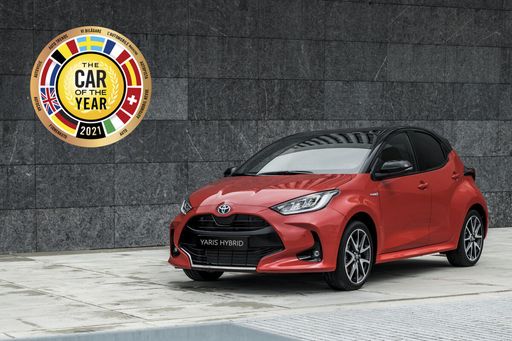
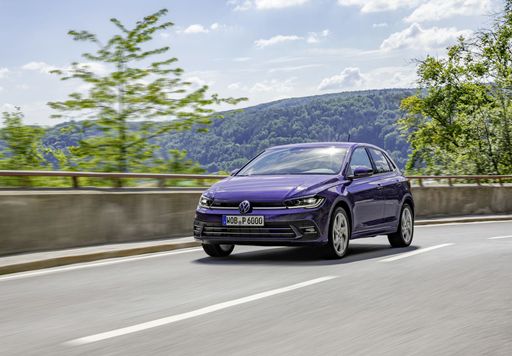
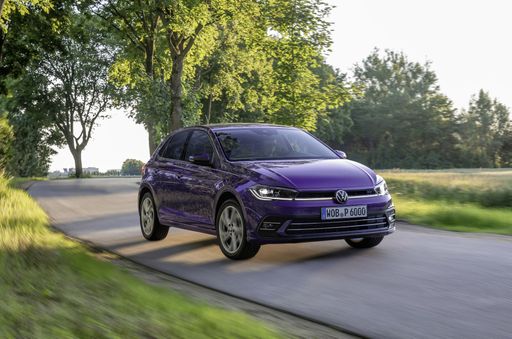
The compact car segment has long been a competitive battlefield, and the latest models from Toyota and Volkswagen are no exception. The Toyota Yaris and VW Polo are two of the most popular choices, and both have come a long way in terms of innovation, design, and technical prowess. Let's dive into a detailed comparison between the two to see how they stack up against each other.

Yaris

Performance and Engine Options

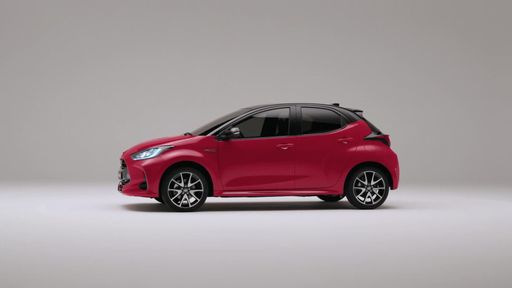
The Toyota Yaris is available in both full hybrid and petrol engine configurations, offering drivers a choice between eco-efficiency and traditional power. The hybrid version delivers 116 HP with impressive fuel consumption of just 3.8 L/100km, while the petrol variants go up to 130 HP and even a sporty 280 HP for those seeking a thrill. With acceleration from 0-100 km/h in as quick as 5.5 seconds for the higher-end models, the Yaris doesn't compromise on performance.

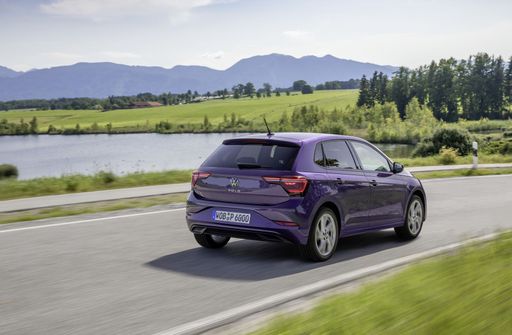
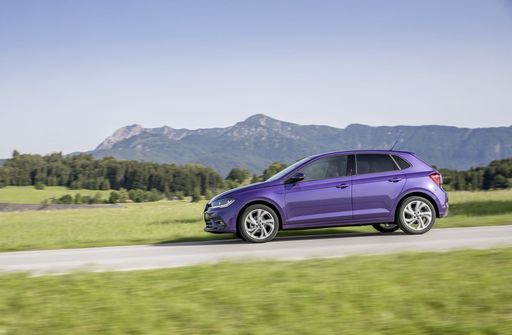
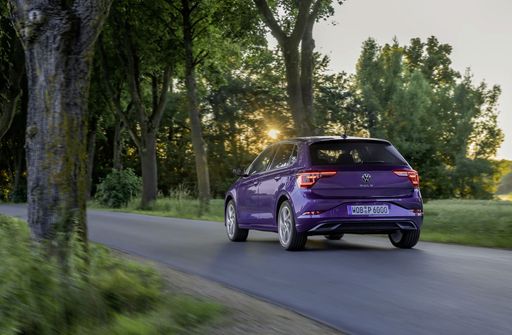
On the other hand, the VW Polo sticks to petrol engines, offering a range of power outputs from 80 HP to a peppy 207 HP. The Polo’s most efficient model consumes 5.1 L/100km, making it slightly less fuel-efficient than the Yaris hybrid. Acceleration varies from a modest 15.6 seconds to a swift 6.5 seconds to reach 100 km/h, showing that it caters to a wide audience.

Polo

Transmission and Drive

Toyota’s Yaris provides both automatic and manual transmissions, catering to different driving preferences. The front-wheel-drive setup is standard, although an all-wheel-drive option enhances its appeal, especially for those who face tougher driving conditions.

VW Polo offers a choice between a manual gearbox and a dual-clutch automatic transmission, renowned for its smooth and rapid gear changes. Like the Yaris, it also features front-wheel drive, which is typical for this vehicle class.

Yaris

Design and Dimensions

In terms of dimensions, the Yaris is slightly shorter at 3940 mm compared to the Polo’s 4074 mm, which may appeal to city drivers looking for ease of maneuverability and parking. The Yaris is also marginally wider, promising a more planted stance on the road. Height-wise, both vehicles are quite similar, with the Polo slightly lower in some configurations, which could enhance aerodynamic efficiency.

Both vehicles offer five doors and a comfortable seating capacity for five occupants, making them practical choices for families or shared use. The VW Polo, however, boasts a slightly larger trunk capacity of 351 L versus the Yaris's 286 L, making it more suitable for those with frequent cargo-carrying needs.

Polo

Innovation and Features

The Toyota Yaris stands out with its hybrid technology, which is not only a boost to its fuel efficiency but also contributes to a lower carbon footprint, featuring CO2 efficiency classes ranging from B to G. Innovative safety features and driver aids are expected, although specific details depend on the trim level chosen.

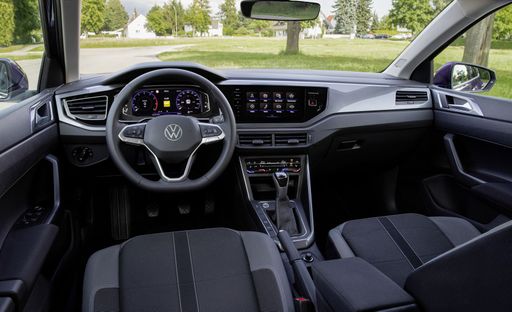
VW Polo focuses on delivering technological sophistication through its infotainment systems and driver assistance technologies. The Polo's lineup includes a variety of trims that allow for personal customization concerning tech features, comfort, and luxury.

Conclusion

Choosing between the Toyota Yaris and VW Polo ultimately depends on what's most important to the driver. The Yaris excels in fuel economy and environmental consideration, thanks to its hybrid option, making it a great choice for eco-conscious urban drivers. The Polo, however, provides a touch more interior space and a wider range of traditional powertrains, appealing to those who prioritize practicality and technological extras.

Both models have their unique strengths and offer exceptional value in the ever-evolving world of compact hatchbacks. Whatever your choice may be, both Toyota and Volkswagen have ensured that you won’t be disappointed.

Here’s where it gets real: The technical differences in detail

Polo

Costs and Efficiency:

When it comes to price and running costs, the biggest differences usually appear. This is often where you see which car fits your budget better in the long run.

VW Polo is noticeably cheaper – starting at 17,300 £ , while the Toyota Yaris costs 21,900 £ . That’s a price difference of around 4,599 £.

Fuel consumption also shows a difference: the Toyota Yaris uses 3.8 L/100km and is clearly more efficient than the VW Polo with 5.1 L/100km. The difference is about 1.3 L/100km.

Yaris

Engine and Performance:

Under the bonnet, it becomes clear which model is tuned for sportiness and which one takes the lead when you hit the accelerator.

When it comes to engine power, the Toyota Yaris offers visibly more power – delivering 280 HP compared to 207 HP. That’s roughly 73 HP more horsepower.

When accelerating from 0 to 100 km/h, the Toyota Yaris is a bit quicker – completing the sprint in 5.5 s, while the VW Polo takes 6.5 s. That’s about 1 s quicker.

There’s also a difference in torque: the Toyota Yaris delivers slightly more torque with 390 Nm compared to 320 Nm. That’s about 70 Nm more.

Polo

Space and Everyday Use:

Beyond pure performance, interior space and usability matter most in daily life. This is where you see which car is more practical and versatile.

Both vehicles offer seating for 5 people.

In terms of curb weight, Toyota Yaris is marginally lighter – 1,090 kg compared to 1,143 kg. The difference is around 53 kg.

Looking at boot space, the VW Polo offers moderately more boot space – 351 L compared to 286 L. That’s a difference of about 65 L.

When it comes to payload, the Toyota Yaris carries moderately more – 525 kg compared to 457 kg. That’s a difference of about 68 kg.

Who wins the race in the data check?

The Toyota Yaris holds a decisive overall lead in the objective data comparison.
This result only shows which model scores more points on paper – not which of the two cars feels right for you.

from £21,900
Yaris

Toyota Yaris

  • Engine Type : Full Hybrid, Petrol
  • Transmission : Automatic, Manuel
  • Drive Type : Front-Wheel Drive, All-Wheel Drive
  • Power HP : 116 - 280 HP
  • Consumption L/100km : 3.8 - 8.7 L/100km
VW Polo
Toyota Yaris

Costs and Consumption

View detailed analysis

Engine and Performance

View detailed analysis

Dimensions and Body

View detailed analysis

VW Polo

The Polo is a small car with surprisingly grown-up refinement, delivering comfortable packaging, crisp handling and a build quality that punches above its class. For buyers who want a practical, fuss-free hatch that still feels a little premium, it’s a sensible, slightly cheeky choice you’ll enjoy every day.

details

Toyota Yaris

The Toyota Yaris is a sprightly city hatch that packs clever packaging, surprising comfort and fuel-sipping manners into a neat, easy-to-park package. It rewards sensible buyers with low running costs, friendly ergonomics and a forgiving drive, delivered with Japanese reliability and just enough personality to make errands feel a little less ordinary.

details
VW Polo
Toyota Yaris

Costs and Consumption

Price
17,300 - 30,800 £
Price
21,900 - 40,800 £
Consumption L/100km
5.1 - 6.5 L/100km
Consumption L/100km
3.8 - 8.7 L/100km
Consumption kWh/100km
-
Consumption kWh/100km
-
Electric Range
-
Electric Range
-
Battery Capacity
-
Battery Capacity
-
co2
116 - 148 g/km
co2
87 - 197 g/km
Fuel tank capacity
-
Fuel tank capacity
-

Dimensions and Body

Body Type
Hatchback
Body Type
Hatchback
Seats
5
Seats
4 - 5
Doors
-
Doors
-
Curb weight
1,143 - 1,378 kg
Curb weight
1,090 - 1,356 kg
Trunk capacity
351 L
Trunk capacity
141 - 286 L
Length
-
Length
-
Width
1,751 mm
Width
1,745 - 1,805 mm
Height
-
Height
-
Max trunk capacity
-
Max trunk capacity
-
Payload
432 - 457 kg
Payload
289 - 525 kg

Engine and Performance

Engine Type
Petrol
Engine Type
Full Hybrid, Petrol
Transmission
Manuel, Automatic
Transmission
Automatic, Manuel
Transmission Detail
Manual Gearbox, Dual-Clutch Automatic
Transmission Detail
CVT, Manual Gearbox
Drive Type
Front-Wheel Drive
Drive Type
Front-Wheel Drive, All-Wheel Drive
Power HP
80 - 207 HP
Power HP
116 - 280 HP
Acceleration 0-100km/h
6.5 - 15.6 s
Acceleration 0-100km/h
5.5 - 9.7 s
Max Speed
-
Max Speed
-
Torque
93 - 320 Nm
Torque
390 Nm
Number of Cylinders
3 - 4
Number of Cylinders
3
Power kW
59 - 152 kW
Power kW
85 - 206 kW
Engine capacity
999 - 1,984 cm3
Engine capacity
1,490 - 1,618 cm3

General

Model Year
2,024 - 2,025
Model Year
2026
CO2 Efficiency Class
D, E
CO2 Efficiency Class
B, G
Brand
VW
Brand
Toyota
DriveDuel uses data analysis and artificial intelligence to evaluate vehicle data and create content. Content is regularly reviewed and improved. The displayed prices are estimates based on German list prices, adjusted to the respective country’s VAT. Country-specific registration taxes are not included. This information is not legally binding.