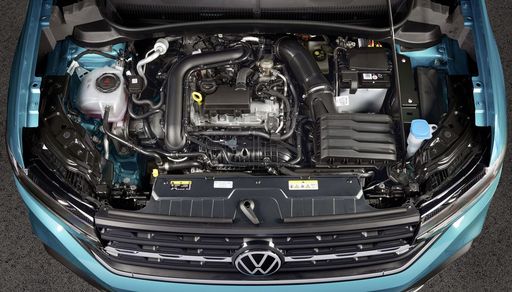
VS

VW T-Cross vs Fiat 600 comparison

Compare performance (150 HP vs 156 HP), boot space and price (21,400 £ vs 21,000 £ ) at a glance. Find out which car is the better choice for you – VW T-Cross or Fiat 600?

VW T-Cross vs Fiat 600: Key differences

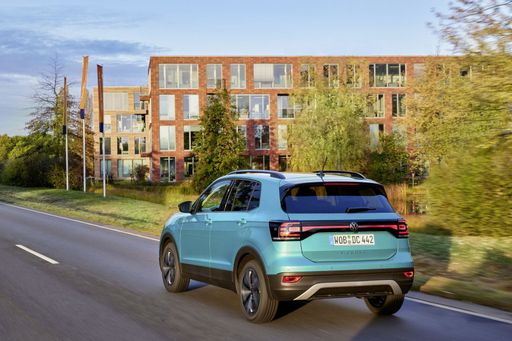
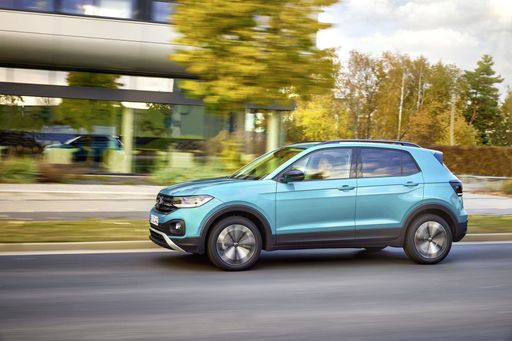
VW T-Cross

4 (5 Reviews)
rate
  • only slightly quicker 0–100 km/h
  • moderately more trunk space
details

Fiat 600

4.8 (3 Reviews)
rate
  • only slightly cheaper
  • marginally more power
  • somewhat more efficient
  • very slightly lighter
details

All details on performance, efficiency, range and trunk space can be found in the technical comparison below – including user reviews for both models.

By Achim Sedelmaier

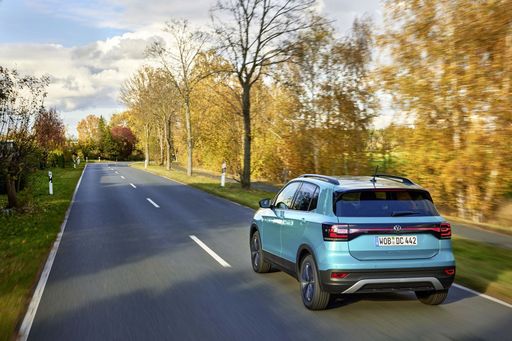
T-Cross

Fiat 600 vs VW T-Cross: A Clash of Compact SUVs

In the world of compact SUVs, buyers often weigh options between well-known brands to find the perfect blend of performance, comfort, and technological innovation. Today, we're putting two popular choices head-to-head: the Fiat 600 and the VW T-Cross. Both models represent the latest in their respective lineups, but which stands out as the more compelling purchase?
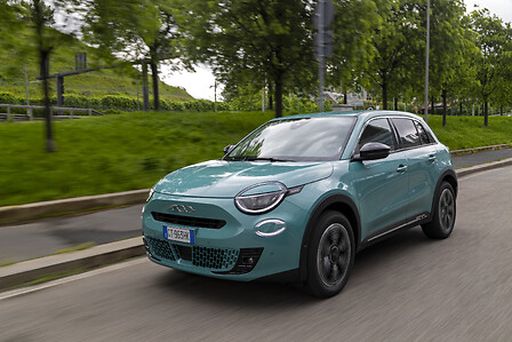
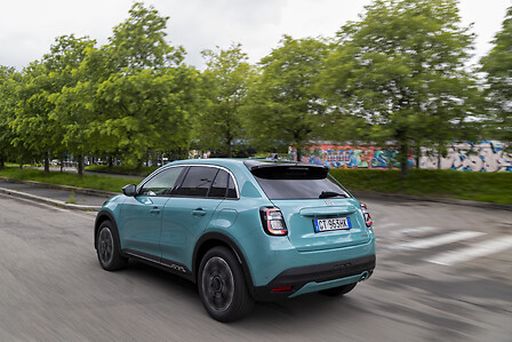
600

Engine Options and Performance

The Fiat 600 offers a range of powertrains to cater to diverse driver needs. From a petrol MHEV with a 1.2-liter three-cylinder engine producing 100 HP, to fully electric options delivering up to 156 HP, Fiat ensures versatility. The hybrid version delivers an efficient fuel consumption of 4.8L/100km, while the electric variant boasts an impressive range of 409 km on a 51 kWh battery, a significant edge for eco-conscious drivers.

Meanwhile, the VW T-Cross enters the scene with a trio of petrol engines. Starting with a 999 cc engine outputting 95 HP, the power numbers climb to a vigorous 150 HP with a 1.5-liter engine. Although the T-Cross has a slightly higher fuel consumption rate, between 5.6 to 6 L/100km, and emits slightly more CO2, its appeal lies in varied manual and automatic gearbox options.

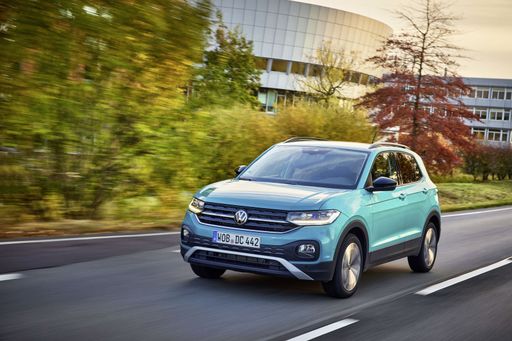
T-Cross

Speed and Handling

Performance seekers looking for quick acceleration will find the Fiat 600 quite satisfactory, with the electric model achieving 0-100 km/h in just 8.5 seconds and reaching a top speed of 200 km/h. The VW T-Cross isn't far behind, hitting the 100 km/h mark in 8.4 seconds with its top engine option, and matching the maximum speed of 200 km/h. Front-wheel drive configurations dominate both competitors, providing stable, predictable handling.

600

Comfort and Interior Space

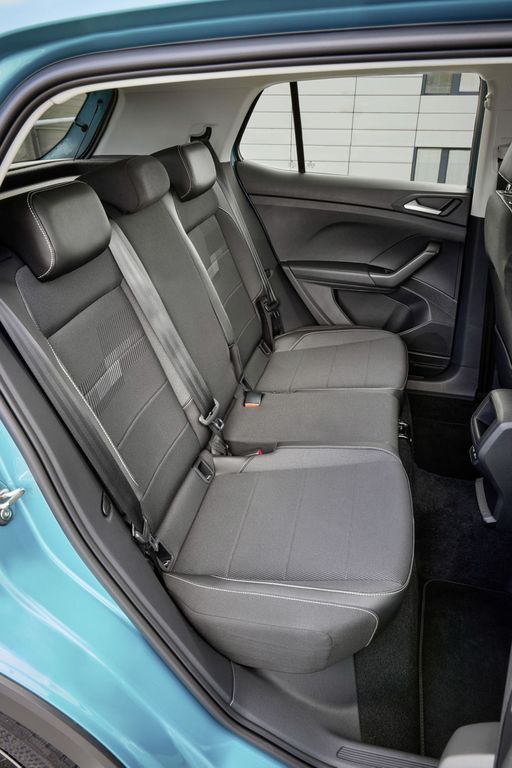
Both the Fiat 600 and VW T-Cross feature seating for five, with thoughtful layouts to maximize space. The T-Cross offers a slightly larger trunk with a capacity of 455 liters, compared to the Fiat's 385 liters, making it a better choice for those who prioritize cargo space.

In terms of dimensions, the T-Cross is longer and taller, providing a touch more headroom, while the Fiat is marginally wider, which might offer enhanced shoulder space. Fiat's recent models are renowned for their chic interiors and intuitive layouts, while Volkswagen upholds its tradition of delivering a functional, well-built cabin.

T-Cross

Technical Innovations and Features

Fiat’s offerings include a dual-clutch automatic transmission and cutting-edge hybrid technology, ensuring smooth gear changes coupled with fuel efficiency. Especially noteworthy is the Fiat 600's electric variant, which is tailored for urban mobility with zero emissions and strong torque figures, up to 260 Nm.

The VW T-Cross complements its automotive prowess with a suite of safety features and driving aids that keep Volkswagen's reputation for reliability intact. Its latest iterations boast advanced infotainment systems, aligning with modern drivers' connectivity demands.

The Final Verdict

Choosing between the Fiat 600 and VW T-Cross rests on your specific needs and environmental considerations. The Fiat 600 promises a slight edge in green technology and innovate hybrid-electric choices, making it a prime candidate for those looking for an environmentally friendly but spirited drive. In contrast, the VW T-Cross offers a more traditional experience with its robust build quality and ample storage space, appealing particularly to long-time SUV aficionados who value practicality and space.

Ultimately, both vehicles bring their unique strengths to the compact SUV segment, proving that there is no one-size-fits-all solution in the diverse world of automotive excellence.

Here’s where it gets real: The technical differences in detail

T-Cross

Costs and Efficiency:

Price and efficiency are often the first things buyers look at. Here it becomes clear which model has the long-term edge – whether at the pump, the plug, or in purchase price.

Fiat 600 is only slightly cheaper – starting at 21,000 £ , while the VW T-Cross costs 21,400 £ . That’s a price difference of around 403 £.

Fuel consumption also shows a difference: the Fiat 600 uses 4.8 L/100km and is somewhat more efficient than the VW T-Cross with 5.4 L/100km. The difference is about 0.6 L/100km.

600

Engine and Performance:

Power, torque and acceleration say a lot about how a car feels on the road. This is where you see which model delivers more driving dynamics.

When it comes to engine power, the Fiat 600 offers marginally more power – delivering 156 HP compared to 150 HP. That’s roughly 6 HP more horsepower.

When accelerating from 0 to 100 km/h, the VW T-Cross is only slightly quicker – completing the sprint in 8.4 s, while the Fiat 600 takes 8.5 s. That’s about 0.1 s quicker.

There’s also a difference in torque: the Fiat 600 delivers very slightly more torque with 260 Nm compared to 250 Nm. That’s about 10 Nm more.

T-Cross

Space and Everyday Use:

Beyond pure performance, interior space and usability matter most in daily life. This is where you see which car is more practical and versatile.

Both vehicles offer seating for 5 people.

In terms of curb weight, Fiat 600 is very slightly lighter – 1,265 kg compared to 1,267 kg. The difference is around 2 kg.

Looking at boot space, the VW T-Cross offers moderately more boot space – 455 L compared to 385 L. That’s a difference of about 70 L.

When it comes to payload, the Fiat 600 carries marginally more – 517 kg compared to 480 kg. That’s a difference of about 37 kg.

Who wins the race in the data check?

The Fiat 600 is clearly superior overall in the objective data comparison.
This result only shows which model scores more points on paper – not which of the two cars feels right for you.

from £21,000
600

Fiat 600

  • Engine Type Petrol MHEV, Electric, Petrol
  • Transmission Automatic, Manuel
  • Drive Type Front-Wheel Drive
  • Power HP 100 - 156 HP
  • Consumption L/100km 4.8 - 5.7 L/100km
  • Consumption kWh/100km 15.1 kWh/100km
  • Electric Range 409 km
VW T-Cross
Fiat 600

Costs and Consumption

View detailed analysis

Engine and Performance

View detailed analysis

Dimensions and Body

View detailed analysis

VW T-Cross

The VW T-Cross is a small, city-friendly crossover that blends practical packaging with easygoing driving manners and a high seating position for good visibility. It’s a sensible, comfortable choice for buyers who want the convenience and style of an SUV without big compromises.

details

Fiat 600

The Fiat 600 is small, cheeky and utterly charming, a pocket-sized Italian that packs more personality than its size suggests. Ideal for city buyers who want fuss-free motoring with a playful driving character, it puts smiles ahead of spreadsheets.

details
VW T-Cross
Fiat 600

Costs and Consumption

Price
21,400 - 32,000 £
Price
21,000 - 31,300 £
Consumption L/100km
5.4 - 6 L/100km
Consumption L/100km
4.8 - 5.7 L/100km
Consumption kWh/100km
-
Consumption kWh/100km
15.1 kWh/100km
Electric Range
-
Electric Range
409 km
Battery Capacity
-
Battery Capacity
-
co2
124 - 136 g/km
co2
0 - 129 g/km
Fuel tank capacity
-
Fuel tank capacity
-

Dimensions and Body

Body Type
SUV
Body Type
SUV
Seats
5
Seats
5
Doors
-
Doors
-
Curb weight
1,267 - 1,338 kg
Curb weight
1,265 - 1,595 kg
Trunk capacity
455 L
Trunk capacity
360 - 385 L
Length
-
Length
-
Width
1,784 mm
Width
1,779 mm
Height
-
Height
-
Max trunk capacity
-
Max trunk capacity
-
Payload
463 - 480 kg
Payload
427 - 517 kg

Engine and Performance

Engine Type
Petrol
Engine Type
Petrol MHEV, Electric, Petrol
Transmission
Manuel, Automatic
Transmission
Automatic, Manuel
Transmission Detail
Manual Gearbox, Dual-Clutch Automatic
Transmission Detail
Dual-Clutch Automatic, Reduction Gearbox, Manual Gearbox
Drive Type
Front-Wheel Drive
Drive Type
Front-Wheel Drive
Power HP
95 - 150 HP
Power HP
100 - 156 HP
Acceleration 0-100km/h
8.4 - 11.3 s
Acceleration 0-100km/h
8.5 - 10.6 s
Max Speed
-
Max Speed
-
Torque
175 - 250 Nm
Torque
205 - 260 Nm
Number of Cylinders
3 - 4
Number of Cylinders
3
Power kW
70 - 110 kW
Power kW
74 - 115 kW
Engine capacity
999 - 1,498 cm3
Engine capacity
1,199 cm3

General

Model Year
2,024 - 2,025
Model Year
2,025 - 2,026
CO2 Efficiency Class
D, E
CO2 Efficiency Class
C, A, D
Brand
VW
Brand
Fiat
DriveDuel uses data analysis and artificial intelligence to evaluate vehicle data and create content. Content is regularly reviewed and improved. The displayed prices are estimates based on German list prices, adjusted to the respective country’s VAT. Country-specific registration taxes are not included. This information is not legally binding.