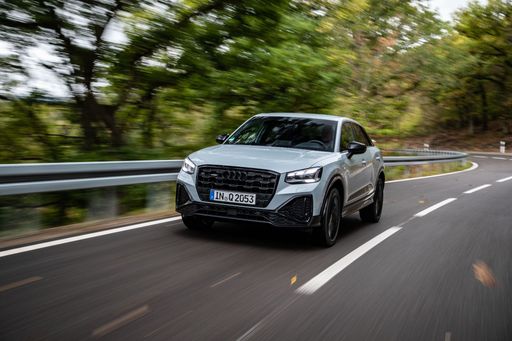
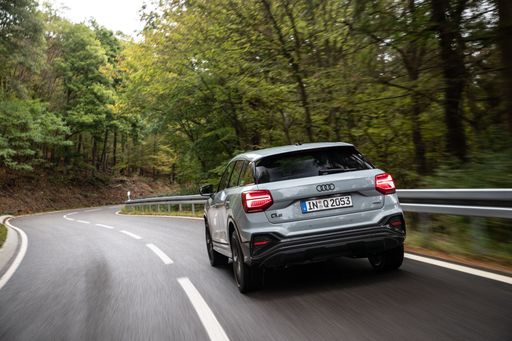
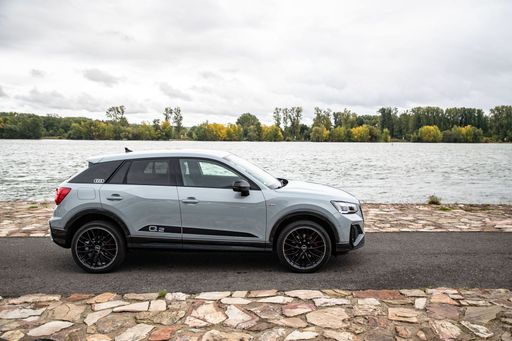
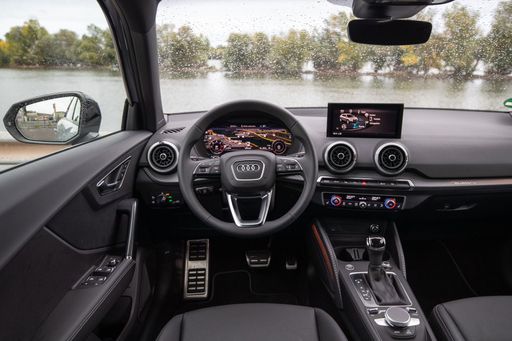
@ Audi AG
@ Volkswagen AG / VW Media
VS

Audi Q2 vs VW T-Cross – Which car suits you better?

Everyday use, family trips or long-distance drives – here’s where the differences show.
Discover whether Audi Q2 or VW T-Cross fits your lifestyle better.

Q2 @ Audi AG

In the competitive compact SUV segment, the Audi Q2 and Volkswagen T-Cross stand out for their blend of style, innovation, and practicality. Both models offer unique features and technical specifications that cater to a variety of drivers. Here, we will explore how these two automotive giants compare on critical fronts such as design, performance, interior comfort, and technological advancements.

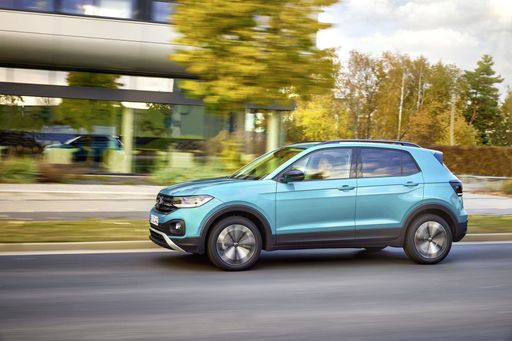
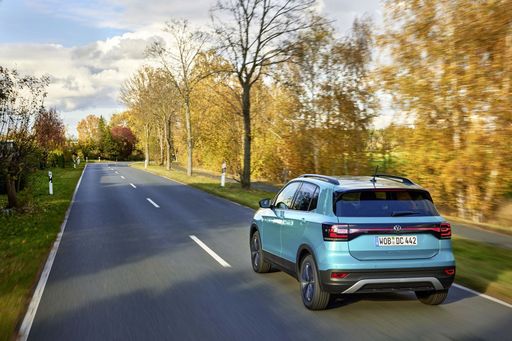
T-Cross @ Volkswagen AG / VW Media

Design and Dimensions

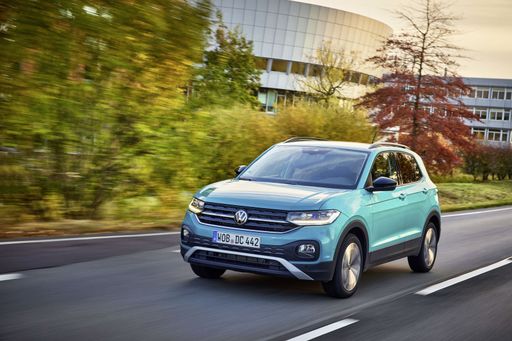
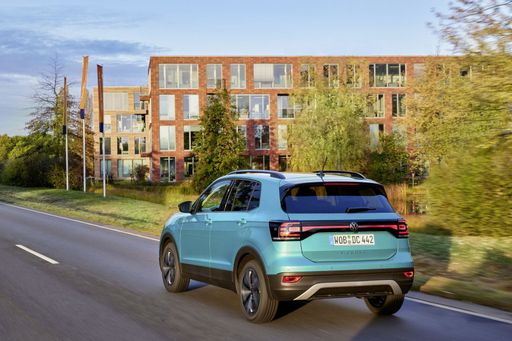
The Audi Q2 exudes a sporty and sophisticated vibe with its bold lines and distinctive front grille. Measuring 4208 mm in length and 1794 mm in width, it appears assertive yet compact, ideal for urban settings. In contrast, the Volkswagen T-Cross, while slightly longer at 4127 mm and marginally wider at 1784 mm, maintains a youthful and versatile look, projecting a strong character that appeals to a younger demographic.

Q2 @ Audi AG

Performance and Engine Options

When it comes to performance, the Audi Q2 provides a range of engine types, including petrol and diesel variants. With power outputs ranging from 116 HP to a hefty 300 HP in the Audi Q2's powertrain offerings, it surprises with an exhilarating driving experience. The Q2's acceleration from 0-100 km/h can be as quick as 4.9 seconds, especially with its 300 HP variant.

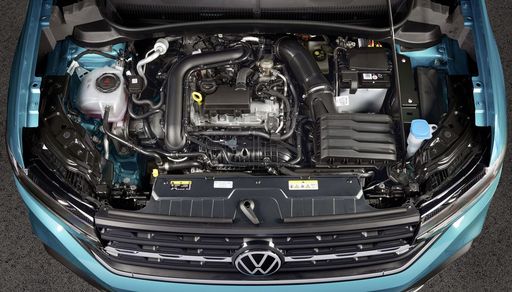
The T-Cross, powered exclusively by petrol engines, has a more modest output peaking at 150 HP. The best-in-class acceleration here is 8.4 seconds from 0-100 km/h, offering pleasant driving dynamics but less sportiness compared to the Q2.

T-Cross @ Volkswagen AG / VW Media

Transmission and Drivetrain

The Q2 offers flexibility with both manual and automatic transmission options, coupled with front-wheel and all-wheel drive capabilities. This versatility allows it to adapt to various driving conditions seamlessly. The T-Cross, on the other hand, is primarily equipped with a front-wheel-drive system and offers similar transmission choices but lacks the all-wheel drive option, which may disadvantage it in tougher driving scenarios.

Q2 @ Audi AG

Fuel Efficiency and Environmental Impact

In terms of fuel consumption, the Audi Q2 leads with efficiency figures that range from 5.1 L/100 km to 8.4 L/100 km depending on the engine variant. The T-Cross delivers competitive performance with fuel consumption figures between 5.6 L/100 km and 6 L/100 km. Both vehicles achieve commendable CO2 emissions, with the Q2's output ranging from 130 g/km to 190 g/km and the T-Cross achieving slightly better figures from 127 g/km to 135 g/km.

T-Cross @ Volkswagen AG / VW Media

Space and Comfort

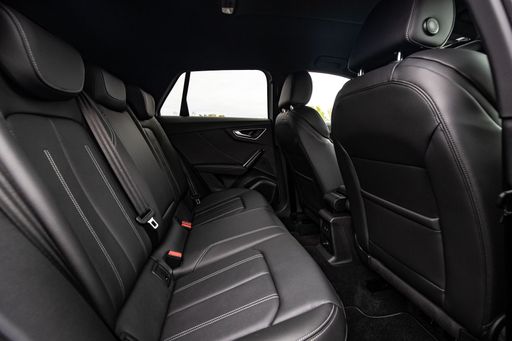
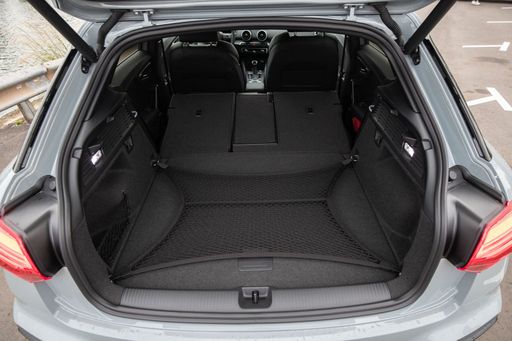
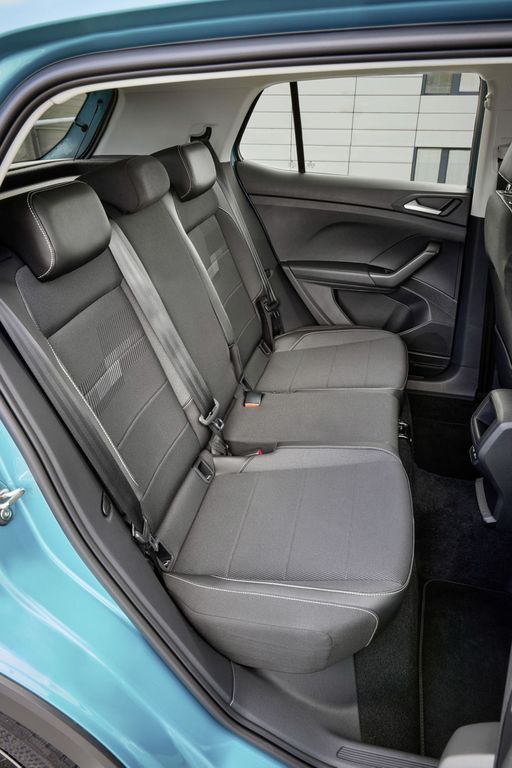
Interior space is a crucial consideration for buyers in this segment. The Audi Q2 offers a trunk capacity of 405 L, while the T-Cross provides slightly more with 455 L, making it favorable for families or those needing extra cargo space. Both models comfortably seat five passengers, but the Q2’s interior boasts a more luxurious feel, featuring high-quality materials and Audi’s renowned MMI infotainment system.

Q2 @ Audi AG

Technological Innovations

Innovation is at the heart of both the Q2 and T-Cross. The Q2 showcases cutting-edge technology such as Virtual Cockpit, providing drivers with a customizable digital display. Audi Connect services enhance connectivity, offering features such as real-time traffic updates and online navigation.

The T-Cross, while lacking some of Audi's more exclusive technologies, includes advanced driver assist systems, such as adaptive cruise control, and the latest infotainment system that integrates smartphone connectivity. Both vehicles articulate a commitment to safety and innovation but do so in distinct ways that cater to their respective audiences.

T-Cross @ Volkswagen AG / VW Media

Conclusion

Choosing between the Audi Q2 and the Volkswagen T-Cross ultimately depends on personal preference and driving needs. The Q2 brings a powerful lineup, exceptional build quality, and luxury brand status, making it ideal for those seeking a premium experience. On the other hand, the T-Cross offers practicality, spaciousness, and remarkable value for money, appealing to budget-conscious buyers who still desire a modern and stylish SUV. Both vehicles represent the automotive prowess of their respective brands and contribute significantly to a diverse and competitive market.

Here’s where it gets real: The technical differences in detail

Q2 @ Audi AG

Costs and Efficiency:

Looking at overall running costs, both models reveal some interesting differences in everyday economy.

VW T-Cross has a somewhat advantage in terms of price – it starts at 21100 £, while the Audi Q2 costs 24900 £. That’s a price difference of around 3780 £.

Fuel consumption also shows a difference: Audi Q2 manages with 4.80 L and is therefore somewhat more efficient than the VW T-Cross with 5.40 L. The difference is about 0.60 L per 100 km.

T-Cross @ Volkswagen AG / VW Media

Engine and Performance:

Under the bonnet, it becomes clear which model is tuned for sportiness and which one takes the lead when you hit the accelerator.

When it comes to engine power, the Audi Q2 has a decisively edge – offering 300 HP compared to 150 HP. That’s roughly 150 HP more horsepower.

In acceleration from 0 to 100 km/h, the Audi Q2 is significantly quicker – completing the sprint in 4.90 s, while the VW T-Cross takes 8.40 s. That’s about 3.50 s faster.

In terms of top speed, the Audi Q2 performs to a small extent better – reaching 250 km/h, while the VW T-Cross tops out at 200 km/h. The difference is around 50 km/h.

There’s also a difference in torque: Audi Q2 pulls clearly perceptible stronger with 400 Nm compared to 250 Nm. That’s about 150 Nm difference.

Q2 @ Audi AG

Space and Everyday Use:

Cabin size, boot volume and payload all play a role in everyday practicality. Here, comfort and flexibility make the difference.

Both vehicles offer seating for 5 people.

In curb weight, VW T-Cross is minimal lighter – 1267 kg compared to 1330 kg. The difference is around 63 kg.

In terms of boot space, the VW T-Cross offers to a small extent more room – 455 L compared to 405 L. That’s a difference of about 50 L.

In maximum load capacity, the VW T-Cross performs slightly better – up to 1281 L, which is about 231 L more than the Audi Q2.

When it comes to payload, Audi Q2 slight takes the win – 510 kg compared to 480 kg. That’s a difference of about 30 kg.

Who comes out on top?

Overall, the Audi Q2 shows itself to be is largely superior and secures the title of DriveDuel Champion.
It convinces with the more balanced overall package and proves to be the more versatile choice for everyday use.

from about £24,900
Q2 @ Audi AG

Audi Q2

  • Engine Type : Petrol, Diesel
  • Transmission : Manuel, Automatic
  • Drive Type : Front-Wheel Drive, All-Wheel Drive
  • Power HP : 116 - 300 HP
  • Consumption L/100km : 4.8 - 8.1 L

Audi Q2

5 (1)
rate

The Audi Q2 packs Audi’s premium attitude into a compact, cheeky package that turns city streets into a runway for tasteful design and clever practicality. It’s an easy car to live with thanks to an upscale cabin, composed manners and sprightly handling, and while it won’t satisfy someone chasing sports-car thrills, it’s a smart, stylish pick for buyers who want substance with a wink.

details

VW T-Cross

4 (1)
rate

The VW T-Cross turns everyday practicality into a style statement, offering a roomy-feeling cabin, clever storage and playful design that suits town life and family duties alike. On the road it's composed and relaxed, rewarding buyers who want the raised seating and confident presence of an SUV without the weighty compromises.

details
Audi Q2
VW T-Cross
Q2 @ Audi AG
T-Cross @ Volkswagen AG / VW Media

Costs and Consumption

Price
24900 - 43600 £
Price
21100 - 31500 £
Consumption L/100km
4.8 - 8.1 L
Consumption L/100km
5.4 - 6 L
Consumption kWh/100km
-
Consumption kWh/100km
-
Electric Range
-
Electric Range
-
Battery Capacity
-
Battery Capacity
-
co2
127 - 183 g/km
co2
124 - 136 g/km
Fuel tank capacity
50 - 55 L
Fuel tank capacity
40 L

Dimensions and Body

Body Type
SUV
Body Type
SUV
Seats
5
Seats
5
Doors
5
Doors
5
Curb weight
1330 - 1610 kg
Curb weight
1267 - 1338 kg
Trunk capacity
355 - 405 L
Trunk capacity
455 L
Length
4208 - 4216 mm
Length
4127 mm
Width
1794 - 1802 mm
Width
1784 mm
Height
1495 - 1508 mm
Height
1573 mm
Max trunk capacity
1000 - 1050 L
Max trunk capacity
1281 L
Payload
450 - 510 kg
Payload
463 - 480 kg

Engine and Performance

Engine Type
Petrol, Diesel
Engine Type
Petrol
Transmission
Manuel, Automatic
Transmission
Manuel, Automatic
Transmission Detail
Manual Gearbox, Dual-Clutch Automatic
Transmission Detail
Manual Gearbox, Dual-Clutch Automatic
Drive Type
Front-Wheel Drive, All-Wheel Drive
Drive Type
Front-Wheel Drive
Power HP
116 - 300 HP
Power HP
95 - 150 HP
Acceleration 0-100km/h
4.9 - 10.5 s
Acceleration 0-100km/h
8.4 - 11.3 s
Max Speed
197 - 250 km/h
Max Speed
180 - 200 km/h
Torque
200 - 400 Nm
Torque
175 - 250 Nm
Number of Cylinders
3 - 4
Number of Cylinders
3 - 4
Power kW
85 - 221 kW
Power kW
70 - 110 kW
Engine capacity
999 - 1984 cm3
Engine capacity
999 - 1498 cm3

General

Model Year
2025
Model Year
2024 - 2025
CO2 Efficiency Class
D, F, E, G
CO2 Efficiency Class
D, E
Brand
Audi
Brand
VW
What drivetrain options does the Audi Q2 have?

The Audi Q2 is offered with Front-Wheel Drive or All-Wheel Drive.

The prices and data displayed are estimates based on German list prices and may vary by country. This information is not legally binding.