VS

SEAT Ateca vs VW T-Cross comparison

Compare performance (150 HP vs 150 HP), boot space and price (25,100 £ vs 21,400 £ ) at a glance. Find out which car is the better choice for you – SEAT Ateca or VW T-Cross?

SEAT Ateca vs VW T-Cross: Key differences

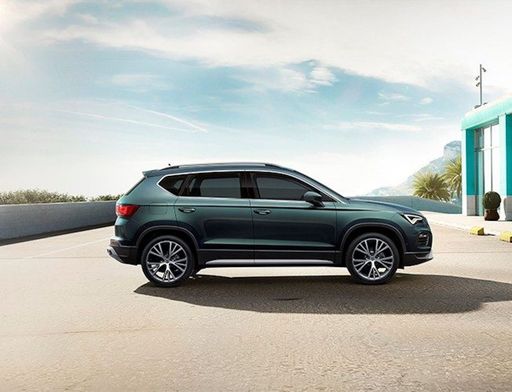
SEAT Ateca

4.9 (3 Reviews)
rate
  • slightly more efficient
  • somewhat more trunk space

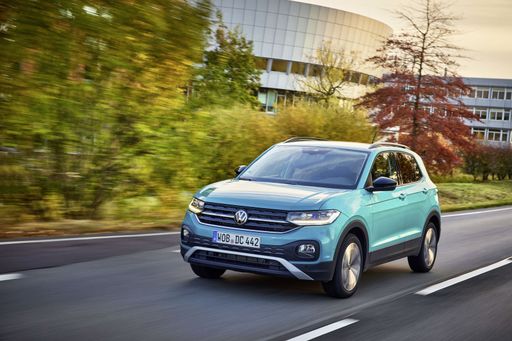
VW T-Cross

4.3 (3 Reviews)
rate
  • somewhat cheaper
  • very slightly quicker 0–100 km/h
  • only slightly lighter

All details on performance, efficiency, range and trunk space can be found in the technical comparison below – including user reviews for both models.

By Achim Sedelmaier

Ateca

Introduction: Compact SUV Battle

The compact SUV segment has gained immense popularity, and two contenders making waves in this category are the SEAT Ateca and the VW T-Cross. Both models offer practicality, modern features, and strong performances, but they cater to slightly different demographics. This comparison will delve into their technical specifications, innovations, and overall appeal, helping potential buyers make an informed choice.

T-Cross

Dimensions and Design

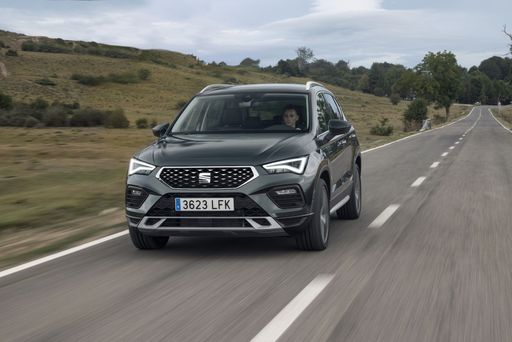
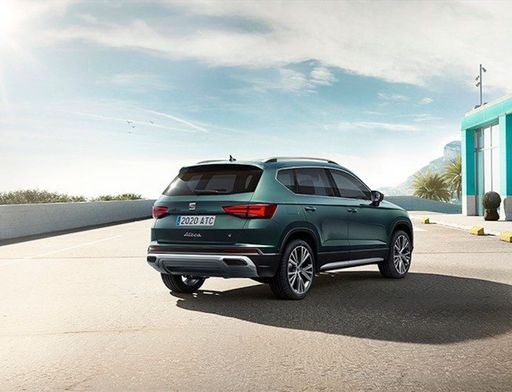
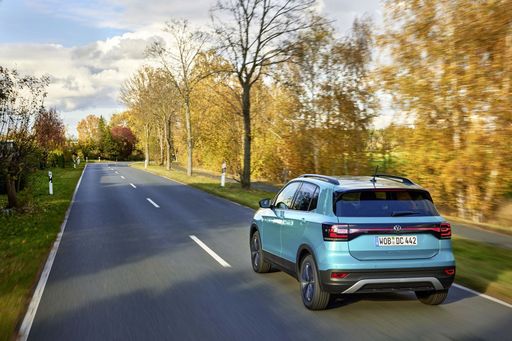
The SEAT Ateca and VW T-Cross both boast SUV capabilities, but their dimensions tell a story of their distinctive characters. The Ateca measures 4381 mm in length, 1841 mm in width, and stands 1601 mm tall, giving it a more robust and commanding presence on the road. In contrast, the T-Cross is slightly shorter at 4127 mm with a width of 1784 mm and a height of 1573 mm, offering a more compact form ideal for urban environments.

Ateca

Powering Performance: Engine Options

Under the hood, the SEAT Ateca offers a choice between petrol and diesel engines, with power outputs ranging from 116 to 150 HP. It features a 1.0 TSI three-cylinder and a 1.5 TSI four-cylinder option, allowing for flexibility according to consumer needs. Its diesel variant, a 2.0 TDI, provides torque figures of up to 360 Nm, catering to those who frequently undertake longer journeys or require towing capabilities.

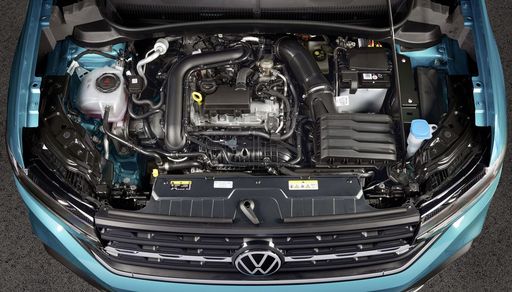
The T-Cross, on the other hand, focuses solely on petrol engines. It offers power outputs of 95, 116, and 150 HP, with a similar 1.0 TSI engine option, also providing a robust torque of up to 250 Nm. This engine lineup ensures that the T-Cross is efficient in both city driving and longer trips.

T-Cross

Transmission and Driving Dynamics

Both models come equipped with a manual and automatic transmission option. The Ateca features a dual-clutch automatic gearbox that enhances smooth shifting and driving comfort. With a front-wheel drive configuration, it holds steady in various driving conditions and offers satisfactory acceleration times, clocking 0-100 km/h in as low as 9 seconds for the sportier variants.

Comparatively, the VW T-Cross also utilizes a dual-clutch automatic and provides slightly higher acceleration in its top-performing variants, achieving 0-100 km/h in just 8.4 seconds. This varies from a less powerful 95 HP model, which takes 11.2 seconds. The T-Cross’s nimble handling makes it an engaging option for city dwellers.

Ateca

Fuel Efficiency

Fuel efficiency is often a key consideration for buyers, and here the T-Cross takes a slight edge. Its consumption ranges from 5.6 to 6.0 L/100km, providing an efficient choice for those who prioritize fuel economy. The Ateca, while still efficient, consumes between 4.9 to 6.4 L/100km, depending on the specific engine variant. Both vehicles are equipped with a sizeable fuel tank, with the Ateca holding 50 liters and the T-Cross at 40 liters, allowing for extended range between fill-ups.

T-Cross

Interior Comfort and Space

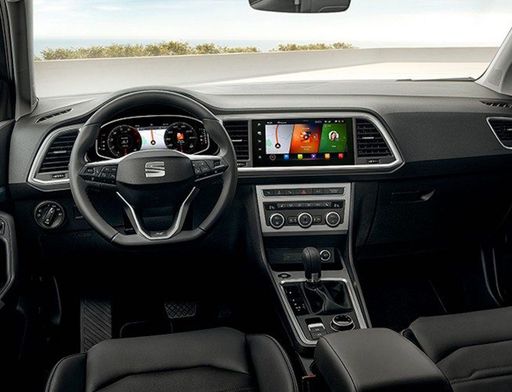
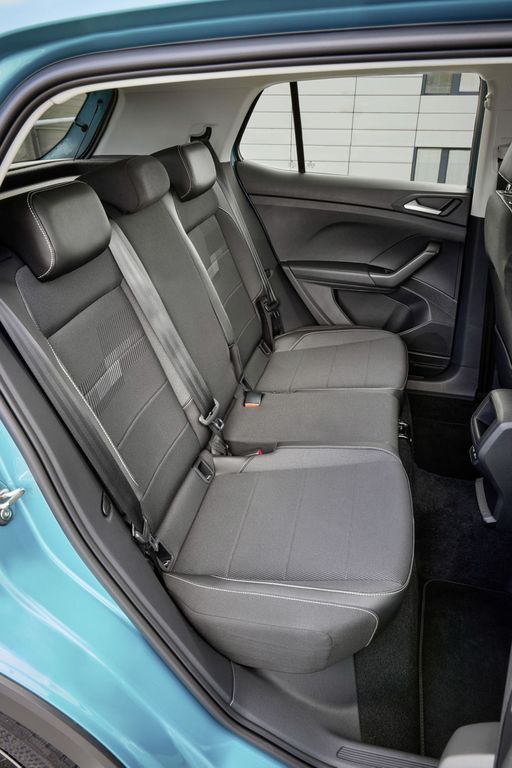
When it comes to interior space, the SEAT Ateca boasts a trunk capacity of 510 liters, thus providing more room for cargo compared to the T-Cross with its 455-liter capacity. Both vehicles come with a five-seat configuration, making them family-friendly options. The Ateca emphasizes a more upscale feel with its well-designed interior and high-quality materials, complementing its larger dimensions.

The T-Cross impresses with its practical and functional interior, featuring an easy-to-use infotainment system and customizable interior options, reflecting VW’s focus on user-friendliness and tech integration.

Ateca

Safety and Technology Features

Both SUVs come equipped with a range of advanced safety and technological features. The Ateca offers adaptive cruise control, lane assist, and emergency braking, contributing to a high safety rating, whereas the T-Cross includes similar features, promoting a safe and secure driving experience.

T-Cross

Conclusion: Which One to Choose?

The choice between the SEAT Ateca and the VW T-Cross ultimately boils down to personal preferences. If you’re looking for a robust SUV with a spacious interior and flexible engine options, the Ateca might be the model for you. On the other hand, if you prefer a compact, city-friendly SUV that excels in fuel efficiency and offer dynamic driving experiences, the T-Cross is a strong contender. Both models have unique attributes that cater to various lifestyles and driving needs, making them noteworthy options in the compact SUV market.

Here’s where it gets real: The technical differences in detail

Ateca

Costs and Efficiency:

When it comes to price and running costs, the biggest differences usually appear. This is often where you see which car fits your budget better in the long run.

VW T-Cross is somewhat cheaper – starting at 21,400 £ , while the SEAT Ateca costs 25,100 £ . That’s a price difference of around 3,711 £.

Fuel consumption also shows a difference: the SEAT Ateca uses 4.9 L/100km and is slightly more efficient than the VW T-Cross with 5.4 L/100km. The difference is about 0.5 L/100km.

T-Cross

Engine and Performance:

Power, torque and acceleration are the classic benchmarks for car enthusiasts – and here, some clear differences start to show.

Both models deliver identical power – 150 HP each.

When accelerating from 0 to 100 km/h, the VW T-Cross is very slightly quicker – completing the sprint in 8.4 s, while the SEAT Ateca takes 9 s. That’s about 0.6 s quicker.

There’s also a difference in torque: the SEAT Ateca delivers noticeably more torque with 360 Nm compared to 250 Nm. That’s about 110 Nm more.

Ateca

Space and Everyday Use:

Beyond pure performance, interior space and usability matter most in daily life. This is where you see which car is more practical and versatile.

Both vehicles offer seating for 5 people.

In terms of curb weight, VW T-Cross is only slightly lighter – 1,267 kg compared to 1,345 kg. The difference is around 78 kg.

Looking at boot space, the SEAT Ateca offers somewhat more boot space – 510 L compared to 455 L. That’s a difference of about 55 L.

When it comes to payload, the SEAT Ateca carries only slightly more – 525 kg compared to 480 kg. That’s a difference of about 45 kg.

Who wins the race in the data check?

The SEAT Ateca holds a solid overall lead in the objective data comparison.
This result only shows which model scores more points on paper – not which of the two cars feels right for you.

from £25,100
Ateca

SEAT Ateca

  • Engine Type : Petrol, Diesel
  • Transmission : Manuel, Automatic
  • Drive Type : Front-Wheel Drive
  • Power HP : 116 - 150 HP
  • Consumption L/100km : 4.9 - 6.4 L/100km
SEAT Ateca
VW T-Cross

Costs and Consumption

View detailed analysis

Engine and Performance

View detailed analysis

Dimensions and Body

View detailed analysis

SEAT Ateca

The SEAT Ateca blends sharp, purposeful styling with practical space that turns everyday errands into something a bit more enjoyable. It’s poised and engaging to drive for its segment, offers solid value, and has just enough personality to make you smile on the school run.

details

VW T-Cross

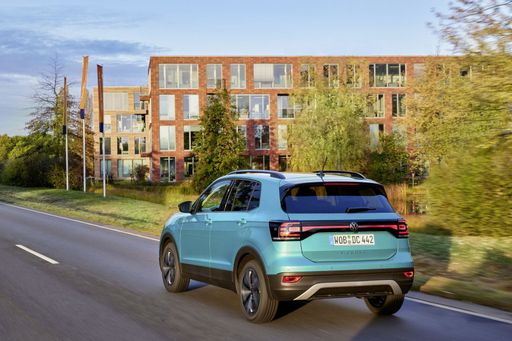
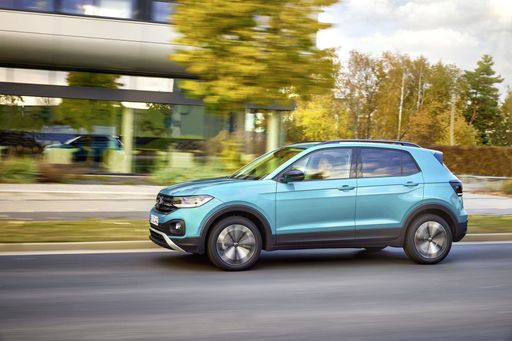
The VW T-Cross turns everyday practicality into a style statement, offering a roomy-feeling cabin, clever storage and playful design that suits town life and family duties alike. On the road it's composed and relaxed, rewarding buyers who want the raised seating and confident presence of an SUV without the weighty compromises.

details
SEAT Ateca
VW T-Cross

Costs and Consumption

Price
25,100 - 36,900 £
Price
21,400 - 32,000 £
Consumption L/100km
4.9 - 6.4 L/100km
Consumption L/100km
5.4 - 6 L/100km
Consumption kWh/100km
-
Consumption kWh/100km
-
Electric Range
-
Electric Range
-
Battery Capacity
-
Battery Capacity
-
co2
129 - 144 g/km
co2
124 - 136 g/km
Fuel tank capacity
-
Fuel tank capacity
-

Dimensions and Body

Body Type
SUV
Body Type
SUV
Seats
5
Seats
5
Doors
-
Doors
-
Curb weight
1,345 - 1,514 kg
Curb weight
1,267 - 1,338 kg
Trunk capacity
510 L
Trunk capacity
455 L
Length
-
Length
-
Width
1,841 mm
Width
1,784 mm
Height
-
Height
-
Max trunk capacity
-
Max trunk capacity
-
Payload
516 - 525 kg
Payload
463 - 480 kg

Engine and Performance

Engine Type
Petrol, Diesel
Engine Type
Petrol
Transmission
Manuel, Automatic
Transmission
Manuel, Automatic
Transmission Detail
Manual Gearbox, Dual-Clutch Automatic
Transmission Detail
Manual Gearbox, Dual-Clutch Automatic
Drive Type
Front-Wheel Drive
Drive Type
Front-Wheel Drive
Power HP
116 - 150 HP
Power HP
95 - 150 HP
Acceleration 0-100km/h
9 - 11 s
Acceleration 0-100km/h
8.4 - 11.3 s
Max Speed
-
Max Speed
-
Torque
200 - 360 Nm
Torque
175 - 250 Nm
Number of Cylinders
3 - 4
Number of Cylinders
3 - 4
Power kW
85 - 110 kW
Power kW
70 - 110 kW
Engine capacity
999 - 1,968 cm3
Engine capacity
999 - 1,498 cm3

General

Model Year
2,025
Model Year
2,024 - 2,025
CO2 Efficiency Class
E, D
CO2 Efficiency Class
D, E
Brand
SEAT
Brand
VW
DriveDuel uses data analysis and artificial intelligence to evaluate vehicle data and create content. Content is regularly reviewed and improved. The displayed prices are estimates based on German list prices, adjusted to the respective country’s VAT. Country-specific registration taxes are not included. This information is not legally binding.