VS

VW Tayron vs Audi Q7 comparison

Compare performance (272 HP vs 507 HP), boot space and price (40,200 £ vs 70,600 £ ) at a glance. Find out which car is the better choice for you – VW Tayron or Audi Q7?

VW Tayron vs Audi Q7: Key differences

VW Tayron

4.5 (6 Reviews)
rate
  • substantially cheaper
  • significantly more efficient
  • visibly more electric range
  • markedly lighter
details

Audi Q7

4.5 (2 Reviews)
rate
  • significantly more power
  • substantially quicker 0–100 km/h
  • very slightly more trunk space
details

All details on performance, efficiency, range and trunk space can be found in the technical comparison below – including user reviews for both models.

By Achim Sedelmaier

Tayron

Audi Q7 vs VW Tayron: A Comprehensive Comparison

The modern automotive landscape offers a diverse selection of SUVs, appealing to a variety of preferences and needs. Among the notable contenders are the Audi Q7 and VW Tayron, each showcasing unique strengths, cutting-edge technology, and engineering excellence. In this article, we will delve into a detailed comparison, focusing on their technical specifications and innovations that set them apart.
Q7

Design and Dimensions

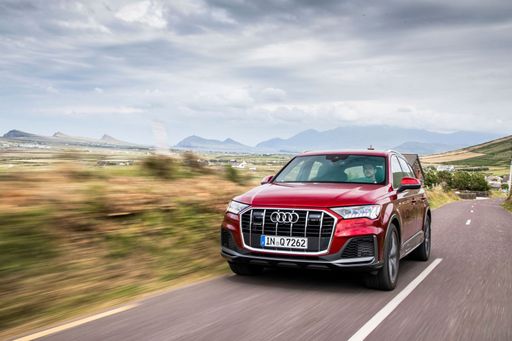
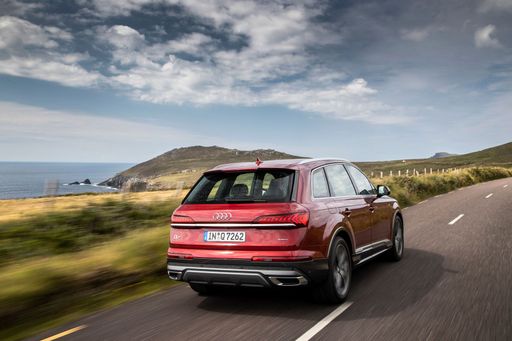
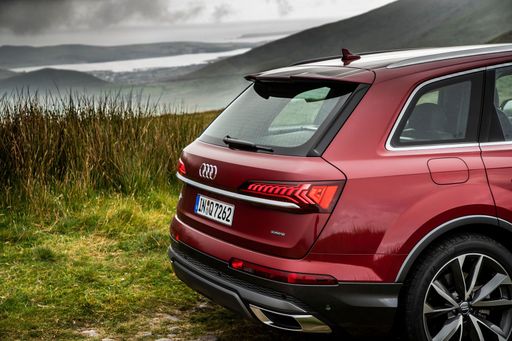
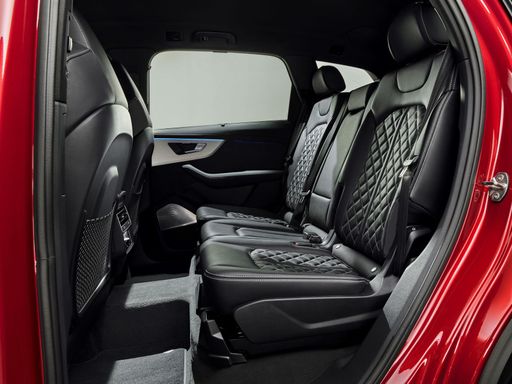
The Audi Q7 is a robust SUV with a length of 5072 mm, width of 1970 mm, and height ranging from 1734 to 1735 mm. Its muscular stance, combined with a spacious cabin, allows for both 5 and 7-seat configurations, catering to families and those requiring extra passenger space.

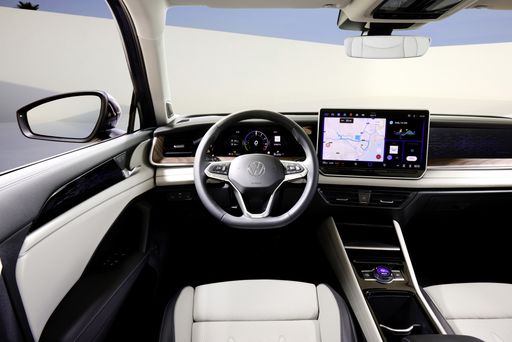
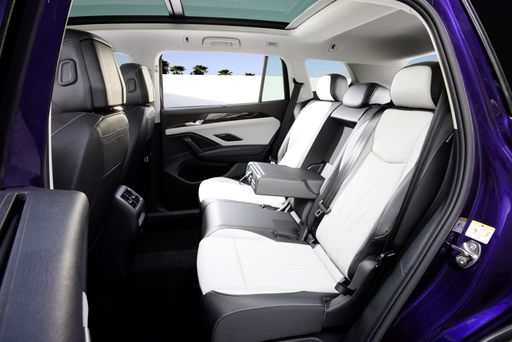
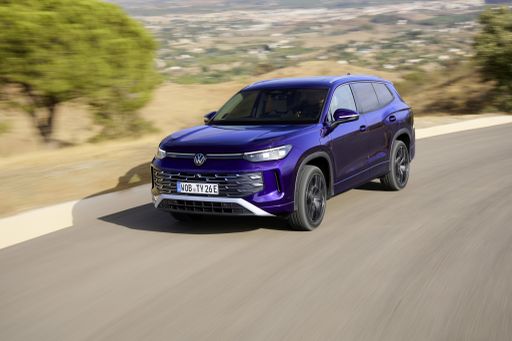
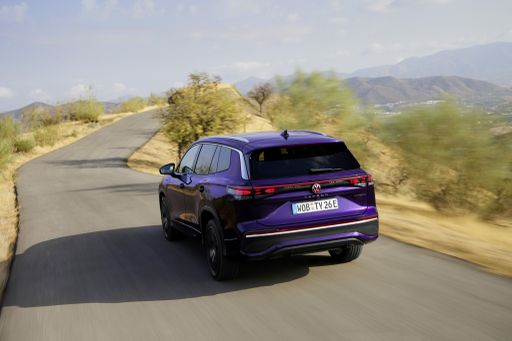
On the other hand, the VW Tayron measures 4792 mm in length, 1853 to 1866 mm in width, and stands 1666 to 1668 mm tall. The Tayron, designed primarily with a compact profile, is a 5-seat SUV that balances style with utility and is ideal for urban navigation.

Tayron

Powertrains and Performance

The Audi Q7 offers a diverse array of engine options, including petrol, diesel, and hybrid variants. Its diesel MHEV options boast power outputs ranging from 231 to 507 HP and torque extending up to 770 Nm. The acceleration figures are impressive, with top models achieving 0-100 km/h in just 4.1 seconds. Moreover, fuel efficiency varies with consumption figures as low as 1.2 L/100km in hybrid versions, showcasing its environmental consciousness.

Conversely, the VW Tayron presents a lineup focused on petrol MHEV and diesel engines, generating between 150 and 272 HP, with torque figures reaching up to 400 Nm. Its acceleration ranges from 7.3 to 9.4 seconds, which is respectable for its class. Whereas, the fuel efficiency for the Tayron boasts consumption as low as 0.4 L/100km in hybrid variants, making it an attractive choice for those who value economy.

Q7

Transmission and Drive Configurations

Both vehicles offer automatic transmissions, with the Audi Q7 featuring an automatic gearbox designed for a seamless driving experience across its all-wheel-drive (AWD) setup. This guarantees enhanced traction and stability, particularly beneficial in diverse weather conditions and terrains.

The VW Tayron is engineered with a similar approach but offers both front-wheel drive and AWD configurations. This flexibility allows buyers to choose according to their driving needs, striking a balance between comfort and performance.

Tayron

Technological Innovations

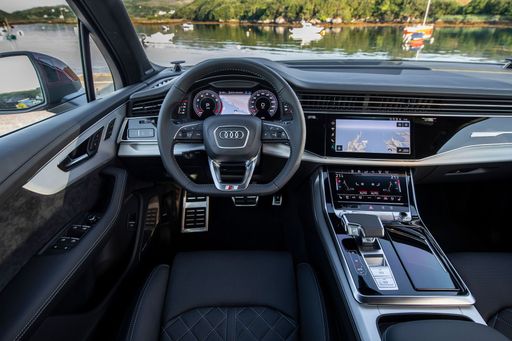
In terms of technology, the Audi Q7 is equipped with advanced features such as an intuitive infotainment system, virtual cockpit, and extensive safety suites. These innovations elevate the driving experience further by providing easily digestible information at the driver’s fingertips while enhancing overall safety.

On the other hand, the VW Tayron focuses on user-friendly technology with its modern infotainment system and a suite of driver assistance features that promote safety and convenience. The Tayron also incorporates Volkswagen’s latest MIB3 technology, ensuring a connected driving experience.

Q7

Interior Comfort and Cargo Capacity

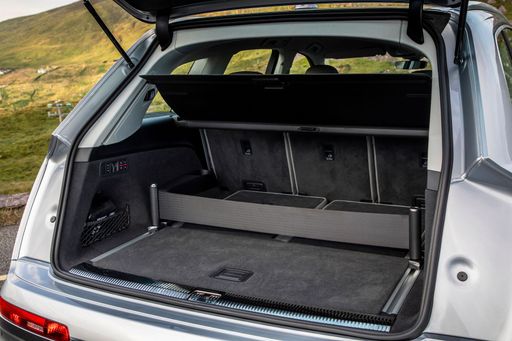
The Q7's interior showcases luxury with high-quality materials and ample space, reflecting the Audi brand's commitment to comfort. Cargo capacity ranges from 563 to 887 liters, depending on seat configuration, making it highly practical for family adventures.

In contrast, the Tayron offers a well-designed interior with great ergonomics, but with a cargo capacity of up to 885 liters, it may not compete directly with the Q7 regarding maximum space. However, for city drivers, it strikes a fine balance between comfort and functionality.

Tayron

Conclusion: Which SUV Reigns Supreme?

Ultimately, the choice between the Audi Q7 and VW Tayron comes down to individual preferences. The Q7 is the epitome of luxury and performance in the SUV segment, boasting advanced features and superior power options. Conversely, the Tayron offers efficiency, modern tech, and a compact design ideal for urban life.

Whichever you choose, both vehicles represent outstanding engineering and remain excellent choices in the competitive SUV market.

Here’s where it gets real: The technical differences in detail

Tayron

Costs and Efficiency:

When it comes to price and running costs, the biggest differences usually appear. This is often where you see which car fits your budget better in the long run.

VW Tayron is substantially cheaper – starting at 40,200 £ , while the Audi Q7 costs 70,600 £ . That’s a price difference of around 30,407 £.

Fuel consumption also shows a difference: the VW Tayron uses 1.5 L/100km and is significantly more efficient than the Audi Q7 with 3.8 L/100km. The difference is about 2.3 L/100km.

As for electric range, the VW Tayron offers visibly more range – reaching up to 123 km, about 41 km more than the Audi Q7.

Q7

Engine and Performance:

Power, torque and acceleration are the classic benchmarks for car enthusiasts – and here, some clear differences start to show.

When it comes to engine power, the Audi Q7 offers significantly more power – delivering 507 HP compared to 272 HP. That’s roughly 235 HP more horsepower.

When accelerating from 0 to 100 km/h, the Audi Q7 is substantially quicker – completing the sprint in 4.1 s, while the VW Tayron takes 6.1 s. That’s about 2 s quicker.

There’s also a difference in torque: the Audi Q7 delivers substantially more torque with 770 Nm compared to 400 Nm. That’s about 370 Nm more.

Tayron

Space and Everyday Use:

Cabin size, boot volume and payload all play a role in everyday practicality. Here, comfort and flexibility make the difference.

Seats: Audi Q7 offers more seats – 7 vs 5.

In terms of curb weight, VW Tayron is markedly lighter – 1,682 kg compared to 2,055 kg. The difference is around 373 kg.

Looking at boot space, the Audi Q7 offers very slightly more boot space – 887 L compared to 885 L. That’s a difference of about 2 L.

When it comes to payload, the Audi Q7 carries visibly more – 885 kg compared to 573 kg. That’s a difference of about 312 kg.

Who wins the race in the data check?

The VW Tayron is clearly superior overall in the objective data comparison.
This result only shows which model scores more points on paper – not which of the two cars feels right for you.

from £40,200
Tayron

VW Tayron

  • Engine Type Petrol MHEV, Diesel, Petrol, Plugin Hybrid
  • Transmission Automatic
  • Drive Type Front-Wheel Drive, All-Wheel Drive
  • Power HP 150 - 272 HP
  • Consumption L/100km 1.5 - 8.5 L/100km
  • Electric Range 116 - 123 km
VW Tayron
Audi Q7

Costs and Consumption

View detailed analysis

Engine and Performance

View detailed analysis

Dimensions and Body

View detailed analysis

VW Tayron

The VW Tayron combines a roomy, practical interior with a composed, comfortable ride that suits both daily commuting and longer journeys. With a restrained, modern design and a focus on straightforward tech and safety, it’s a sensible choice for buyers who want Volkswagen refinement without unnecessary flash.

details

Audi Q7

The Audi Q7 cuts an imposing figure on the road, balancing restrained luxury with a spacious, tech-rich cabin that makes long journeys feel effortless. It rides with confident composure and polished manners, so if you want a premium family SUV that feels grown-up and worth the badge, the Q7 is a persuasive choice — even the in-laws will be impressed.

details
VW Tayron
Audi Q7

Costs and Consumption

Price
40,200 - 56,000 £
Price
70,600 - 100,600 £
Consumption L/100km
1.5 - 8.5 L/100km
Consumption L/100km
3.8 - 11.9 L/100km
Consumption kWh/100km
-
Consumption kWh/100km
-
Electric Range
116 - 123 km
Electric Range
81 - 82 km
Battery Capacity
-
Battery Capacity
-
co2
33 - 192 g/km
co2
86 - 271 g/km
Fuel tank capacity
-
Fuel tank capacity
-

Dimensions and Body

Body Type
SUV
Body Type
SUV
Seats
5
Seats
5 - 7
Doors
-
Doors
-
Curb weight
1,682 - 1,948 kg
Curb weight
2,055 - 2,460 kg
Trunk capacity
705 - 885 L
Trunk capacity
563 - 887 L
Length
-
Length
-
Width
1,853 - 1,866 mm
Width
1,970 mm
Height
-
Height
-
Max trunk capacity
-
Max trunk capacity
-
Payload
497 - 573 kg
Payload
640 - 885 kg

Engine and Performance

Engine Type
Petrol MHEV, Diesel, Petrol, Plugin Hybrid
Engine Type
Petrol MHEV, Diesel MHEV, Petrol, Plugin Hybrid
Transmission
Automatic
Transmission
Automatic
Transmission Detail
Dual-Clutch Automatic
Transmission Detail
Automatic Gearbox
Drive Type
Front-Wheel Drive, All-Wheel Drive
Drive Type
All-Wheel Drive
Power HP
150 - 272 HP
Power HP
231 - 507 HP
Acceleration 0-100km/h
6.1 - 9.7 s
Acceleration 0-100km/h
4.1 - 7.1 s
Max Speed
-
Max Speed
-
Torque
250 - 400 Nm
Torque
500 - 770 Nm
Number of Cylinders
4
Number of Cylinders
6 - 8
Power kW
110 - 200 kW
Power kW
170 - 373 kW
Engine capacity
1,498 - 1,984 cm3
Engine capacity
2,967 - 3,996 cm3

General

Model Year
2,025 - 2,026
Model Year
2025
CO2 Efficiency Class
E, F, B, G
CO2 Efficiency Class
G, B
Brand
VW
Brand
Audi
DriveDuel uses data analysis and artificial intelligence to evaluate vehicle data and create content. Content is regularly reviewed and improved. The displayed prices are estimates based on German list prices, adjusted to the respective country’s VAT. Country-specific registration taxes are not included. This information is not legally binding.