VS

VW Tayron vs Mazda CX-80 comparison

Compare performance (272 HP vs 327 HP), boot space and price (40,200 £ vs 49,300 £ ) at a glance. Find out which car is the better choice for you – VW Tayron or Mazda CX-80?

VW Tayron vs Mazda CX-80: Key differences

VW Tayron

4.5 (6 Reviews)
rate
  • visibly cheaper
  • considerably more efficient
  • substantially more electric range
  • moderately quicker 0–100 km/h
  • noticeably lighter
  • clearly more trunk space
details

Mazda CX-80

4 (2 Reviews)
rate
  • a bit more power
details

All details on performance, efficiency, range and trunk space can be found in the technical comparison below – including user reviews for both models.

By Achim Sedelmaier

Tayron

Overview: Mazda CX-80 VS VW Tayron in one look

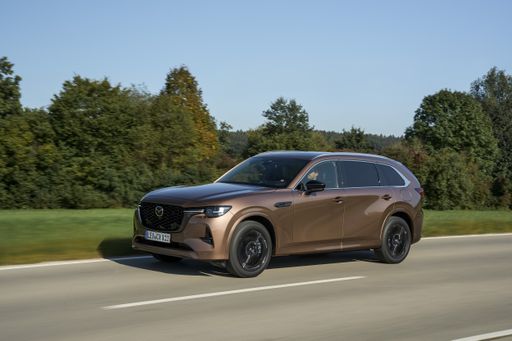
Mazda CX-80 VS VW Tayron bring two different philosophies to the large family‑SUV table: the CX‑80 leans toward crafted materials, seven‑seat flexibility and towing strength, while the Tayron prioritises roomy five‑seat practicality, a very quiet motorway ride and a larger, more usable boot. The Mazda feels like a premium-minded, hands‑on tool with lots of physical controls and a strong second row; the VW feels like a placid, ergonomic family car that favours comfort and luggage space. Both cars are substantial, so neither is ideal for tight city parking, but the trade-offs you get in return are distinct. Below I’ll unpack how those differences play out in everyday life so you can judge which compromises you’d rather live with.
CX-80

Cabin feel and perceived quality

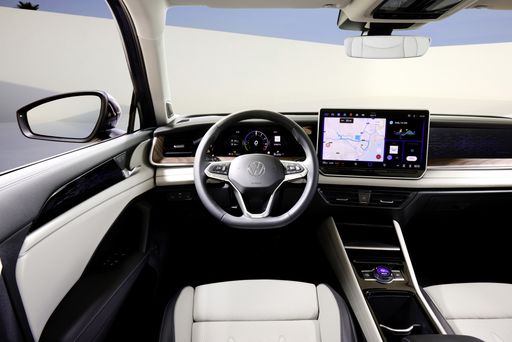
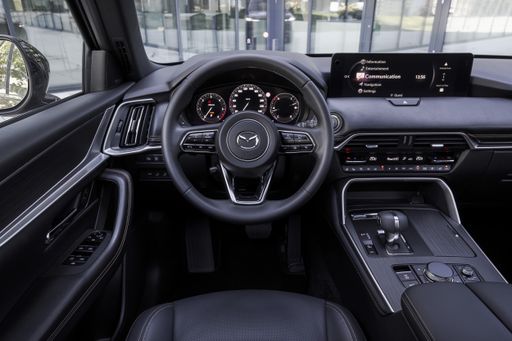
The Mazda CX-80 presents a deliberately premium cabin: tactile knobs, high‑grade materials and a clean, restrained design that reads more expensive than its badge. The VW Tayron counters with a more modern, gadget‑forward interior—clearer digital menus and practical controls—but some surfaces feel more corporate and less tactile than Mazda’s. In everyday use the CX‑80’s workmanship gives a sense of care and longevity, while the Tayron’s layout rewards quick access and configurability for multiple drivers. If you prize hand‑felt quality and a calm, analogue interface, the CX‑80 wins the mood battle; if you prefer a more systematic, driver‑assist friendly cockpit, the Tayron feels more grown‑up and functional.

Tayron

Comfort and long‑distance behaviour

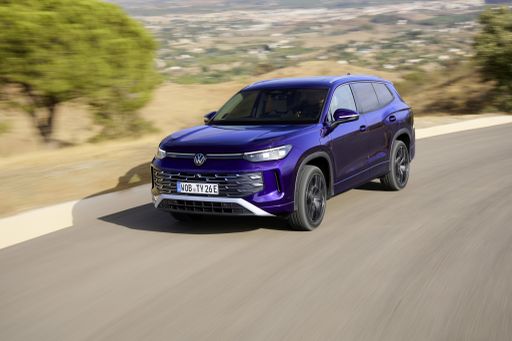
On long runs the VW Tayron is the more relaxing companion: excellent noise suppression and a comfort‑biased suspension make motorway miles glide by with minimal fatigue. The Mazda CX‑80 also cruises with poise and diesel refinement, but its suspension is firmer over short sharp bumps and 20‑inch wheels can transmit more harshness in town. The Tayron’s availability of adaptive damping and softer baseline setup helps it swallow undulations that the CX‑80 translates into a firmer, more controlled feel. If most of your miles are motorway and you value serenity, the Tayron is preferable; if you want a composed, weighty feel and stronger towing composure, the CX‑80 brings a steadier, muscular character.

CX-80

Practicality, seats and family usability

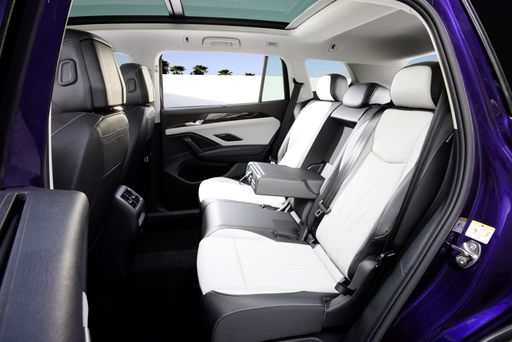
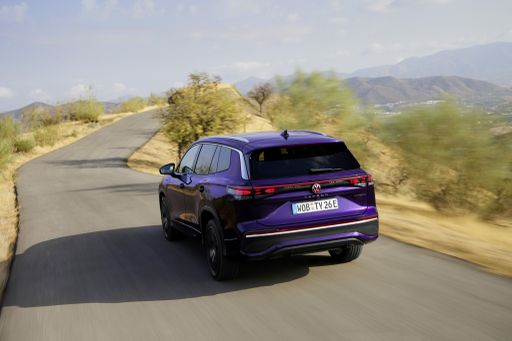
The Mazda CX‑80’s headline is versatility: generous second‑row space, optional captain chairs and a true seven‑seat layout that suits families who regularly need extra occupants or heavy towing capability. The VW Tayron excels as a five‑seat family hauler with a larger and lower‑loading boot that makes everyday shopping, strollers and suitcases far easier to manage. In practice that means the CX‑80 is the better choice when you need flexible seating or frequent trailer work, while the Tayron is superior if you rarely use the third row and want a more usable cargo area day‑to‑day. Both offer secure ISOFIX seating in the rear, but the third row in either is best treated as a kids‑only solution rather than a full‑time adult space.

Tayron

City friendliness, controls and infotainment

In town the Mazda CX‑80’s many physical buttons and rotary controller make quick adjustments simple and safe, yet the infotainment visuals and voice control feel dated compared with newer rivals. The VW Tayron’s system is more contemporary and organised, with straightforward menus and helpful presets, although touch sliders and some camera images remain fiddly in practice. Manoeuvring both large SUVs is similar work—visibility aids help—but the Mazda’s greater width and heft are more noticeable in tight parking; the Tayron steers lighter and feels easier to position. If you want intuitive, button‑first ergonomics that keep your eyes off the screen, the CX‑80 is preferable; if you value clearer digital layout and a lower boot lip for daily loading, the Tayron wins the city chores battle.

CX-80

Who each car actually fits — buyer trade‑offs before the specs

Choose the Mazda CX‑80 if your priority is a premium cabin feel, rear‑seat flexibility and a vehicle that can tow and carry a stretched family configuration with confidence; accept a firmer urban ride and tighter third‑row practicality as the price for that versatility. Opt for the VW Tayron if you want the most effortless everyday usability: a quieter long‑distance cruiser, a more accessible and capacious boot as a five‑seater, and modernised in‑car systems with stronger PHEV electric range and charging practicality. Both are large, capable SUVs, so the decision comes down to whether you need seven‑seat versatility and tactile quality (Mazda CX‑80) or the quieter, more cargo‑centric and comfort‑biased package (VW Tayron); the technical comparison that follows will make those functional trade‑offs clearer in measurable terms.

Here’s where it gets real: The technical differences in detail

Tayron

Costs and Efficiency:

Price and efficiency are key factors when choosing a car – and this is often where the real differences emerge.

VW Tayron is visibly cheaper – starting at 40,200 £ , while the Mazda CX-80 costs 49,300 £ . That’s a price difference of around 9,107 £.

Fuel consumption also shows a difference: the VW Tayron uses 1.5 L/100km and is considerably more efficient than the Mazda CX-80 with 4 L/100km. The difference is about 2.5 L/100km.

As for electric range, the VW Tayron offers substantially more range – reaching up to 123 km, about 63 km more than the Mazda CX-80.

CX-80

Engine and Performance:

Power, torque and acceleration are the classic benchmarks for car enthusiasts – and here, some clear differences start to show.

When it comes to engine power, the Mazda CX-80 offers a bit more power – delivering 327 HP compared to 272 HP. That’s roughly 55 HP more horsepower.

When accelerating from 0 to 100 km/h, the VW Tayron is moderately quicker – completing the sprint in 6.1 s, while the Mazda CX-80 takes 6.8 s. That’s about 0.7 s quicker.

There’s also a difference in torque: the Mazda CX-80 delivers noticeably more torque with 550 Nm compared to 400 Nm. That’s about 150 Nm more.

Tayron

Space and Everyday Use:

Cabin size, boot volume and payload all play a role in everyday practicality. Here, comfort and flexibility make the difference.

Seats: Mazda CX-80 offers more seats – 7 vs 5.

In terms of curb weight, VW Tayron is noticeably lighter – 1,682 kg compared to 2,131 kg. The difference is around 449 kg.

Looking at boot space, the VW Tayron offers clearly more boot space – 885 L compared to 258 L. That’s a difference of about 627 L.

When it comes to payload, the Mazda CX-80 carries a bit more – 650 kg compared to 573 kg. That’s a difference of about 77 kg.

Who wins the race in the data check?

The VW Tayron stands well ahead of its rival in the objective data comparison.
This result only shows which model scores more points on paper – not which of the two cars feels right for you.

from £40,200
Tayron

VW Tayron

  • Engine Type Petrol MHEV, Diesel, Petrol, Plugin Hybrid
  • Transmission Automatic
  • Drive Type Front-Wheel Drive, All-Wheel Drive
  • Power HP 150 - 272 HP
  • Consumption L/100km 1.5 - 8.5 L/100km
  • Electric Range 116 - 123 km
VW Tayron
Mazda CX-80

Costs and Consumption

View detailed analysis

Engine and Performance

View detailed analysis

Dimensions and Body

View detailed analysis

VW Tayron

The VW Tayron combines a roomy, practical interior with a composed, comfortable ride that suits both daily commuting and longer journeys. With a restrained, modern design and a focus on straightforward tech and safety, it’s a sensible choice for buyers who want Volkswagen refinement without unnecessary flash.

details

Mazda CX-80

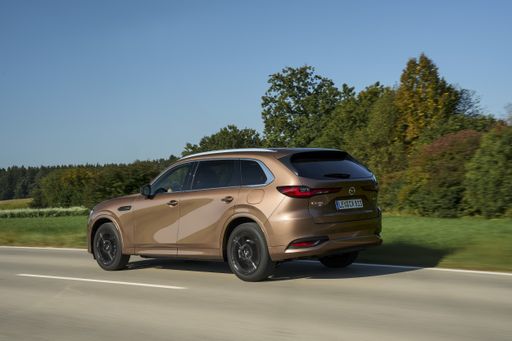
The Mazda CX-80 brings polished, near-premium styling and a cabin that feels far classier than its badge might imply. It steers with a composed, engaging character and packs the sensible practicality families want — with just enough flair to make school runs feel a little less ordinary.

details
VW Tayron
Mazda CX-80

Costs and Consumption

Price
40,200 - 56,000 £
Price
49,300 - 61,400 £
Consumption L/100km
1.5 - 8.5 L/100km
Consumption L/100km
4 - 5.6 L/100km
Consumption kWh/100km
-
Consumption kWh/100km
-
Electric Range
116 - 123 km
Electric Range
60 km
Battery Capacity
-
Battery Capacity
-
co2
33 - 192 g/km
co2
91 - 146 g/km
Fuel tank capacity
-
Fuel tank capacity
-

Dimensions and Body

Body Type
SUV
Body Type
SUV
Seats
5
Seats
7
Doors
-
Doors
-
Curb weight
1,682 - 1,948 kg
Curb weight
2,131 - 2,240 kg
Trunk capacity
705 - 885 L
Trunk capacity
258 L
Length
-
Length
-
Width
1,853 - 1,866 mm
Width
1,890 mm
Height
-
Height
-
Max trunk capacity
-
Max trunk capacity
-
Payload
497 - 573 kg
Payload
649 - 650 kg

Engine and Performance

Engine Type
Petrol MHEV, Diesel, Petrol, Plugin Hybrid
Engine Type
Plugin Hybrid, Diesel MHEV
Transmission
Automatic
Transmission
Automatic
Transmission Detail
Dual-Clutch Automatic
Transmission Detail
Automatic Gearbox
Drive Type
Front-Wheel Drive, All-Wheel Drive
Drive Type
All-Wheel Drive
Power HP
150 - 272 HP
Power HP
254 - 327 HP
Acceleration 0-100km/h
6.1 - 9.7 s
Acceleration 0-100km/h
6.8 - 8.4 s
Max Speed
-
Max Speed
-
Torque
250 - 400 Nm
Torque
500 - 550 Nm
Number of Cylinders
4
Number of Cylinders
4 - 6
Power kW
110 - 200 kW
Power kW
187 - 241 kW
Engine capacity
1,498 - 1,984 cm3
Engine capacity
2,488 - 3,283 cm3

General

Model Year
2,025 - 2,026
Model Year
2025
CO2 Efficiency Class
E, F, B, G
CO2 Efficiency Class
B, E
Brand
VW
Brand
Mazda
DriveDuel uses data analysis and artificial intelligence to evaluate vehicle data and create content. Content is regularly reviewed and improved. The displayed prices are estimates based on German list prices, adjusted to the respective country’s VAT. Country-specific registration taxes are not included. This information is not legally binding.