VS

VW Tayron vs Mercedes GLB comparison

Compare performance (272 HP vs 354 HP), boot space and price (39,600 £ vs 50,600 £ ) at a glance. Find out which car is the better choice for you – VW Tayron or Mercedes GLB?

VW Tayron vs Mercedes GLB: Key differences

VW Tayron

4.8 (2 Reviews)
rate
  • visibly cheaper
  • markedly lighter
  • clearly more trunk space
details

Mercedes GLB

3.6 (4 Reviews)
rate
  • markedly more power
  • substantially more electric range
  • a bit quicker 0–100 km/h
details

All details on performance, efficiency, range and trunk space can be found in the technical comparison below – including user reviews for both models.

By Achim Sedelmaier

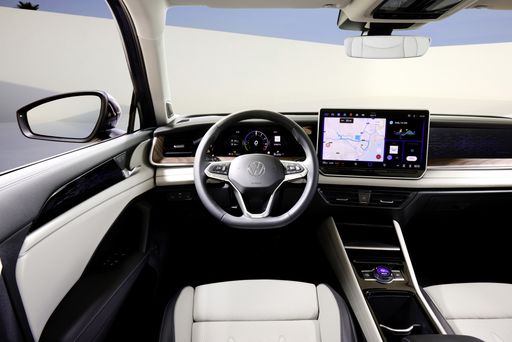
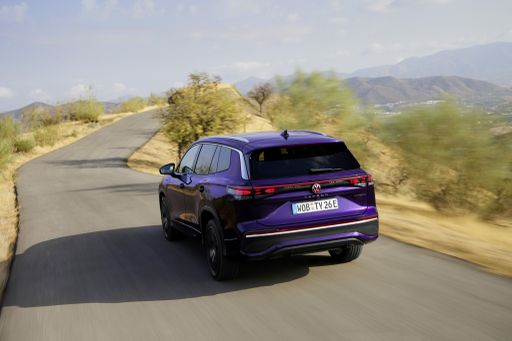
Tayron

The automotive market is constantly evolving, with manufacturers pushing boundaries in technology, performance, and comfort. As two leading players, Mercedes-Benz and Volkswagen bring their flagship offerings to the table, the GLB and Tayron stand out in the growing SUV segment. In this comparative analysis, we’ll explore the technical aspects and innovations that define these vehicles.
GLB

Design and Dimensions

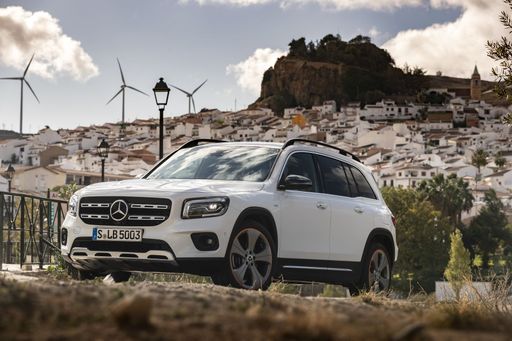
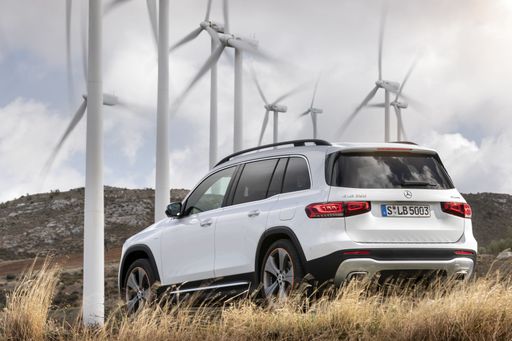
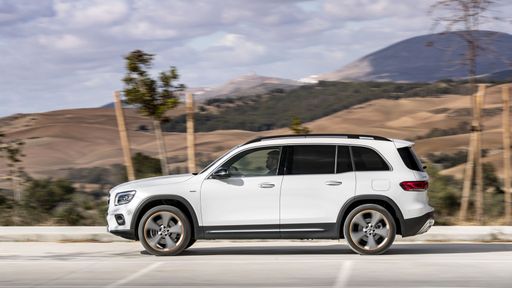
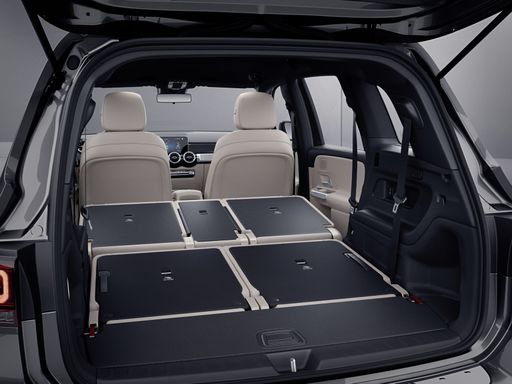
The Mercedes GLB packs a robust design that exudes luxury and sophistication. Measuring 4634mm in length, 1834mm in width, and 1692mm in height, its dimensions are compact enough for urban driving but roomy enough for family use. It boasts a practical trunk capacity of 565 to 570 liters, perfect for everyday errands or weekend trips.

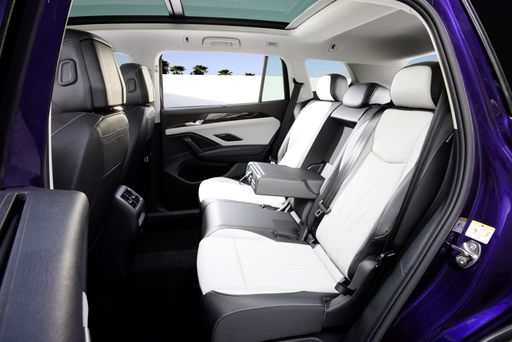
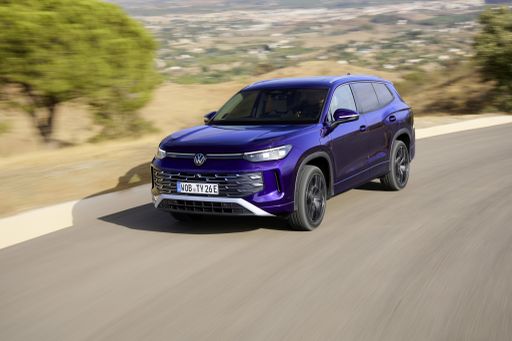
In contrast, the Volkswagen Tayron is slightly larger, with a length of 4792mm and a width of 1853mm. Its height is comparable at 1668mm, allowing for an equally spacious cabin. With a trunk capacity ranging from 705 to 885 liters, it provides more luggage space, making the Tayron a preference for those who prioritize cargo capacity.

Tayron

Powertrains and Performance

Mercedes-Benz offers the GLB with a variety of powertrains, including petrol and diesel options, along with a mild-hybrid engine. Power outputs range from 116 HP to a thrilling 320 HP, catering to different driving preferences. The GLB can accelerate from 0-100 km/h in as little as 5.5 seconds, showcasing its sporty capabilities. Fuel consumption varies between 5.6 to 9 L/100km, depending on the engine choice.

On the other hand, the VW Tayron features a range of powertrains that includes petrol, diesel, and a plug-in hybrid variant. It offers power outputs of up to 272 HP, with impressive acceleration capabilities - the quickest model can sprint from 0-100 km/h in just 7.3 seconds. Economically, the Tayron shines with a fuel consumption rating as low as 0.4 L/100 km in its hybrid variant, making it an eco-friendly choice for those who prioritise sustainability.

GLB

Transmission and Drive Systems

Both the GLB and Tayron are equipped with advanced automatic transmission systems, enhancing driving comfort. The GLB utilizes a dual-clutch automatic gearbox, providing quick gear shifts and responsiveness. It is available in front-wheel drive or all-wheel drive configurations, ensuring versatility for various driving conditions.

Similarly, the Tayron employs a dual-clutch automatic transmission, offering seamless transitions between gears. It, too, is available in both front and all-wheel drive options, appealing to those who seek performance and stability on varied terrains.

Tayron

Technological Innovations

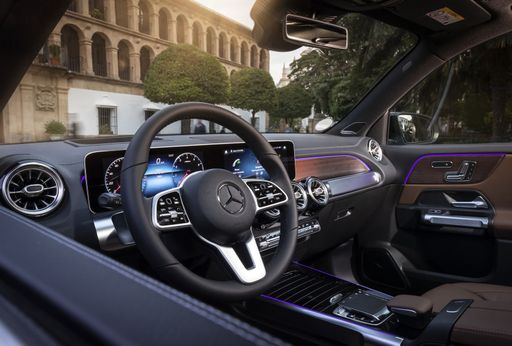
The Mercedes GLB is equipped with a state-of-the-art infotainment system that integrates Mercedes’ MBUX technology. This innovation includes voice command capabilities, allowing drivers to manage navigation and media with ease. Safety features are paramount, with comprehensive active safety systems that enhance driving confidence.

Conversely, the VW Tayron embraces modern connectivity and smart features, including a digital cockpit that provides vital information at a glance. Advanced driver assistance systems are incorporated, ensuring passengers are well-protected while on the road. The plug-in hybrid option of the Tayron allows drivers to navigate short distances using electric power alone, with an electric range of up to 126 km.

GLB

Conclusion

In summary, both the Mercedes GLB and VW Tayron cater to a discerning audience looking for practicality, performance, and innovative technology in an SUV. The GLB highlights a luxurious design and sporty engine range, while the Tayron excels with its larger cargo capacity and environmentally-friendly hybrid options. Ultimately, the choice between these two fantastic SUVs will come down to personal preference and specific lifestyle needs.

Here’s where it gets real: The technical differences in detail

Tayron

Costs and Efficiency:

Price and efficiency are key factors when choosing a car – and this is often where the real differences emerge.

VW Tayron is visibly cheaper – starting at 39,600 £ , while the Mercedes GLB costs 50,600 £ . That’s a price difference of around 11,000 £.

As for electric range, the Mercedes GLB offers substantially more range – reaching up to 631 km, about 508 km more than the VW Tayron.

GLB

Engine and Performance:

Under the bonnet, it becomes clear which model is tuned for sportiness and which one takes the lead when you hit the accelerator.

When it comes to engine power, the Mercedes GLB offers markedly more power – delivering 354 HP compared to 272 HP. That’s roughly 82 HP more horsepower.

When accelerating from 0 to 100 km/h, the Mercedes GLB is a bit quicker – completing the sprint in 5.5 s, while the VW Tayron takes 6.1 s. That’s about 0.6 s quicker.

There’s also a difference in torque: the Mercedes GLB delivers markedly more torque with 515 Nm compared to 400 Nm. That’s about 115 Nm more.

Tayron

Space and Everyday Use:

Whether family car or daily driver – which one offers more room, flexibility and comfort?

Both vehicles offer seating for 5 people.

In terms of curb weight, VW Tayron is markedly lighter – 1,682 kg compared to 2,200 kg. The difference is around 518 kg.

Looking at boot space, the VW Tayron offers clearly more boot space – 885 L compared to 540 L. That’s a difference of about 345 L.

When it comes to payload, the VW Tayron carries slightly more – 566 kg compared to 500 kg. That’s a difference of about 66 kg.

Who wins the race in the data check?

The Mercedes GLB is clearly superior overall in the objective data comparison.
This result only shows which model scores more points on paper – not which of the two cars feels right for you.

from £50,600
GLB

Mercedes GLB

  • Engine Type : Electric
  • Transmission : Automatic
  • Drive Type : Rear-Wheel Drive, All-Wheel Drive
  • Power HP : 272 - 354 HP
  • Consumption kWh/100km : 15.8 - 15.9 kWh/100km
  • Electric Range : 614 - 631 km
VW Tayron
Mercedes GLB

Costs and Consumption

View detailed analysis

Engine and Performance

View detailed analysis

Dimensions and Body

View detailed analysis

VW Tayron

The VW Tayron is Volkswagen's roomy, no-nonsense SUV that pairs clean, familiar styling with a practical cabin built for families and everyday use. It rides comfortably, packs sensible tech and creature comforts, and feels like the sensible sweater of SUVs for buyers who prefer steady value over headline-grabbing drama.

details

Mercedes GLB

The Mercedes GLB is a practical compact SUV that mixes boxy, family-friendly space with premium German polish, making it an appealing choice for buyers who want usefulness without pretension. It drives with a confident, composed feel and somehow manages to look both rugged and refined — the grown-up SUV that still likes to have fun.

details
VW Tayron
Mercedes GLB

Costs and Consumption

Price
39,600 - 56,000 £
Price
50,600 - 62,400 £
Consumption L/100km
1.5 - 8.5 L/100km
Consumption L/100km
-
Consumption kWh/100km
-
Consumption kWh/100km
15.8 - 15.9 kWh/100km
Electric Range
116 - 123 km
Electric Range
614 - 631 km
Battery Capacity
19.7 kWh
Battery Capacity
-
co2
33 - 192 g/km
co2
0 g/km
Fuel tank capacity
45 - 58 L
Fuel tank capacity
-

Dimensions and Body

Body Type
SUV
Body Type
SUV
Seats
5
Seats
5
Doors
5
Doors
-
Curb weight
1,682 - 1,948 kg
Curb weight
2,200 - 2,280 kg
Trunk capacity
705 - 885 L
Trunk capacity
540 L
Length
4,792 mm
Length
-
Width
1,853 - 1,866 mm
Width
1,861 mm
Height
1,666 - 1,668 mm
Height
-
Max trunk capacity
1,915 - 2,090 L
Max trunk capacity
-
Payload
489 - 566 kg
Payload
500 kg

Engine and Performance

Engine Type
Petrol MHEV, Diesel, Petrol, Plugin Hybrid
Engine Type
Electric
Transmission
Automatic
Transmission
Automatic
Transmission Detail
Dual-Clutch Automatic
Transmission Detail
Reduction Gearbox
Drive Type
Front-Wheel Drive, All-Wheel Drive
Drive Type
Rear-Wheel Drive, All-Wheel Drive
Power HP
150 - 272 HP
Power HP
272 - 354 HP
Acceleration 0-100km/h
6.1 - 9.7 s
Acceleration 0-100km/h
5.5 - 7.4 s
Max Speed
204 - 221 km/h
Max Speed
-
Torque
250 - 400 Nm
Torque
335 - 515 Nm
Number of Cylinders
4
Number of Cylinders
-
Power kW
110 - 200 kW
Power kW
200 - 260 kW
Engine capacity
1,498 - 1,984 cm3
Engine capacity
-

General

Model Year
2,025 - 2,026
Model Year
2026
CO2 Efficiency Class
E, F, G, B
CO2 Efficiency Class
A
Brand
VW
Brand
Mercedes-Benz
DriveDuel uses data analysis and artificial intelligence to evaluate vehicle data and create content. Content is regularly reviewed and improved. The displayed prices are estimates based on German list prices, adjusted to the respective country’s VAT. Country-specific registration taxes are not included. This information is not legally binding.