VS

VW Tayron vs VW Passat comparison

Compare performance (272 HP vs 272 HP), boot space and price (40,200 £ vs 36,500 £ ) at a glance. Find out which car is the better choice for you – VW Tayron or VW Passat?

VW Tayron vs VW Passat: Key differences

VW Tayron

4.5 (5 Reviews)
rate
  • somewhat quicker 0–100 km/h
  • noticeably more trunk space
details

VW Passat

5 (3 Reviews)
rate
  • somewhat cheaper
  • visibly more efficient
  • very slightly more electric range
  • only slightly lighter
details

All details on performance, efficiency, range and trunk space can be found in the technical comparison below – including user reviews for both models.

By Achim Sedelmaier

Tayron

Overview: VW Passat VS VW Tayron in one glance

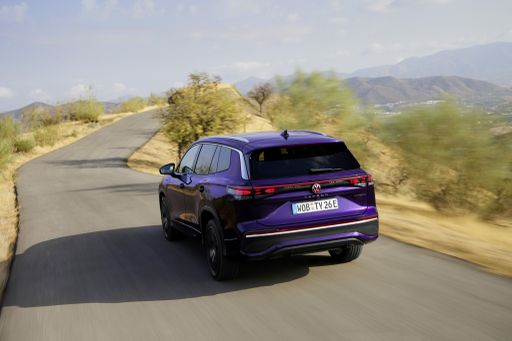
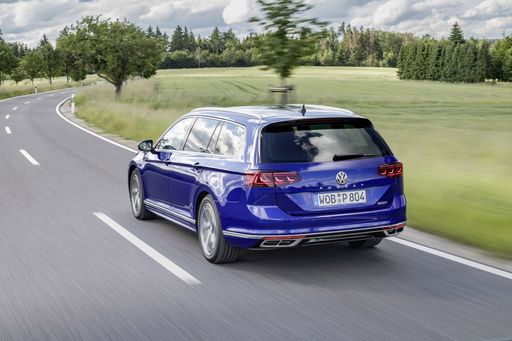
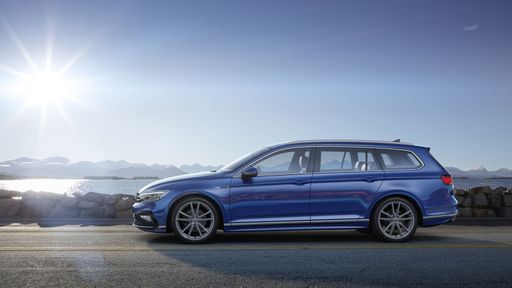
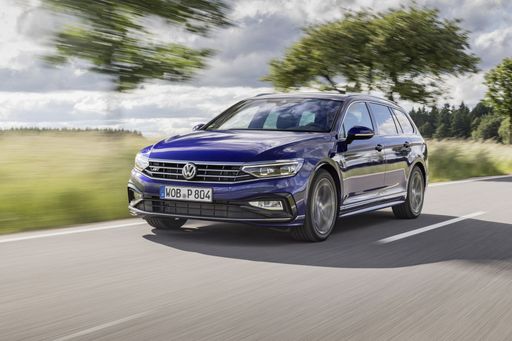
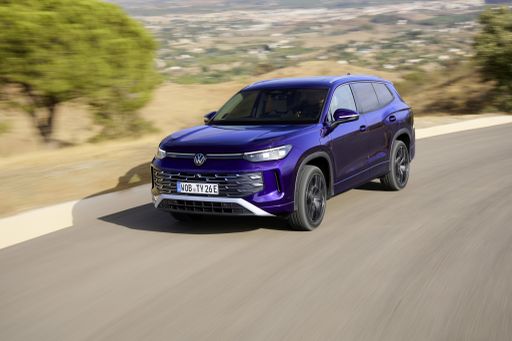
VW Passat VS VW Tayron frames a familiar Volkswagen choice: a traditional, cavernous estate versus a modern, high‑seated SUV. The VW Passat presents itself as a long‑distance workhorse with a focus on low running costs and maximum luggage space, while the VW Tayron trades estate practicality for SUV poise, higher seating and optional third‑row flexibility. Both wear Volkswagen’s sober design and safety pedigree, but they answer different practical questions at the driveway. This comparison teases out how that difference plays out in daily life rather than on paper.
Passat

Character and driving feel

The VW Passat drives like a grown‑up estate: composed, efficient and tuned for mile‑eating calm, whereas the VW Tayron feels more like a soft‑riding SUV that prioritises a raised viewpoint and isolation from road imperfections. Passat steering is crisper and makes the car feel lighter through corners for its size, while Tayron’s higher mass and softer roll offer a more cocooned, less involving experience. On dual carriageways the Passat rewards steady inputs and economical use, the Tayron rewards occupants with a quieter, more limousine‑like ambience. If you want engagement and directness, the Passat tilts that way; if you favour serenity and a higher seat, the Tayron leans the other.

Tayron

Comfort, cabin feel and perceived quality

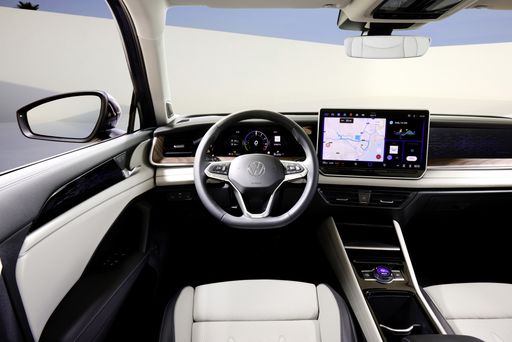
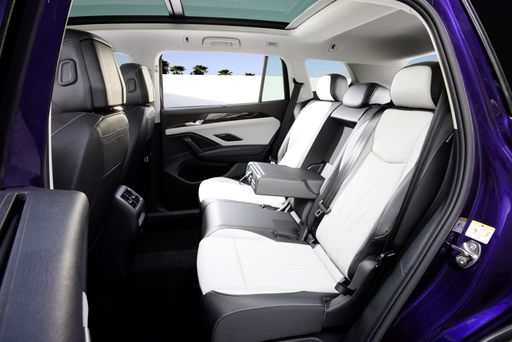
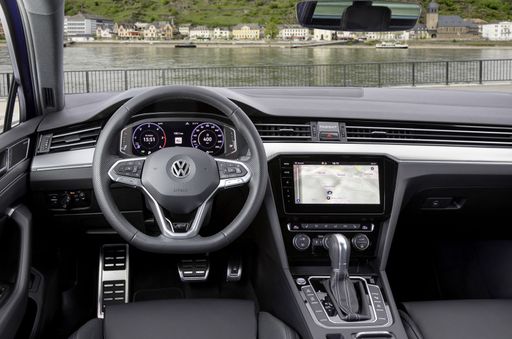
Inside the VW Passat the mood is low and wide — seats and suspension geared for long hours with that understated Volkswagen material mix that feels solid rather than flashy, while the VW Tayron gives you the SUV rituals: commanding view, higher hip point and slightly more presence from trim and options. Rear passengers will notice a different promise: the Passat offers vast legroom in an estate package, the Tayron offers roomy second‑row space with the feeling of being in a true family SUV. Both cabins are well finished, but the Passat’s interior projects pragmatic calm and the Tayron’s interior projects a slightly more premium, upright posture; small hard‑plastic areas on the Tayron keep expectations grounded. If perceived luxury and a higher driving position matter, the Tayron wins that vote; for seat comfort and composure on long runs the Passat nudges ahead.

Passat

Usability and practicality for families

Practical differences are where the two cars stop being interchangeable: the VW Passat’s estate layout makes loading large or awkward items easier thanks to a lower lip and flat floor, whereas the VW Tayron’s SUV architecture offers a bigger usable boot in many configurations and the option of a third row for occasional children’s seats. Families carrying bulky gear, pushchairs or long items will appreciate the Passat’s estate practicality and the intuitive load space, but families wanting flexible seating and the higher ingress/egress of an SUV will prefer the Tayron. The Tayron also offers three ISOFIX points and a bigger sense of cabin versatility, though the extra seats are best for kids. Both will feel large in tight urban parking, but the Passat’s estate shape can be easier to slide into parking bays than the Tayron’s taller profile and wider turning arc.

Tayron

Long‑distance behaviour and everyday usability

On long motorway runs both the VW Passat and the VW Tayron excel at keeping fatigue down, yet they get there in slightly different ways: the Passat emphasises low consumption and an unhurried, planted ride that shrinks distances, while the Tayron doubles down on acoustic refinement and a cushioned glide that makes heavy traffic less wearing. The Passat’s drivetrain options tend to reward economy-minded drivers, and the plug‑in variant gives commuters an extended electric reach that changes daily running costs; the Tayron’s PHEV also helps short commutes but packages differently and can be heavier. In town both cars ask for parking aids — the Passat for its length, the Tayron for its bulk — and the Tayron’s higher seating makes city traffic easier to read despite the broader footprint. If your life is motorway kilometres, the Passat’s efficiency edge is meaningful; if your priorities are cabin quiet and easy access, the Tayron scores.

Passat

Buyer fit: who should choose which and why

If you are a frequent motorway commuter, a company car user who values low running costs, or someone who routinely hauls large loads, the VW Passat is the more logical tool: it prioritises luggage usability, fuel economy and a composed driving manners. If your household needs flexible seating, a commanding seating position, strong middle‑row space and an SUV image — or you tow regularly — the VW Tayron will suit your needs better, offering family‑friendly practicality and a quieter long‑distance cabin. Budget sensitivity, parking constraints and whether you need a genuinely flat, low‑load floor should tip the balance in real life rather than brochure items. The technical comparison that follows will quantify the trade‑offs in range, cargo volume and performance so you can match those real‑world tendencies to the numbers that matter for your use case.

Here’s where it gets real: The technical differences in detail

Tayron

Costs and Efficiency:

Price and efficiency are often the first things buyers look at. Here it becomes clear which model has the long-term edge – whether at the pump, the plug, or in purchase price.

VW Passat is somewhat cheaper – starting at 36,500 £ , while the VW Tayron costs 40,200 £ . That’s a price difference of around 3,759 £.

Fuel consumption also shows a difference: the VW Passat uses 1.2 L/100km and is visibly more efficient than the VW Tayron with 1.5 L/100km. The difference is about 0.3 L/100km.

As for electric range, the VW Passat offers very slightly more range – reaching up to 135 km, about 12 km more than the VW Tayron.

Passat

Engine and Performance:

Under the bonnet, it becomes clear which model is tuned for sportiness and which one takes the lead when you hit the accelerator.

Both models deliver identical power – 272 HP each.

When accelerating from 0 to 100 km/h, the VW Tayron is somewhat quicker – completing the sprint in 6.1 s, while the VW Passat takes 7.1 s. That’s about 1 s quicker.

Both models offer the same torque – 400 Nm.

Tayron

Space and Everyday Use:

Cabin size, boot volume and payload all play a role in everyday practicality. Here, comfort and flexibility make the difference.

Both vehicles offer seating for 5 people.

In terms of curb weight, VW Passat is only slightly lighter – 1,573 kg compared to 1,682 kg. The difference is around 109 kg.

Looking at boot space, the VW Tayron offers noticeably more boot space – 885 L compared to 690 L. That’s a difference of about 195 L.

When it comes to payload, the VW Passat carries barely more – 577 kg compared to 573 kg. That’s a difference of about 4 kg.

Who wins the race in the data check?

The VW Passat is slightly ahead in the objective data comparison.
This result only shows which model scores more points on paper – not which of the two cars feels right for you.

from £36,500
Passat

VW Passat

  • Engine Type : Petrol MHEV, Diesel, Plugin Hybrid
  • Transmission : Automatic
  • Drive Type : Front-Wheel Drive, All-Wheel Drive
  • Power HP : 122 - 272 HP
  • Consumption L/100km : 1.2 - 5.8 L/100km
  • Electric Range : 124 - 135 km
VW Tayron
VW Passat

Costs and Consumption

View detailed analysis

Engine and Performance

View detailed analysis

Dimensions and Body

View detailed analysis

VW Tayron

The VW Tayron combines a roomy, practical interior with a composed, comfortable ride that suits both daily commuting and longer journeys. With a restrained, modern design and a focus on straightforward tech and safety, it’s a sensible choice for buyers who want Volkswagen refinement without unnecessary flash.

details

VW Passat

The VW Passat is the grown-up family car that gets the basics absolutely right — roomy, comfortable and built to handle weekday commutes and weekend getaways without fuss. It won't set your pulse racing, but its calm composure and sensible packaging make it boring in the best possible way: a dependable, no‑drama choice for buyers who value practicality over flash.

details
VW Tayron
VW Passat

Costs and Consumption

Price
40,200 - 56,000 £
Price
36,500 - 58,500 £
Consumption L/100km
1.5 - 8.5 L/100km
Consumption L/100km
1.2 - 5.8 L/100km
Consumption kWh/100km
-
Consumption kWh/100km
-
Electric Range
116 - 123 km
Electric Range
124 - 135 km
Battery Capacity
-
Battery Capacity
-
co2
33 - 192 g/km
co2
28 - 153 g/km
Fuel tank capacity
-
Fuel tank capacity
-

Dimensions and Body

Body Type
SUV
Body Type
Estate
Seats
5
Seats
5
Doors
-
Doors
-
Curb weight
1,682 - 1,948 kg
Curb weight
1,573 - 1,858 kg
Trunk capacity
705 - 885 L
Trunk capacity
510 - 690 L
Length
-
Length
-
Width
1,853 - 1,866 mm
Width
1,849 mm
Height
-
Height
-
Max trunk capacity
-
Max trunk capacity
-
Payload
489 - 573 kg
Payload
501 - 577 kg

Engine and Performance

Engine Type
Petrol MHEV, Diesel, Petrol, Plugin Hybrid
Engine Type
Petrol MHEV, Diesel, Plugin Hybrid
Transmission
Automatic
Transmission
Automatic
Transmission Detail
Dual-Clutch Automatic
Transmission Detail
Dual-Clutch Automatic
Drive Type
Front-Wheel Drive, All-Wheel Drive
Drive Type
Front-Wheel Drive, All-Wheel Drive
Power HP
150 - 272 HP
Power HP
122 - 272 HP
Acceleration 0-100km/h
6.1 - 9.7 s
Acceleration 0-100km/h
7.1 - 10.7 s
Max Speed
-
Max Speed
-
Torque
250 - 400 Nm
Torque
250 - 400 Nm
Number of Cylinders
4
Number of Cylinders
4
Power kW
110 - 200 kW
Power kW
90 - 200 kW
Engine capacity
1,498 - 1,984 cm3
Engine capacity
1,498 - 1,968 cm3

General

Model Year
2,025 - 2,026
Model Year
2,024 - 2,025
CO2 Efficiency Class
E, F, G, B
CO2 Efficiency Class
D, E, B
Brand
VW
Brand
VW
DriveDuel uses data analysis and artificial intelligence to evaluate vehicle data and create content. Content is regularly reviewed and improved. The displayed prices are estimates based on German list prices, adjusted to the respective country’s VAT. Country-specific registration taxes are not included. This information is not legally binding.