VS

VW Tiguan vs Jaguar F-Pace comparison

Compare performance (272 HP vs 575 HP), boot space and price (33,600 £ vs 56,400 £ ) at a glance. Find out which car is the better choice for you – VW Tiguan or Jaguar F-Pace?

VW Tiguan vs Jaguar F-Pace: Key differences

VW Tiguan

4.1 (8 Reviews)
rate
  • substantially cheaper
  • clearly more efficient
  • clearly more electric range
  • clearly lighter
  • markedly more trunk space

Jaguar F-Pace

5 (1 Reviews)
rate
  • substantially more power
  • clearly quicker 0–100 km/h

All details on performance, efficiency, range and trunk space can be found in the technical comparison below – including user reviews for both models.

Tiguan

When it comes to flexibility, performance, and innovation in the SUV segment, two contenders make a compelling case: the Jaguar F-Pace and the Volkswagen Tiguan. This comparison will delve into their technical specifications, innovative features, and what sets them apart in this competitive landscape.
F-Pace

Design and Dimensions: A Study in Versatility

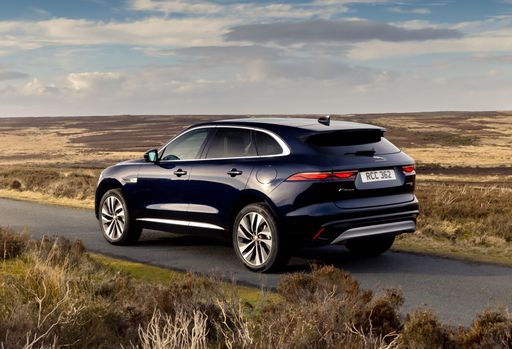
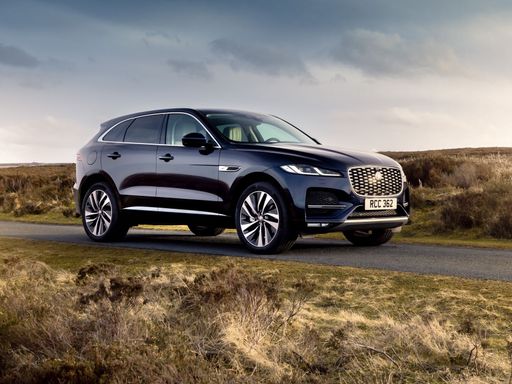
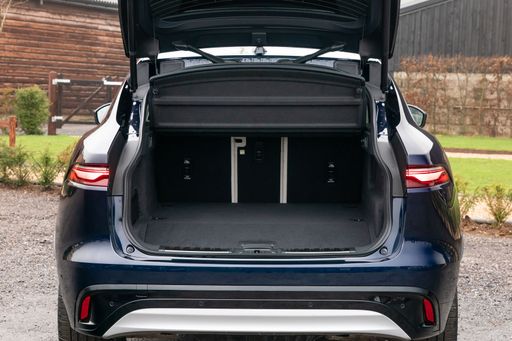
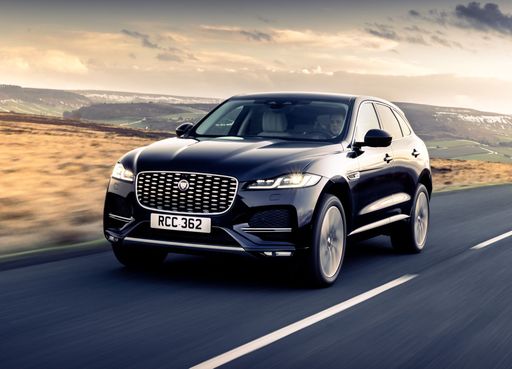
The Jaguar F-Pace flaunts a more athletic design, with dimensions measuring approximately 4747 mm in length, 1936 mm in width, and a height of 1664 mm. This luxurious SUV not only captures the eye but also offers a trunk capacity of 470 liters, making it ideal for both city drives and weekend getaways.

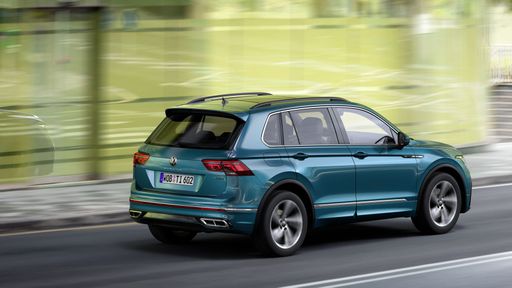
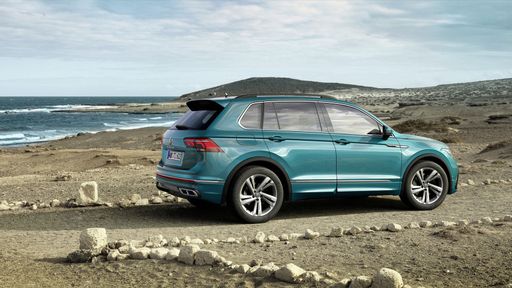
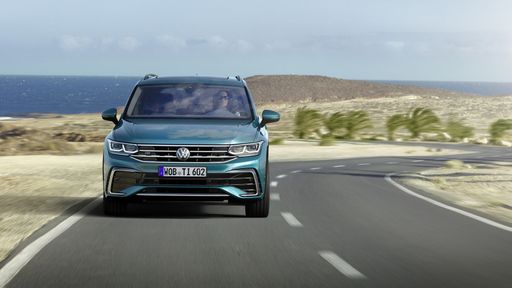
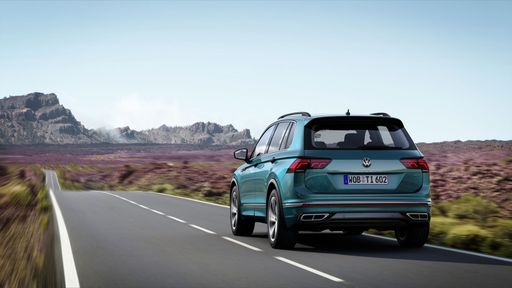
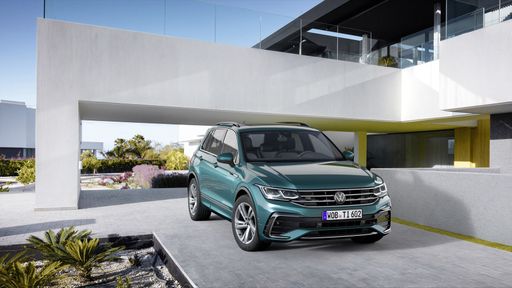
On the other side, the VW Tiguan, while slightly shorter at 4539 mm in length, offers a more spacious trunk capacity of 652 liters, emphasizing practical utility. Its width ranges from 1842 mm to 1859 mm, and its height stands at 1658 mm, presenting a robust yet functional silhouette that appeals to families and adventurers alike.

Tiguan

Engine Options: Power Meets Efficiency

Under the hood, both SUVs offer a range of potent engine choices. The F-Pace features a selection of diesel and petrol engines, including a hybrid option, producing anywhere from 163 HP in the entry-level model to a staggering 575 HP in the top-spec variant. The acceleration figures are equally impressive, with some models capable of reaching 100 km/h in as little as 4 seconds, showcasing the brand’s performance pedigree.

In contrast, the Tiguan settles into a different realm with its engine lineup, which includes petrol, diesel, and hybrid options as well. While its power ranges from 130 HP in the base model to 272 HP, it still manages respectable acceleration, especially with its sportier configurations, clocking in at around 5.9 seconds for 0-100 km/h in the most powerful setup.

F-Pace

Transmission and Drive: Automatic Versatility

Both vehicles come equipped with automatic transmissions. The Jaguar F-Pace utilizes a traditional automatic gearbox, complemented by an all-wheel drive (AWD) system, ensuring a dynamic driving experience especially in varying weather conditions.

The Tiguan, featuring a dual-clutch automatic system, offers both front-wheel drive and all-wheel drive configurations, providing an adaptable choice that caters to different driving preferences and road conditions.

Tiguan

Fuel Consumption and Emissions: Balancing Performance and Responsibility

In terms of efficiency, the F-Pace’s diesel engines boast a commendable fuel consumption of around 6.7 L/100 km, while its hybrid options can lower this to as little as 1.8 L/100 km. This positions the F-Pace as an environmentally responsible choice without compromising on power.

The Tiguan claims slightly better efficiency figures, averaging around 5.3 L/100 km in its most efficient models, and its hybrid variants can achieve fuel consumption as low as 0.4 L/100 km. Both models present robust CO2 efficiency, with the F-Pace showcasing emissions between 41 g/km and 274 g/km, whereas the Tiguan ranges from 8 g/km to 193 g/km, appealing to eco-conscious consumers.

F-Pace

Innovative Features: Tech That Transforms the Drive

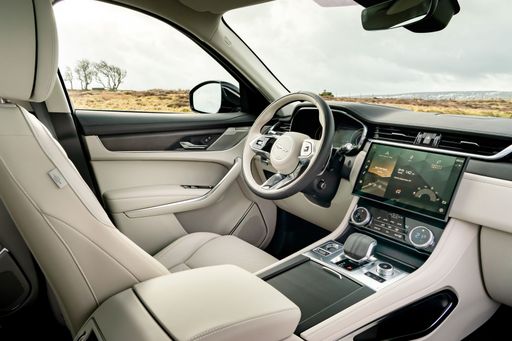
In the tech arena, the F-Pace shines with its advanced infotainment system, featuring a responsive touchscreen interface integrated with Apple CarPlay and Android Auto, allowing seamless connectivity. Jaguar's commitment to luxury is echoed in its premium audio systems and driver assistance features, which enhance safety and comfort on the road.

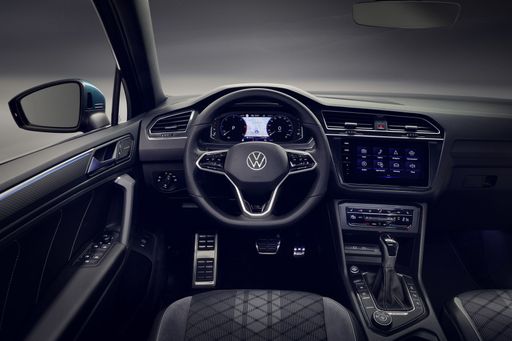
Conversely, the VW Tiguan integrates cutting-edge technology with its sophisticated infotainment system. The Digital Cockpit, a fully customizable digital display, allows drivers to personalize their driving interface. This focus on user-friendliness extends to its range of driver-assistance technologies, providing peace of mind in various driving conditions.

Tiguan

Final Thoughts: The Ultimate SUV Choice

Ultimately, the choice between the Jaguar F-Pace and the Volkswagen Tiguan boils down to individual preferences. The F-Pace epitomizes luxury and performance, perfect for those who prioritize driving exhilaration while enjoying premium interiors. However, the Tiguan stands tall with its practicality, spaciousness, and advanced tech features, catering to families and those seeking a versatile SUV.

Both vehicles demonstrate a commitment to innovation, efficiency, and driver satisfaction, making them standout options in the crowded SUV market.

Here’s where it gets real: The technical differences in detail

Tiguan

Costs and Efficiency:

Price and efficiency are key factors when choosing a car – and this is often where the real differences emerge.

VW Tiguan is substantially cheaper – starting at 33,600 £ , while the Jaguar F-Pace costs 56,400 £ . That’s a price difference of around 22,822 £.

Fuel consumption also shows a difference: the VW Tiguan uses 1.4 L/100km and is clearly more efficient than the Jaguar F-Pace with 1.8 L/100km. The difference is about 0.4 L/100km.

As for electric range, the VW Tiguan offers clearly more range – reaching up to 126 km, about 62 km more than the Jaguar F-Pace.

F-Pace

Engine and Performance:

Power, torque and acceleration are the classic benchmarks for car enthusiasts – and here, some clear differences start to show.

When it comes to engine power, the Jaguar F-Pace offers substantially more power – delivering 575 HP compared to 272 HP. That’s roughly 303 HP more horsepower.

When accelerating from 0 to 100 km/h, the Jaguar F-Pace is clearly quicker – completing the sprint in 4 s, while the VW Tiguan takes 5.9 s. That’s about 1.9 s quicker.

Looking at top speed, the Jaguar F-Pace is noticeably faster – reaching 286 km/h, while the VW Tiguan tops out at 215 km/h. The difference is around 71 km/h.

There’s also a difference in torque: the Jaguar F-Pace delivers substantially more torque with 700 Nm compared to 400 Nm. That’s about 300 Nm more.

Tiguan

Space and Everyday Use:

Whether family car or daily driver – which one offers more room, flexibility and comfort?

Both vehicles offer seating for 5 people.

In terms of curb weight, VW Tiguan is clearly lighter – 1,599 kg compared to 1,951 kg. The difference is around 352 kg.

Looking at boot space, the VW Tiguan offers markedly more boot space – 652 L compared to 470 L. That’s a difference of about 182 L.

For maximum load capacity, the VW Tiguan offers very slightly more capacity – up to 1,486 L, about 58 L more than the Jaguar F-Pace.

When it comes to payload, the Jaguar F-Pace carries barely more – 589 kg compared to 533 kg. That’s a difference of about 56 kg.

Who wins the race in the data check?

The Jaguar F-Pace holds a decisive overall lead in the objective data comparison.
This result only shows which model scores more points on paper – not which of the two cars feels right for you.

from £56,400
F-Pace

Jaguar F-Pace

  • Engine Type : Diesel MHEV, Petrol MHEV, Plugin Hybrid, Petrol
  • Transmission : Automatic
  • Drive Type : All-Wheel Drive
  • Power HP : 163 - 575 HP
  • Consumption L/100km : 1.8 - 12 L/100km
  • Electric Range : 64 km
VW Tiguan
Jaguar F-Pace

Costs and Consumption

View detailed analysis

Engine and Performance

View detailed analysis

Dimensions and Body

View detailed analysis

VW Tiguan

The VW Tiguan blends sensible family practicality with a dash of German polish, delivering a calm, reassuring ride and a cabin that never feels like an afterthought. For buyers who want an SUV that’s easy to live with yet still nicely dressed, the Tiguan is the grown‑up choice that keeps a cheeky wink in reserve.

details

Jaguar F-Pace

Jaguar F-Pace blends the prowling presence of a sports car with the practicality of an SUV, looking elegant while rewarding drivers with lively handling. If you crave something that feels special every time you climb in and prefer style and driving flair over blending into the parking lot, the F-Pace is a classy, slightly cheeky alternative to the usual German suspects.

details
VW Tiguan
Jaguar F-Pace

Costs and Consumption

Price
33,600 - 54,600 £
Price
56,400 - 100,800 £
Consumption L/100km
1.4 - 8.4 L/100km
Consumption L/100km
1.8 - 12 L/100km
Consumption kWh/100km
-
Consumption kWh/100km
-
Electric Range
118 - 126 km
Electric Range
64 km
Battery Capacity
19.7 kWh
Battery Capacity
15.4 kWh
co2
32 - 190 g/km
co2
41 - 274 g/km
Fuel tank capacity
45 L
Fuel tank capacity
62 - 83 L

Dimensions and Body

Body Type
SUV
Body Type
SUV
Seats
5
Seats
5
Doors
5
Doors
5
Curb weight
1,599 - 1,879 kg
Curb weight
1,951 - 2,230 kg
Trunk capacity
490 - 652 L
Trunk capacity
354 - 470 L
Length
4,539 mm
Length
4,747 - 4,762 mm
Width
1,842 - 1,859 mm
Width
1,936 mm
Height
1,658 mm
Height
1,664 - 1,670 mm
Max trunk capacity
1,486 L
Max trunk capacity
1,299 - 1,428 L
Payload
460 - 533 kg
Payload
457 - 589 kg

Engine and Performance

Engine Type
Petrol MHEV, Petrol, Diesel, Plugin Hybrid
Engine Type
Diesel MHEV, Petrol MHEV, Plugin Hybrid, Petrol
Transmission
Automatic
Transmission
Automatic
Transmission Detail
Dual-Clutch Automatic
Transmission Detail
Automatic Gearbox
Drive Type
Front-Wheel Drive, All-Wheel Drive
Drive Type
All-Wheel Drive
Power HP
130 - 272 HP
Power HP
163 - 575 HP
Acceleration 0-100km/h
5.9 - 10.6 s
Acceleration 0-100km/h
4 - 10.1 s
Max Speed
210 - 215 km/h
Max Speed
195 - 286 km/h
Torque
220 - 400 Nm
Torque
380 - 700 Nm
Number of Cylinders
4
Number of Cylinders
4 - 8
Power kW
96 - 200 kW
Power kW
120 - 423 kW
Engine capacity
1,498 - 1,984 cm3
Engine capacity
1,997 - 5,000 cm3

General

Model Year
2,024 - 2,026
Model Year
2,024
CO2 Efficiency Class
D, E, F, B, G
CO2 Efficiency Class
G, B
Brand
VW
Brand
Jaguar
DriveDuel uses data analysis and artificial intelligence to evaluate vehicle data and create content. Content is regularly reviewed and improved. The displayed prices are estimates based on German list prices, adjusted to the respective country’s VAT. Country-specific registration taxes are not included. This information is not legally binding.