VS

VW Tiguan vs Kia Sorento comparison

Compare performance (272 HP vs 252 HP), boot space and price (33,600 £ vs 46,900 £ ) at a glance. Find out which car is the better choice for you – VW Tiguan or Kia Sorento?

VW Tiguan vs Kia Sorento: Key differences

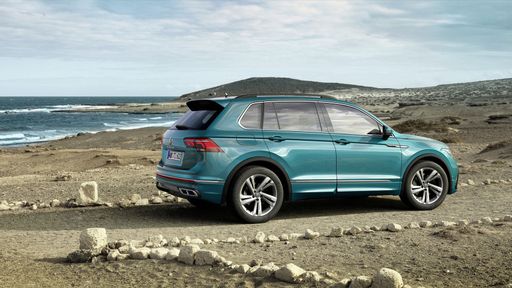
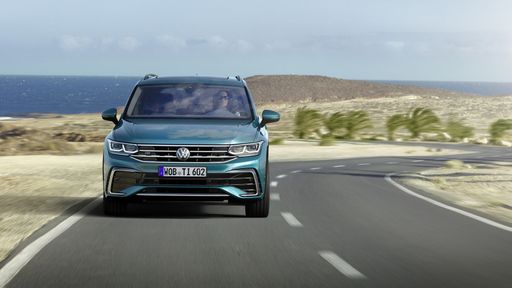
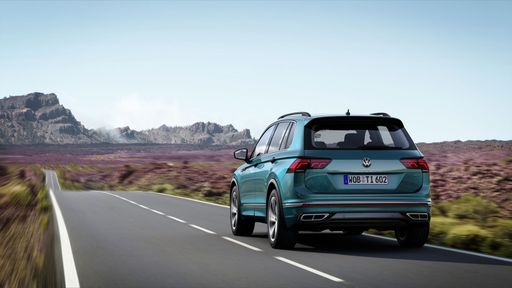
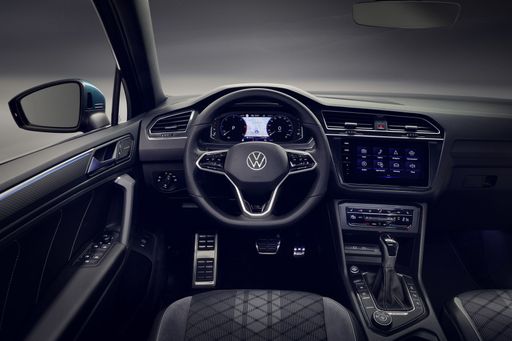
VW Tiguan

4.1 (8 Reviews)
rate
  • clearly cheaper
  • very slightly more power
  • considerably more efficient
  • considerably more electric range
  • visibly quicker 0–100 km/h
  • slightly lighter

Kia Sorento

  • only slightly more trunk space

All details on performance, efficiency, range and trunk space can be found in the technical comparison below – including user reviews for both models.

Tiguan

The Battle of SUVs: Kia Sorento vs VW Tiguan

In the competitive world of Sport Utility Vehicles (SUVs), the Kia Sorento and the Volkswagen Tiguan stand out as formidable contenders. With 2024 models bringing fresh design elements and technological advancements, both these SUVs promise a remarkable driving experience. But when compared head to head, which one comes out on top? Let's explore the technical aspects and innovations of these two vehicles.
Sorento

Engine Performance and Variants

The Kia Sorento offers a variety of engine options, including Plugin Hybrid, Full Hybrid, and Diesel. Depending on the engine type, the Sorento generates power ranging from 194 HP to 252 HP, with the plugin hybrid boasting an electric range of 55 km. This range is commendable for those looking to maximize fuel efficiency.

On the other hand, the VW Tiguan provides a wide gamut of engines including Petrol MHEV, Plugin Hybrid, Diesel, and Petrol configurations. The power ranges here from a modest 130 HP to a robust 272 HP, and the plugin hybrid can achieve up to 113 km on electric power alone, making it a top choice for city driving enthusiasts.

Tiguan

Transmission and Drivability

Both vehicles come equipped with automatic transmissions, with the Sorento offering options between an Automatic Gearbox and a Dual-Clutch Automatic. This setup facilitates a smooth driving experience with all-wheel and front-wheel drive types available to suit different driving needs.

The Tiguan also embraces the automatic Dual-Clutch Automatic transmission technology, providing responsive gear changes. Buyers can choose between front-wheel and all-wheel-drive options to enjoy varied terrains with confidence.

Sorento

Dimensions and Design

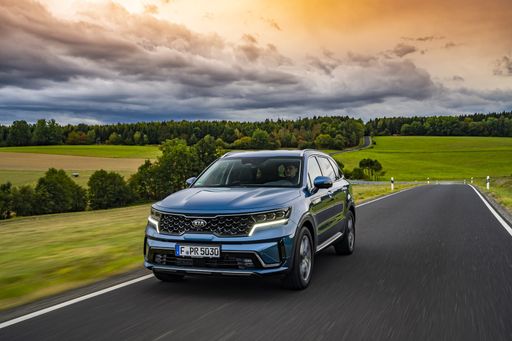
The Kia Sorento demonstrates a commanding presence with its length of 4815 mm and a width of 1900 mm, slightly towering over its rival. It accommodates up to seven seats, making it ideal for larger families, while the trunk capacity extends up to 705 L, catering to those heavy luggage days.

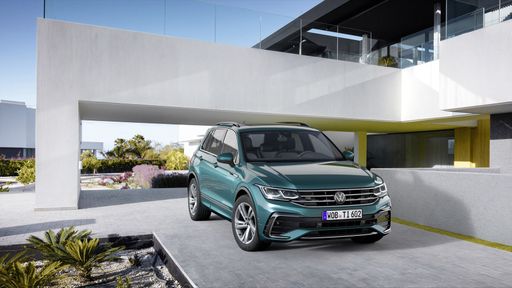
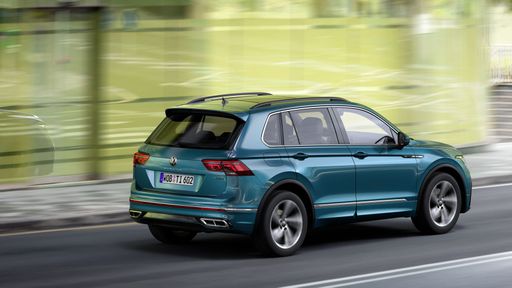
Meanwhile, the Tiguan is slightly more compact at 4539 mm in length and a width of up to 1859 mm. This five-seater SUV is more suited for smaller families or individuals needing ample space without the need for extensive passenger seating. The Tiguan's trunk offers a capacity of up to 652 L.

Tiguan

Fuel Efficiency and Consumption

Efficiency is at the heart of both vehicles. The Sorento presents various consumption rate options from as low as 1.6 L/100 km for hybrid models to 7.2 L/100 km for diesel. This flexibility appeals to a range of eco-conscious to power-hungry drivers.

The Tiguan intrigues with its equally diverse consumption rates, ranging from an impressively economical 0.4 L/100 km for hybrids to 7.7 L/100 km for petrol models. This range demonstrates VW’s commitment to efficient fuel usage without compromising performance.

Sorento

Conclusion: Which SUV Reigns Supreme?

Both the Kia Sorento and the VW Tiguan offer distinctive advantages, tailored to meet different preferences. The Sorento emerges as the leader in space and diversity of seating options, making it optimal for families and long journeys. Its hybrid options also cater to sustainability-focused drivers.

Conversely, the Tiguan excels in performance with a broader engine variety and superior electric range for its plugin hybrid. It suits those who prioritize urban mobility and efficiency intermixed with occasional escapades.

Ultimately, the decision lies in the driver's lifestyle and preferences. Whether it's the comprehensive package of the Kia Sorento or the dynamic choices of the VW Tiguan, both these SUVs deliver excellence on the road.

Here’s where it gets real: The technical differences in detail

Tiguan

Costs and Efficiency:

When it comes to price and running costs, the biggest differences usually appear. This is often where you see which car fits your budget better in the long run.

VW Tiguan is clearly cheaper – starting at 33,600 £ , while the Kia Sorento costs 46,900 £ . That’s a price difference of around 13,299 £.

Fuel consumption also shows a difference: the VW Tiguan uses 1.4 L/100km and is considerably more efficient than the Kia Sorento with 3.9 L/100km. The difference is about 2.5 L/100km.

As for electric range, the VW Tiguan offers considerably more range – reaching up to 126 km, about 71 km more than the Kia Sorento.

Sorento

Engine and Performance:

Power, torque and acceleration are the classic benchmarks for car enthusiasts – and here, some clear differences start to show.

When it comes to engine power, the VW Tiguan offers very slightly more power – delivering 272 HP compared to 252 HP. That’s roughly 20 HP more horsepower.

When accelerating from 0 to 100 km/h, the VW Tiguan is visibly quicker – completing the sprint in 5.9 s, while the Kia Sorento takes 8 s. That’s about 2.1 s quicker.

There’s also a difference in torque: the Kia Sorento delivers marginally more torque with 440 Nm compared to 400 Nm. That’s about 40 Nm more.

Tiguan

Space and Everyday Use:

Beyond pure performance, interior space and usability matter most in daily life. This is where you see which car is more practical and versatile.

Seats: Kia Sorento offers more seats – 7 vs 5.

In terms of curb weight, VW Tiguan is slightly lighter – 1,599 kg compared to 1,855 kg. The difference is around 256 kg.

Looking at boot space, the Kia Sorento offers only slightly more boot space – 705 L compared to 652 L. That’s a difference of about 53 L.

When it comes to payload, the Kia Sorento carries noticeably more – 685 kg compared to 533 kg. That’s a difference of about 152 kg.

Who wins the race in the data check?

The VW Tiguan is decisively ahead in the objective data comparison.
This result only shows which model scores more points on paper – not which of the two cars feels right for you.

from £33,600
Tiguan

VW Tiguan

  • Engine Type : Petrol MHEV, Petrol, Diesel, Plugin Hybrid
  • Transmission : Automatic
  • Drive Type : Front-Wheel Drive, All-Wheel Drive
  • Power HP : 130 - 272 HP
  • Consumption L/100km : 1.4 - 8.4 L/100km
  • Electric Range : 118 - 126 km
VW Tiguan
Kia Sorento

Costs and Consumption

View detailed analysis

Engine and Performance

View detailed analysis

Dimensions and Body

View detailed analysis

VW Tiguan

The VW Tiguan blends sensible family practicality with a dash of German polish, delivering a calm, reassuring ride and a cabin that never feels like an afterthought. For buyers who want an SUV that’s easy to live with yet still nicely dressed, the Tiguan is the grown‑up choice that keeps a cheeky wink in reserve.

details

Kia Sorento

The Kia Sorento blends roomy practicality with smart tech and an unexpectedly composed highway manner, making it an easy choice for families who want comfort without fuss. It presents classy interior touches and sensible packaging at a realistic price, proving you don't need to shout to be noticed in the SUV crowd.

details
VW Tiguan
Kia Sorento

Costs and Consumption

Price
33,600 - 54,600 £
Price
46,900 - 60,100 £
Consumption L/100km
1.4 - 8.4 L/100km
Consumption L/100km
3.9 - 7 L/100km
Consumption kWh/100km
-
Consumption kWh/100km
-
Electric Range
118 - 126 km
Electric Range
55 km
Battery Capacity
19.7 kWh
Battery Capacity
-
co2
32 - 190 g/km
co2
87 - 174 g/km
Fuel tank capacity
45 L
Fuel tank capacity
-

Dimensions and Body

Body Type
SUV
Body Type
SUV
Seats
5
Seats
5 - 7
Doors
5
Doors
-
Curb weight
1,599 - 1,879 kg
Curb weight
1,855 - 2,110 kg
Trunk capacity
490 - 652 L
Trunk capacity
175 - 705 L
Length
4,539 mm
Length
-
Width
1,842 - 1,859 mm
Width
1,900 mm
Height
1,658 mm
Height
-
Max trunk capacity
1,486 L
Max trunk capacity
-
Payload
460 - 533 kg
Payload
162 - 685 kg

Engine and Performance

Engine Type
Petrol MHEV, Petrol, Diesel, Plugin Hybrid
Engine Type
Full Hybrid, Diesel, Plugin Hybrid
Transmission
Automatic
Transmission
Automatic
Transmission Detail
Dual-Clutch Automatic
Transmission Detail
Automatic Gearbox, Dual-Clutch Automatic
Drive Type
Front-Wheel Drive, All-Wheel Drive
Drive Type
Front-Wheel Drive, All-Wheel Drive
Power HP
130 - 272 HP
Power HP
194 - 252 HP
Acceleration 0-100km/h
5.9 - 10.6 s
Acceleration 0-100km/h
8 - 9.7 s
Max Speed
210 - 215 km/h
Max Speed
-
Torque
220 - 400 Nm
Torque
380 - 440 Nm
Number of Cylinders
4
Number of Cylinders
4
Power kW
96 - 200 kW
Power kW
142 - 212 kW
Engine capacity
1,498 - 1,984 cm3
Engine capacity
1,598 - 2,151 cm3

General

Model Year
2,024 - 2,026
Model Year
2,025 - 2,026
CO2 Efficiency Class
D, E, F, B, G
CO2 Efficiency Class
E, F, B
Brand
VW
Brand
Kia
DriveDuel uses data analysis and artificial intelligence to evaluate vehicle data and create content. Content is regularly reviewed and improved. The displayed prices are estimates based on German list prices, adjusted to the respective country’s VAT. Country-specific registration taxes are not included. This information is not legally binding.