VS

VW Tiguan vs Nissan X-Trail comparison

Compare performance (272 HP vs 213 HP), boot space and price (33,600 £ vs 34,200 £ ) at a glance. Find out which car is the better choice for you – VW Tiguan or Nissan X-Trail?

VW Tiguan vs Nissan X-Trail: Key differences

VW Tiguan

4.1 (9 Reviews)
rate
  • barely cheaper
  • clearly more power
  • substantially more efficient
  • moderately quicker 0–100 km/h
  • marginally lighter
  • moderately more trunk space
details

Nissan X-Trail

4.6 (5 Reviews)
rate
details

All details on performance, efficiency, range and trunk space can be found in the technical comparison below – including user reviews for both models.

By Achim Sedelmaier

Tiguan

When it comes to compact SUVs, two models that continuously capture the attention of car enthusiasts are the Nissan X-Trail and the VW Tiguan. Both vehicles offer a robust blend of comfort, technology, and performance, but which one stands out as the better option? Let's dive into a comprehensive comparison of these two popular SUVs.
X-Trail

Design and Dimensions

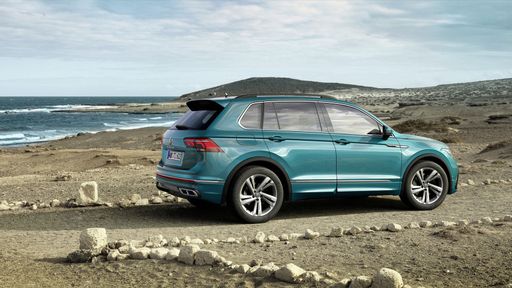
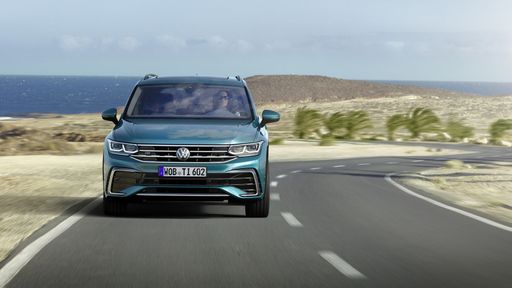
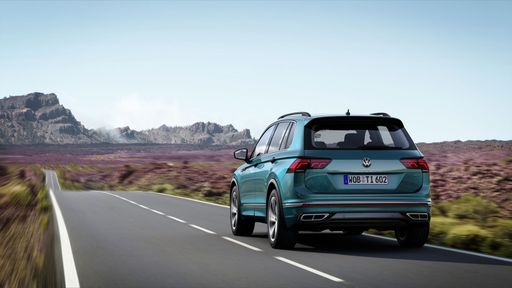
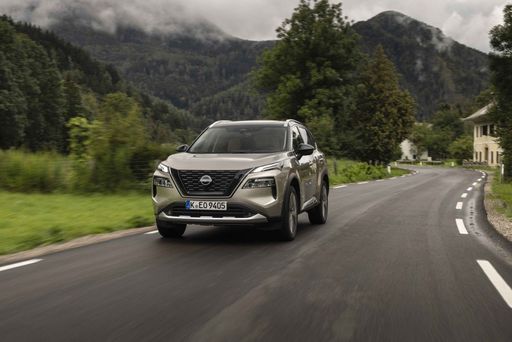
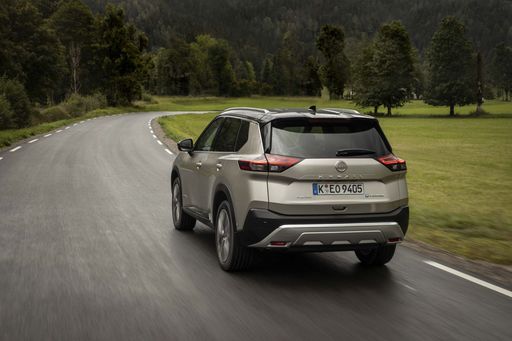
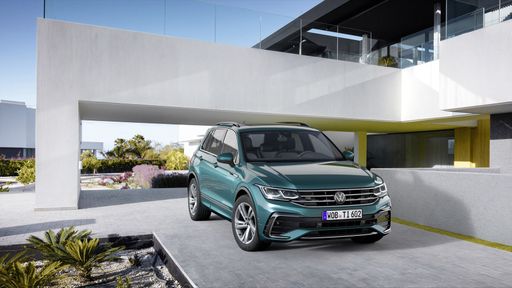
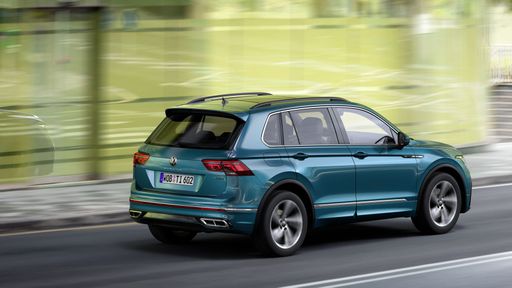
The Nissan X-Trail measures 4680 mm in length, 1840 mm in width, and 1720 mm in height. It boasts a bold exterior with a modern design that reflects its adventurous spirit. On the other hand, the VW Tiguan, slightly smaller, has dimensions of 4539 mm in length, 1842 mm in width, and 1658 mm in height. The Tiguan's design is characterized by sharp lines and a more understated elegance, appealing to those seeking a sophisticated aesthetic.

Tiguan

Powertrains and Performance

Under the hood, the Nissan X-Trail offers a variety of engine options, including petrol mild-hybrid and full-hybrid systems. The power outputs range from 163 HP to 213 HP, with torque figures reaching up to 525 Nm. The X-Trail is available in both front-wheel drive and all-wheel drive configurations, with a CVT or a reduction gearbox transmission, providing an engaging drive.

In contrast, the VW Tiguan presents a wider range of engine choices, including petrol, diesel, and hybrid variants. It features diverse power levels from 130 HP to a powerful 272 HP, offering robust performance across the lineup. The Tiguan also utilizes an automatic dual-clutch transmission, ensuring smooth shifts and improved response times.

X-Trail

Fuel Efficiency and Emissions

Fuel efficiency is a crucial factor for many buyers, and here both SUVs showcase commendable performances. The X-Trail achieves a consumption rate as low as 5.7 L/100 km, depending on the engine variant. For emissions, the CO2 output ranges from 131 g/km to 161 g/km, placing it in various efficiency classes such as D and E.

The VW Tiguan edges ahead in hybrid technology with its plug-in hybrid variant, offering an impressive electric range of up to 112 km. Its fuel consumption can drop to an astonishing 0.4 L/100 km for the hybrid, while other petrol versions average around 6.1 L/100 km. CO2 emissions range from a low of 8 g/km to 168 g/km, achieving efficiency classes as high as B, making the Tiguan a strong contender in sustainability.

Tiguan

Interior Comfort and Technology

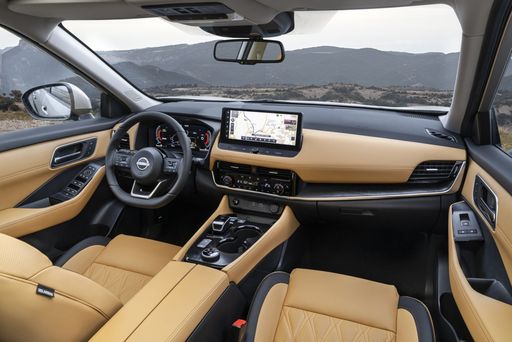
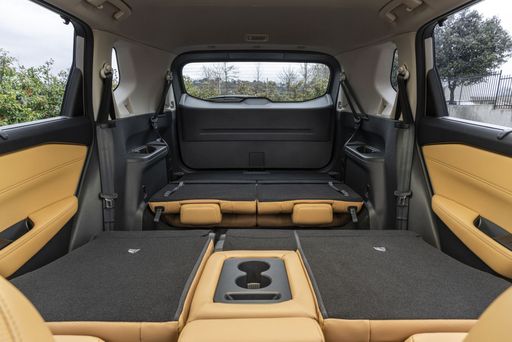
Both the Nissan X-Trail and VW Tiguan promise a comfortable ride with ample space. The X-Trail can seat up to 7 passengers in its larger configuration, while the 5-seat version still provides excellent roominess and 585 liters of trunk space.

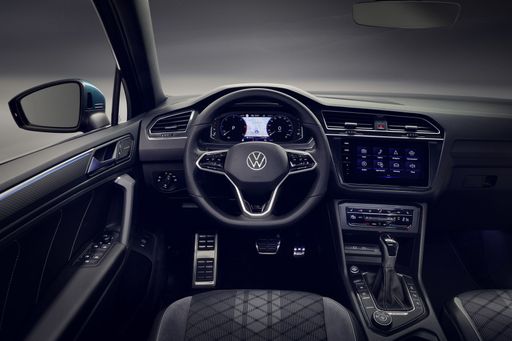
The VW Tiguan, designed primarily as a 5-seater, offers a trunk capacity of 652 liters, making it slightly more versatile in cargo storage for daily use. In terms of technology, both vehicles come equipped with advanced infotainment systems, but the Tiguan's interface is often praised for being more user-friendly. Both models incorporate smartphone connectivity, numerous safety features, and driver aids, ensuring a modern driving experience.

X-Trail

Driving Dynamics

Driving experience varies between the two models. The X-Trail, with its comfortable ride, excels in off-road capabilities thanks to the all-wheel drive option. It offers a serene cabin experience, ideal for long journeys and family trips.

The Tiguan, while also capable off-road, is often viewed as sportier, with a more engaging driving style. Its handling is sharper, making it enjoyable for those who like a more dynamic drive on paved roads. The suspension systems in both vehicles provide a good balance between comfort and sportiness.

Tiguan

Conclusion: Which SUV Should You Choose?

Ultimately, the decision between the Nissan X-Trail and the VW Tiguan boils down to individual preferences and priorities. The X-Trail is ideal for those needing additional seating capacity and a more rugged off-road experience, while the Tiguan appeals to those looking for a sophisticated design with advanced technology and impressive hybrid options. Both SUVs have their strengths, making it essential for potential buyers to consider what features matter most to their lifestyle.

Here’s where it gets real: The technical differences in detail

Tiguan

Costs and Efficiency:

Price and efficiency are key factors when choosing a car – and this is often where the real differences emerge.

VW Tiguan is barely cheaper – starting at 33,600 £ , while the Nissan X-Trail costs 34,200 £ . That’s a price difference of around 579 £.

Fuel consumption also shows a difference: the VW Tiguan uses 1.4 L/100km and is substantially more efficient than the Nissan X-Trail with 5.7 L/100km. The difference is about 4.3 L/100km.

X-Trail

Engine and Performance:

Power, torque and acceleration are the classic benchmarks for car enthusiasts – and here, some clear differences start to show.

When it comes to engine power, the VW Tiguan offers clearly more power – delivering 272 HP compared to 213 HP. That’s roughly 59 HP more horsepower.

When accelerating from 0 to 100 km/h, the VW Tiguan is moderately quicker – completing the sprint in 5.9 s, while the Nissan X-Trail takes 7 s. That’s about 1.1 s quicker.

There’s also a difference in torque: the Nissan X-Trail delivers visibly more torque with 525 Nm compared to 400 Nm. That’s about 125 Nm more.

Tiguan

Space and Everyday Use:

Cabin size, boot volume and payload all play a role in everyday practicality. Here, comfort and flexibility make the difference.

Seats: Nissan X-Trail offers more seats – 7 vs 5.

In terms of curb weight, VW Tiguan is marginally lighter – 1,599 kg compared to 1,668 kg. The difference is around 69 kg.

Looking at boot space, the VW Tiguan offers moderately more boot space – 652 L compared to 585 L. That’s a difference of about 67 L.

When it comes to payload, the Nissan X-Trail carries marginally more – 574 kg compared to 533 kg. That’s a difference of about 41 kg.

Who wins the race in the data check?

The VW Tiguan is far ahead overall in the objective data comparison.
This result only shows which model scores more points on paper – not which of the two cars feels right for you.

from £33,600
Tiguan

VW Tiguan

  • Engine Type : Petrol MHEV, Petrol, Diesel, Plugin Hybrid
  • Transmission : Automatic
  • Drive Type : Front-Wheel Drive, All-Wheel Drive
  • Power HP : 130 - 272 HP
  • Consumption L/100km : 1.4 - 8.4 L/100km
  • Electric Range : 118 - 126 km
VW Tiguan
Nissan X-Trail

Costs and Consumption

View detailed analysis

Engine and Performance

View detailed analysis

Dimensions and Body

View detailed analysis

VW Tiguan

The VW Tiguan is a calm, family‑first compact SUV that impresses with cavernous rear room, a versatile boot and sofa‑like seats that make motorway miles feel effortless, while its revamped infotainment is quicker and cleaner than before. It does demand a healthy budget and some compromises — the cabin leans heavily on touch controls for climate and the limited rear child‑seat anchoring and wide mirrors can frustrate buyers who prize simplicity or maximal flexibility.

details

Nissan X-Trail

The Nissan X-Trail is a roomy, no-nonsense family SUV that mixes sensible practicality with a quietly modern look, making it an easy choice for busy lives and weekend escapes. It drives with calm confidence, delivers a comfortable ride and sensible tech, and won’t demand drama while doing the everyday heavy lifting.

details
VW Tiguan
Nissan X-Trail

Costs and Consumption

Price
33,600 - 54,600 £
Price
34,200 - 50,500 £
Consumption L/100km
1.4 - 8.4 L/100km
Consumption L/100km
5.7 - 6.9 L/100km
Consumption kWh/100km
-
Consumption kWh/100km
-
Electric Range
118 - 126 km
Electric Range
-
Battery Capacity
19.7 kWh
Battery Capacity
-
co2
32 - 190 g/km
co2
131 - 161 g/km
Fuel tank capacity
45 L
Fuel tank capacity
-

Dimensions and Body

Body Type
SUV
Body Type
SUV
Seats
5
Seats
5 - 7
Doors
5
Doors
-
Curb weight
1,599 - 1,879 kg
Curb weight
1,668 - 1,961 kg
Trunk capacity
490 - 652 L
Trunk capacity
177 - 585 L
Length
4,539 mm
Length
-
Width
1,842 - 1,859 mm
Width
1,840 mm
Height
1,658 mm
Height
-
Max trunk capacity
1,486 L
Max trunk capacity
-
Payload
460 - 533 kg
Payload
432 - 574 kg

Engine and Performance

Engine Type
Petrol MHEV, Petrol, Diesel, Plugin Hybrid
Engine Type
Petrol MHEV, Full Hybrid
Transmission
Automatic
Transmission
Automatic
Transmission Detail
Dual-Clutch Automatic
Transmission Detail
CVT, Reduction Gearbox
Drive Type
Front-Wheel Drive, All-Wheel Drive
Drive Type
Front-Wheel Drive, All-Wheel Drive
Power HP
130 - 272 HP
Power HP
163 - 213 HP
Acceleration 0-100km/h
5.9 - 10.6 s
Acceleration 0-100km/h
7 - 9.6 s
Max Speed
210 - 215 km/h
Max Speed
-
Torque
220 - 400 Nm
Torque
300 - 525 Nm
Number of Cylinders
4
Number of Cylinders
3
Power kW
96 - 200 kW
Power kW
120 - 157 kW
Engine capacity
1,498 - 1,984 cm3
Engine capacity
1,497 cm3

General

Model Year
2,024 - 2,026
Model Year
2025
CO2 Efficiency Class
D, E, F, B, G
CO2 Efficiency Class
F, D, E
Brand
VW
Brand
Nissan
DriveDuel uses data analysis and artificial intelligence to evaluate vehicle data and create content. Content is regularly reviewed and improved. The displayed prices are estimates based on German list prices, adjusted to the respective country’s VAT. Country-specific registration taxes are not included. This information is not legally binding.