
VS

VW Transporter Transporter vs Toyota Proace Bus comparison

Compare performance (286 HP vs 180 HP), boot space and price (37,500 £ vs 31,600 £ ) at a glance. Find out which car is the better choice for you – VW Transporter Transporter or Toyota Proace Bus?

VW Transporter Transporter vs Toyota Proace Bus: Key differences

VW Transporter Transporter

  • clearly more power
  • slightly more efficient
  • clearly quicker 0–100 km/h
details

Toyota Proace Bus

  • somewhat cheaper
  • marginally more efficient
  • barely more electric range
  • only slightly lighter
details

By Achim Sedelmaier

Transporter Transporter

Clash of the Titans: Toyota Proace Versus VW Transporter

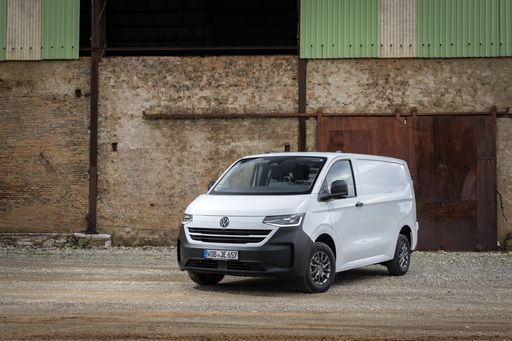
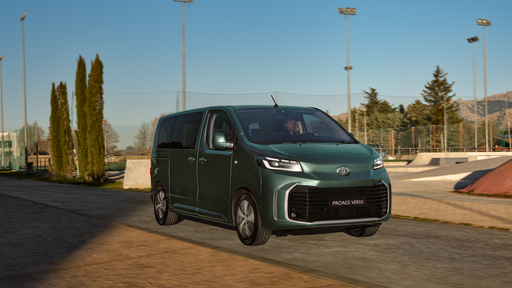
In the world of multi-purpose vehicles, the Toyota Proace and the VW Transporter have long dominated the scene, each offering a unique blend of performance, technology, and practicality. As we delve into a comparison of these industry stalwarts, we aim to discern which model provides the superior package for both commercial users and families. Our analysis focuses on their powertrain capabilities, innovation, and noteworthy features.
Proace Bus

Power and Performance: Under the Hood

The Toyota Proace boasts a variety of engine types, including electric and diesel options. With power outputs ranging from 136 HP to 177 HP and torque between 260 and 400 Nm, the Proace covers diverse needs, whether it’s ferrying family across country roads or managing city logistics. The Proace's engine capacity sits at 1997 cm3, supported by a reliable front-wheel drive.

Meanwhile, the VW Transporter offers even more variety, from diesel to plug-in hybrid and electric engines. Its wide power spectrum ranges from 110 HP to a robust 286 HP, and torque ranges between 310 and 415 Nm, catering to a broad list of driving requirements. The Transporter offers multiple drive types, including all-wheel, rear-wheel, and front-wheel drive, highlighting its versatility. Engine capacities span from 1996 cm3 to 2488 cm3, depending on the version.

Fuel Efficiency and Range

In terms of fuel efficiency, the Proace impresses with a diesel consumption of 7.3 to 7.4 L/100km and an electric consumption of 24.2 kWh/100km, achieving a commendable electric range between 218 and 343 kilometers. This range makes it an attractive option for those seeking eco-friendly transportation without sacrificing practicality.

The Transporter, on the other hand, offers a diesel consumption ranging from 7.1 to 8.4 L/100km and an electric consumption from 21.9 to 24.3 kWh/100km. Its electric range varies from 56 km to an impressive 331 km, depending on the chosen configuration. The battery capacity for the Transporter peaks at 63.8 kWh, offering substantial driving autonomy.

Space and Comfort

The Proace accommodates between 5 to 9 seats, tailored for both family and business users with varying configurations. Its length runs between 4983 mm and 5333 mm, providing a roomy interior. However, it lacks trunk capacity, emphasizing passenger comfort and interior space maximization. Notable is its payload capacity ranging up to 1265 kg, ideal for transporting people and cargo alike.

VW Transporter's seating arrangements oscillate between 2 and 5 seats, with a focus more on cargo than passenger transport, given its origin as a cargo van. It offers longer lengths, from 5050 mm to 5450 mm, and provides payloads up to 1259 kg, illustrating its prowess in carrying significant loads.

Technology and Innovations

Toyota Proace garners attention with its array of modern transmissions, including both automatic and manual gearboxes, and features like reduction gearbox options that enhance driving efficiency and comfort. Its top speed ranges from 130 to 170 km/h, aligning with competitive urban and highway driving conditions.

The VW Transporter also impresses with technology, providing both manual and automatic gearboxes, and diverse drive configurations that hint at its flexibility and intelligent design. Its advanced models manage top speeds from 112 to an exhilarating 150 km/h, underscoring its potential on open roads.

Concluding Thoughts: For the Road Ahead

The Toyota Proace and VW Transporter embody robust designs and engineering excellence that fulfill varying consumer needs. The Proace leans towards those needing versatility in a passenger-centric setup with green credentials. In contrast, the Transporter caters to those who prioritize robust cargo capacity and imposing powertrains.

Ultimately, the choice between the Toyota Proace and VW Transporter will largely depend on individual needs—be it sheer seating capacity, load bearing, or powertrain diversity. Both models provide compelling offerings in this competitive automotive segment, bolstered by innovative design and engineering prowess.

Here’s where it gets real: The technical differences in detail

Transporter Transporter

Costs and Efficiency:

When it comes to price and running costs, the biggest differences usually appear. This is often where you see which car fits your budget better in the long run.

Toyota Proace Bus is somewhat cheaper – starting at 31,600 £ , while the VW Transporter Transporter costs 37,500 £ . That’s a price difference of around 5,951 £.

Fuel consumption also shows a difference: the Toyota Proace Bus uses 6.5 L/100km and is marginally more efficient than the VW Transporter Transporter with 7.1 L/100km. The difference is about 0.6 L/100km.

In terms of energy consumption, the VW Transporter Transporter is slightly more efficient: consuming 21.9 kWh/100km compared to 24.2 kWh/100km for the Toyota Proace Bus. That’s a difference of about 2.3 kWh/100km.

As for electric range, the Toyota Proace Bus offers barely more range – reaching up to 343 km, about 12 km more than the VW Transporter Transporter.

Proace Bus

Engine and Performance:

Under the bonnet, it becomes clear which model is tuned for sportiness and which one takes the lead when you hit the accelerator.

When it comes to engine power, the VW Transporter Transporter offers clearly more power – delivering 286 HP compared to 180 HP. That’s roughly 106 HP more horsepower.

When accelerating from 0 to 100 km/h, the VW Transporter Transporter is clearly quicker – completing the sprint in 7.4 s, while the Toyota Proace Bus takes 13.3 s. That’s about 5.9 s quicker.

There’s also a difference in torque: the VW Transporter Transporter delivers only slightly more torque with 415 Nm compared to 400 Nm. That’s about 15 Nm more.

Space and Everyday Use:

Cabin size, boot volume and payload all play a role in everyday practicality. Here, comfort and flexibility make the difference.

Seats: Toyota Proace Bus offers more seats – 9 vs 5.

In terms of curb weight, Toyota Proace Bus is only slightly lighter – 1,835 kg compared to 1,872 kg. The difference is around 37 kg.

When it comes to payload, the Toyota Proace Bus carries only slightly more – 1,265 kg compared to 1,259 kg. That’s a difference of about 6 kg.

Who wins the race in the data check?

The VW Transporter Transporter is clearly superior overall in the objective data comparison.
This result only shows which model scores more points on paper – not which of the two cars feels right for you.

from £37,500
Transporter Transporter

VW Transporter Transporter

  • Engine Type Diesel, Plugin Hybrid, Electric
  • Transmission Manuel, Automatic
  • Drive Type Front-Wheel Drive, All-Wheel Drive, Rear-Wheel Drive
  • Power HP 110 - 286 HP
  • Consumption L/100km 7.1 - 8.4 L/100km
  • Consumption kWh/100km 21.9 - 24.4 kWh/100km
  • Electric Range 56 - 331 km
VW Transporter Transporter
Toyota Proace Bus

Costs and Consumption

View detailed analysis

Engine and Performance

View detailed analysis

Dimensions and Body

View detailed analysis

VW Transporter Transporter

The VW Transporter is the workhorse of the modern tradesman, blending practical cleverness with a cabin that's actually pleasant to spend a long day in. It may not steal the style spotlight, but its unshowy durability, clever load solutions and easy-to-live-with character make it a sensible pick for businesses and weekend projects alike.

details

Toyota Proace Bus

The Toyota Proace Bus is a pragmatic people‑mover that swallows passengers and luggage with the kind of everyday practicality fleet managers and large families will appreciate. It may not thrill the enthusiast, but its sensible layout, sturdy build and Toyota badge make it a dependable, no-nonsense choice for anyone needing space and reliability rather than flash.

details
VW Transporter Transporter
Toyota Proace Bus

Costs and Consumption

Price
37,500 - 60,800 £
Price
31,600 - 57,100 £
Consumption L/100km
7.1 - 8.4 L/100km
Consumption L/100km
6.5 - 6.7 L/100km
Consumption kWh/100km
21.9 - 24.4 kWh/100km
Consumption kWh/100km
24.2 - 24.3 kWh/100km
Electric Range
56 - 331 km
Electric Range
218 - 343 km
Battery Capacity
11.8 - 63.8 kWh
Battery Capacity
-
co2
0 - 220 g/km
co2
0 - 177 g/km
Fuel tank capacity
55 L
Fuel tank capacity
-

Dimensions and Body

Body Type
Cargo Van
Body Type
Bus
Seats
2 - 5
Seats
5 - 9
Doors
4 - 5
Doors
-
Curb weight
1,872 - 2,462 kg
Curb weight
1,835 - 2,140 kg
Trunk capacity
-
Trunk capacity
-
Length
5,050 - 5,450 mm
Length
-
Width
2,032 mm
Width
1,920 mm
Height
1,966 - 1,985 mm
Height
-
Max trunk capacity
-
Max trunk capacity
-
Payload
755 - 1,259 kg
Payload
825 - 1,265 kg

Engine and Performance

Engine Type
Diesel, Plugin Hybrid, Electric
Engine Type
Electric, Diesel
Transmission
Manuel, Automatic
Transmission
Automatic, Manuel
Transmission Detail
Manual Gearbox, Automatic Gearbox
Transmission Detail
Reduction Gearbox, Manual Gearbox, Automatic Gearbox
Drive Type
Front-Wheel Drive, All-Wheel Drive, Rear-Wheel Drive
Drive Type
Front-Wheel Drive
Power HP
110 - 286 HP
Power HP
136 - 180 HP
Acceleration 0-100km/h
7.4 - 16.9 s
Acceleration 0-100km/h
13.3 s
Max Speed
112 - 150 km/h
Max Speed
-
Torque
310 - 415 Nm
Torque
260 - 400 Nm
Number of Cylinders
4
Number of Cylinders
4
Power kW
81 - 210 kW
Power kW
100 - 132 kW
Engine capacity
1,996 - 2,488 cm3
Engine capacity
2,184 cm3

General

Model Year
2025
Model Year
2,024 - 2,025
CO2 Efficiency Class
G, A
CO2 Efficiency Class
A, F, G
Brand
VW
Brand
Toyota
DriveDuel uses data analysis and artificial intelligence to evaluate vehicle data and create content. Content is regularly reviewed and improved. The displayed prices are estimates based on German list prices, adjusted to the respective country’s VAT. Country-specific registration taxes are not included. This information is not legally binding.








