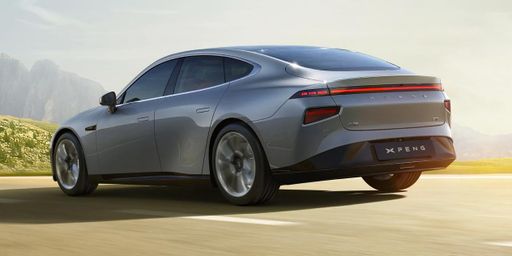
VS

XPeng P7+ vs XPeng P7 comparison

Compare performance (503 HP vs 473 HP), boot space and price (39,900 £ vs 42,500 £ ) at a glance. Find out which car is the better choice for you – XPeng P7+ or XPeng P7?

XPeng P7+ vs XPeng P7: Key differences

XPeng P7+

4.9 (1 Reviews)
rate
  • very slightly cheaper
  • barely more power
  • a bit more efficient
  • only slightly lighter
  • noticeably more trunk space
details

XPeng P7

4.9 (2 Reviews)
rate
  • barely more electric range
  • only slightly quicker 0–100 km/h
details

All details on performance, efficiency, range and trunk space can be found in the technical comparison below – including user reviews for both models.

By Achim Sedelmaier

P7+

XPeng P7 vs P7+: same badge, different mission

XPeng P7 and XPeng P7+ share the look and tech ethos, yet they’re aimed at different lives. In the XPeng P7 VS XPeng P7+ matchup, the P7 feels like the sleeker, tidier fastback for personal use, while the P7+ plays the roomy, lounge‑like hatch for family and business travel. The P7 majors on calm efficiency and an easygoing drive, wrapped in a stylish, slightly sportier‑feeling package. The P7+ counters with more space, a more premium cabin vibe and ultra‑short fast‑charge stops that shrink journey times. Surprisingly, the P7+ also tends to come in at a keener price in this head‑to‑head, which changes the value equation if you have the space for a bigger car.
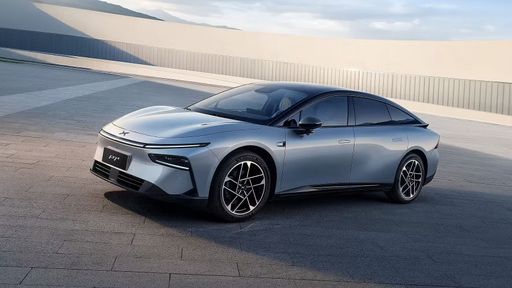
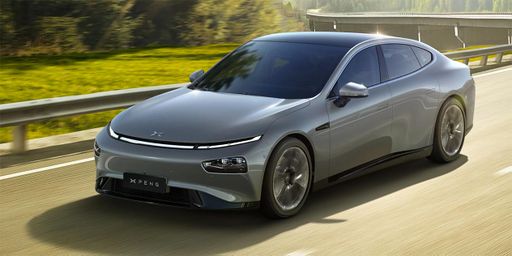
P7

Space and everyday practicality

The XPeng P7 is a saloon with a narrow boot opening, so bulky items and buggies demand a bit of patience when loading. Rear headroom is modest too, which taller passengers will notice on longer trips. The XPeng P7+ switches to a wide‑opening hatch and a substantially larger cargo area, so weekly shops, golf bags or flat‑packs go in without drama. Its rear bench is roomier and comfier, making it the natural pick for family duties or regular airport runs. A small caveat: the P7+’s open cargo bay feels less discreet without a proper load cover, so you’ll want to plan what stays in sight.

Range, charging and long‑distance flow

The XPeng P7 typically covers a longer distance per charge, which suits drivers who like to space out their stops. The XPeng P7+ flips the script with exceptionally short rapid‑charge halts that keep overall trip times low even if you stop a little more often. Both are impressively quiet at motorway speeds and settle into a relaxed, low‑stress rhythm. If your priority is stretching stints between breaks, the P7 has the edge; if you value getting back on the road quickly, the P7+ makes journeys feel shorter.

Ride, steering and day‑to‑day manners

The XPeng P7 feels tidier in size and a touch keener off the line, but its ultra‑light steering doesn’t relay much feedback. It rides calmly most of the time, though sharp bumps can thump through more than you’d expect. The XPeng P7+ leans into comfort with softer seats and a more serene, planted gait at speed, trading a bit of precision for ease. Neither is a born curve‑carver, yet both are secure and predictable; choose the P7 for a slightly more agile feel, or the P7+ for long‑haul smoothness.

Cabin feel, tech and driver aids

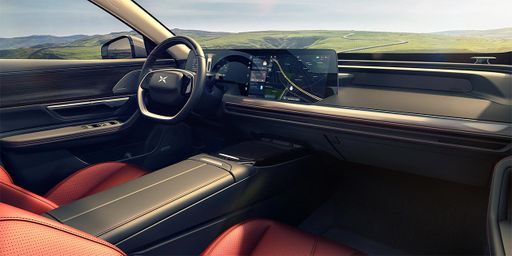
The XPeng P7’s cabin is clean and modern, while the XPeng P7+ comes across more premium, with richer materials and a lounge‑like ambiance. Both run feature‑packed infotainment, but too many functions hide in menus, and some driver‑assist warnings can feel over‑eager. The P7 lacks a true one‑pedal mode, so you’ll still use the brake at low speeds; the P7+ streamlines climate control with proper vents but remains screen‑centric overall. If you want a plush, hushed environment with more wow factor, the P7+ delivers; if you prefer a simpler, slightly sportier cockpit feel, the P7 fits better.

Value, city friendliness and buyer fit

The XPeng P7+ undercuts the P7 in this spec while also sipping a little less energy in typical use, which is compelling if you rack up miles. The XPeng P7 strikes back with longer stints between charges and a footprint that’s easier to thread through tight streets and parking garages. Families and frequent travelers will appreciate the P7+ for its vast hatch and rear comfort, provided driveway space isn’t an issue. Design‑led buyers and commuters who prize tidy dimensions and a calmer, slightly firmer feel will gel with the P7. If that trade‑off resonates, the detailed technical comparison below will help you lock in the nuances that matter most to your routine.

Here’s where it gets real: The technical differences in detail

P7+

Costs and Efficiency:

Price and efficiency are often the first things buyers look at. Here it becomes clear which model has the long-term edge – whether at the pump, the plug, or in purchase price.

XPeng P7+ is very slightly cheaper – starting at 39,900 £ , while the XPeng P7 costs 42,500 £ . That’s a price difference of around 2,572 £.

In terms of energy consumption, the XPeng P7+ is a bit more efficient: consuming 15.2 kWh/100km compared to 16.8 kWh/100km for the XPeng P7. That’s a difference of about 1.6 kWh/100km.

As for electric range, the XPeng P7 offers barely more range – reaching up to 576 km, about 46 km more than the XPeng P7+.

P7

Engine and Performance:

Power, torque and acceleration say a lot about how a car feels on the road. This is where you see which model delivers more driving dynamics.

When it comes to engine power, the XPeng P7+ offers barely more power – delivering 503 HP compared to 473 HP. That’s roughly 30 HP more horsepower.

When accelerating from 0 to 100 km/h, the XPeng P7 is only slightly quicker – completing the sprint in 4.1 s, while the XPeng P7+ takes 4.3 s. That’s about 0.2 s quicker.

There’s also a difference in torque: the XPeng P7 delivers slightly more torque with 757 Nm compared to 670 Nm. That’s about 87 Nm more.

Space and Everyday Use:

Cabin size, boot volume and payload all play a role in everyday practicality. Here, comfort and flexibility make the difference.

Both vehicles offer seating for 5 people.

In terms of curb weight, XPeng P7+ is only slightly lighter – 1,999 kg compared to 2,020 kg. The difference is around 21 kg.

Looking at boot space, the XPeng P7+ offers noticeably more boot space – 573 L compared to 440 L. That’s a difference of about 133 L.

When it comes to payload, the XPeng P7+ carries slightly more – 486 kg compared to 430 kg. That’s a difference of about 56 kg.

Who wins the race in the data check?

The XPeng P7+ is clearly ahead overall in the objective data comparison.
This result only shows which model scores more points on paper – not which of the two cars feels right for you.

from £39,900
P7+

XPeng P7+

  • Engine Type Electric
  • Transmission Automatic
  • Drive Type Rear-Wheel Drive, All-Wheel Drive
  • Power HP 245 - 503 HP
  • Consumption kWh/100km 15.2 - 17.4 kWh/100km
  • Electric Range 455 - 530 km
XPeng P7+
XPeng P7

Costs and Consumption

View detailed analysis

Engine and Performance

View detailed analysis

Dimensions and Body

View detailed analysis

XPeng P7+

The XPeng P7+ is a sleek, coupe-like electric sedan that pairs a spacious, tech-forward cabin with an easygoing yet poised driving character — think premium feel without premium smugness. Packed with clever driver aids and a refined ride that earns the odd grin on twisty roads, it’s a compelling, modern alternative to the usual premium suspects.

details

XPeng P7

The XPeng P7 cuts a sleek, coupe-like silhouette that looks like a tech firm's idea of a stylish electric sedan, and its minimalist cabin packs smart screens and handy features that actually improve everyday life. Underneath the future-facing image it drives with surprising poise and comes loaded with advanced driver aids, making it a tempting choice for buyers who want electric charisma without the hype.

details
XPeng P7+
XPeng P7

Costs and Consumption

Price
39,900 - 45,900 £
Price
42,500 - 50,200 £
Consumption L/100km
-
Consumption L/100km
-
Consumption kWh/100km
15.2 - 17.4 kWh/100km
Consumption kWh/100km
16.8 - 19.2 kWh/100km
Electric Range
455 - 530 km
Electric Range
505 - 576 km
Battery Capacity
-
Battery Capacity
82.7 kWh
co2
0 g/km
co2
0 g/km
Fuel tank capacity
-
Fuel tank capacity
-

Dimensions and Body

Body Type
Hatchback
Body Type
Sedan
Seats
5
Seats
5
Doors
-
Doors
5
Curb weight
1,999 - 2,200 kg
Curb weight
2,020 - 2,140 kg
Trunk capacity
573 L
Trunk capacity
440 L
Length
-
Length
4,888 mm
Width
1,937 mm
Width
1,896 mm
Height
-
Height
1,450 mm
Max trunk capacity
-
Max trunk capacity
-
Payload
485 - 486 kg
Payload
430 kg

Engine and Performance

Engine Type
Electric
Engine Type
Electric
Transmission
Automatic
Transmission
Automatic
Transmission Detail
Reduction Gearbox
Transmission Detail
Reduction Gearbox
Drive Type
Rear-Wheel Drive, All-Wheel Drive
Drive Type
Rear-Wheel Drive, All-Wheel Drive
Power HP
245 - 503 HP
Power HP
276 - 473 HP
Acceleration 0-100km/h
4.3 - 6.9 s
Acceleration 0-100km/h
4.1 - 6.7 s
Max Speed
-
Max Speed
200 km/h
Torque
450 - 670 Nm
Torque
440 - 757 Nm
Number of Cylinders
-
Number of Cylinders
-
Power kW
180 - 370 kW
Power kW
203 - 348 kW
Engine capacity
-
Engine capacity
-

General

Model Year
2026
Model Year
2024
CO2 Efficiency Class
A
CO2 Efficiency Class
A
Brand
XPeng
Brand
XPeng
DriveDuel uses data analysis and artificial intelligence to evaluate vehicle data and create content. Content is regularly reviewed and improved. The displayed prices are estimates based on German list prices, adjusted to the respective country’s VAT. Country-specific registration taxes are not included. This information is not legally binding.