VS

XPeng G6 vs XPeng P7+ comparison

Compare performance (487 HP vs 503 HP), boot space and price (37,400 £ vs 39,900 £ ) at a glance. Find out which car is the better choice for you – XPeng G6 or XPeng P7+?

XPeng G6 vs XPeng P7+: Key differences

XPeng G6

5 (3 Reviews)
rate
  • very slightly cheaper
  • only slightly quicker 0–100 km/h
details

XPeng P7+

  • only slightly more power
  • a bit more efficient
  • barely more electric range
  • barely lighter
  • very slightly more trunk space
details

All details on performance, efficiency, range and trunk space can be found in the technical comparison below – including user reviews for both models.

By Achim Sedelmaier

G6

XPeng G6 VS XPeng P7+: first look

XPeng G6 and XPeng P7+ sit close on the ladder of electric choices, but they appeal to different needs the moment you close the door. The G6 advertises itself as a tech‑heavy, family‑friendly SUV‑coupé with a focus on ultra‑fast charging and a roomy rear bench. The P7+ skews more like a composed, efficiency‑minded sedan that rewards steady driving with slightly better range and a tauter feel. For buyers, the decision comes down to whether you value rear‑seat space and short charging stops or a slightly more efficient, higher‑performance driving package. Read on for how those differences play out in daily life rather than on a spec sheet.
P7+

Character and driving: calm cruiser vs. focused sedan

The XPeng G6 drives like a modern family cruiser — composed, predictable and built more for stability than engagement, which suits motorway miles and passenger comfort. By contrast, the XPeng P7+ carries a touch more performance intent; it feels a bit lighter and livelier when you push on, so drivers who enjoy sharper responses will notice the difference. If you prioritise feedback and a hint of sportiness the P7+ leans closer to that brief, whereas the G6 prefers to tuck its dynamics under quiet composure. Neither is a hardcore sports car, but the practical effect is clear: G6 soothes, P7+ teases a sportier edge.

G6

Comfort and long‑distance behaviour

On long trips the XPeng G6’s roomy rear seats and generally good highway refinement make it an easy companion for passengers, and its very fast DC charging habitually shortens stops. The XPeng P7+ offsets that by stretching each charge further thanks to its higher efficiency, which reduces how often you need to pause and can make journeys less charging‑centric. Ride quality is a story of trade‑offs: the G6 can feel firmer and a touch choppy on rough patches, while the P7+’s packaging tends to deliver a steadier, more connected feel at speed. Comfort‑minded families will love the G6’s space; distance drivers who dislike frequent stops may prefer the P7+’s economy advantage.

Practicality and everyday usability

Practical differences are tangible: the XPeng G6’s coupé‑like roofline still manages an impressively spacious rear seat with useful adjustability, but its sloping tail limits tall or bulky loads. The XPeng P7+ offers a marginally more conventional boot that is easier to load for suitcases and boxes, and the sedan silhouette helps with visibility when reversing in many situations. Storage and cabin stowage feel broadly competitive, yet the G6’s layout emphasises passenger comfort over abundant cubbyholes. For families who regularly carry people and occasional large items the G6 is compelling, while buyers who prioritize tidy luggage capacity and easier loading will tilt toward the P7+.

Cabin ergonomics and perceived quality

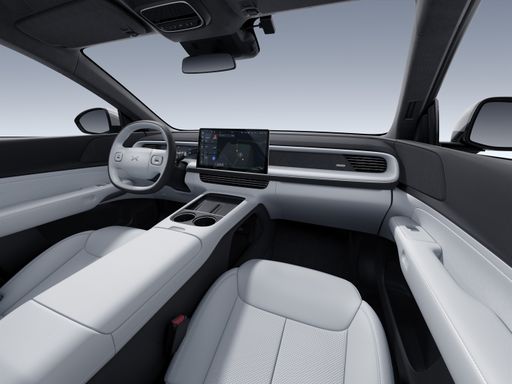
The XPeng G6 presents a modern, high‑tech cabin where many features live behind touch menus, which looks slick but frustrates users who prefer immediate tactile controls. The XPeng P7+ feels a little more reserved in that regard, with a cabin impression that leans toward refined efficiency rather than gadget theatre, which some buyers will read as higher perceived quality. Material finishes in both cars are broadly good for the price, though the G6 shows a few hard‑plastic areas that betray its value focus. If ergonomics and straightforward control are priorities, plan to spend time with both interiors to see which interface you tolerate day after day.

Who should choose which, and what to compare next

Choosing between the XPeng G6 and the XPeng P7+ is about matching lifestyle to strengths: pick the G6 if you want generous rear space, strong standard kit and ultra‑short charging stops that keep long trips efficient; choose the P7+ if you prefer a slightly more efficient, sport‑leaning sedan that stretches range and rewards brisk driving. Urban buyers who worry about rear visibility and touchscreen complexity should test the G6’s camera aids thoroughly, while commuters obsessed with fewer charging interruptions should prioritise the P7+. Both models bring compelling packages, but their trade‑offs are practical and personal rather than absolute. The technical comparison that follows will unpack the drivetrain, efficiency and charging differences so you can see how those real‑world effects are produced.

Here’s where it gets real: The technical differences in detail

G6

Costs and Efficiency:

Price and efficiency are key factors when choosing a car – and this is often where the real differences emerge.

XPeng G6 is very slightly cheaper – starting at 37,400 £ , while the XPeng P7+ costs 39,900 £ . That’s a price difference of around 2,571 £.

In terms of energy consumption, the XPeng P7+ is a bit more efficient: consuming 15.2 kWh/100km compared to 17.3 kWh/100km for the XPeng G6. That’s a difference of about 2.1 kWh/100km.

As for electric range, the XPeng P7+ offers barely more range – reaching up to 530 km, about 5 km more than the XPeng G6.

P7+

Engine and Performance:

Under the bonnet, it becomes clear which model is tuned for sportiness and which one takes the lead when you hit the accelerator.

When it comes to engine power, the XPeng P7+ offers only slightly more power – delivering 503 HP compared to 487 HP. That’s roughly 16 HP more horsepower.

When accelerating from 0 to 100 km/h, the XPeng G6 is only slightly quicker – completing the sprint in 4.1 s, while the XPeng P7+ takes 4.3 s. That’s about 0.2 s quicker.

There’s also a difference in torque: the XPeng P7+ delivers only slightly more torque with 670 Nm compared to 660 Nm. That’s about 10 Nm more.

G6

Space and Everyday Use:

Beyond pure performance, interior space and usability matter most in daily life. This is where you see which car is more practical and versatile.

Both vehicles offer seating for 5 people.

In terms of curb weight, XPeng P7+ is barely lighter – 1,999 kg compared to 2,065 kg. The difference is around 66 kg.

Looking at boot space, the XPeng P7+ offers very slightly more boot space – 573 L compared to 571 L. That’s a difference of about 2 L.

Who wins the race in the data check?

The XPeng P7+ holds a slight edge in the objective data comparison.
This result only shows which model scores more points on paper – not which of the two cars feels right for you.

from £39,900
P7+

XPeng P7+

  • Engine Type : Electric
  • Transmission : Automatic
  • Drive Type : Rear-Wheel Drive, All-Wheel Drive
  • Power HP : 245 - 503 HP
  • Consumption kWh/100km : 15.2 - 17.4 kWh/100km
  • Electric Range : 455 - 530 km
XPeng G6
XPeng P7+

Costs and Consumption

View detailed analysis

Engine and Performance

View detailed analysis

Dimensions and Body

View detailed analysis

XPeng G6

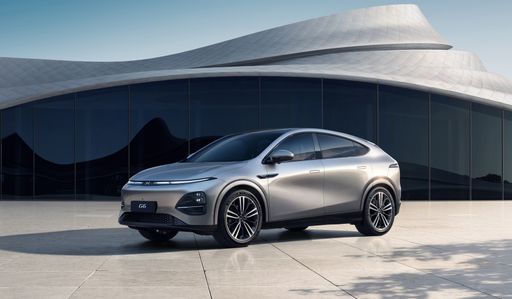
The XPeng G6 looks like a sleeker, tech-rich alternative to conventional electric SUVs, with an interior that feels modern, airy and purposefully designed for everyday comfort. On the road it’s composed and surprisingly engaging, giving drivers a smart mix of calm refinement and a playful streak — not bad for a car that quietly challenges the usual premium suspects.

details

XPeng P7+

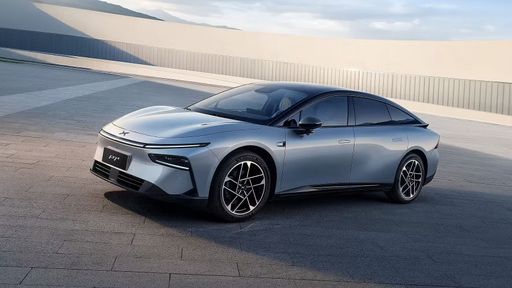
The XPeng P7+ is a sleek, coupe-like electric sedan that pairs a spacious, tech-forward cabin with an easygoing yet poised driving character — think premium feel without premium smugness. Packed with clever driver aids and a refined ride that earns the odd grin on twisty roads, it’s a compelling, modern alternative to the usual premium suspects.

details
XPeng G6
XPeng P7+

Costs and Consumption

Price
37,400 - 44,200 £
Price
39,900 - 45,900 £
Consumption L/100km
-
Consumption L/100km
-
Consumption kWh/100km
17.3 - 18.4 kWh/100km
Consumption kWh/100km
15.2 - 17.4 kWh/100km
Electric Range
455 - 525 km
Electric Range
455 - 530 km
Battery Capacity
-
Battery Capacity
-
co2
0 g/km
co2
0 g/km
Fuel tank capacity
-
Fuel tank capacity
-

Dimensions and Body

Body Type
SUV
Body Type
Hatchback
Seats
5
Seats
5
Doors
-
Doors
-
Curb weight
2,065 - 2,220 kg
Curb weight
1,999 - 2,200 kg
Trunk capacity
571 L
Trunk capacity
573 L
Length
-
Length
-
Width
1,920 mm
Width
1,937 mm
Height
-
Height
-
Max trunk capacity
-
Max trunk capacity
-
Payload
470 - 475 kg
Payload
-

Engine and Performance

Engine Type
Electric
Engine Type
Electric
Transmission
Automatic
Transmission
Automatic
Transmission Detail
Reduction Gearbox
Transmission Detail
Reduction Gearbox
Drive Type
Rear-Wheel Drive, All-Wheel Drive
Drive Type
Rear-Wheel Drive, All-Wheel Drive
Power HP
252 - 487 HP
Power HP
245 - 503 HP
Acceleration 0-100km/h
4.1 - 6.9 s
Acceleration 0-100km/h
4.3 - 6.9 s
Max Speed
-
Max Speed
-
Torque
440 - 660 Nm
Torque
450 - 670 Nm
Number of Cylinders
-
Number of Cylinders
-
Power kW
185 - 358 kW
Power kW
180 - 370 kW
Engine capacity
-
Engine capacity
-

General

Model Year
2025
Model Year
2026
CO2 Efficiency Class
A
CO2 Efficiency Class
A
Brand
XPeng
Brand
XPeng
DriveDuel uses data analysis and artificial intelligence to evaluate vehicle data and create content. Content is regularly reviewed and improved. The displayed prices are estimates based on German list prices, adjusted to the respective country’s VAT. Country-specific registration taxes are not included. This information is not legally binding.