VS

XPeng P7 vs XPeng P7+ comparison

Compare performance (473 HP vs 503 HP), boot space and price (42,500 £ vs 39,900 £ ) at a glance. Find out which car is the better choice for you – XPeng P7 or XPeng P7+?

XPeng P7 vs XPeng P7+: Key differences

XPeng P7

4.9 (1 Reviews)
rate
  • marginally more electric range
  • very slightly quicker 0–100 km/h

XPeng P7+

  • barely cheaper
  • only slightly more power
  • moderately more efficient
  • marginally lighter
  • clearly more trunk space

All details on performance, efficiency, range and trunk space can be found in the technical comparison below – including user reviews for both models.

P7

Head-to-head: XPeng P7 vs XPeng P7+

XPeng P7 and XPeng P7+ are two sibling electric sedans that invite a direct comparison — they look similar in the driveway but promise different priorities behind the wheel. Think of this as a duel between nuance and refinement: the XPeng P7 often feels like the sportier, more expressive choice, while the XPeng P7+ leans toward practical polish. Both carry XPeng’s design language and tech ambitions, so picking one is rarely about brand loyalty and more about how you plan to use the car. Read on to untangle what these two mean in daily life and which flavor of electric sedan suits your needs best.

P7+

Two personalities from the same family

The XPeng P7 projects a slightly sharper, more driver-focused persona, whereas the XPeng P7+ presents itself as the calmer, more composed sister — one prefers the twisty road, the other prefers the quiet motorway cruise. In practical terms the XPeng P7 feels more performance-minded and emotionally engaging, while the XPeng P7+ trades a touch of that edge for a steadier, more grown-up demeanour. Materials and cabin ambience also follow that split: the XPeng P7 flirts with sportiness, the XPeng P7+ aims for understated refinement. That difference in attitude is what will make shoppers fall for one or the other within seconds of sitting down.

P7

Daily life: where each sedan earns its keep

For daily commuting and city chores the XPeng P7 feels agile and engaging, making traffic and suburban routes less tedious, while the XPeng P7+ favours comfort and usable space that show up on longer family trips. The XPeng P7+ gives you a more accommodating trunk and a roomier feel in the rear seats, which is a clear advantage if you regularly carry luggage, kids or a lot of kit. Conversely, the XPeng P7’s character makes it more rewarding on winding routes and for drivers who want a slightly brisker feel. Both are fine on long motorway runs, but you’ll notice where each trims priorities — one for involvement, the other for everyday practicality.

Buying one says something about you

Choosing the XPeng P7 is a statement: you value a sharper driving feel and slightly sportier looks, and you want the cabin to feel like it belongs to a car that wants to be driven. Picking the XPeng P7+ signals a preference for sensible space, quiet confidence and small comforts that add up over a week of school runs and weekend luggage hauls. Neither choice is about showy ostentation — both are modern, tech-rich saloons — but the XPeng P7 tilts toward expressive driving, while the XPeng P7+ plays the long game of usability. Your choice will say as much about how you spend your time in the car as it does about how you want to be seen pulling up at the grocery store.

Who should be looking at the XPeng P7?

If you lean toward the Tech and Design/Brand mindsets, the XPeng P7 will make more sense: it rewards drivers who enjoy up-to-the-minute features and a cabin that looks and feels a touch sportier. The XPeng P7 suits buyers who treat the car as part of their daily enjoyment rather than merely a tool, so if your commute includes twisty roads or you like a sharper steering feel, this is the one to shortlist. The P7 is less about maximum practicality and more about delivering a more involving ownership experience. Still, if space and calm are more important on some days, the XPeng P7+ remains a sensible fallback to consider.

Who should be looking at the XPeng P7+ (and when to circle back to the P7)

The XPeng P7+ is the natural pick for the Pragmatist and the Rational buyer who values usable interior space, everyday efficiency and a composed ride above a sporty edge. If your life demands a larger boot, frequent family duties or simply a car that hums along without calling attention to itself, the XPeng P7+ will feel like the smarter, more workaday choice. That said, don’t forget the XPeng P7 when you crave a bit more flair and driver engagement — it’s the one that will keep a grin on your face on the way home. Dive into the numbers and detail below to see where the practical gaps and subtle advantages really sit.

Here’s where it gets real: The technical differences in detail

P7

Costs and Efficiency:

Price and efficiency are key factors when choosing a car – and this is often where the real differences emerge.

XPeng P7+ is barely cheaper – starting at 39,900 £ , while the XPeng P7 costs 42,500 £ . That’s a price difference of around 2,572 £.

In terms of energy consumption, the XPeng P7+ is moderately more efficient: consuming 15.2 kWh/100km compared to 16.8 kWh/100km for the XPeng P7. That’s a difference of about 1.6 kWh/100km.

As for electric range, the XPeng P7 offers marginally more range – reaching up to 576 km, about 46 km more than the XPeng P7+.

P7+

Engine and Performance:

Under the bonnet, it becomes clear which model is tuned for sportiness and which one takes the lead when you hit the accelerator.

When it comes to engine power, the XPeng P7+ offers only slightly more power – delivering 503 HP compared to 473 HP. That’s roughly 30 HP more horsepower.

When accelerating from 0 to 100 km/h, the XPeng P7 is very slightly quicker – completing the sprint in 4.1 s, while the XPeng P7+ takes 4.3 s. That’s about 0.2 s quicker.

There’s also a difference in torque: the XPeng P7 delivers slightly more torque with 757 Nm compared to 670 Nm. That’s about 87 Nm more.

P7

Space and Everyday Use:

Cabin size, boot volume and payload all play a role in everyday practicality. Here, comfort and flexibility make the difference.

Both vehicles offer seating for 5 people.

In terms of curb weight, XPeng P7+ is marginally lighter – 1,999 kg compared to 2,020 kg. The difference is around 21 kg.

Looking at boot space, the XPeng P7+ offers clearly more boot space – 573 L compared to 440 L. That’s a difference of about 133 L.

Who wins the race in the data check?

The XPeng P7+ holds a narrow overall lead in the objective data comparison.
This result only shows which model scores more points on paper – not which of the two cars feels right for you.

from £39,900
P7+

XPeng P7+

  • Engine Type : Electric
  • Transmission : Automatic
  • Drive Type : Rear-Wheel Drive, All-Wheel Drive
  • Power HP : 245 - 503 HP
  • Consumption kWh/100km : 15.2 - 17.4 kWh/100km
  • Electric Range : 455 - 530 km
XPeng P7
XPeng P7+

Costs and Consumption

View detailed analysis

Engine and Performance

View detailed analysis

Dimensions and Body

View detailed analysis

XPeng P7

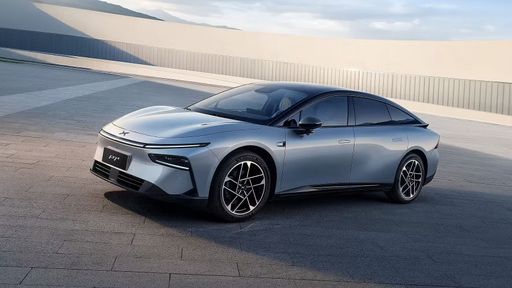
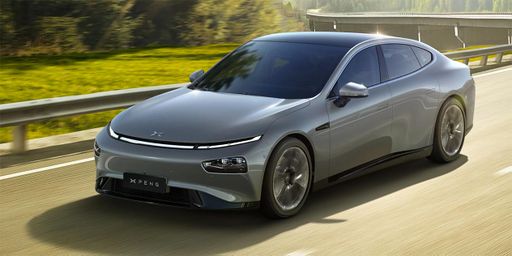
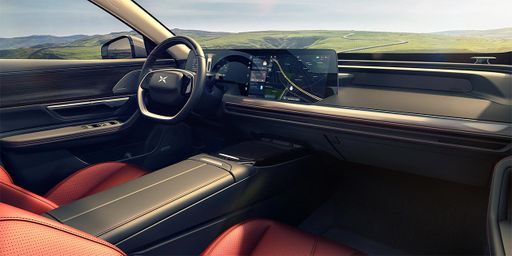
The XPeng P7 cuts a sleek, coupe-like silhouette that looks like a tech firm's idea of a stylish electric sedan, and its minimalist cabin packs smart screens and handy features that actually improve everyday life. Underneath the future-facing image it drives with surprising poise and comes loaded with advanced driver aids, making it a tempting choice for buyers who want electric charisma without the hype.

details

XPeng P7+

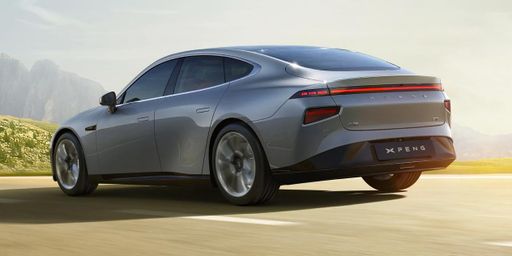
The XPeng P7+ is a sleek, coupe-like electric sedan that pairs a spacious, tech-forward cabin with an easygoing yet poised driving character — think premium feel without premium smugness. Packed with clever driver aids and a refined ride that earns the odd grin on twisty roads, it’s a compelling, modern alternative to the usual premium suspects.

details
XPeng P7
XPeng P7+

Costs and Consumption

Price
42,500 - 50,200 £
Price
39,900 - 45,900 £
Consumption L/100km
-
Consumption L/100km
-
Consumption kWh/100km
16.8 - 19.2 kWh/100km
Consumption kWh/100km
15.2 - 17.4 kWh/100km
Electric Range
505 - 576 km
Electric Range
455 - 530 km
Battery Capacity
82.7 kWh
Battery Capacity
-
co2
0 g/km
co2
0 g/km
Fuel tank capacity
-
Fuel tank capacity
-

Dimensions and Body

Body Type
Sedan
Body Type
Hatchback
Seats
5
Seats
5
Doors
5
Doors
-
Curb weight
2,020 - 2,140 kg
Curb weight
1,999 - 2,200 kg
Trunk capacity
440 L
Trunk capacity
573 L
Length
4,888 mm
Length
-
Width
1,896 mm
Width
1,937 mm
Height
1,450 mm
Height
-
Max trunk capacity
-
Max trunk capacity
-
Payload
430 kg
Payload
-

Engine and Performance

Engine Type
Electric
Engine Type
Electric
Transmission
Automatic
Transmission
Automatic
Transmission Detail
Reduction Gearbox
Transmission Detail
Reduction Gearbox
Drive Type
Rear-Wheel Drive, All-Wheel Drive
Drive Type
Rear-Wheel Drive, All-Wheel Drive
Power HP
276 - 473 HP
Power HP
245 - 503 HP
Acceleration 0-100km/h
4.1 - 6.7 s
Acceleration 0-100km/h
4.3 - 6.9 s
Max Speed
200 km/h
Max Speed
-
Torque
440 - 757 Nm
Torque
450 - 670 Nm
Number of Cylinders
-
Number of Cylinders
-
Power kW
203 - 348 kW
Power kW
180 - 370 kW
Engine capacity
-
Engine capacity
-

General

Model Year
2,024
Model Year
2,026
CO2 Efficiency Class
A
CO2 Efficiency Class
A
Brand
XPeng
Brand
XPeng
DriveDuel uses data analysis and artificial intelligence to evaluate vehicle data and create content. Content is regularly reviewed and improved. The displayed prices are estimates based on German list prices, adjusted to the respective country’s VAT. Country-specific registration taxes are not included. This information is not legally binding.