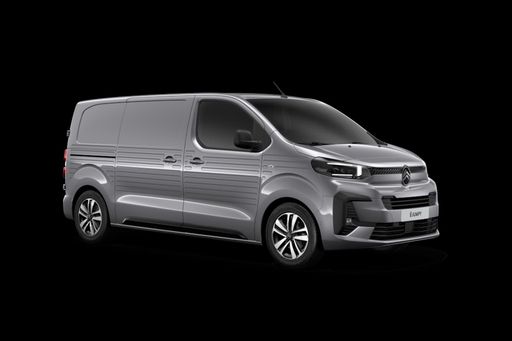
Citroen Jumpy Transporter Cargo Van, starting at 32100 £

The Citroen Jumpy Transporter Cargo Van impresses with 180 HP 328 km and an attractive starting price of 32100 £ . Here are all the details at a glance.

from about £32,100
default

Citroen Jumpy Transporter

  • Engine Type : Electric, Diesel
  • Transmission : Automatic, Manuel
  • Drive Type : Front-Wheel Drive
  • Power HP : 120 - 180 HP
  • Consumption L/100km : 6.2 - 6.5 L
  • Consumption kWh/100km : 23.6 - 24.7 kWh
  • Electric Range : 222 - 328 km

Street Cred with a Practical Edge

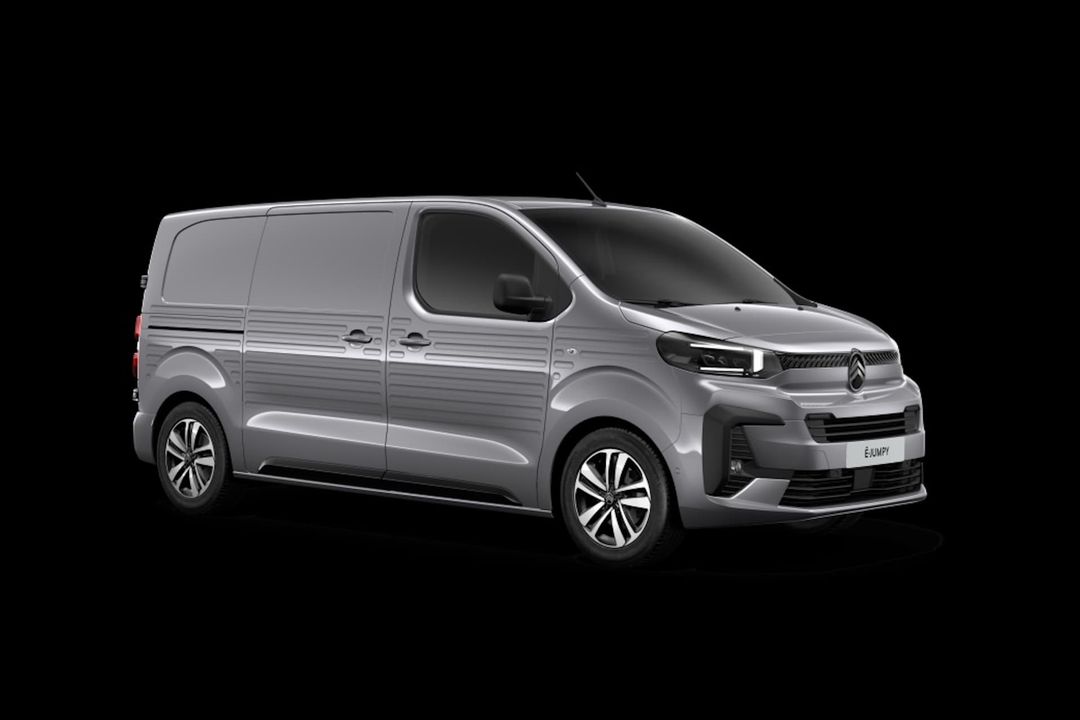
The Citroën Jumpy Transporter looks like it means business without trying too hard — a blunt nose, upright flanks and useful roof height that read as honest workhorse rather than showroom stunner. Proportions vary from the compact medium to the roomy XL, with lengths stretching up to around 5.3 metres and a width near 1.92 metres, which keeps loading space high while staying manageable in town. Visual cues like the short overhangs and tall glass help visibility and parking, while modest styling details lift what could otherwise be a purely functional van. For fleets that want a familiar, no-nonsense face on the road, the Jumpy balances presence and practicality well.
Cabin Where Work Gets Done

The interior takes a deliberate, utilitarian approach: materials are hard-wearing but modern, with sensible storage nooks and a straightforward control layout that won’t confuse a busy driver. Seating comes as a single-row three-seat bench or a six-seat crew cab, offering flexibility for jobsite teams and tools alike, and the driving position is commanding enough for long shifts. Small luxuries — adjustable seats, optional driver-assist displays and an easy-to-reach infotainment screen — make long days less punishing without pretending to be premium. Overall, the cabin focuses on usability: everything has a purpose and most surfaces survive a week of work boots and coffee.

Loadroom That Actually Fits the Job

Space is the Jumpy’s headline act: load volumes run up to about 6,100 litres depending on wheelbase and roof height, with payloads that can approach the tonne mark, making it suitable for pallets, shelving or mixed loads. The wide side sliding doors and low load sill simplify daily loading, and the nearly flat floor helps with arranging bulky items; the vehicle’s width and length choices mean it can be specified to match specific trades or delivery routes. Roof height and internal dimensions are practical for most small business needs, from carpenters to couriers, and the available payload figures mean fewer trips and better efficiency. For operators who measure value in cubic metres and kilos, the Jumpy makes economic sense.

Driving That Prioritises Comfort Over Sport

On the road the Jumpy is tuned for comfort and stability rather than agility, with a suspension that soaks up town potholes and motorway seams without tossing cargo around. Engines and drivetrains are pragmatic: front-wheel drive layouts with diesel options from around 120 to 180 hp and an electric e-Jumpy with about 136 hp deliver usable performance, with 0–100 km/h figures in the low teens for typical configurations — adequate for motorway merges but not sporty. Steering is light and the turning circle is friendly for deliveries, while the electric version adds a quiet, refined feel and strong low-speed torque that makes stop-start urban work easier. For everyday trips the Jumpy is predictable, comfortable and built to keep drivers fresh over long shifts.

Fuel, Electrons and Real-World Range

Choice is a strong suit: diesel engines return about 6.2–6.5 L/100 km in WLTP figures, which translates to decent economy on longer runs but will rise under heavy loads or mixed driving. The electric e-Jumpy manages roughly 23.6–24.7 kWh/100 km, with battery options that put WLTP range at around 220–230 km for the smaller pack and about 320–330 km for the larger 75 kWh unit — figures that mean the larger battery can cover most day-to-day rounds without recharging. In practice, the 75 kWh e-Jumpy suits longer urban or mixed routes and keeps charging stops to a minimum, while the 50 kWh pack is fine for city runs and shift-based use; diesel still wins for long-distance high-payload work where quick refuelling and sustained range matter. Real-world consumption depends heavily on load, driving style and accessory use, so match powertrain to duty cycle for best value.

Driver Tech That Keeps Workflows Moving

Assistance systems are modern enough for commercial duties: parking sensors, rear cameras, lane-keep aids and adaptive cruise are available to reduce fatigue and speed up deliveries in congested areas. The infotainment is designed for practicality with touchscreen operation, smartphone mirroring and simple navigation that helps drivers locate jobs quickly rather than get bogged down by gimmicks. Fleet-friendly features such as telematics-ready interfaces and configurable driver profiles make administration and maintenance planning easier for businesses. The overall tech package is focused on uptime, safety and connectivity rather than headline-grabbing gadgets.

Who Should Consider the Jumpy Transporter?

The Jumpy is aimed squarely at tradespeople, small businesses and urban fleets that need a durable, versatile van without premium complexity — ideal for electricians, couriers, installers or anyone moving bulky gear regularly. Choose the diesel variants for long-haul work, heavy payloads and quick refuels; the 75 kWh e-Jumpy is the pick for operators wanting electric duty cycles with ranges up to roughly 320–330 km, while the smaller battery suits urban, shift-based routes. It’s not a luxury cruiser, but for buyers who prioritise cargo space, sensible running costs and driver comfort during a hard day’s work, the Jumpy is a pragmatic, well-rounded choice.

Costs and Consumption

Price
32100 - 52000 £
Consumption L/100km
6.2 - 6.5 L
Consumption kWh/100km
23.6 - 24.7 kWh
Electric Range
222 - 328 km
Battery Capacity
-
co2
0 - 199 g/km
Fuel tank capacity
69 L

Dimensions and Body

Body Type
Cargo Van
Seats
3 - 6
Doors
4
Curb weight
1722 - 2188 kg
Trunk capacity
-
Length
4959 - 5309 mm
Width
1920 mm
Height
1895 - 1935 mm
Max trunk capacity
3200 - 6100 L
Payload
881 - 1226 kg

Engine and Performance

Engine Type
Electric, Diesel
Transmission
Automatic, Manuel
Transmission Detail
Reduction Gearbox, Manual Gearbox, Automatic Gearbox
Drive Type
Front-Wheel Drive
Power HP
120 - 180 HP
Acceleration 0-100km/h
12.1 - 13.3 s
Max Speed
130 - 160 km/h
Torque
260 - 400 Nm
Number of Cylinders
4
Power kW
88 - 132 kW
Engine capacity
1499 - 2184 cm3

General

Model Year
2024 - 2025
CO2 Efficiency Class
A, F, G
Brand
Citroen
What drive types are available for the Citroen Jumpy Transporter?

Available configurations include Front-Wheel Drive.

The prices shown are estimates based on German list prices, adjusted for local VAT. Local registration taxes (e.g. NoVA, BPM or CO2 malus) are not included. This information is not legally binding.