
Mercedes Sprinter Bus Bus, starting at 41400 £

The Mercedes Sprinter Bus Bus impresses with 190 HP and an attractive starting price of 41400 £ . Here are all the details at a glance.

from about £41,400
default

Mercedes Sprinter Bus

  • Engine Type : Diesel
  • Transmission : Manuel, Automatic
  • Drive Type : Rear-Wheel Drive, All-Wheel Drive
  • Power HP : 114 - 190 HP
  • Consumption L/100km : 9.3 - 12.3 L

Street Authority and First Impressions

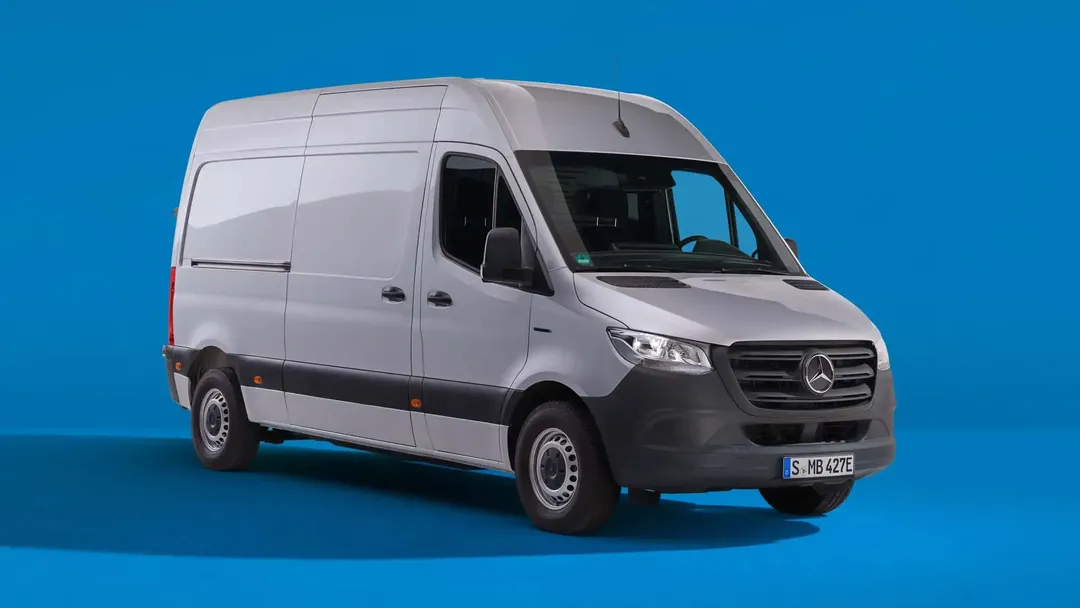
The Mercedes Sprinter Bus makes a purposeful entrance with a tall, upright silhouette and a face that reads serious rather than flashy — unmistakably commercial but refined enough for executive shuttles. Available in long and extra-long lengths (up to 6,967 mm) and with high‑roof options (around 2,633–2,659 mm), the presence on the road is commanding and practical for standing passengers or luggage stacks. The broad 1,993 mm track gives highway stability, while the clean, Mercedes‑style grille and crisp light signatures keep the look modern rather than utilitarian. For operators, the Sprinter’s stance telegraphs capability: it’s built to carry people and kit without fuss.
Cabin: Functional Luxury

The driver’s environment aims at professional comfort rather than plush luxury, with a solid, logically laid out dash, durable trim and plenty of storage for paperwork and devices; the base cab is configured for two occupants but the layout adapts to different operator needs. Seat comfort is tuned for long shifts, with good visibility over the bonnet and a commanding seating position that reduces fatigue on motorway runs. Controls are straightforward, with optional higher‑spec trims adding nicer materials and larger screens for a more upmarket feel. Overall the cabin balances hard‑wearing practicality with enough refinement to keep passengers and drivers content on extended duties.

Seats, Cargo and Real-World Space

The Sprinter Bus is about configurable space: seat packs and floorplans can prioritize up to dozens of passengers, or swap to generous luggage bays for airport shuttles and rail replacements, while the long wheelbase versions provide the most usable interior length. Payloads vary by specification but commonly sit in the 900–1,140 kg range, meaning the vehicle can carry heavy passenger loads and baggage without being on the edge of its limits. Practical touches such as wide sliding doors, high roof clearance and low step thresholds make boarding and luggage stowing straightforward in daily use. For converters and operators, the mix of length, height and payload options is the Sprinter’s core selling point.

On the Move: Comfort vs Agility

Driving the Sprinter Bus leans towards composed, predictable behaviour rather than sporty responses; the chassis soaks up motorway kilometres with a calm ride, while the steering is light and engineered for precision during tight manoeuvres in town. Powertrains span roughly 114–190 hp with torques around 300–450 Nm, and kerb weights in the mid‑2,300 to 2,600 kg area, so acceleration is adequate for overtaking but never brisk — top speeds are electronically in the 150–159 km/h region. Rear‑wheel drive is standard on most models for towing and load balance, with all‑wheel drive offered where grip and winter operation matter. In short, the Sprinter prioritizes load‑bearing comfort and stability over agility, which is exactly what most buyers will want from a people‑carrier of this size.

Fuel Use, Range and Running Costs

Diesel consumption is broadly in the 9.3–12.3 L/100 km window depending on engine, weight and duty cycle, which translates with the 71‑litre tank to a practical real‑world range of roughly 575–760 km between fill‑ups. CO2 emissions sit in the mid to high hundreds of grams per kilometre, placing the Sprinter in the higher tax/low‑emissions classes in some markets and making fuel economy an operational cost to manage. Regular maintenance, tire choices and load planning will have a marked effect on running costs, so fleet buyers should budget accordingly rather than expecting car‑like economy. For long shuttle routes the Sprinter remains efficient enough, but urban stop‑start use will push consumption toward the top end of the range.

Driver Aids and Screen Life

The Sprinter offers a comprehensive Mercedes safety and connectivity stack with options that include adaptive cruise control, active lane keeping, blind‑spot monitoring and 360‑degree camera systems to ease tight urban operations and coachyard manoeuvres. Infotainment ranges from functional screens with smartphone mirroring to larger displays and navigation packages that improve route planning and fleet management, while telematics options help track fuel use and servicing. These features reduce daily stress for drivers and can cut operating costs by improving fuel efficiency and avoiding incidents. Practical technology, rather than gimmicks, is the theme here: useful tools for an operator’s bottom line.

Best Buyers and Use Cases

The Mercedes Sprinter Bus is aimed squarely at professional operators: shuttle companies, tour firms, corporate transport, small bus services and camper/coachbuilders who need a rugged, configurable platform that scales from short city routes to long intercity runs. Current model choices include a range of diesel engines (roughly 114–190 hp), manual or automatic transmissions and rear‑ or all‑wheel drive, allowing buyers to match performance and economy to duty cycle without unnecessary compromise. For anyone needing a reliable, spacious people‑mover that wears load and mileage well, the Sprinter is a sensible, proven choice rather than a fashion statement. Private buyers should weigh the vehicle’s size and running costs against their intended use; for commercial users it often represents a sensible tool rather than a toy.

Costs and Consumption

Price
41400 - 55900 £
Consumption L/100km
9.3 - 12.3 L
Consumption kWh/100km
-
Electric Range
-
Battery Capacity
-
co2
244 - 322 g/km
Fuel tank capacity
71 L

Dimensions and Body

Body Type
Bus
Seats
2
Doors
4
Curb weight
2356 - 2559 kg
Trunk capacity
-
Length
5932 - 6967 mm
Width
1993 mm
Height
2633 - 2659 mm
Max trunk capacity
-
Payload
814 - 1144 kg

Engine and Performance

Engine Type
Diesel
Transmission
Manuel, Automatic
Transmission Detail
Manual Gearbox, Automatic Gearbox
Drive Type
Rear-Wheel Drive, All-Wheel Drive
Power HP
114 - 190 HP
Acceleration 0-100km/h
-
Max Speed
150 - 159 km/h
Torque
300 - 450 Nm
Number of Cylinders
4
Power kW
84 - 140 kW
Engine capacity
1950 cm3

General

Model Year
2024 - 2025
CO2 Efficiency Class
G
Brand
Mercedes-Benz
Is the Mercedes Sprinter Bus offered with different drivetrains?

Available configurations include Rear-Wheel Drive or All-Wheel Drive.

The prices shown are estimates based on German list prices, adjusted for local VAT. Local registration taxes (e.g. NoVA, BPM or CO2 malus) are not included. This information is not legally binding.







