Electric Mobility Has No Technology Problem – It Has a Reality Problem

Over 200 comments on Reddit reveal a surprising picture. Many people think electric cars make sense. However, they wouldn't buy one today. The problem often isn't the car itself—but the world in which the decisions are made.

Electric Mobility Has No Technology Problem – It Has a Reality Problem

Anyone following political debates or press conferences in the car industry might think the future is already decided. Driving ranges are increasing, charging times are decreasing, and more and more electric cars are hitting the market. The discussion often revolves around which electric car to buy.

But a discussion with over 200 comments on Reddit showed a completely different picture. People there weren't talking about Tesla, BYD, or the latest electric SUVs. They were discussing the reality of their everyday lives.

Many commenters thought electric cars were generally a good idea. Some even said that an electric car would be perfect for their daily life. Yet, they wouldn't buy one today.

Most People Don't Compare an Electric Car to a New Combustion Engine Vehicle

This might be the most important realization of the entire discussion. Politicians, manufacturers, and media often compare a new electric car to a new combustion engine vehicle. Most people do not.

They compare a new electric car to the car already parked in front of their house. To the ten-year-old diesel. To the paid-off family station wagon. To the used car that's been reliably serving them for years.

Many comments sounded similar: "My car still works." Or: "Why should I spend 40,000 euros?"

For many families, the real question isn't: Electric or combustion engine? The question is: Why a new car at all?

The Charging Infrastructure is Often Viewed from Homeowners' Perspective

The most-liked comments surprisingly had little to do with range. Instead, they focused on apartments, lack of parking spaces, and public charging stations.

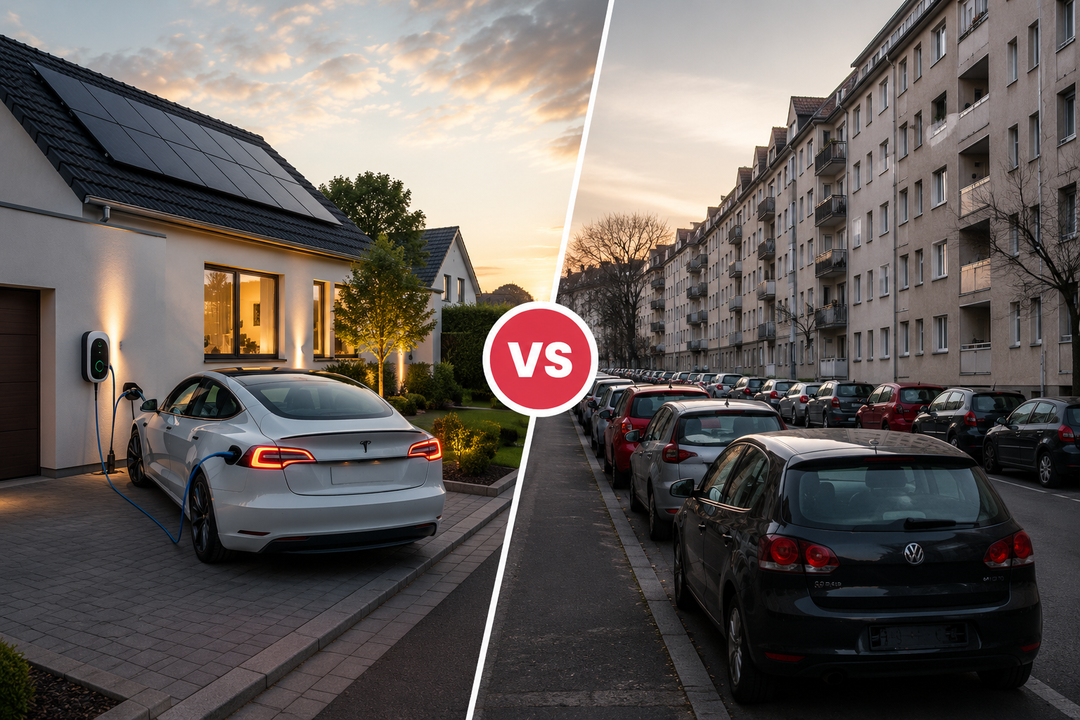
The same statement kept coming up: Those who can charge at home experience electric mobility completely differently from someone who lives in a rental apartment and relies on public infrastructure.

For homeowners with their own driveway, an electric car can be convenient and cost-effective. For people without a private charging spot, every trip starts with an additional question: Where do I actually charge?

This is where the real boundary of electric mobility lies. Not between electric cars and combustion engines, but between driveways and apartments.

Charging on the go feels unnecessarily complicated for many people

Another point was a recurring theme in the discussion. Many drivers find the public charging network complicated.

When refueling a gas-powered car, the process is simple. You go to the gas station, refuel, and pay. This system has been in place for decades.

In contrast, when charging an electric car, you encounter different providers, various rates, apps, charging cards, subscriptions, and sometimes wildly fluctuating prices.

Those who dive deep into the subject find their way easily. Those who just want to be mobile often find it unnecessarily complex.

A common criticism was that public charging is often significantly more expensive than charging at home. For many people, this eliminates one of the most important financial advantages of electric cars.

Trust Doesn't Come from Political Goals

From 2035, no new cars with pure combustion engines will be approved in the European Union. From a political perspective, this is an important step for climate goals.

However, many drivers are asking a different question. They don't ask what will happen in 2035. They ask how their daily life works today.

People who rent their homes, don't have a parking space, and can't afford a new car feel overlooked in many political discussions. The issues don't start with the car itself but much earlier.

Many people feel that decisions about their future are being made without adequately considering their real-life situations.

The Real Challenge Lies Outside the Car

The discussion revealed one thing above all: Most people are not fundamentally opposed to electric cars.

The real problem is often not the technology. It's the surrounding conditions.

As long as millions of people don't have easy access to affordable charging options, as long as new vehicles remain financially out of reach for many households, and as long as public charging infrastructure appears more complicated than traditional refueling, electric mobility will face resistance.

The future of electric mobility will therefore be decided not solely in battery factories or development centers. It will be decided mainly where people live, park, and organize their daily lives.