
 Deutschland
 France
 Nederland
 Great Britain
 Sverige
 Danmark
 Suomi
Suomi Italia
 Polska
 España
VS
Alpine A290 vs Hyundai i20 - Differences and prices compared
Compare performance (218 HP vs 90 HP), boot space and price (33200 £ vs 18600 £ ) at a glance. Find out which car is the better choice for you – Alpine A290 or Hyundai i20?
A290
Costs and Efficiency:
Price and efficiency are key factors when choosing a car – and this is often where the real differences emerge.
Hyundai i20 has a convincingly advantage in terms of price – it starts at 18600 £ , while the Alpine A290 costs 33200 £ . That’s a price difference of around 14571 £.
i20
Engine and Performance:
Power, torque and acceleration say a lot about how a car feels on the road. This is where you see which model delivers more driving dynamics.
When it comes to engine power, the Alpine A290 has a decisively edge – offering 218 HP compared to 90 HP. That’s roughly 128 HP more horsepower.
In acceleration from 0 to 100 km/h, the Alpine A290 is convincingly quicker – completing the sprint in 6.40 s, while the Hyundai i20 takes 11.50 s. That’s about 5.10 s faster.
There’s also a difference in torque: Alpine A290 pulls decisively stronger with 300 Nm compared to 172 Nm. That’s about 128 Nm difference.
Space and Everyday Use:
Whether family car or daily driver – which one offers more room, flexibility and comfort?
Both vehicles offer seating for 5 people.
In curb weight, Hyundai i20 is distinct lighter – 1145 kg compared to 1554 kg. The difference is around 409 kg.
In terms of boot space, the Hyundai i20 offers minimal more room – 352 L compared to 326 L. That’s a difference of about 26 L.
When it comes to payload, Hyundai i20 slightly takes the win – 465 kg compared to 396 kg. That’s a difference of about 69 kg.
Who wins the race in the data check?
The Alpine A290 sits well ahead of its rival in the objective data comparison.
This result only shows which model scores more points on paper – not which of the two cars feels right for you.
Alpine A290
Hyundai i20
Costs and Consumption
View detailed analysis
View detailed analysis
Engine and Performance
View detailed analysis
View detailed analysis
Dimensions and Body
View detailed analysis
View detailed analysis
from about £33,200
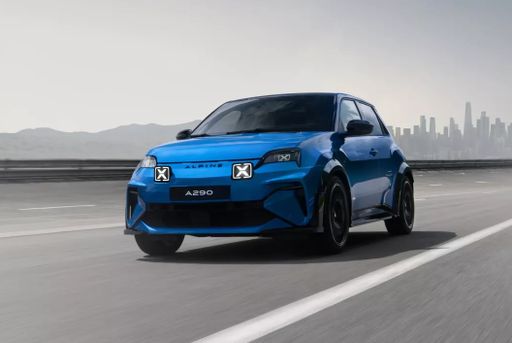
Alpine A290
Alpine A290
5 (1 Reviews)
The Alpine A290 brings Alpine's racing-bred spirit to the road with taut handling, razor-sharp steering and a compact, cheeky silhouette that's impossible to ignore. It's a car for drivers who want pure fun rather than family practicality — a playful, stylish pocket rocket that makes every back road feel like a racetrack and hands out smiles with the key.
details
Hyundai i20
4 (1 Reviews)
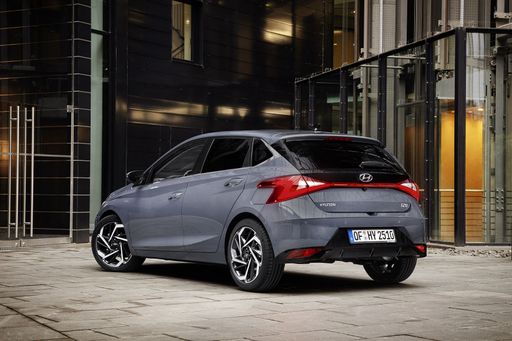
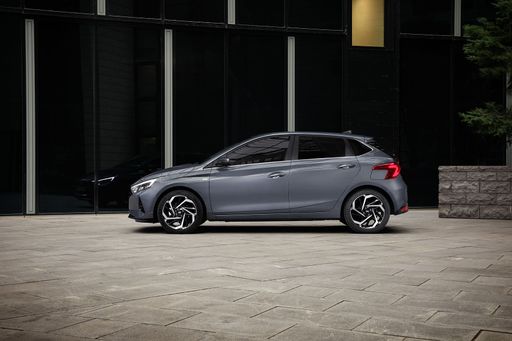
The Hyundai i20 is a cheeky small car that mixes smart styling with sensible practicality, feeling more polished and roomy than you might expect for the money. It’s an easy car to live with, offering engaging handling, a comfy cabin and useful equipment that make daily commutes and weekend errands notably less dull.
details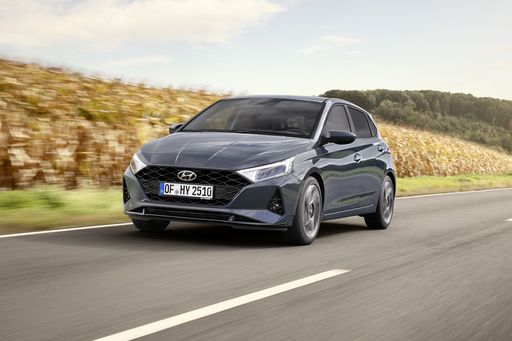
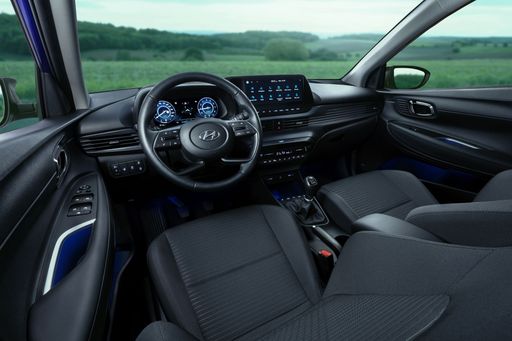

Alpine A290
Hyundai i20
Costs and Consumption |
|
|---|---|
|
Price
33200 - 39600 £
|
Price
18600 - 24000 £
|
|
Consumption L/100km
-
|
Consumption L/100km
5.70 L
|
|
Consumption kWh/100km
15.8 - 16.5 kWh
|
Consumption kWh/100km
-
|
|
Electric Range
364 - 380 km
|
Electric Range
-
|
|
Battery Capacity
-
|
Battery Capacity
-
|
|
co2
0 g/km
|
co2
128 - 129 g/km
|
|
Fuel tank capacity
-
|
Fuel tank capacity
-
|
Dimensions and Body |
|
|---|---|
|
Body Type
Hatchback
|
Body Type
Hatchback
|
|
Seats
5
|
Seats
5
|
|
Doors
5
|
Doors
-
|
|
Curb weight
1554 kg
|
Curb weight
1145 - 1170 kg
|
|
Trunk capacity
326 L
|
Trunk capacity
352 L
|
|
Length
3990 mm
|
Length
-
|
|
Width
1820 mm
|
Width
1775 mm
|
|
Height
1520 mm
|
Height
-
|
|
Max trunk capacity
1106 L
|
Max trunk capacity
-
|
|
Payload
396 kg
|
Payload
455 - 465 kg
|
Engine and Performance |
|
|---|---|
|
Engine Type
Electric
|
Engine Type
Petrol
|
|
Transmission
Automatic
|
Transmission
Manuel, Automatic
|
|
Transmission Detail
Reduction Gearbox
|
Transmission Detail
Manual Gearbox, Dual-Clutch Automatic
|
|
Drive Type
Front-Wheel Drive
|
Drive Type
Front-Wheel Drive
|
|
Power HP
177 - 218 HP
|
Power HP
90 HP
|
|
Acceleration 0-100km/h
6.4 - 7.4 s
|
Acceleration 0-100km/h
11.5 - 12.8 s
|
|
Max Speed
160 - 170 km/h
|
Max Speed
-
|
|
Torque
285 - 300 Nm
|
Torque
172 Nm
|
|
Number of Cylinders
-
|
Number of Cylinders
3
|
|
Power kW
130 - 160 kW
|
Power kW
66 kW
|
|
Engine capacity
-
|
Engine capacity
998 cm3
|
General |
|
|---|---|
|
Model Year
2024
|
Model Year
2025
|
|
CO2 Efficiency Class
A
|
CO2 Efficiency Class
D
|
|
Brand
Alpine
|
Brand
Hyundai
|
Is the Alpine A290 offered with different drivetrains?
Available configurations include Front-Wheel Drive.
The prices shown are estimates based on German list prices, adjusted for local VAT. Local registration taxes (e.g. NoVA, BPM or CO2 malus) are not included. This information is not legally binding.