VS

Audi A3 Sportback vs Mazda CX-30 comparison

Compare performance (400 HP vs 186 HP), boot space and price (27,000 £ vs 25,700 £ ) at a glance. Find out which car is the better choice for you – Audi A3 Sportback or Mazda CX-30?

Audi A3 Sportback vs Mazda CX-30: Key differences

Audi A3 Sportback

3.9 (1 Reviews)
rate
  • substantially more power
  • substantially more efficient
  • clearly quicker 0–100 km/h
  • marginally lighter
details

Mazda CX-30

4.5 (9 Reviews)
rate
  • marginally cheaper
  • somewhat more trunk space
details

All details on performance, efficiency, range and trunk space can be found in the technical comparison below – including user reviews for both models.

By Achim Sedelmaier

A3 Sportback

A Battle of Compact Versatility: Audi A3 Sportback vs. Mazda CX-30

When it comes to the competitive hatchback and crossover segment, the Audi A3 Sportback and Mazda CX-30 stand out as exceptional options. Both cater to diverse needs, combining style with practicality, yet they embody distinct characteristics influenced by their manufacturer’s philosophies. This article delves into the technical specifications and innovations of each model, providing a comprehensive comparison for prospective buyers.
CX-30

Design and Body Type

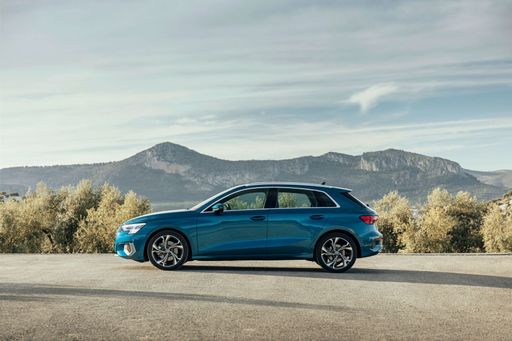
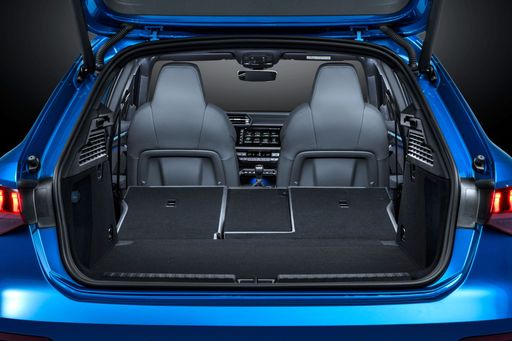
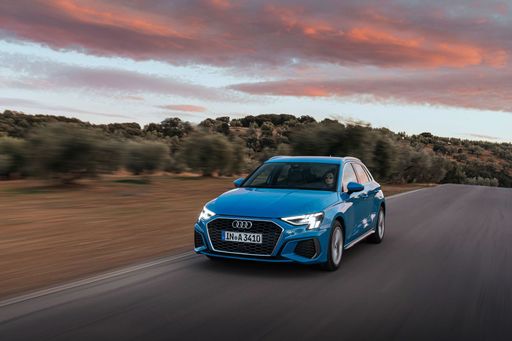
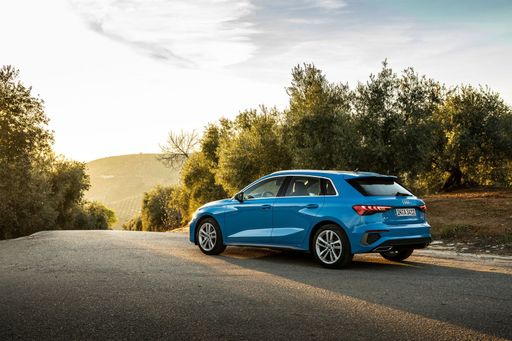
The Audi A3 Sportback presents itself as a sleek and sporty hatchback, designed for drivers who value agility and aesthetics. With a length of 4,353 mm and a width of 1,816 mm, it offers a compact form that is easily maneuverable in urban environments. The trunk capacity stands at a respectable 380 liters, providing adequate space for luggage or shopping.

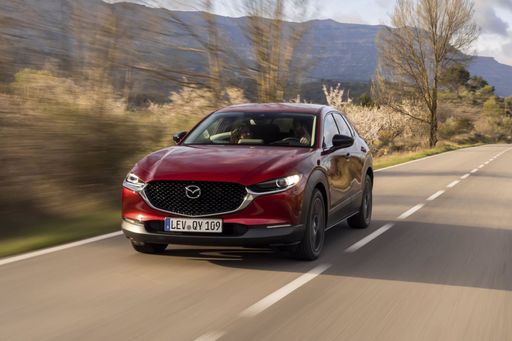
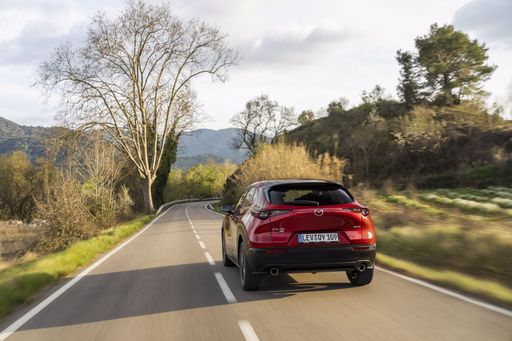
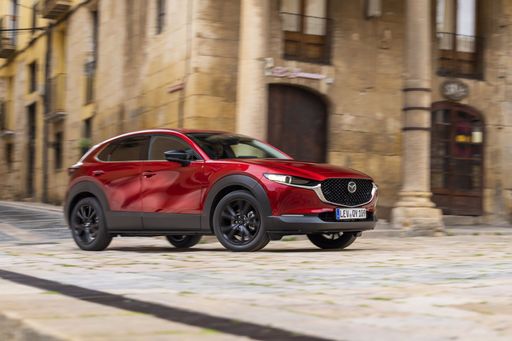
In contrast, the Mazda CX-30 adopts the SUV body type, delivering a more pronounced road presence. Measuring 4,395 mm in length and 1,795 mm in width, this model combines higher seating without compromising driving dynamics. The CX-30 boasts a larger trunk capacity of 430 liters, making it better suited for families or those who require more cargo space.

A3 Sportback

Engine Options and Performance

The Audi A3 Sportback offers a variety of engine options, including petrol, diesel, and plug-in hybrids, with power outputs ranging from 116 to an exhilarating 400 HP. Its performance is bolstered by advanced technologies such as mild hybrid electric vehicle (MHEV) systems. The A3 Sportback can achieve impressive 0-100 km/h acceleration times as low as 3.8 seconds, depending on the variant chosen.

On the other hand, the Mazda CX-30 is powered by a petrol MHEV engine, delivering up to 186 HP. Although it doesn’t match the sheer power range of the A3, its performance is competitive within its segment. Acceleration times peak at around 8.3 seconds, making it a responsive choice for everyday driving.

CX-30

Fuel Efficiency and Emissions

In the realm of fuel efficiency, the Audi A3 Sportback impresses with consumption figures as low as 4.8 L/100 km across its various engine options. It also benefits from a lower CO2 output, rated as low as 120 g/km for some versions, appealing to environmentally conscious buyers.

The Mazda CX-30, though slightly less efficient, still offers competitive performance. Its fuel consumption varies from 5.7 to 6.6 L/100 km, with CO2 emissions ranging from 129 to 148 g/km, positioning it as a respectable option in terms of running costs.

A3 Sportback

Technology and Innovations

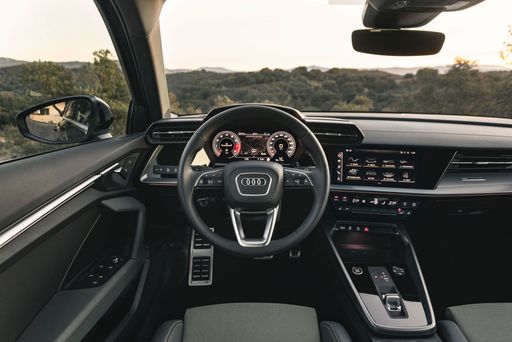
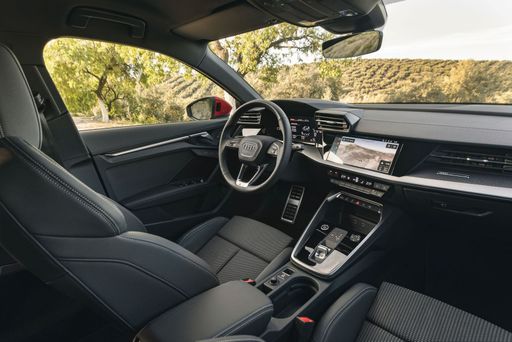
Both the Audi A3 Sportback and Mazda CX-30 come equipped with cutting-edge technology that enhances the driving experience. Audi's MMI infotainment system stands out with its user-friendly interface and an optional Virtual Cockpit that puts critical information right in front of the driver. Advanced driver assistance systems, including adaptive cruise control and lane departure warning, further enhance safety.

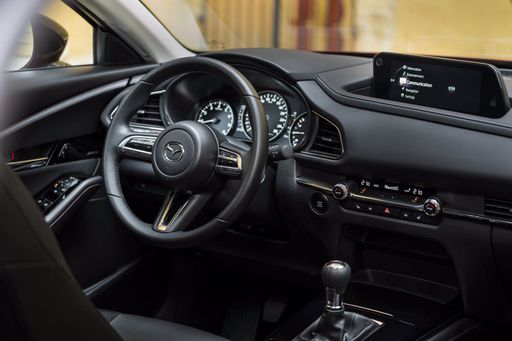
The Mazda CX-30 features Mazda's latest infotainment system, which, while intuitive, relies on a dial control that some may find less accessible while driving. It also includes a suite of safety technologies, such as blind-spot monitoring and smart braking assistance, ensuring peace of mind during daily commutes.

CX-30

Final Thoughts

Choosing between the Audi A3 Sportback and Mazda CX-30 ultimately depends on individual preferences and priorities. The A3 Sportback is the choice for those seeking performance-oriented driving and a premium feel wrapped in a compact package. Meanwhile, the CX-30 offers practicality, style, and a higher driving position, appealing to those who prioritize versatility and cargo space.

Both vehicles highlight the respective brands' commitment to innovation and excellence, ensuring that whichever model you choose, you’ll enjoy a remarkable driving experience.

Here’s where it gets real: The technical differences in detail

A3 Sportback

Costs and Efficiency:

Looking at overall running costs, both models reveal some interesting differences in everyday economy.

Mazda CX-30 is marginally cheaper – starting at 25,700 £ , while the Audi A3 Sportback costs 27,000 £ . That’s a price difference of around 1,295 £.

Fuel consumption also shows a difference: the Audi A3 Sportback uses 1.1 L/100km and is substantially more efficient than the Mazda CX-30 with 5.7 L/100km. The difference is about 4.6 L/100km.

CX-30

Engine and Performance:

Power, torque and acceleration say a lot about how a car feels on the road. This is where you see which model delivers more driving dynamics.

When it comes to engine power, the Audi A3 Sportback offers substantially more power – delivering 400 HP compared to 186 HP. That’s roughly 214 HP more horsepower.

When accelerating from 0 to 100 km/h, the Audi A3 Sportback is clearly quicker – completing the sprint in 3.8 s, while the Mazda CX-30 takes 8.3 s. That’s about 4.5 s quicker.

There’s also a difference in torque: the Audi A3 Sportback delivers significantly more torque with 500 Nm compared to 240 Nm. That’s about 260 Nm more.

A3 Sportback

Space and Everyday Use:

Beyond pure performance, interior space and usability matter most in daily life. This is where you see which car is more practical and versatile.

Both vehicles offer seating for 5 people.

In terms of curb weight, Audi A3 Sportback is marginally lighter – 1,360 kg compared to 1,455 kg. The difference is around 95 kg.

Looking at boot space, the Mazda CX-30 offers somewhat more boot space – 430 L compared to 380 L. That’s a difference of about 50 L.

When it comes to payload, the Mazda CX-30 carries marginally more – 496 kg compared to 480 kg. That’s a difference of about 16 kg.

Who wins the race in the data check?

The Audi A3 Sportback stands well ahead of its rival in the objective data comparison.
This result only shows which model scores more points on paper – not which of the two cars feels right for you.

from £27,000
A3 Sportback

Audi A3 Sportback

  • Engine Type Petrol, Petrol MHEV, Diesel, Plugin Hybrid
  • Transmission Manuel, Automatic
  • Drive Type Front-Wheel Drive, All-Wheel Drive
  • Power HP 116 - 400 HP
  • Consumption L/100km 1.1 - 9.3 L/100km
  • Electric Range 134 - 141 km
Audi A3 Sportback
Mazda CX-30

Costs and Consumption

View detailed analysis

Engine and Performance

View detailed analysis

Dimensions and Body

View detailed analysis

Audi A3 Sportback

The Audi A3 Sportback wraps premium materials and crisp German design into a practical hatchback package that makes daily driving feel smart rather than showy. It’s nimble in the city, composed on longer trips, and carries just enough swagger to satisfy buyers who want quality without shouting about it.

details

Mazda CX-30

The Mazda CX-30 blends Mazda’s upscale styling with a compact crossover body, offering a refined interior and engaging driving dynamics. It’s a practical choice for buyers who want a premium feel and agile handling in a city-friendly package.

details
Audi A3 Sportback
Mazda CX-30

Costs and Consumption

Price
27,000 - 92,900 £
Price
25,700 - 37,200 £
Consumption L/100km
1.1 - 9.3 L/100km
Consumption L/100km
5.7 - 6.6 L/100km
Consumption kWh/100km
-
Consumption kWh/100km
-
Electric Range
134 - 141 km
Electric Range
-
Battery Capacity
-
Battery Capacity
-
co2
25 - 211 g/km
co2
129 - 148 g/km
Fuel tank capacity
-
Fuel tank capacity
-

Dimensions and Body

Body Type
Hatchback
Body Type
SUV
Seats
5
Seats
5
Doors
-
Doors
-
Curb weight
1,360 - 1,685 kg
Curb weight
1,455 - 1,587 kg
Trunk capacity
280 - 380 L
Trunk capacity
422 - 430 L
Length
-
Length
-
Width
1,816 - 1,851 mm
Width
1,795 mm
Height
-
Height
-
Max trunk capacity
-
Max trunk capacity
-
Payload
410 - 480 kg
Payload
458 - 496 kg

Engine and Performance

Engine Type
Petrol, Petrol MHEV, Diesel, Plugin Hybrid
Engine Type
Petrol MHEV
Transmission
Manuel, Automatic
Transmission
Manuel, Automatic
Transmission Detail
Manual Gearbox, Dual-Clutch Automatic
Transmission Detail
Manual Gearbox, Automatic Gearbox
Drive Type
Front-Wheel Drive, All-Wheel Drive
Drive Type
Front-Wheel Drive, All-Wheel Drive
Power HP
116 - 400 HP
Power HP
140 - 186 HP
Acceleration 0-100km/h
3.8 - 10.1 s
Acceleration 0-100km/h
8.3 - 10.3 s
Max Speed
-
Max Speed
-
Torque
220 - 500 Nm
Torque
238 - 240 Nm
Number of Cylinders
4 - 5
Number of Cylinders
4
Power kW
85 - 294 kW
Power kW
103 - 137 kW
Engine capacity
1,498 - 2,480 cm3
Engine capacity
1,998 - 2,488 cm3

General

Model Year
2,025 - 2,026
Model Year
2025
CO2 Efficiency Class
D, F, E, G, B
CO2 Efficiency Class
D, E
Brand
Audi
Brand
Mazda
DriveDuel uses data analysis and artificial intelligence to evaluate vehicle data and create content. Content is regularly reviewed and improved. The displayed prices are estimates based on German list prices, adjusted to the respective country’s VAT. Country-specific registration taxes are not included. This information is not legally binding.