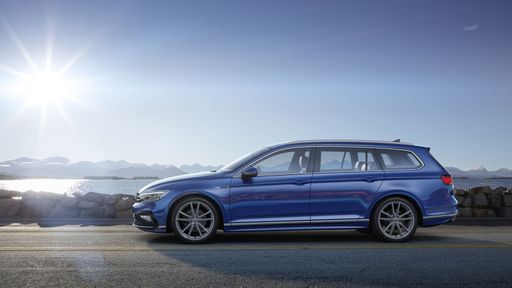
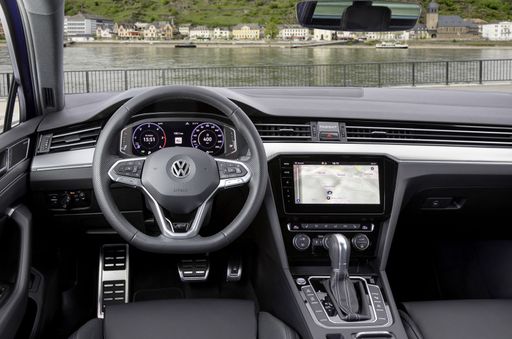
VS

Audi A4 Avant vs VW Passat comparison

Compare performance (470 HP vs 272 HP), boot space and price (37,200 £ vs 36,500 £ ) at a glance. Find out which car is the better choice for you – Audi A4 Avant or VW Passat?

Audi A4 Avant vs VW Passat: Key differences

Audi A4 Avant

5 (1 Reviews)
rate
  • clearly more power
  • significantly quicker 0–100 km/h
details

VW Passat

4.8 (4 Reviews)
rate
  • very slightly cheaper
  • considerably more efficient
  • marginally lighter
  • noticeably more trunk space
details

All details on performance, efficiency, range and trunk space can be found in the technical comparison below – including user reviews for both models.

By Achim Sedelmaier

A4 Avant

The Battle of Wagons: Audi A4 Avant vs. VW Passat

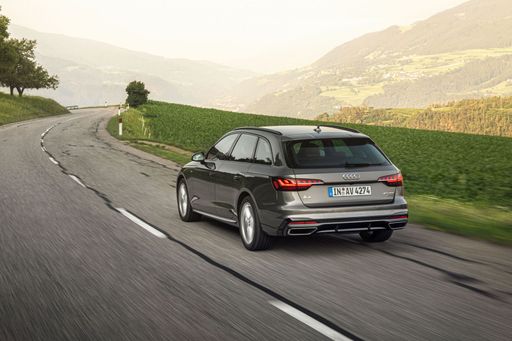
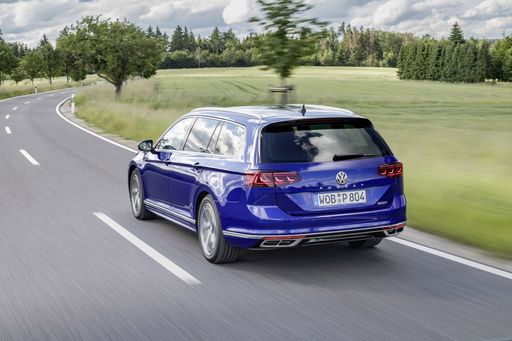
In the realm of wagons, two renowned names stand out: the Audi A4 Avant and the VW Passat. Both vehicles merge utility and performance with exquisite design, appealing to families and enthusiasts alike. However, the devil is in the details, and this comparison digs into technical specs and innovative features to determine which wagon reigns supreme.
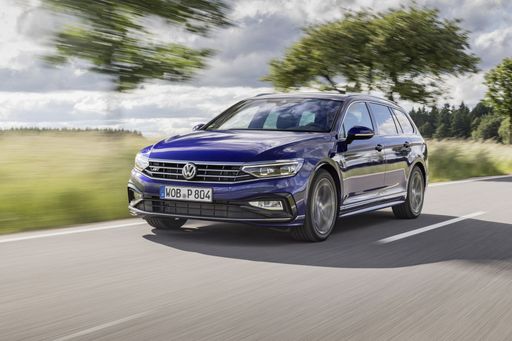
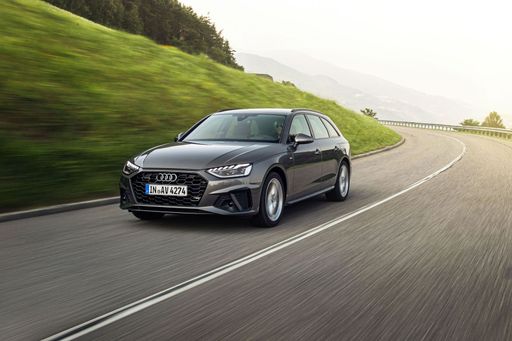
Passat

A Look Under the Hood

The Audi A4 Avant offers a diverse range of engine types, including Diesel MHEV, Petrol MHEV, and standard Petrol engines. The horsepower ranges from 136 HP to a thrilling 470 HP, depending on the configuration. The dual-clutch automatic transmission ensures smooth shifting, with both front-wheel and all-wheel drive options available. The versatility in engine choices allows drivers to prioritize either performance or efficiency, with consumption rates ranging from 4.8 to 9.7 L/100 km.

In contrast, the VW Passat introduces an intriguing Plugin Hybrid option alongside its various petrol and diesel engines. The Passat covers a horsepower spectrum from 122 HP to 272 HP. Standard in the Passat is the dual-clutch automatic transmission paired with front-wheel drive, though all-wheel drive adds a variance for those seeking extra traction. The standout aspect is the electric range provided by the Plugin Hybrid, delivering up to 126 km on electric power alone, supplemented by a 19.7 kWh battery capacity.

A4 Avant

Performance and Handling

When it comes to acceleration, the Audi A4 Avant exhibits impressive agility, accelerating from 0 to 100 km/h in as little as 3.7 seconds in its top-tier model. Maximum speeds cap at a thrilling 300 km/h, making it a true performer in the wagon category. Regardless of the speed, the Audi maintains precision and control, thanks to its well-tuned suspension and adaptive handling features.

The VW Passat isn’t far behind, with its top configuration hitting 0 to 100 km/h in 5.8 seconds and peaking at 250 km/h. The Passat shines in its smooth and efficient handling, benefiting from a structure that provides stability and comfort over long distances, making it a formidable choice for those who prioritize a balanced combination of power and fuel economy.

Passat

Innovation and Technology

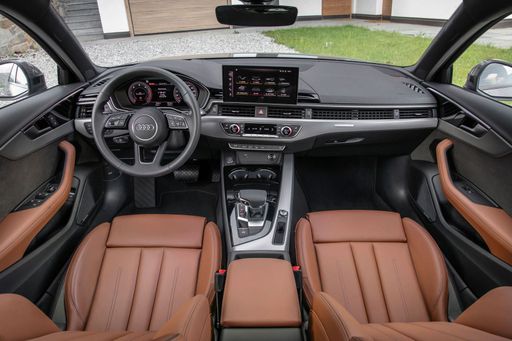
Audi invests heavily in innovation, as seen in the A4 Avant's design. State-of-the-art infotainment systems, adaptive cruise control, and extensive driver-assistance features set the vehicle ahead in terms of user experience and travel convenience. Additionally, CO2 efficiency ratings for the A4 Avant span classes E to G, with emissions ranging between 127 to 220 g/km.

The VW Passat is remarkable for its integration of green technology, with its Plugin Hybrid option significantly reducing CO2 emissions—down to as low as 8 g/km. The Passat also offers numerous innovative features, such as adaptive chassis control, a wealth of digital cockpit functionalities, and comprehensive safety systems that ensure a secure and engaging driving experience.

A4 Avant

Space and Practicality

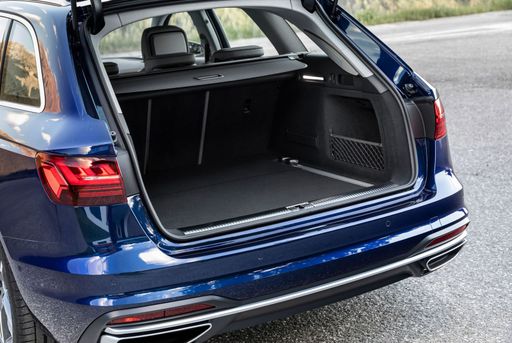
Both wagons accommodate five passengers comfortably, but differ in storage. The Audi A4 Avant offers a trunk capacity of 495 liters, while the VW Passat surpasses it with an impressive 690-liter trunk, catering especially well to families needing more space on extended trips. Both vehicles emphasize ergonomic and thoughtful design within their interiors, providing a luxurious yet practical environment.

Passat

The Verdict

Choosing between the Audi A4 Avant and the VW Passat ultimately depends on the buyer’s priorities. The A4 Avant stands out with its performance-driven options and cutting-edge technology, making it ideal for enthusiasts who crave power and innovation. On the other hand, the VW Passat presents itself as a versatile, eco-friendly option with its substantial cargo space and hybrid efficiency, meeting the needs of families and environmentally conscious drivers. Both vehicles set a high standard in the wagon sector, offering quality, safety, and sophistication.

Here’s where it gets real: The technical differences in detail

A4 Avant

Costs and Efficiency:

Price and efficiency are often the first things buyers look at. Here it becomes clear which model has the long-term edge – whether at the pump, the plug, or in purchase price.

VW Passat is very slightly cheaper – starting at 36,500 £ , while the Audi A4 Avant costs 37,200 £ . That’s a price difference of around 780 £.

Fuel consumption also shows a difference: the VW Passat uses 1.2 L/100km and is considerably more efficient than the Audi A4 Avant with 4.8 L/100km. The difference is about 3.6 L/100km.

Passat

Engine and Performance:

Under the bonnet, it becomes clear which model is tuned for sportiness and which one takes the lead when you hit the accelerator.

When it comes to engine power, the Audi A4 Avant offers clearly more power – delivering 470 HP compared to 272 HP. That’s roughly 198 HP more horsepower.

When accelerating from 0 to 100 km/h, the Audi A4 Avant is significantly quicker – completing the sprint in 3.7 s, while the VW Passat takes 7.1 s. That’s about 3.4 s quicker.

There’s also a difference in torque: the Audi A4 Avant delivers clearly more torque with 600 Nm compared to 400 Nm. That’s about 200 Nm more.

A4 Avant

Space and Everyday Use:

Cabin size, boot volume and payload all play a role in everyday practicality. Here, comfort and flexibility make the difference.

Both vehicles offer seating for 5 people.

In terms of curb weight, VW Passat is marginally lighter – 1,573 kg compared to 1,595 kg. The difference is around 22 kg.

Looking at boot space, the VW Passat offers noticeably more boot space – 690 L compared to 495 L. That’s a difference of about 195 L.

When it comes to payload, the VW Passat carries marginally more – 577 kg compared to 565 kg. That’s a difference of about 12 kg.

Who wins the race in the data check?

The VW Passat stands well ahead of its rival in the objective data comparison.
This result only shows which model scores more points on paper – not which of the two cars feels right for you.

from £36,500
Passat

VW Passat

  • Engine Type Petrol MHEV, Diesel, Plugin Hybrid
  • Transmission Automatic
  • Drive Type Front-Wheel Drive, All-Wheel Drive
  • Power HP 122 - 272 HP
  • Consumption L/100km 1.2 - 5.8 L/100km
  • Electric Range 124 - 135 km
Audi A4 Avant
VW Passat

Costs and Consumption

View detailed analysis

Engine and Performance

View detailed analysis

Dimensions and Body

View detailed analysis

Audi A4 Avant

The Audi A4 Avant blends elegant, understated styling with practical estate versatility, making it a polished choice for drivers who want both poise and generous cargo space. Inside, the cabin feels premium and tech-forward while the composed driving manners turn routine journeys into a quietly satisfying experience—exactly the sensible indulgence buyers will appreciate.

details

VW Passat

The VW Passat is the grown-up family car that gets the basics absolutely right — roomy, comfortable and built to handle weekday commutes and weekend getaways without fuss. It won't set your pulse racing, but its calm composure and sensible packaging make it boring in the best possible way: a dependable, no‑drama choice for buyers who value practicality over flash.

details
Audi A4 Avant
VW Passat

Costs and Consumption

Price
37,200 - 122,500 £
Price
36,500 - 58,500 £
Consumption L/100km
4.8 - 9.7 L/100km
Consumption L/100km
1.2 - 5.8 L/100km
Consumption kWh/100km
-
Consumption kWh/100km
-
Electric Range
-
Electric Range
124 - 135 km
Battery Capacity
-
Battery Capacity
-
co2
126 - 220 g/km
co2
28 - 153 g/km
Fuel tank capacity
40 - 58 L
Fuel tank capacity
-

Dimensions and Body

Body Type
Estate
Body Type
Estate
Seats
5
Seats
5
Doors
5
Doors
-
Curb weight
1,595 - 1,820 kg
Curb weight
1,573 - 1,858 kg
Trunk capacity
495 L
Trunk capacity
510 - 690 L
Length
4,750 - 4,782 mm
Length
-
Width
1,842 - 1,866 mm
Width
1,849 mm
Height
1,428 - 1,493 mm
Height
-
Max trunk capacity
1,495 L
Max trunk capacity
-
Payload
510 - 565 kg
Payload
501 - 577 kg

Engine and Performance

Engine Type
Diesel MHEV, Petrol MHEV, Petrol
Engine Type
Petrol MHEV, Diesel, Plugin Hybrid
Transmission
Automatic
Transmission
Automatic
Transmission Detail
Dual-Clutch Automatic, Automatic Gearbox
Transmission Detail
Dual-Clutch Automatic
Drive Type
All-Wheel Drive, Front-Wheel Drive
Drive Type
Front-Wheel Drive, All-Wheel Drive
Power HP
136 - 470 HP
Power HP
122 - 272 HP
Acceleration 0-100km/h
3.7 - 9.8 s
Acceleration 0-100km/h
7.1 - 10.7 s
Max Speed
210 - 300 km/h
Max Speed
-
Torque
270 - 600 Nm
Torque
250 - 400 Nm
Number of Cylinders
4 - 6
Number of Cylinders
4
Power kW
100 - 346 kW
Power kW
90 - 200 kW
Engine capacity
1,968 - 2,894 cm3
Engine capacity
1,498 - 1,968 cm3

General

Model Year
2,023 - 2,024
Model Year
2,024 - 2,025
CO2 Efficiency Class
E, F, D, G
CO2 Efficiency Class
D, E, B
Brand
Audi
Brand
VW
DriveDuel uses data analysis and artificial intelligence to evaluate vehicle data and create content. Content is regularly reviewed and improved. The displayed prices are estimates based on German list prices, adjusted to the respective country’s VAT. Country-specific registration taxes are not included. This information is not legally binding.