VS

Audi A6 Avant vs VW Tayron comparison

Compare performance (367 HP vs 272 HP), boot space and price (49,700 £ vs 40,200 £ ) at a glance. Find out which car is the better choice for you – Audi A6 Avant or VW Tayron?

Audi A6 Avant vs VW Tayron: Key differences

Audi A6 Avant

  • markedly more power
  • noticeably quicker 0–100 km/h
details

VW Tayron

4.5 (5 Reviews)
rate
  • clearly cheaper
  • significantly more efficient
  • somewhat more electric range
  • somewhat lighter
  • significantly more trunk space
details

All details on performance, efficiency, range and trunk space can be found in the technical comparison below – including user reviews for both models.

By Achim Sedelmaier

A6 Avant

Unveiling the Battle of the Giants: Audi A6 Avant vs. VW Tayron

In the realm of midsize vehicles, few names resonate as powerfully as Audi and Volkswagen. Today, we set our sights on two formidable contenders from these iconic brands: the Audi A6 Avant and the VW Tayron. Each vehicle comes loaded with its distinctive flair, cutting-edge technology, and a multitude of innovations. Car enthusiasts, prepare for a riveting head-to-head comparison of these remarkable machines.
Tayron

Design and Dimensions: Elegance Meets Utility

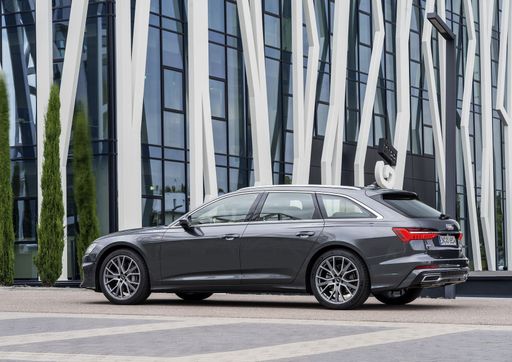
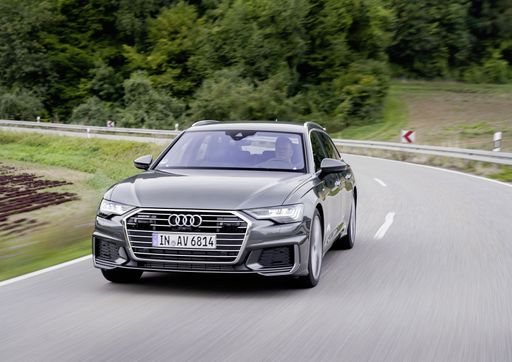
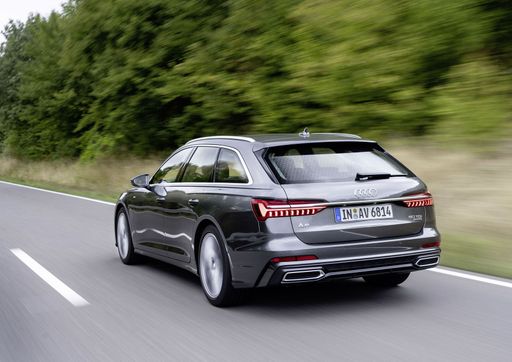
The Audi A6 Avant is a striking vision of elegance and sophistication wrapped in a wagon body type. With dimensions charting at a length of 4951 mm, width of 1902 mm, and height of 1469 mm, the A6 Avant offers an expansive trunk capacity of 565 liters, catering to all your travel needs without compromising on luxury.

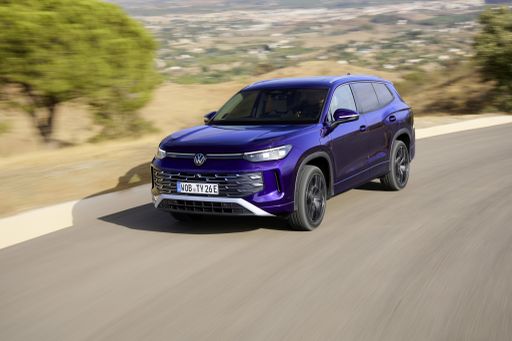
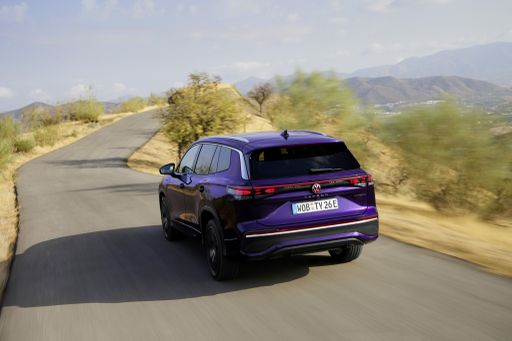
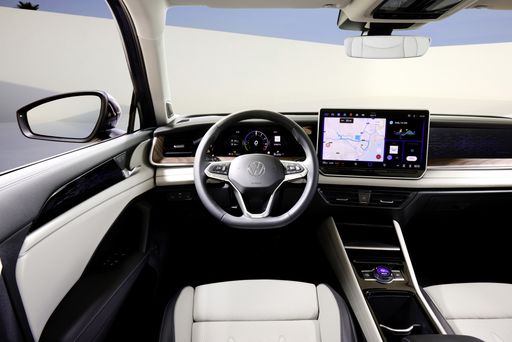
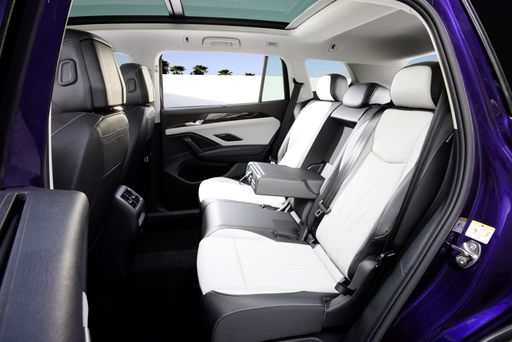
On the flip side, the VW Tayron takes on the mantle of a robust SUV with a length of 4792 mm, width of 1866 mm, and a notable height of 1668 mm. The Tayron offers a commanding trunk capacity of 885 liters, significantly larger than its Audi counterpart, making it a practical choice for families and adventurers alike.

A6 Avant

Engine and Performance: Power Unleashed

The Audi A6 Avant is powered by a variety of engine options including Diesel MHEV, Petrol MHEV, and a Plugin Hybrid. With power figures ranging from 163 HP to an exhilarating 630 HP, the A6 Avant promises a thrilling ride for any driving enthusiast. Its acceleration ranges from 9.4 seconds to 3.3 seconds for 0-100 km/h, ensuring a smooth yet powerful performance on the road.

The VW Tayron primarily flaunts Petrol and Plugin Hybrid engines with power ranging between 150 HP and 272 HP. Its acceleration spectrum from 9.7 to 6.1 seconds for the 0-100 km/h dash makes the Tayron a spirited competitor, perfectly blending efficiency with vigor for those seeking a balanced drive.

Tayron

Innovations and Technology: A Step into the Future

The Audi A6 Avant's technological prowess is particularly highlighted by its MHEV and Plugin Hybrid offerings, enabling an electric range of 65 km with a 14.4 kWh battery capacity. This innovation not only enhances fuel efficiency but also encapsulates Audi's commitment to reducing carbon emissions, with CO2 emissions as low as 32 g/km.

Meanwhile, the VW Tayron, with an impressive Plugin Hybrid iteration, boasts an electric range of up to 126 km facilitated by a formidable 19.7 kWh battery. The vehicle’s CO2 emissions can descend to just 9 g/km, reflecting VW's stride towards eco-friendly advancements in the automotive industry.

A6 Avant

Fuel Efficiency and Environmental Impact

Fuel efficiency stands at the forefront for both contenders. The Audi A6 Avant showcases versatile consumption ranging from 1.4 to 12.3 L/100 km depending on the engine choice. The Tayron competently matches this with consumption figures between 0.4 to 7.8 L/100 km, demonstrating competitive efficiency in its class.

Additionally, each brand has strategically curated its offerings to position themselves prominently in the challenges against global CO2 emissions. The environmental performance of both vehicles emphasizes a growing trend towards sustainability without sacrificing performance.

Tayron

Conclusion: Choosing Your Champion

The Audi A6 Avant and VW Tayron both make compelling arguments with their distinct blends of luxury, performance, and environmental consciousness. The Avant appeals to those desiring an upscale travel experience, while the Tayron caters to families and adventurers who prioritize space and versatility.

No matter your preference, both models represent the pinnacle of automotive innovation, showcasing the rich heritage and forward-thinking virtues of their respective brands. The final decision rests with the driver and their unique preferences, but rest assured, either choice will deliver an unforgettable driving adventure.

Here’s where it gets real: The technical differences in detail

A6 Avant

Costs and Efficiency:

Price and efficiency are often the first things buyers look at. Here it becomes clear which model has the long-term edge – whether at the pump, the plug, or in purchase price.

VW Tayron is clearly cheaper – starting at 40,200 £ , while the Audi A6 Avant costs 49,700 £ . That’s a price difference of around 9,493 £.

Fuel consumption also shows a difference: the VW Tayron uses 1.5 L/100km and is significantly more efficient than the Audi A6 Avant with 2.3 L/100km. The difference is about 0.8 L/100km.

As for electric range, the VW Tayron offers somewhat more range – reaching up to 123 km, about 22 km more than the Audi A6 Avant.

Tayron

Engine and Performance:

Power, torque and acceleration say a lot about how a car feels on the road. This is where you see which model delivers more driving dynamics.

When it comes to engine power, the Audi A6 Avant offers markedly more power – delivering 367 HP compared to 272 HP. That’s roughly 95 HP more horsepower.

When accelerating from 0 to 100 km/h, the Audi A6 Avant is noticeably quicker – completing the sprint in 4.7 s, while the VW Tayron takes 6.1 s. That’s about 1.4 s quicker.

There’s also a difference in torque: the Audi A6 Avant delivers visibly more torque with 580 Nm compared to 400 Nm. That’s about 180 Nm more.

A6 Avant

Space and Everyday Use:

Cabin size, boot volume and payload all play a role in everyday practicality. Here, comfort and flexibility make the difference.

Both vehicles offer seating for 5 people.

In terms of curb weight, VW Tayron is somewhat lighter – 1,682 kg compared to 1,865 kg. The difference is around 183 kg.

Looking at boot space, the VW Tayron offers significantly more boot space – 885 L compared to 503 L. That’s a difference of about 382 L.

When it comes to payload, the VW Tayron carries very slightly more – 573 kg compared to 570 kg. That’s a difference of about 3 kg.

Who wins the race in the data check?

The VW Tayron holds a narrow overall lead in the objective data comparison.
This result only shows which model scores more points on paper – not which of the two cars feels right for you.

from £40,200
Tayron

VW Tayron

  • Engine Type : Petrol MHEV, Diesel, Petrol, Plugin Hybrid
  • Transmission : Automatic
  • Drive Type : Front-Wheel Drive, All-Wheel Drive
  • Power HP : 150 - 272 HP
  • Consumption L/100km : 1.5 - 8.5 L/100km
  • Electric Range : 116 - 123 km
Audi A6 Avant
VW Tayron

Costs and Consumption

View detailed analysis

Engine and Performance

View detailed analysis

Dimensions and Body

View detailed analysis

Audi A6 Avant

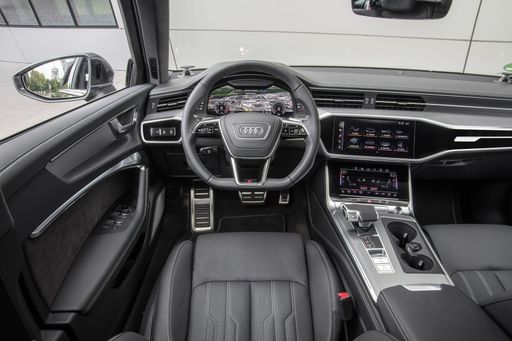
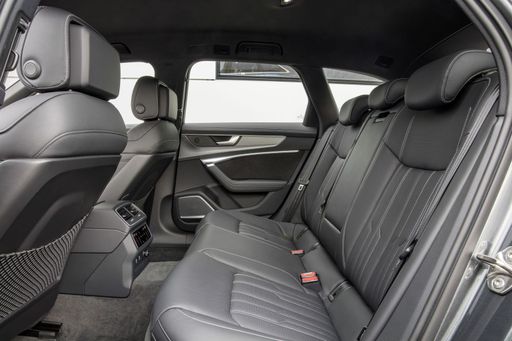
The Audi A6 Avant wraps executive poise and usable practicality into an impeccably finished estate that makes everyday driving feel noticeably more grown-up. It serves up a calm, composed ride and clever packaging for buyers who want space and refinement without ostentation — the sensible choice that still manages to impress.

details

VW Tayron

The VW Tayron combines a roomy, practical interior with a composed, comfortable ride that suits both daily commuting and longer journeys. With a restrained, modern design and a focus on straightforward tech and safety, it’s a sensible choice for buyers who want Volkswagen refinement without unnecessary flash.

details
Audi A6 Avant
VW Tayron

Costs and Consumption

Price
49,700 - 70,200 £
Price
40,200 - 56,000 £
Consumption L/100km
2.3 - 7.5 L/100km
Consumption L/100km
1.5 - 8.5 L/100km
Consumption kWh/100km
-
Consumption kWh/100km
-
Electric Range
94 - 101 km
Electric Range
116 - 123 km
Battery Capacity
-
Battery Capacity
-
co2
53 - 170 g/km
co2
33 - 192 g/km
Fuel tank capacity
-
Fuel tank capacity
-

Dimensions and Body

Body Type
Estate
Body Type
SUV
Seats
5
Seats
5
Doors
-
Doors
-
Curb weight
1,865 - 2,240 kg
Curb weight
1,682 - 1,948 kg
Trunk capacity
404 - 503 L
Trunk capacity
705 - 885 L
Length
-
Length
-
Width
1,875 mm
Width
1,853 - 1,866 mm
Height
-
Height
-
Max trunk capacity
-
Max trunk capacity
-
Payload
535 - 570 kg
Payload
497 - 573 kg

Engine and Performance

Engine Type
Petrol, Petrol MHEV, Diesel MHEV, Plugin Hybrid
Engine Type
Petrol MHEV, Diesel, Petrol, Plugin Hybrid
Transmission
Automatic
Transmission
Automatic
Transmission Detail
Dual-Clutch Automatic
Transmission Detail
Dual-Clutch Automatic
Drive Type
Front-Wheel Drive, All-Wheel Drive
Drive Type
Front-Wheel Drive, All-Wheel Drive
Power HP
204 - 367 HP
Power HP
150 - 272 HP
Acceleration 0-100km/h
4.7 - 8.3 s
Acceleration 0-100km/h
6.1 - 9.7 s
Max Speed
-
Max Speed
-
Torque
340 - 580 Nm
Torque
250 - 400 Nm
Number of Cylinders
4 - 6
Number of Cylinders
4
Power kW
150 - 270 kW
Power kW
110 - 200 kW
Engine capacity
1,968 - 2,995 cm3
Engine capacity
1,498 - 1,984 cm3

General

Model Year
2025
Model Year
2,025 - 2,026
CO2 Efficiency Class
F, D, E, B
CO2 Efficiency Class
E, F, B, G
Brand
Audi
Brand
VW
DriveDuel uses data analysis and artificial intelligence to evaluate vehicle data and create content. Content is regularly reviewed and improved. The displayed prices are estimates based on German list prices, adjusted to the respective country’s VAT. Country-specific registration taxes are not included. This information is not legally binding.