
 Deutschland
 France
 Nederland
 Great Britain
 Sverige
 Danmark
 Suomi
Suomi Italia
 Polska
 España
VS
Audi e-tron GT vs VW Tiguan comparison
Compare performance (843 HP vs 272 HP), boot space and price (93,300 £ vs 33,600 £ ) at a glance. Find out which car is the better choice for you – Audi e-tron GT or VW Tiguan?
e-tron GT
Costs and Efficiency:
When it comes to price and running costs, the biggest differences usually appear. This is often where you see which car fits your budget better in the long run.
VW Tiguan is considerably cheaper – starting at 33,600 £ , while the Audi e-tron GT costs 93,300 £ . That’s a price difference of around 59,764 £.
As for electric range, the Audi e-tron GT offers significantly more range – reaching up to 617 km, about 491 km more than the VW Tiguan.
Tiguan
Engine and Performance:
Under the bonnet, it becomes clear which model is tuned for sportiness and which one takes the lead when you hit the accelerator.
When it comes to engine power, the Audi e-tron GT offers clearly more power – delivering 843 HP compared to 272 HP. That’s roughly 571 HP more horsepower.
When accelerating from 0 to 100 km/h, the Audi e-tron GT is clearly quicker – completing the sprint in 2.9 s, while the VW Tiguan takes 5.9 s. That’s about 3 s quicker.
Looking at top speed, the Audi e-tron GT is somewhat faster – reaching 250 km/h, while the VW Tiguan tops out at 215 km/h. The difference is around 35 km/h.
There’s also a difference in torque: the Audi e-tron GT delivers clearly more torque with 1,027 Nm compared to 400 Nm. That’s about 627 Nm more.
e-tron GT
Space and Everyday Use:
Cabin size, boot volume and payload all play a role in everyday practicality. Here, comfort and flexibility make the difference.
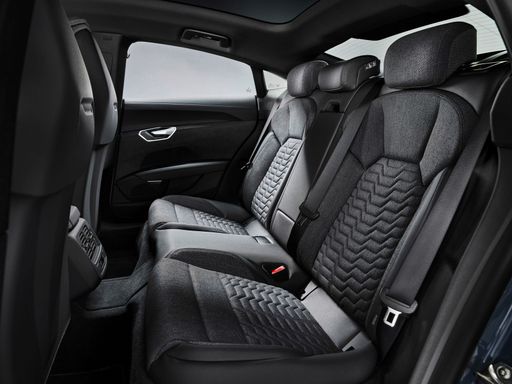
Seats: VW Tiguan offers more seats – 5 vs 4.
In terms of curb weight, VW Tiguan is clearly lighter – 1,599 kg compared to 2,355 kg. The difference is around 756 kg.
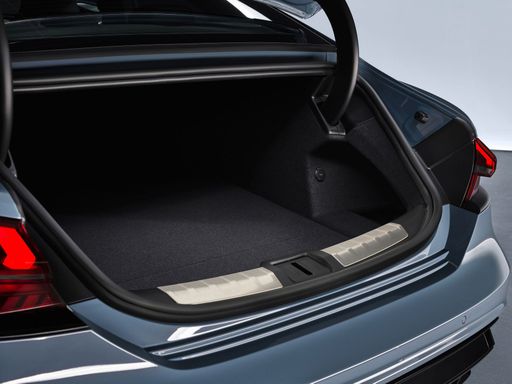
Looking at boot space, the VW Tiguan offers visibly more boot space – 652 L compared to 405 L. That’s a difference of about 247 L.
When it comes to payload, the VW Tiguan carries very slightly more – 533 kg compared to 485 kg. That’s a difference of about 48 kg.
Who wins the race in the data check?
The Audi e-tron GT holds a decisive overall lead in the objective data comparison.
This result only shows which model scores more points on paper – not which of the two cars feels right for you.
from £93,300
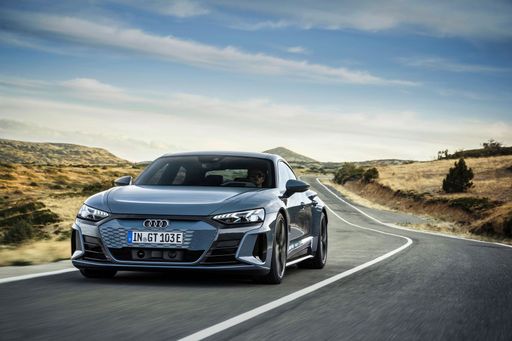
Audi e-tron GT
Audi e-tron GT
VW Tiguan
Costs and Consumption
View detailed analysis
View detailed analysis
Engine and Performance
View detailed analysis
View detailed analysis
Dimensions and Body
View detailed analysis
View detailed analysis
Audi e-tron GT
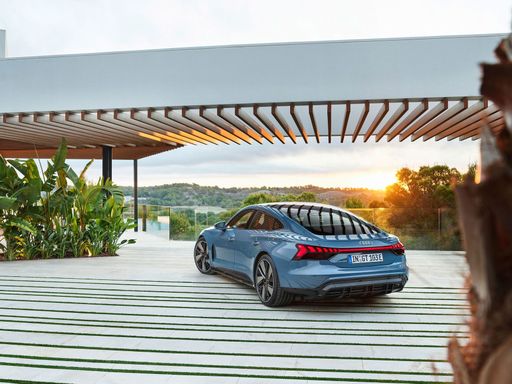
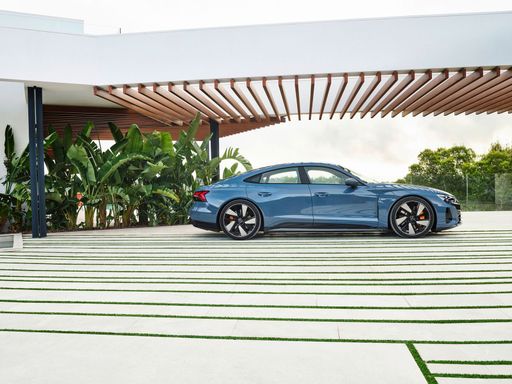
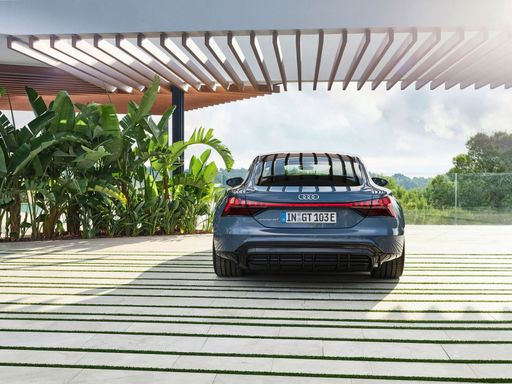
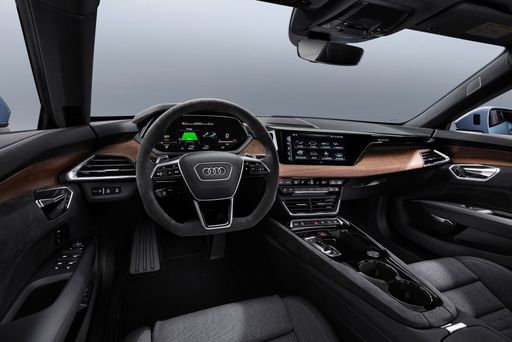
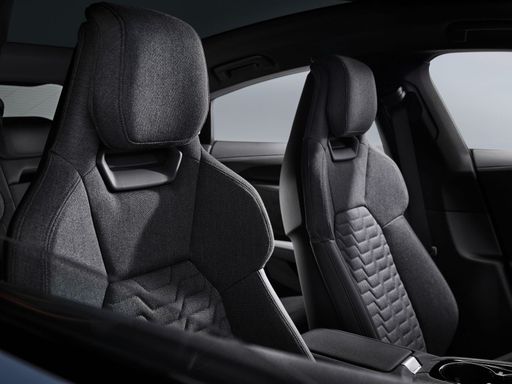
The Audi e-tron GT is a striking electric grand tourer that blends dramatic, low-slung styling with the hushed refinement of a luxury saloon. Behind the beautiful skin you'll find a driver-focused cabin and brisk, silent performance that makes daily commutes feel like auditioning for a weekend road trip — and yes, it manages to be both serious and a little bit smug about it.
details
VW Tiguan
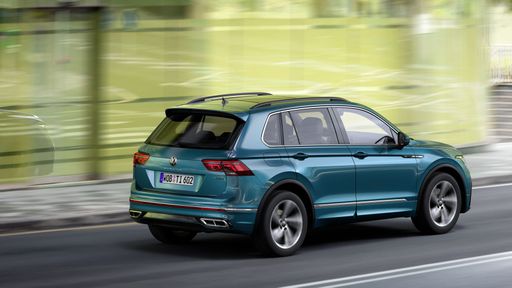
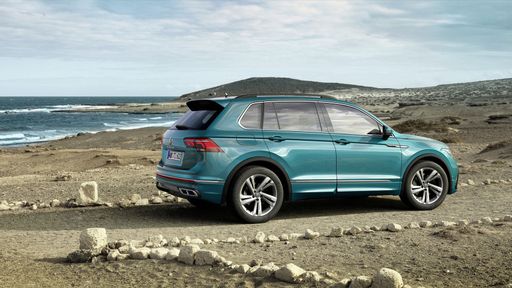
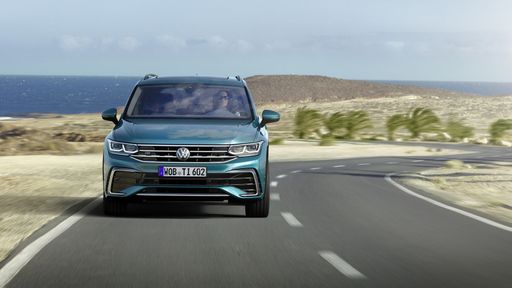
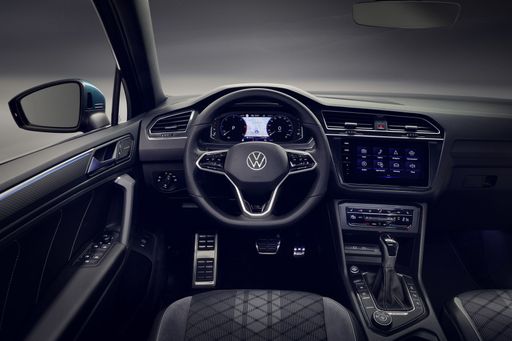
The VW Tiguan blends sensible family practicality with a dash of German polish, delivering a calm, reassuring ride and a cabin that never feels like an afterthought. For buyers who want an SUV that’s easy to live with yet still nicely dressed, the Tiguan is the grown‑up choice that keeps a cheeky wink in reserve.
details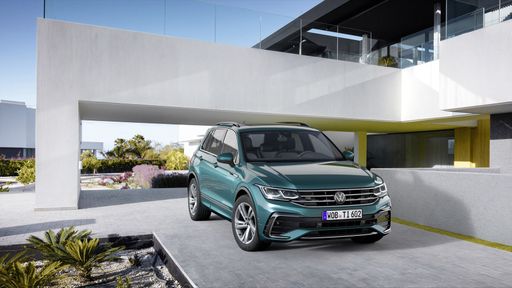
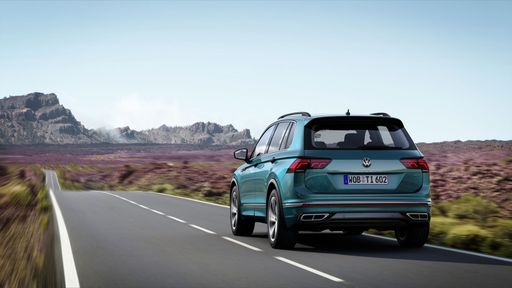
Audi e-tron GT
VW Tiguan
Costs and Consumption |
|
|---|---|
|
Price
93,300 - 137,600 £
|
Price
33,600 - 54,600 £
|
|
Consumption L/100km
-
|
Consumption L/100km
1.4 - 8.4 L/100km
|
|
Consumption kWh/100km
17.9 - 19 kWh/100km
|
Consumption kWh/100km
-
|
|
Electric Range
582 - 617 km
|
Electric Range
118 - 126 km
|
|
Battery Capacity
97 kWh
|
Battery Capacity
19.7 kWh
|
|
co2
0 g/km
|
co2
32 - 190 g/km
|
|
Fuel tank capacity
-
|
Fuel tank capacity
45 L
|
Dimensions and Body |
|
|---|---|
|
Body Type
Coupe
|
Body Type
SUV
|
|
Seats
4
|
Seats
5
|
|
Doors
4
|
Doors
5
|
|
Curb weight
2,355 - 2,395 kg
|
Curb weight
1,599 - 1,879 kg
|
|
Trunk capacity
350 - 405 L
|
Trunk capacity
490 - 652 L
|
|
Length
4,997 - 5,004 mm
|
Length
4,539 mm
|
|
Width
1,964 mm
|
Width
1,842 - 1,859 mm
|
|
Height
1,379 - 1,394 mm
|
Height
1,658 mm
|
|
Max trunk capacity
-
|
Max trunk capacity
1,486 L
|
|
Payload
455 - 485 kg
|
Payload
460 - 533 kg
|
Engine and Performance |
|
|---|---|
|
Engine Type
Electric
|
Engine Type
Petrol MHEV, Petrol, Diesel, Plugin Hybrid
|
|
Transmission
Automatic
|
Transmission
Automatic
|
|
Transmission Detail
Reduction Gearbox
|
Transmission Detail
Dual-Clutch Automatic
|
|
Drive Type
All-Wheel Drive
|
Drive Type
Front-Wheel Drive, All-Wheel Drive
|
|
Power HP
503 - 843 HP
|
Power HP
130 - 272 HP
|
|
Acceleration 0-100km/h
2.9 - 4.2 s
|
Acceleration 0-100km/h
5.9 - 10.6 s
|
|
Max Speed
245 - 250 km/h
|
Max Speed
210 - 215 km/h
|
|
Torque
625 - 1,027 Nm
|
Torque
220 - 400 Nm
|
|
Number of Cylinders
-
|
Number of Cylinders
4
|
|
Power kW
370 - 620 kW
|
Power kW
96 - 200 kW
|
|
Engine capacity
-
|
Engine capacity
1,498 - 1,984 cm3
|
General |
|
|---|---|
|
Model Year
2,024 - 2,025
|
Model Year
2,024 - 2,026
|
|
CO2 Efficiency Class
A
|
CO2 Efficiency Class
D, E, F, B, G
|
|
Brand
Audi
|
Brand
VW
|
DriveDuel uses data analysis and artificial intelligence to evaluate vehicle data and create content. Content is regularly reviewed and improved.
The displayed prices are estimates based on German list prices, adjusted to the respective country’s VAT. Country-specific registration taxes are not included. This information is not legally binding.