VS

Audi Q2 vs Mercedes GLC comparison

Compare performance (300 HP vs 680 HP), boot space and price (24,900 £ vs 50,300 £ ) at a glance. Find out which car is the better choice for you – Audi Q2 or Mercedes GLC?

Audi Q2 vs Mercedes GLC: Key differences

Audi Q2

4.7 (4 Reviews)
rate
  • clearly cheaper
  • considerably lighter

Mercedes GLC

4.4 (11 Reviews)
rate
  • significantly more power
  • substantially more efficient
  • significantly quicker 0–100 km/h
  • visibly more trunk space

All details on performance, efficiency, range and trunk space can be found in the technical comparison below – including user reviews for both models.

Q2

Audi Q2 vs Mercedes GLC: A Clash of Premium Compact SUVs

The battle in the compact SUV segment has heated up once again with the introduction of the 2024 Audi Q2 and the latest iteration of the Mercedes GLC. Both manufacturers have a reputation for blending luxury, technology, and performance in their offerings, but how do these two SUVs stack up against each other? Let's dive into their technical aspects and innovations to find out.
GLC

Design and Dimensions

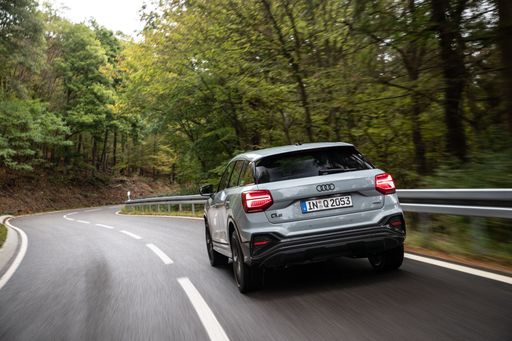
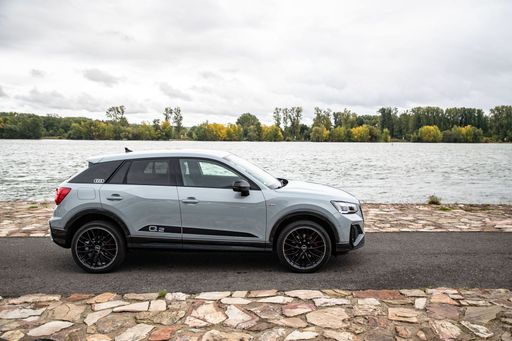
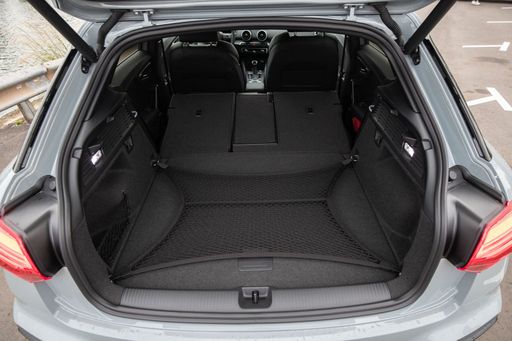
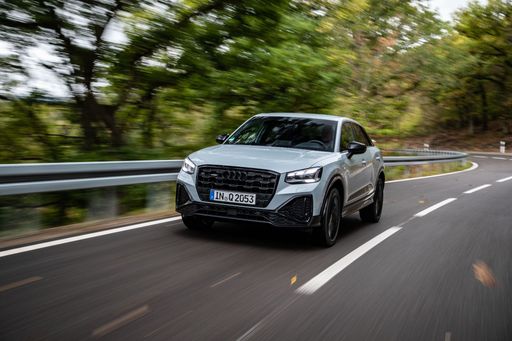
The Audi Q2 is a striking compact SUV with a length of 4,208 mm, a width of 1,794 mm, and a height of 1,508 mm. It strikes a sporty yet practical profile, which is ideal for urban settings. The Q2 has a trunk capacity of 405 liters which, while ample for its class, is modest compared to some competitors.

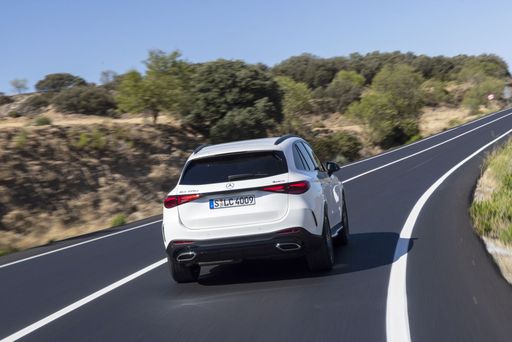
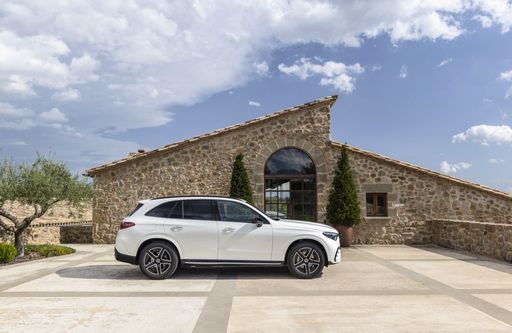
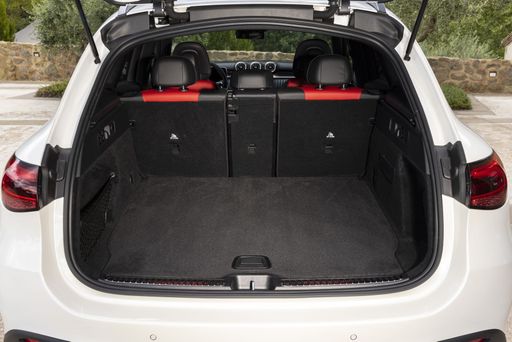
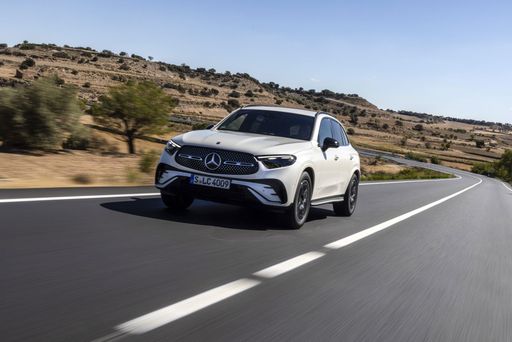
On the contrary, the Mercedes GLC stretches out more generously with lengths ranging from 4,716 mm to 4,792 mm, a width of 1,890 mm, and a height that varies from 1,603 mm to 1,647 mm. Its trunk capacity starts at 620 liters, offering significantly more storage space, suitable for longer journeys or those needing additional cargo space. The GLC presents a more robust stance, reflecting its luxurious underpinnings.

Q2

Performance and Powertrains

The Audi Q2 provides a choice between petrol and diesel engines, with power outputs ranging from 116 to 300 HP. It offers both front-wheel and all-wheel drive configurations, facilitating diverse driving preferences. Its engine lineup includes efficient options, delivering fuel consumption as low as 4.8 L/100km on diesel variants, making it an economical choice for urban commutes. The top-speed capabilities stretch from 197 km/h to 250 km/h, with acceleration to 100 km/h as quick as 4.9 seconds for high-performance models.

The Mercedes GLC, on the other hand, encompasses more opulent engine options like petrol and diesel mild hybrids, alongside plugin hybrids for those looking for an eco-conscious solution. Power ranges from 186 HP to a staggering 680 HP in the hybrid model. The GLC is exclusively all-wheel drive, enhancing stability across various terrains. With a top speed peaking at 275 km/h and acceleration from 0-100 km/h in just 3.5 seconds for the upper spectrum variants, the GLC promises a thrilling drive.

GLC

Technology and Innovations

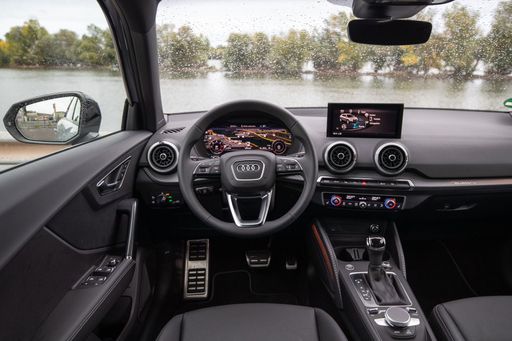
The Audi Q2 is outfitted with the latest infotainment offerings from the brand, focusing on user-friendly navigation and connectivity. It aims to strike a balance between functionality and intuitive usage, catering to tech-savvy drivers who prioritize integrated digital experiences.

Mercedes GLC steps further into the future with advanced MBUX (Mercedes-Benz User Experience) systems, bringing AI-powered interaction, augmented reality for navigation, and expansive voice recognition capabilities. Its plugin hybrid versions also offer significant electric-only range capabilities—up to 130 km—making it a formidable competitor in sustainable urban driving.

Q2

Conclusion

Pitting the Audi Q2 against the Mercedes GLC is more than a comparison of specifications; it’s a reflection of individual needs and lifestyle preferences. The Q2 is ideal for those seeking a nimble, stylish compact SUV with potent yet efficient powertrains. Meanwhile, the GLC is suited for drivers aspiring for a luxury experience with cutting-edge technology and an extensive range of powerful and eco-friendly hybrids. Ultimately, both vehicles deliver on the promise of German engineering excellence, making them worthy contenders in the compact SUV arena.

Here’s where it gets real: The technical differences in detail

Q2

Costs and Efficiency:

Price and efficiency are often the first things buyers look at. Here it becomes clear which model has the long-term edge – whether at the pump, the plug, or in purchase price.

Audi Q2 is clearly cheaper – starting at 24,900 £ , while the Mercedes GLC costs 50,300 £ . That’s a price difference of around 25,470 £.

Fuel consumption also shows a difference: the Mercedes GLC uses 1.6 L/100km and is substantially more efficient than the Audi Q2 with 4.8 L/100km. The difference is about 3.2 L/100km.

GLC

Engine and Performance:

Power, torque and acceleration are the classic benchmarks for car enthusiasts – and here, some clear differences start to show.

When it comes to engine power, the Mercedes GLC offers significantly more power – delivering 680 HP compared to 300 HP. That’s roughly 380 HP more horsepower.

When accelerating from 0 to 100 km/h, the Mercedes GLC is significantly quicker – completing the sprint in 3.5 s, while the Audi Q2 takes 4.9 s. That’s about 1.4 s quicker.

There’s also a difference in torque: the Mercedes GLC delivers significantly more torque with 1,020 Nm compared to 400 Nm. That’s about 620 Nm more.

Q2

Space and Everyday Use:

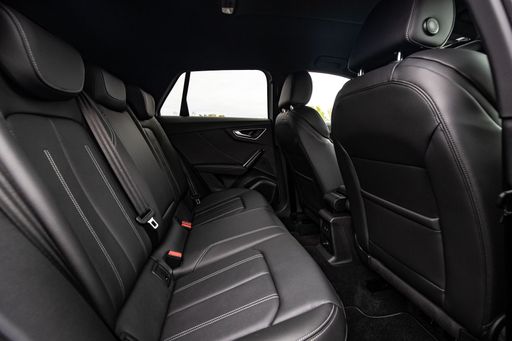
Beyond pure performance, interior space and usability matter most in daily life. This is where you see which car is more practical and versatile.

Both vehicles offer seating for 5 people.

In terms of curb weight, Audi Q2 is considerably lighter – 1,330 kg compared to 1,910 kg. The difference is around 580 kg.

Looking at boot space, the Mercedes GLC offers visibly more boot space – 620 L compared to 405 L. That’s a difference of about 215 L.

When it comes to payload, the Mercedes GLC carries slightly more – 600 kg compared to 510 kg. That’s a difference of about 90 kg.

Who wins the race in the data check?

The Mercedes GLC is decisively ahead in the objective data comparison.
This result only shows which model scores more points on paper – not which of the two cars feels right for you.

from £50,300
GLC

Mercedes GLC

  • Engine Type : Petrol MHEV, Plugin Hybrid, Diesel MHEV, Electric
  • Transmission : Automatic
  • Drive Type : All-Wheel Drive
  • Power HP : 186 - 680 HP
  • Consumption L/100km : 1.6 - 9.7 L/100km
  • Consumption kWh/100km : 14.9 - 16.6 kWh/100km
  • Electric Range : 12 - 714 km
Audi Q2
Mercedes GLC

Costs and Consumption

View detailed analysis

Engine and Performance

View detailed analysis

Dimensions and Body

View detailed analysis

Audi Q2

The Audi Q2 packs Audi’s premium attitude into a compact, cheeky package that turns city streets into a runway for tasteful design and clever practicality. It’s an easy car to live with thanks to an upscale cabin, composed manners and sprightly handling, and while it won’t satisfy someone chasing sports-car thrills, it’s a smart, stylish pick for buyers who want substance with a wink.

details

Mercedes GLC

The Mercedes GLC blends plush cabin comfort and composed road manners into an SUV that feels more grown-up than it looks. It won’t shout for attention, but will quietly please buyers who want refinement, usable space and a touch of luxury without the drama.

details
Audi Q2
Mercedes GLC

Costs and Consumption

Price
24,900 - 43,600 £
Price
50,300 - 126,600 £
Consumption L/100km
4.8 - 8.1 L/100km
Consumption L/100km
1.6 - 9.7 L/100km
Consumption kWh/100km
-
Consumption kWh/100km
14.9 - 16.6 kWh/100km
Electric Range
-
Electric Range
12 - 714 km
Battery Capacity
-
Battery Capacity
94 kWh
co2
127 - 183 g/km
co2
0 - 221 g/km
Fuel tank capacity
-
Fuel tank capacity
62 - 65 L

Dimensions and Body

Body Type
SUV
Body Type
SUV
Seats
5
Seats
5
Doors
-
Doors
5
Curb weight
1,330 - 1,610 kg
Curb weight
1,910 - 2,535 kg
Trunk capacity
355 - 405 L
Trunk capacity
390 - 620 L
Length
-
Length
4,716 - 4,845 mm
Width
1,794 - 1,802 mm
Width
1,890 - 1,913 mm
Height
-
Height
1,603 - 1,644 mm
Max trunk capacity
-
Max trunk capacity
1,490 - 1,740 L
Payload
450 - 510 kg
Payload
475 - 600 kg

Engine and Performance

Engine Type
Petrol, Diesel
Engine Type
Petrol MHEV, Plugin Hybrid, Diesel MHEV, Electric
Transmission
Manuel, Automatic
Transmission
Automatic
Transmission Detail
Manual Gearbox, Dual-Clutch Automatic
Transmission Detail
Automatic Gearbox, Reduction Gearbox
Drive Type
Front-Wheel Drive, All-Wheel Drive
Drive Type
All-Wheel Drive
Power HP
116 - 300 HP
Power HP
186 - 680 HP
Acceleration 0-100km/h
4.9 - 10.5 s
Acceleration 0-100km/h
3.5 - 9 s
Max Speed
-
Max Speed
210 - 275 km/h
Torque
200 - 400 Nm
Torque
320 - 1,020 Nm
Number of Cylinders
3 - 4
Number of Cylinders
4 - 6
Power kW
85 - 221 kW
Power kW
137 - 500 kW
Engine capacity
999 - 1,984 cm3
Engine capacity
1,991 - 2,989 cm3

General

Model Year
2,025
Model Year
2,025 - 2,026
CO2 Efficiency Class
D, F, E, G
CO2 Efficiency Class
F, G, D, B, E, A
Brand
Audi
Brand
Mercedes-Benz
DriveDuel uses data analysis and artificial intelligence to evaluate vehicle data and create content. Content is regularly reviewed and improved. The displayed prices are estimates based on German list prices, adjusted to the respective country’s VAT. Country-specific registration taxes are not included. This information is not legally binding.