@ Audi AG
@ SEAT S.A. / SEAT Media Center
VS

Audi Q3 vs SEAT Arona – Differences & prices compared

Both models have their strengths – but which one suits you more?
Compare performance, efficiency, price and space directly: Audi Q3 or SEAT Arona?

Audi Q3

5 (1 Reviews)
rate

SEAT Arona

4.9 (1 Reviews)
rate
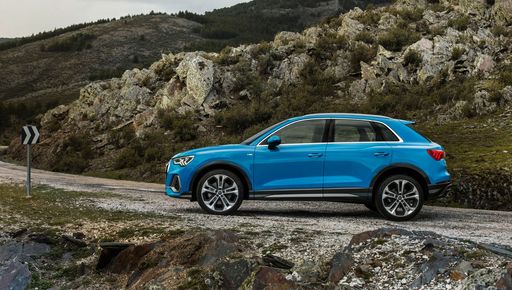
Q3 @ Audi AG

Comparing the Compact Dynamos: Audi Q3 vs. SEAT Arona

The growing popularity of compact SUVs has led to fierce competition in the market, with manufacturers striving to deliver superior design, performance, and innovations. Here, we take a closer look at two remarkable contenders: the Audi Q3 and the SEAT Arona. Both vehicles showcase exceptional engineering, yet they cater to distinct audiences. Let's dive into a head-to-head comparison of their technical specifications and innovative features.
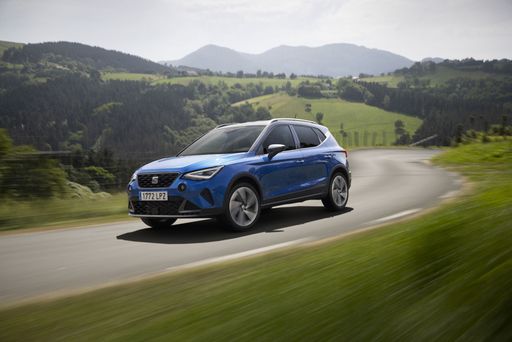
Arona @ SEAT S.A. / SEAT Media Center

Design and Dimensions

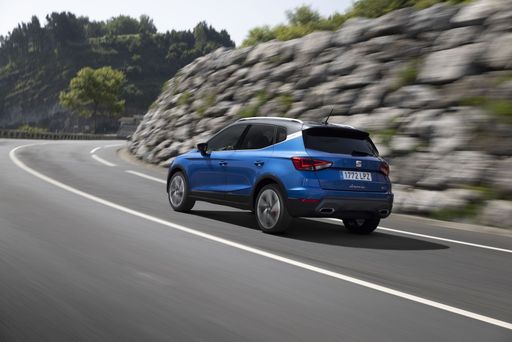
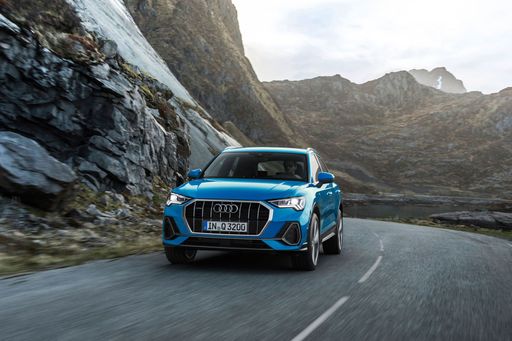
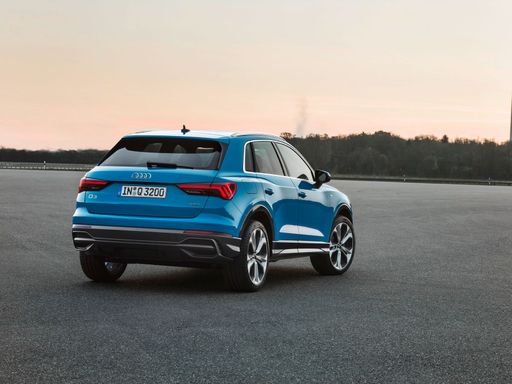
Starting with design, both the Audi Q3 and SEAT Arona present attractive SUV profiles, yet align with their brand philosophies. The Q3 exudes a premium aura, characterized by its bold Singleframe grille and sleek LED lighting. The dimensions reveal that the Q3 is larger, measuring 4484 mm in length, 1849 mm in width, and 1585 mm in height. In contrast, the Arona, being more compact, measures 4153 mm in length, 1780 mm in width, and 1537 mm in height. This makes the Arona easier to maneuver in urban environments.

Q3 @ Audi AG

Powertrains and Performance

When looking under the hood, both models offer diverse engine options. The Audi Q3 has a broader selection with petrol and diesel engines providing power outputs ranging from 150 to 245 HP. It presents impressive accelerations, with the fastest variant achieving 0-100 km/h in just 5.8 seconds. On the other hand, the SEAT Arona features a lineup of petrol engines, reaching 150 HP at its peak, and achieving a respectful acceleration of 0-100 km/h as quick as 8.4 seconds.

Fuel efficiency also varies, with the Q3 showing consumption figures from 5.5 to 8.5 L/100 km, while the Arona stands out as a more economical choice with higher efficiency, averaging between 5.4 to 5.6 L/100 km. This efficiency, coupled with a smaller fuel tank capacity of 40 liters versus the Q3’s 58-60 liters, makes the Arona appealing for cost-conscious consumers.

Arona @ SEAT S.A. / SEAT Media Center

Driving Dynamics: Handling and Comfort

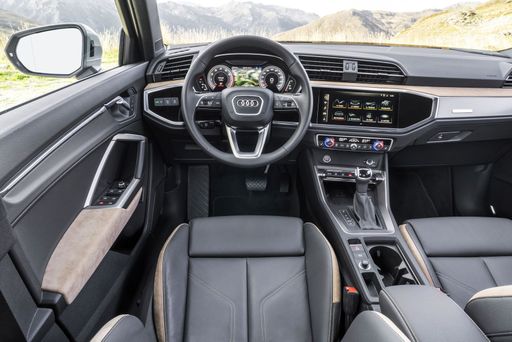
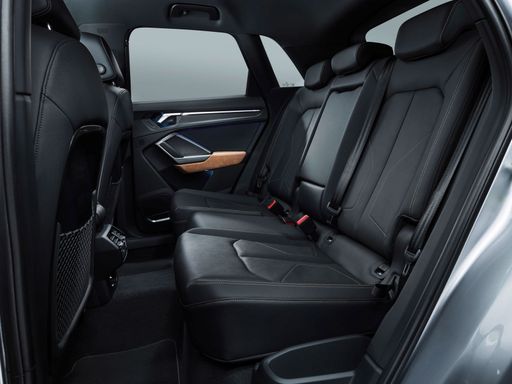
Both vehicles support a front-wheel-drive layout, but the Q3 also offers all-wheel-drive for those seeking enhanced traction in diverse driving conditions. Audi’s Quattro system is renowned for optimizing performance, especially on slippery surfaces. In terms of budng comfort, the Q3 continues to uphold its reputation for luxury, featuring high-quality materials and a spacious interior that includes an impressive trunk capacity of 530 liters, compared to the Arona's 400 liters.

Q3 @ Audi AG

Technological Innovations

Technology is a significant differentiator. The Audi Q3 comes equipped with a cutting-edge MMI infotainment system, featuring a large touchscreen and integrated navigation, apple CarPlay, and Android Auto compatibility. Audi has also integrated numerous driver assistance systems that enhance safety and driving experience.

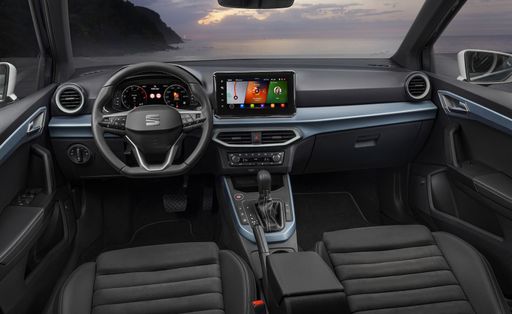
The SEAT Arona, although less sophisticated, does not shy away from offering modern tech. With a user-friendly infotainment system and essential connectivity features, it offers a great experience for the tech-savvy driver without overwhelming complexity. It also includes essential safety technologies, ensuring a secure drive.

Arona @ SEAT S.A. / SEAT Media Center

Conclusion: Tailoring Choices to Consumer Needs

In conclusion, both the Audi Q3 and SEAT Arona represent excellent choices within the compact SUV segment, tailored to different preferences and budgets. The Q3 stands out for those seeking performance, advanced technology, and a luxurious driving experience, while the Arona appeals to buyers looking for practicality, efficiency, and a compact footprint perfect for urban driving. Ultimately, the choice between the two will come down to individual needs and priorities, making both vehicles noteworthy contenders in the competitive SUV market.

Here’s where it gets real: The technical differences in detail

Q3 @ Audi AG

Costs and Efficiency:

Price and efficiency are often the first things buyers look at. Here it becomes clear which model has the long-term edge – whether at the pump, the plug, or in purchase price.

SEAT Arona has a clearly advantage in terms of price – it starts at 19300 £, while the Audi Q3 costs 38200 £. That’s a price difference of around 18926 £.

Fuel consumption also shows a difference: Audi Q3 manages with 1.70 L and is therefore significantly more efficient than the SEAT Arona with 5.40 L. The difference is about 3.70 L per 100 km.

Arona @ SEAT S.A. / SEAT Media Center

Engine and Performance:

Power, torque and acceleration are the classic benchmarks for car enthusiasts – and here, some clear differences start to show.

When it comes to engine power, the Audi Q3 has a clearly edge – offering 272 HP compared to 150 HP. That’s roughly 122 HP more horsepower.

In acceleration from 0 to 100 km/h, the Audi Q3 is clearly quicker – completing the sprint in 5.70 s, while the SEAT Arona takes 8.40 s. That’s about 2.70 s faster.

In terms of top speed, the Audi Q3 performs a bit better – reaching 240 km/h, while the SEAT Arona tops out at 210 km/h. The difference is around 30 km/h.

There’s also a difference in torque: Audi Q3 pulls noticeable stronger with 400 Nm compared to 250 Nm. That’s about 150 Nm difference.

Q3 @ Audi AG

Space and Everyday Use:

Cabin size, boot volume and payload all play a role in everyday practicality. Here, comfort and flexibility make the difference.

Both vehicles offer seating for 5 people.

In curb weight, SEAT Arona is noticeable lighter – 1188 kg compared to 1635 kg. The difference is around 447 kg.

In terms of boot space, the Audi Q3 offers a bit more room – 488 L compared to 400 L. That’s a difference of about 88 L.

In maximum load capacity, the Audi Q3 performs slight better – up to 1386 L, which is about 106 L more than the SEAT Arona.

When it comes to payload, Audi Q3 slight takes the win – 535 kg compared to 522 kg. That’s a difference of about 13 kg.

Who wins the race?

The Audi Q3 proves to be leaves the rival little chance and therefore becomes our DriveDuel Champion!
Audi Q3 is the better all-rounder in this comparison.

Audi Q3
SEAT Arona

Costs and Consumption

View detailed analysis

Engine and Performance

View detailed analysis

Dimensions and Body

View detailed analysis
from about £38,200
Q3 @ Audi AG

Audi Q3

  • Engine Type : Petrol MHEV, Petrol, Plugin Hybrid, Diesel
  • Transmission : Automatic
  • Drive Type : Front-Wheel Drive, All-Wheel Drive
  • Power HP : 150 - 272 HP
  • Consumption L/100km : 1.7 - 8.6 L
  • Electric Range : 118 - 119 km

Audi Q3

5 (1 Reviews)
rate

The Audi Q3 feels like a grown-up compact SUV with premium polish and city-friendly agility, the sort of car that makes weekend escapes and daily commutes equally satisfying. Inside, you get quality materials and smart packaging that keep things practical without skimping on style, so it’s an easy pick for buyers who want luxury without the drama.

details

SEAT Arona

4.9 (1 Reviews)
rate

The SEAT Arona is a cheeky urban crossover that mixes sharp styling with sensible practicality, making it an appealing choice for buyers who want personality without fuss. It’s zippy in traffic, comfortable enough for daily driving, and brings enough character to make routine journeys feel a little more fun.

details
Audi Q3
SEAT Arona
Q3 @ Audi AG
Arona @ SEAT S.A. / SEAT Media Center

Costs and Consumption

Price
38200 - 52900 £
Price
19300 - 29300 £
Consumption L/100km
1.7 - 8.6 L
Consumption L/100km
5.4 - 5.6 L
Consumption kWh/100km
-
Consumption kWh/100km
-
Electric Range
118 - 119 km
Electric Range
-
Battery Capacity
19.70 kWh
Battery Capacity
-
co2
39 - 195 g/km
co2
122 - 128 g/km
Fuel tank capacity
45 - 60 L
Fuel tank capacity
40 L

Dimensions and Body

Body Type
SUV
Body Type
SUV
Seats
5
Seats
5
Doors
5
Doors
5
Curb weight
1635 - 1900 kg
Curb weight
1188 - 1268 kg
Trunk capacity
375 - 488 L
Trunk capacity
400 L
Length
4531 mm
Length
4153 mm
Width
1859 mm
Width
1780 mm
Height
1559 - 1601 mm
Height
1537 mm
Max trunk capacity
1196 - 1386 L
Max trunk capacity
1280 L
Payload
505 - 535 kg
Payload
502 - 522 kg

Engine and Performance

Engine Type
Petrol MHEV, Petrol, Plugin Hybrid, Diesel
Engine Type
Petrol
Transmission
Automatic
Transmission
Manuel, Automatic
Transmission Detail
Dual-Clutch Automatic
Transmission Detail
Manual Gearbox, Dual-Clutch Automatic
Drive Type
Front-Wheel Drive, All-Wheel Drive
Drive Type
Front-Wheel Drive
Power HP
150 - 272 HP
Power HP
95 - 150 HP
Acceleration 0-100km/h
5.7 - 9.2 s
Acceleration 0-100km/h
8.4 - 11.3 s
Max Speed
208 - 240 km/h
Max Speed
182 - 210 km/h
Torque
250 - 400 Nm
Torque
175 - 250 Nm
Number of Cylinders
4
Number of Cylinders
3 - 4
Power kW
110 - 200 kW
Power kW
70 - 110 kW
Engine capacity
1498 - 1984 cm3
Engine capacity
999 - 1498 cm3

General

Model Year
2025
Model Year
2025
CO2 Efficiency Class
E, G, B
CO2 Efficiency Class
D
Brand
Audi
Brand
SEAT
Is the Audi Q3 offered with different drivetrains?

The Audi Q3 is available as Front-Wheel Drive or All-Wheel Drive.

The prices and data displayed are estimates based on German list prices and may vary by country. This information is not legally binding.

do not click