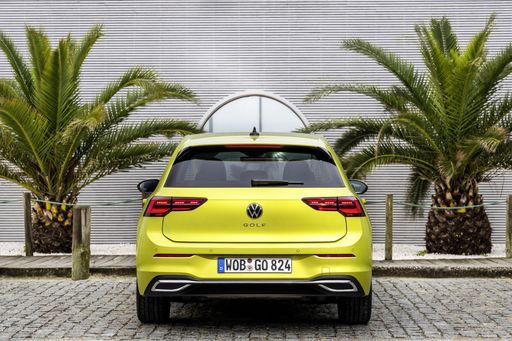
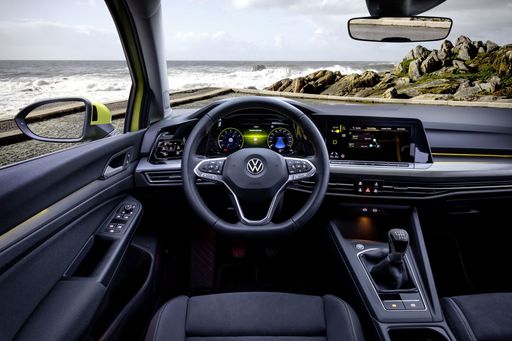
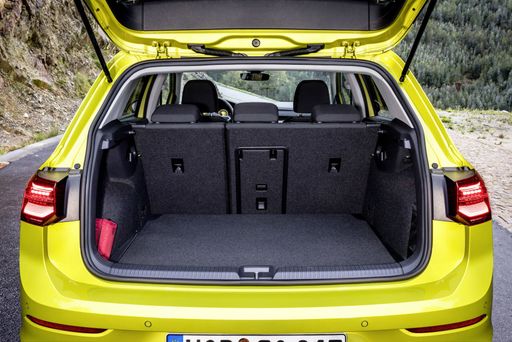
VS

Audi Q4 e-tron vs VW Golf comparison

Compare performance (340 HP vs 333 HP), boot space and price (39,600 £ vs 25,200 £ ) at a glance. Find out which car is the better choice for you – Audi Q4 e-tron or VW Golf?

Audi Q4 e-tron vs VW Golf: Key differences

Audi Q4 e-tron

4.9 (2 Reviews)
rate
  • barely more power
  • considerably more electric range
  • clearly more trunk space

VW Golf

4.6 (1 Reviews)
rate
  • clearly cheaper
  • somewhat quicker 0–100 km/h
  • substantially lighter
Q4 e-tron

Electric Futurism Meets Traditional Versatility: Audi Q4 e-tron vs. VW Golf

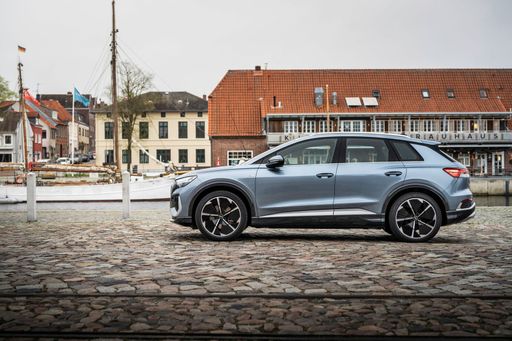
The automotive world is undergoing a seismic shift as electric vehicles continue to gain prominence. In this edition, we venture into the realms of innovation and heritage by comparing the Audi Q4 e-tron and the VW Golf. Although they share Volkswagen Group’s lineage, these two models showcase vastly different approaches to modern motoring.
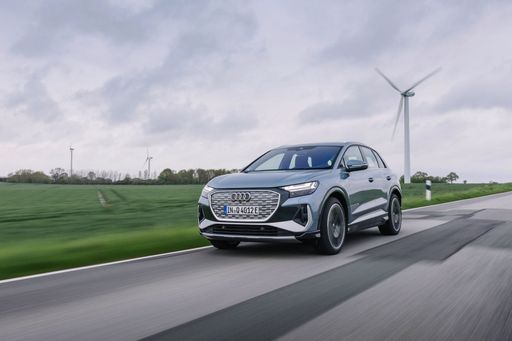
Golf

Powertrain and Performance

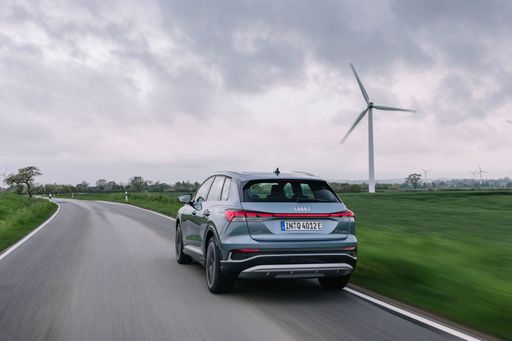
The Audi Q4 e-tron is a pure electric SUV, available in rear-wheel or all-wheel drive configurations, generating between 170 to 340 horsepower. Acceleration is brisk, with the fastest model reaching 0-100 km/h in just 5.4 seconds. The Q4 e-tron offers various battery options, positioning it as a compelling choice for the eco-conscious driver, with zero CO2 emissions and a top range of up to 554 km.

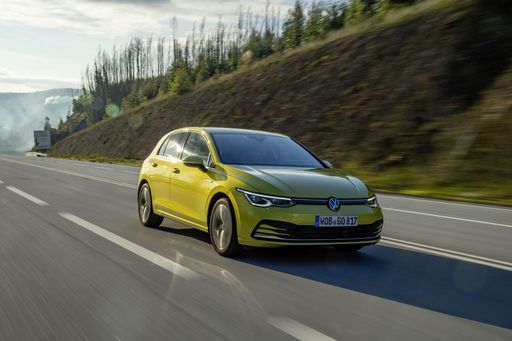
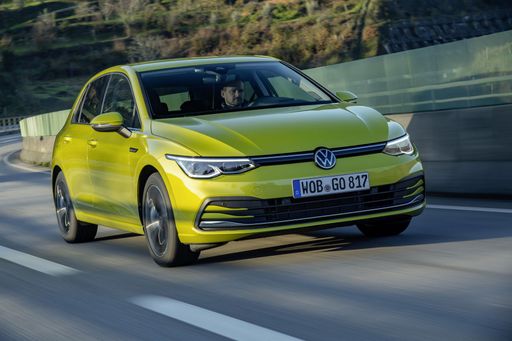
In contrast, the VW Golf maintains a more traditional lineup with petrol, diesel, and plug-in hybrid options. Its most powerful variants reach up to 333 horsepower with 0-100 km/h acceleration in 4.6 seconds. Although it offers a much shorter electric range in its hybrid guises—up to 143 km—the Golf compensates with diverse fuel types catering to varying consumer needs.

Q4 e-tron

Dimensions and Practicality

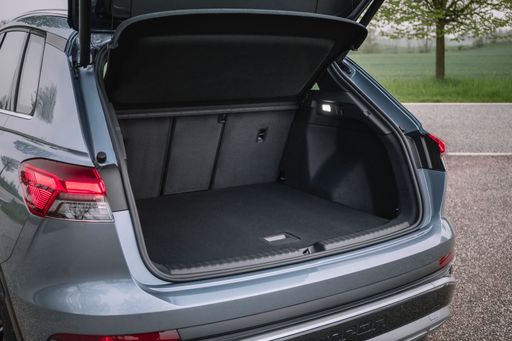
The Audi Q4 e-tron is an imposing figure by hatchback standards, measuring 4588 mm in length, 1865 mm in width, and standing 1632 mm tall, emphasizing its SUV capabilities. It comes with a capacious trunk capacity of 535 liters, suitable for family adventures or long road trips.

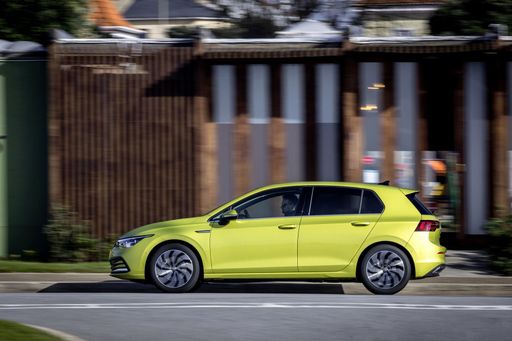
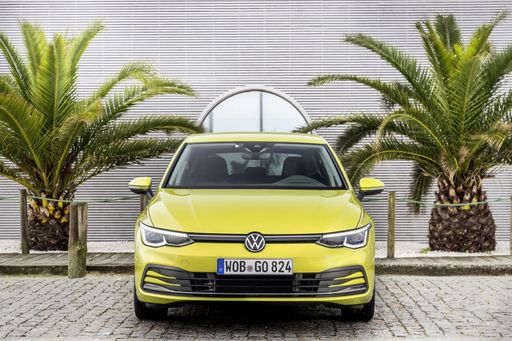
The VW Golf, meanwhile, retains its classic hatchback form at 4292 mm in length, 1789 mm in width, and height varying around 1478 mm. With a trunk capacity of 381 liters, it provides ample space for urban commuters and smaller families.

Golf

Technological Advancements

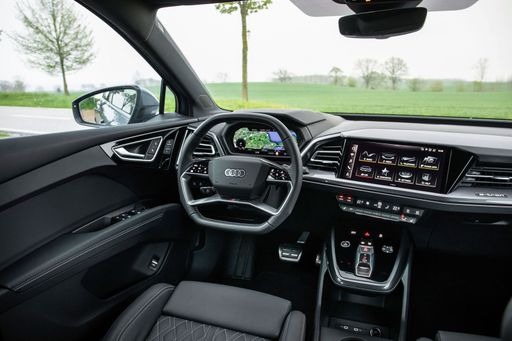
Audi’s Q4 e-tron is packed with high-tech features, from its virtual cockpit to an advanced MMI navigation system, which complements its futuristic electric drivetrain. The model exemplifies Audi's commitment to an intelligent and sustainable driving experience.

The VW Golf, while maintaining its hallmark of reliability, has embraced the modern era with options for a digital cockpit and driver-assist features like adaptive cruise control and lane-keeping assist. This makes the Golf a technologically savvy choice for those not ready to transition fully to electric.

Q4 e-tron

Environmental and Economic Impact

The Audi Q4 e-tron, with its electric engine, proudly boasts a zero emissions footprint while providing competitive range and performance—an essential consideration for those keen on reducing their carbon footprint.

The VW Golf, equipped in its non-hybrid forms, produces CO2 emissions between 113 to 192 g/km, which places it within varied environmental efficiency classes. For drivers seeking traditional petrol or diesel engines with improved environmental credentials, the cleaner hybrid versions offer a sensible compromise.

Golf

Conclusion

Choosing between the Audi Q4 e-tron and the VW Golf boils down to lifestyle preferences and readiness to transition towards an electric future. The Q4 e-tron offers an avant-garde experience for those prepared to embrace eco-friendly motoring fully. In contrast, the Golf provides a multi-faceted approach that balances classic driving pleasures with modern technological conveniences. Both models stand as a testament to the diverse innovation within the Volkswagen Group's arsenal, catering to a broad spectrum of automotive desires.

Here’s where it gets real: The technical differences in detail

Q4 e-tron

Costs and Efficiency:

Price and efficiency are often the first things buyers look at. Here it becomes clear which model has the long-term edge – whether at the pump, the plug, or in purchase price.

VW Golf is clearly cheaper – starting at 25,200 £ , while the Audi Q4 e-tron costs 39,600 £ . That’s a price difference of around 14,362 £.

As for electric range, the Audi Q4 e-tron offers considerably more range – reaching up to 554 km, about 411 km more than the VW Golf.

Golf

Engine and Performance:

Power, torque and acceleration say a lot about how a car feels on the road. This is where you see which model delivers more driving dynamics.

When it comes to engine power, the Audi Q4 e-tron offers barely more power – delivering 340 HP compared to 333 HP. That’s roughly 7 HP more horsepower.

When accelerating from 0 to 100 km/h, the VW Golf is somewhat quicker – completing the sprint in 4.6 s, while the Audi Q4 e-tron takes 5.4 s. That’s about 0.8 s quicker.

Looking at top speed, the VW Golf is clearly faster – reaching 270 km/h, while the Audi Q4 e-tron tops out at 180 km/h. The difference is around 90 km/h.

There’s also a difference in torque: the Audi Q4 e-tron delivers visibly more torque with 679 Nm compared to 420 Nm. That’s about 259 Nm more.

Q4 e-tron

Space and Everyday Use:

Whether family car or daily driver – which one offers more room, flexibility and comfort?

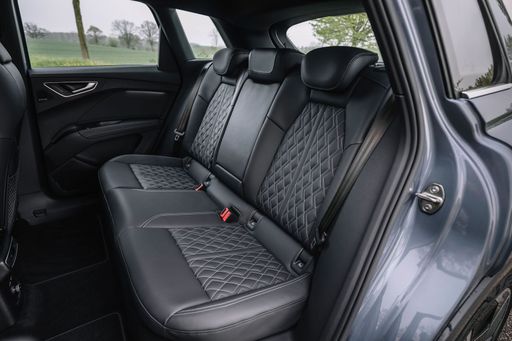
Both vehicles offer seating for 5 people.

In terms of curb weight, VW Golf is substantially lighter – 1,307 kg compared to 2,035 kg. The difference is around 728 kg.

Looking at boot space, the Audi Q4 e-tron offers clearly more boot space – 535 L compared to 381 L. That’s a difference of about 154 L.

For maximum load capacity, the Audi Q4 e-tron offers slightly more capacity – up to 1,490 L, about 253 L more than the VW Golf.

When it comes to payload, the Audi Q4 e-tron carries only slightly more – 515 kg compared to 508 kg. That’s a difference of about 7 kg.

Who wins the race in the data check?

The Audi Q4 e-tron stands well ahead of its rival in the objective data comparison.
This result only shows which model scores more points on paper – not which of the two cars feels right for you.

from £39,600
Q4 e-tron

Audi Q4 e-tron

  • Engine Type : Electric
  • Transmission : Automatic
  • Drive Type : Rear-Wheel Drive, All-Wheel Drive
  • Power HP : 204 - 340 HP
  • Consumption kWh/100km : 15.9 - 17.4 kWh/100km
  • Electric Range : 406 - 554 km
Audi Q4 e-tron
VW Golf

Costs and Consumption

View detailed analysis

Engine and Performance

View detailed analysis

Dimensions and Body

View detailed analysis

Audi Q4 e-tron

The Audi Q4 e-tron brings Audi polish into the electric crossover scene, pairing a sleek exterior with a refined, airy interior that makes everyday driving feel distinctly premium. It’s an easy-to-live-with EV that balances comfort and real-world usability with intuitive tech, making it a smart choice for buyers who want electric mobility without giving up Audi character — and yes, it still looks good in the driveway.

details

VW Golf

The VW Golf remains the everyman’s favourite — cleverly balanced, composed and just posh enough to feel grown-up without pretending to be something it’s not. It slips through town and eats up longer trips with a refined cabin, practical layout and a kindly, capable character that turns everyday driving into something a little bit special.

details
Audi Q4 e-tron
VW Golf

Costs and Consumption

Price
39,600 - 58,800 £
Price
25,200 - 47,600 £
Consumption L/100km
-
Consumption L/100km
1.1 - 8.1 L/100km
Consumption kWh/100km
15.9 - 17.4 kWh/100km
Consumption kWh/100km
-
Electric Range
406 - 554 km
Electric Range
131 - 143 km
Battery Capacity
77 kWh
Battery Capacity
19.7 kWh
co2
0 g/km
co2
25 - 184 g/km
Fuel tank capacity
-
Fuel tank capacity
40 - 55 L

Dimensions and Body

Body Type
SUV
Body Type
Hatchback
Seats
5
Seats
5
Doors
5
Doors
5
Curb weight
2,035 - 2,235 kg
Curb weight
1,307 - 1,662 kg
Trunk capacity
520 - 535 L
Trunk capacity
273 - 381 L
Length
4,588 mm
Length
4,282 - 4,296 mm
Width
1,865 mm
Width
1,789 mm
Height
1,614 - 1,632 mm
Height
1,454 - 1,483 mm
Max trunk capacity
1,460 - 1,490 L
Max trunk capacity
1,129 - 1,237 L
Payload
505 - 515 kg
Payload
438 - 508 kg

Engine and Performance

Engine Type
Electric
Engine Type
Petrol MHEV, Petrol, Diesel, Plugin Hybrid
Transmission
Automatic
Transmission
Automatic, Manuel
Transmission Detail
Reduction Gearbox
Transmission Detail
Dual-Clutch Automatic, Manual Gearbox
Drive Type
Rear-Wheel Drive, All-Wheel Drive
Drive Type
Front-Wheel Drive, All-Wheel Drive
Power HP
204 - 340 HP
Power HP
116 - 333 HP
Acceleration 0-100km/h
5.4 - 8.1 s
Acceleration 0-100km/h
4.6 - 10.2 s
Max Speed
180 km/h
Max Speed
203 - 270 km/h
Torque
310 - 679 Nm
Torque
220 - 420 Nm
Number of Cylinders
-
Number of Cylinders
4
Power kW
150 - 250 kW
Power kW
85 - 245 kW
Engine capacity
-
Engine capacity
1,498 - 1,984 cm3

General

Model Year
2,023 - 2,025
Model Year
2,024 - 2,025
CO2 Efficiency Class
A
CO2 Efficiency Class
D, F, G, C, B
Brand
Audi
Brand
VW
DriveDuel uses data analysis and artificial intelligence to evaluate vehicle data and create content. Content is regularly reviewed and improved. The displayed prices are estimates based on German list prices, adjusted to the respective country’s VAT. Country-specific registration taxes are not included. This information is not legally binding.