@ Audi AG
@ Volvo Cars
VS

Audi Q7 vs Volvo XC90 – Which model is better for everyday use?

Two cars, one duel: Audi Q7 meets Volvo XC90.
Which one wins in performance, efficiency and value for money? Find out now!

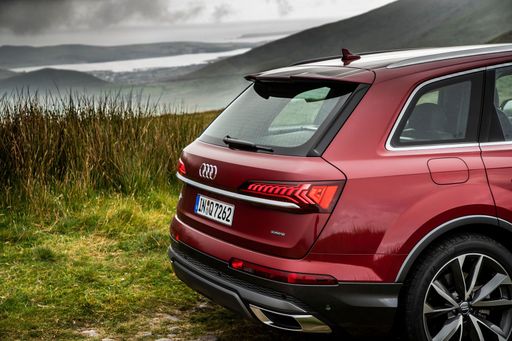
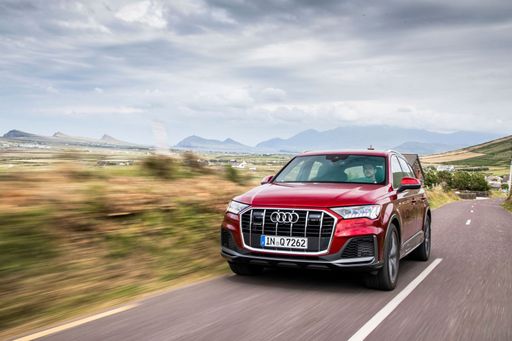
Q7 @ Audi AG

Showdown of Titans: Audi Q7 vs. Volvo XC90

In the world of luxury SUVs, the Audi Q7 and Volvo XC90 are often seen at the forefront, each offering a blend of sophistication, safety, performance, and technological innovation. Both models have seen updates in their 2024 versions, strengthening their acclaims in the market. Let’s dive into a detailed comparison of these automotive marvels.
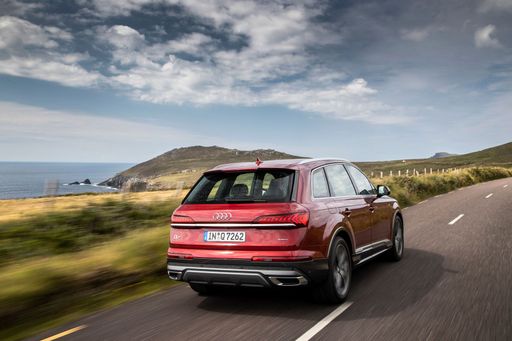
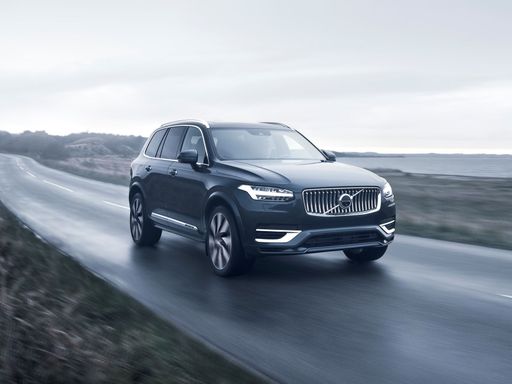
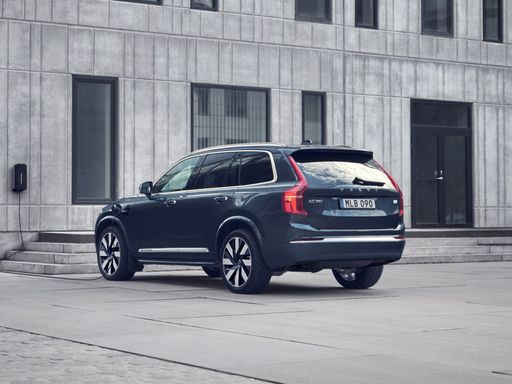
XC90 @ Volvo Cars

Power and Performance

The Audi Q7 offers an array of powertrains, including Diesel MHEV, Plug-in Hybrid, Petrol MHEV, and Petrol options. The horsepower varies from 231 to a robust 507 HP, with a top speed stretching up to 250 km/h. The Q7 boasts an impressive acceleration, with its most powerful engine reaching from 0-100 km/h in just 4.1 seconds. Its all-wheel-drive mechanism ensures a stable and responsive driving experience.

On the other hand, the Volvo XC90, available in Petrol MHEV and Plug-in Hybrid variants, offers a maximum of 455 HP and a top speed of 180 km/h. It reaches 0-100 km/h in 5.4 seconds, showcasing its prowess despite a more conservative top speed. This prioritizes efficient, sustainable performance while maintaining a commendable level of power.

Q7 @ Audi AG

Efficiency and Eco-Friendliness

Both SUVs present a commitment to efficiency, but the approach differs. The Audi Q7's consumption spans from 1.2 L/100 km in its hybrid variant to 12 L/100 km in the petrol version, promising versatility. Beyond that, its plug-in hybrid model flaunts an electric range of up to 84 km with a 22 kWh battery, highlighting Audi's advance into sustainable luxury.

Volvo's XC90 offers an efficient 1.2 L/100 km consumption in its hybrid form, with an electric range of 71 km supported by a 14.7 kWh battery. The brand’s dedication to reducing its carbon footprint is emphasized with a CO2 efficiency class of B, similar to Audi's efforts with equivalent classifications.

XC90 @ Volvo Cars

Design and Dimensions

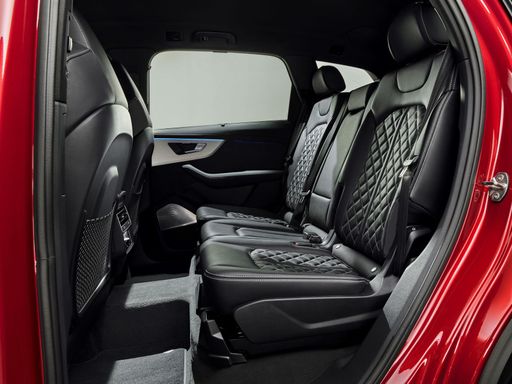
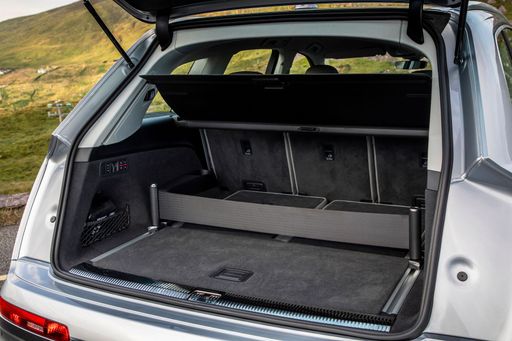
The Audi Q7 is designed with precision, measuring 5072 mm in length, 1970 mm in width, and a height between 1703 to 1735 mm, depending on the variant. The interior is spacious, allowing for configurations between 5 and 7 seats, making it versatile for families or those needing additional cargo space—amplified by a maximum trunk capacity of 887 liters.

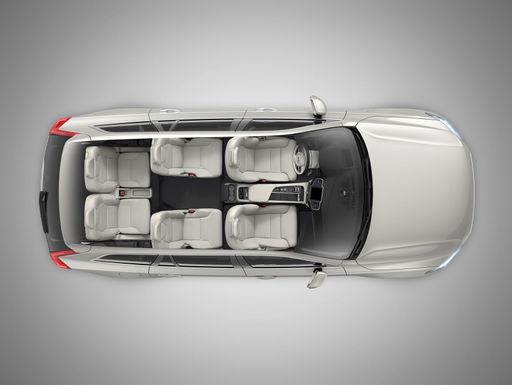
Conversely, the Volvo XC90 brings the Scandinavian design ethos to the fore. At 4953 mm long, 1923 mm wide, and 1771 mm high, it provides grandeur without excess. It comfortably seats 7, with trunk space adaptable up to 302 liters, catering primarily to passengers with a smaller focus on luggage.

Q7 @ Audi AG

Technology and Safety Innovations

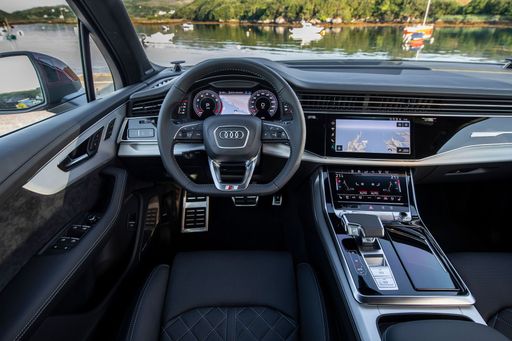
Both models are suffused with cutting-edge technology, ensuring safety and convenience. The Audi Q7 features advanced driver-assist systems, integrated into a digitalized cockpit offering a seamless user experience with its MMI touch response displays.

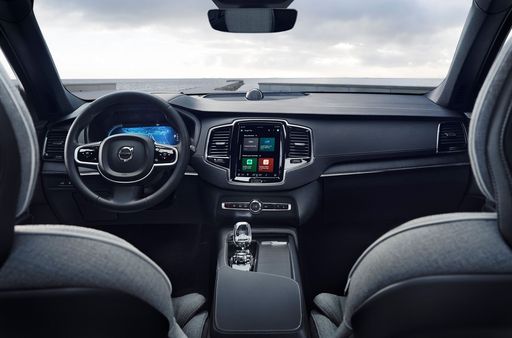
Volvo, synonymous with safety, imbues the XC90 with state-of-the-art safety features, including collision avoidance technology and Pilot Assist semi-autonomous driving. The infotainment system is efficiently organized for ease of use, reflecting the clean, functional Volvo design.

XC90 @ Volvo Cars

Conclusion

In the ultimate analysis, the choice between the Audi Q7 and Volvo XC90 depends on individual preferences. The Q7 dazzles with its expansive engine line-up and impressive performance metrics, appealing to those who prioritize power and space. Meanwhile, the XC90, with its emphasis on eco-friendly driving and top-tier safety features, caters to those who value sustainability and security. Both contenders uphold their brand values, promising an unparalleled luxury driving experience, ensuring either choice is a step towards exhilaration and comfort.

Here’s where it gets real: The technical differences in detail

Q7 @ Audi AG

Costs and Efficiency:

Price and efficiency are key factors when choosing a car – and this is often where the real differences emerge.

Audi Q7 has a barely noticeable advantage in terms of price – it starts at 69300 £, while the Volvo XC90 costs 69800 £. That’s a price difference of around 420 £.

Fuel consumption also shows a difference: Audi Q7 manages with 1.20 L and is therefore clearly more efficient than the Volvo XC90 with 3.50 L. The difference is about 2.30 L per 100 km.

As for range, the Audi Q7 performs somewhat better – achieving up to 84 km, about 13 km more than the Volvo XC90.

XC90 @ Volvo Cars

Engine and Performance:

Power, torque and acceleration say a lot about how a car feels on the road. This is where you see which model delivers more driving dynamics.

When it comes to engine power, the Audi Q7 has a slightly edge – offering 507 HP compared to 455 HP. That’s roughly 52 HP more horsepower.

In acceleration from 0 to 100 km/h, the Audi Q7 is evident quicker – completing the sprint in 4.10 s, while the Volvo XC90 takes 5.40 s. That’s about 1.30 s faster.

In terms of top speed, the Audi Q7 performs evident better – reaching 250 km/h, while the Volvo XC90 tops out at 180 km/h. The difference is around 70 km/h.

There’s also a difference in torque: Audi Q7 pulls hardly perceptible stronger with 770 Nm compared to 709 Nm. That’s about 61 Nm difference.

Q7 @ Audi AG

Space and Everyday Use:

Cabin size, boot volume and payload all play a role in everyday practicality. Here, comfort and flexibility make the difference.

Both vehicles offer seating for 7 people.

In curb weight, Audi Q7 is minimal lighter – 2055 kg compared to 2080 kg. The difference is around 25 kg.

In terms of boot space, the Audi Q7 offers clearly more room – 887 L compared to 302 L. That’s a difference of about 585 L.

In maximum load capacity, the Audi Q7 performs slightly better – up to 2255 L, which is about 399 L more than the Volvo XC90.

When it comes to payload, Audi Q7 to a small extent takes the win – 885 kg compared to 710 kg. That’s a difference of about 175 kg.

Who wins the race?

The Audi Q7 proves to be dominates this comparison and therefore becomes our DriveDuel Champion!
Audi Q7 is the better all-rounder in this comparison.

from about £69,300
Q7 @ Audi AG

Audi Q7

  • Engine Type : Petrol MHEV, Plugin Hybrid, Diesel MHEV, Petrol
  • Transmission : Automatic
  • Drive Type : All-Wheel Drive
  • Power HP : 231 - 507 HP
  • Consumption L/100km : 1.2 - 11.9 L
  • Electric Range : 83 - 84 km

Audi Q7

The Audi Q7 cuts an imposing figure on the road, balancing restrained luxury with a spacious, tech-rich cabin that makes long journeys feel effortless. It rides with confident composure and polished manners, so if you want a premium family SUV that feels grown-up and worth the badge, the Q7 is a persuasive choice — even the in-laws will be impressed.

details

Volvo XC90

5 (1)
rate

The Volvo XC90 is a serene Scandinavian SUV that mixes minimalist luxury with a composed, confidence-inspiring presence — ideal for buyers who want family practicality without sacrificing style. Inside it serves up a calm, well-crafted cabin and user-friendly tech that keeps long journeys pleasant and tantrums to a minimum, making the XC90 a smart, stylish pick for sensible drivers.

details
Audi Q7
Volvo XC90
Q7 @ Audi AG
XC90 @ Volvo Cars

Costs and Consumption

Price
69300 - 99000 £
Price
69800 - 84600 £
Consumption L/100km
1.2 - 11.9 L
Consumption L/100km
3.5 - 8.5 L
Consumption kWh/100km
-
Consumption kWh/100km
-
Electric Range
83 - 84 km
Electric Range
71 km
Battery Capacity
22 kWh
Battery Capacity
14.70 kWh
co2
28 - 271 g/km
co2
79 - 191 g/km
Fuel tank capacity
75 - 85 L
Fuel tank capacity
71 L

Dimensions and Body

Body Type
SUV
Body Type
SUV
Seats
5 - 7
Seats
7
Doors
5
Doors
5
Curb weight
2055 - 2460 kg
Curb weight
2080 - 2297 kg
Trunk capacity
563 - 887 L
Trunk capacity
262 - 302 L
Length
5072 mm
Length
4953 mm
Width
1970 mm
Width
1923 mm
Height
1703 - 1735 mm
Height
1771 mm
Max trunk capacity
1863 - 2255 L
Max trunk capacity
1816 - 1856 L
Payload
640 - 885 kg
Payload
653 - 710 kg

Engine and Performance

Engine Type
Petrol MHEV, Plugin Hybrid, Diesel MHEV, Petrol
Engine Type
Petrol MHEV, Plugin Hybrid
Transmission
Automatic
Transmission
Automatic
Transmission Detail
Automatic Gearbox
Transmission Detail
Automatic Gearbox
Drive Type
All-Wheel Drive
Drive Type
All-Wheel Drive
Power HP
231 - 507 HP
Power HP
250 - 455 HP
Acceleration 0-100km/h
4.1 - 7.1 s
Acceleration 0-100km/h
5.4 - 7.7 s
Max Speed
226 - 250 km/h
Max Speed
180 km/h
Torque
500 - 770 Nm
Torque
360 - 709 Nm
Number of Cylinders
6 - 8
Number of Cylinders
4
Power kW
170 - 373 kW
Power kW
184 - 335 kW
Engine capacity
2967 - 3996 cm3
Engine capacity
1969 cm3

General

Model Year
2025
Model Year
2024 - 2025
CO2 Efficiency Class
G, B
CO2 Efficiency Class
G, B
Brand
Audi
Brand
Volvo
Is the Audi Q7 offered with different drivetrains?

Available configurations include All-Wheel Drive.

The prices and data displayed are estimates based on German list prices and may vary by country. This information is not legally binding.