VS

BMW 1 Series vs VW T-Cross comparison

Compare performance (300 HP vs 150 HP), boot space and price (29,400 £ vs 21,400 £ ) at a glance. Find out which car is the better choice for you – BMW 1 Series or VW T-Cross?

BMW 1 Series vs VW T-Cross: Key differences

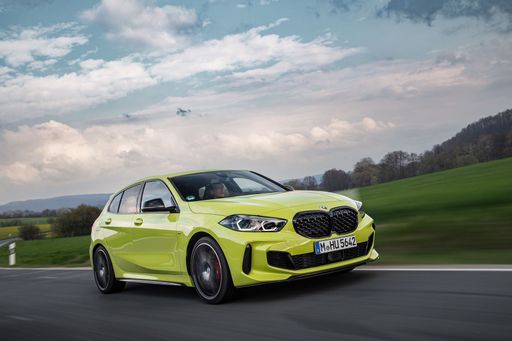
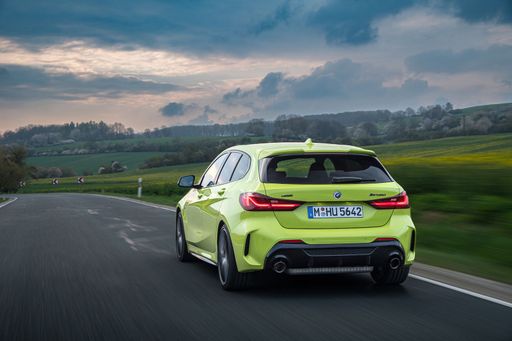
BMW 1 Series

5 (1 Reviews)
rate
  • considerably more power
  • clearly more efficient
  • substantially quicker 0–100 km/h
details

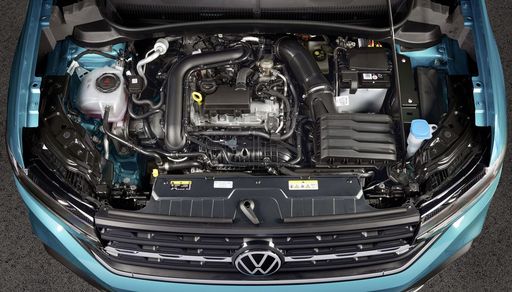
VW T-Cross

3.9 (4 Reviews)
rate
  • markedly cheaper
  • slightly lighter
  • slightly more trunk space
details

All details on performance, efficiency, range and trunk space can be found in the technical comparison below – including user reviews for both models.

By Achim Sedelmaier

1 Series

An In-Depth Look at the BMW 1er Reihe vs VW T-Cross

As the automotive market evolves, car enthusiasts and everyday drivers alike are constantly comparing vehicles to find the perfect match for their needs. Today, we delve into a comparison between two stellar contenders in distinct segments: the dynamic BMW 1er Reihe and the versatile VW T-Cross. Each offers a unique blend of performance, efficiency, and innovation, catering to diverse tastes and preferences.
T-Cross

Performance and Power

The BMW 1er Reihe impresses with a broad range of engine options, offering both petrol and diesel, including mild-hybrid versions. This series showcases power outputs spanning from 122 HP to an exhilarating 300 HP, paired with either front-wheel or all-wheel drive. The model features a dual-clutch automatic transmission across its lineup, emphasizing a smooth and responsive driving experience, complemented by an acceleration capability of 4.9 to 9.8 seconds from 0 to 100 km/h. High performers in this series boast speeds up to 250 km/h.

In contrast, the VW T-Cross offers a focused lineup of petrol engines, with power outputs ranging from 95 HP to 150 HP. Designed as a front-wheel-drive vehicle, it offers both a manual and dual-clutch automatic transmission option. The T-Cross accelerates from 0 to 100 km/h in 8.4 to 11.2 seconds, reaching a maximum speed between 180 and 200 km/h, making it adept for urban driving and moderate cruising.

1 Series

Fuel Efficiency and Eco-friendliness

When it comes to fuel efficiency, the BMW 1er Reihe offers competitive consumption rates between 4.3 and 7.6 liters per 100 kilometers, depending on the powertrain. Its CO2 emissions range from 112 g/km to 173 g/km, securing CO2 efficiency classes between C and F. On the other hand, the VW T-Cross, with its all-petrol engine lineup, consumes slightly more fuel at 5.6 to 6 liters per 100 kilometers, with emissions in the range of 127 g/km to 135 g/km, classed as D for efficiency.

T-Cross

Space and Versatility

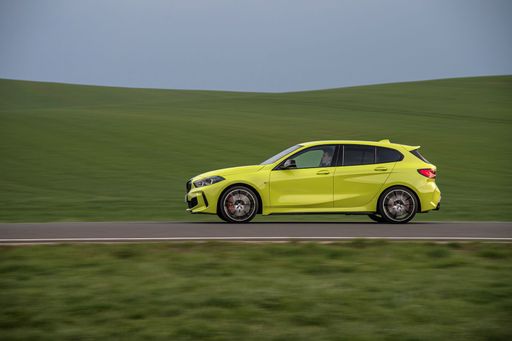
The BMW 1er Reihe's hatchback design offers a trunk capacity of 380 liters, which is slightly less than the T-Cross's spacious 455-liter trunk. Additionally, its dimensions, with a length of 4361 mm, width of 1800 mm, and height of 1459 mm, contribute to a sleek and sporty profile.

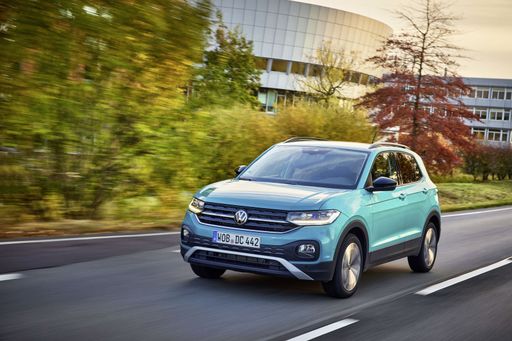
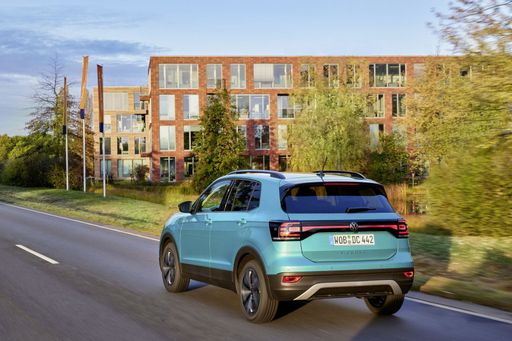
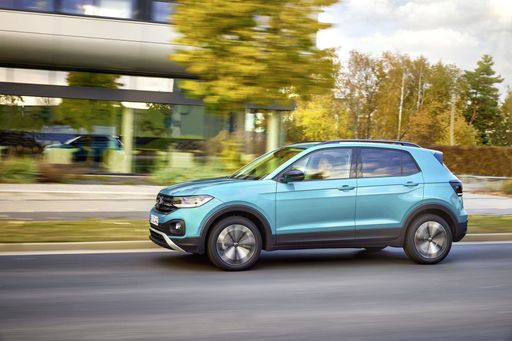
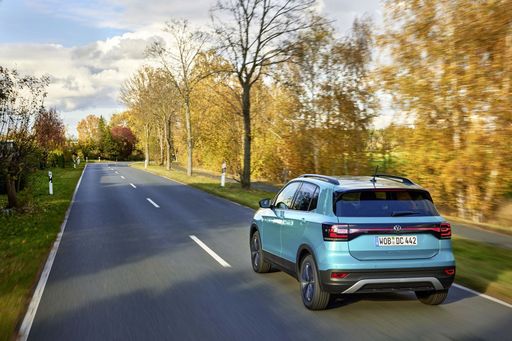
The VW T-Cross, with its SUV body type, provides more vertical space, measuring 1573 mm in height, but is shorter in length at 4127 mm and slightly narrower with a width of 1784 mm. This additional height enhances its practicality and offers a more commanding view of the road, highly desirable for the typical SUV buyer.

1 Series

Innovation and Features

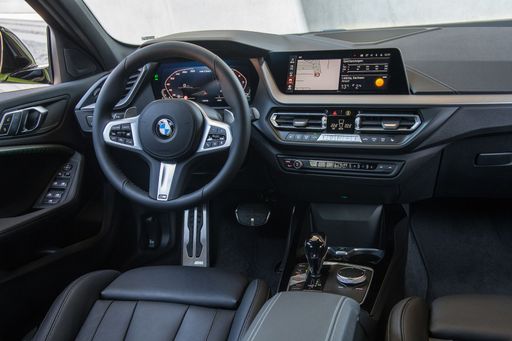
In terms of innovation, the BMW 1er Reihe stands out with its sophisticated driving dynamics and technology integration, including cutting-edge infotainment and connectivity options, aligning with BMW's premium brand experience. Its hybrid options further highlight a commitment towards more sustainable driving solutions.

Conversely, the VW T-Cross is a beacon of practicality and user-friendly operation, featuring a commendable suite of safety and connectivity technologies. Its focus on functionality does not hinder its capacity to provide a comfortable and enjoyable driving experience, particularly valued by families and urban drivers.

T-Cross

Conclusion

Ultimately, the choice between the BMW 1er Reihe and the VW T-Cross hinges on specific customer priorities. For those seeking thrilling performance wrapped in a sporty design, the BMW 1er Reihe delivers with aplomb. Conversely, the VW T-Cross appeals to those prioritizing space, practicality, and efficiency within a compact SUV format, making it an excellent choice for city professionals and family-oriented drivers.

Here’s where it gets real: The technical differences in detail

1 Series

Costs and Efficiency:

When it comes to price and running costs, the biggest differences usually appear. This is often where you see which car fits your budget better in the long run.

VW T-Cross is markedly cheaper – starting at 21,400 £ , while the BMW 1 Series costs 29,400 £ . That’s a price difference of around 7,963 £.

Fuel consumption also shows a difference: the BMW 1 Series uses 4.3 L/100km and is clearly more efficient than the VW T-Cross with 5.4 L/100km. The difference is about 1.1 L/100km.

T-Cross

Engine and Performance:

Under the bonnet, it becomes clear which model is tuned for sportiness and which one takes the lead when you hit the accelerator.

When it comes to engine power, the BMW 1 Series offers considerably more power – delivering 300 HP compared to 150 HP. That’s roughly 150 HP more horsepower.

When accelerating from 0 to 100 km/h, the BMW 1 Series is substantially quicker – completing the sprint in 4.9 s, while the VW T-Cross takes 8.4 s. That’s about 3.5 s quicker.

There’s also a difference in torque: the BMW 1 Series delivers visibly more torque with 400 Nm compared to 250 Nm. That’s about 150 Nm more.

1 Series

Space and Everyday Use:

Whether family car or daily driver – which one offers more room, flexibility and comfort?

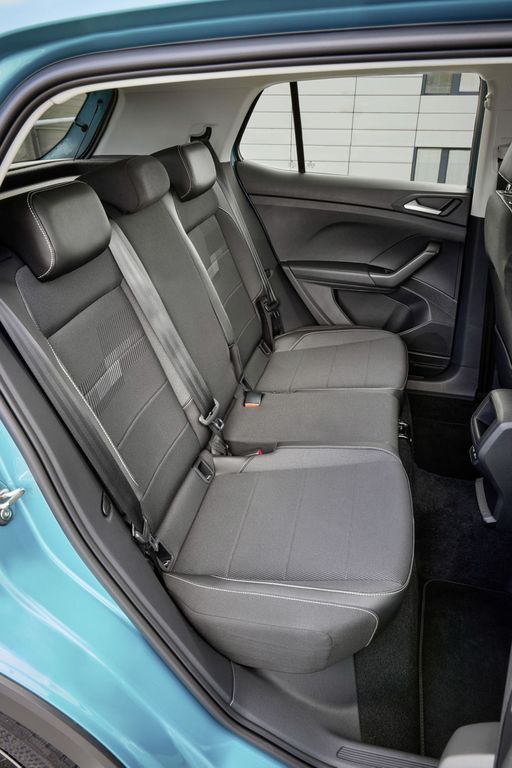
Both vehicles offer seating for 5 people.

In terms of curb weight, VW T-Cross is slightly lighter – 1,267 kg compared to 1,465 kg. The difference is around 198 kg.

Looking at boot space, the VW T-Cross offers slightly more boot space – 455 L compared to 380 L. That’s a difference of about 75 L.

When it comes to payload, the BMW 1 Series carries very slightly more – 510 kg compared to 480 kg. That’s a difference of about 30 kg.

Who wins the race in the data check?

The BMW 1 Series is decisively ahead in the objective data comparison.
This result only shows which model scores more points on paper – not which of the two cars feels right for you.

from £29,400
1 Series

BMW 1 Series

  • Engine Type : Diesel, Petrol MHEV, Diesel MHEV, Petrol
  • Transmission : Automatic
  • Drive Type : Front-Wheel Drive, All-Wheel Drive
  • Power HP : 122 - 300 HP
  • Consumption L/100km : 4.3 - 7.6 L/100km
BMW 1 Series
VW T-Cross

Costs and Consumption

View detailed analysis

Engine and Performance

View detailed analysis

Dimensions and Body

View detailed analysis

BMW 1 Series

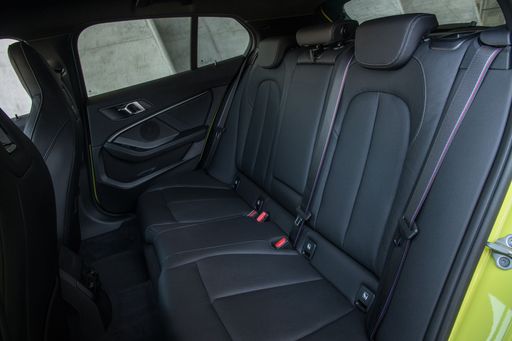
The BMW 1 Series is a compact premium hatchback that injects a proper sense of driving fun into everyday life, with sharp handling and a cabin that punches above its class. It’s a great pick for buyers who want sporty manners without losing practicality, and yes, you’ll still get that unmistakable BMW grin behind the wheel.

details

VW T-Cross

The VW T-Cross is a small, city-friendly crossover that blends practical packaging with easygoing driving manners and a high seating position for good visibility. It’s a sensible, comfortable choice for buyers who want the convenience and style of an SUV without big compromises.

details
BMW 1 Series
VW T-Cross

Costs and Consumption

Price
29,400 - 51,900 £
Price
21,400 - 32,000 £
Consumption L/100km
4.3 - 7.6 L/100km
Consumption L/100km
5.4 - 6 L/100km
Consumption kWh/100km
-
Consumption kWh/100km
-
Electric Range
-
Electric Range
-
Battery Capacity
-
Battery Capacity
-
co2
112 - 173 g/km
co2
124 - 136 g/km
Fuel tank capacity
-
Fuel tank capacity
-

Dimensions and Body

Body Type
Hatchback
Body Type
SUV
Seats
5
Seats
5
Doors
-
Doors
-
Curb weight
1,465 - 1,625 kg
Curb weight
1,267 - 1,338 kg
Trunk capacity
300 - 380 L
Trunk capacity
455 L
Length
-
Length
-
Width
1,800 mm
Width
1,784 mm
Height
-
Height
-
Max trunk capacity
-
Max trunk capacity
-
Payload
475 - 510 kg
Payload
463 - 480 kg

Engine and Performance

Engine Type
Diesel, Petrol MHEV, Diesel MHEV, Petrol
Engine Type
Petrol
Transmission
Automatic
Transmission
Manuel, Automatic
Transmission Detail
Dual-Clutch Automatic
Transmission Detail
Manual Gearbox, Dual-Clutch Automatic
Drive Type
Front-Wheel Drive, All-Wheel Drive
Drive Type
Front-Wheel Drive
Power HP
122 - 300 HP
Power HP
95 - 150 HP
Acceleration 0-100km/h
4.9 - 9.8 s
Acceleration 0-100km/h
8.4 - 11.3 s
Max Speed
-
Max Speed
-
Torque
230 - 400 Nm
Torque
175 - 250 Nm
Number of Cylinders
3 - 4
Number of Cylinders
3 - 4
Power kW
90 - 221 kW
Power kW
70 - 110 kW
Engine capacity
1,499 - 1,998 cm3
Engine capacity
999 - 1,498 cm3

General

Model Year
2024
Model Year
2,024 - 2,025
CO2 Efficiency Class
D, C, F
CO2 Efficiency Class
D, E
Brand
BMW
Brand
VW
DriveDuel uses data analysis and artificial intelligence to evaluate vehicle data and create content. Content is regularly reviewed and improved. The displayed prices are estimates based on German list prices, adjusted to the respective country’s VAT. Country-specific registration taxes are not included. This information is not legally binding.