VS

BMW 2 Series Active Tourer vs Audi Q3 comparison

Compare performance (326 HP vs 272 HP), boot space and price (31,500 £ vs 38,200 £ ) at a glance. Find out which car is the better choice for you – BMW 2 Series Active Tourer or Audi Q3?

BMW 2 Series Active Tourer vs Audi Q3: Key differences

BMW 2 Series Active Tourer

4.1 (1 Reviews)
rate
  • visibly cheaper
  • moderately more power
  • barely quicker 0–100 km/h
  • very slightly lighter
details

Audi Q3

5 (1 Reviews)
rate
  • considerably more efficient
  • clearly more electric range
  • only slightly more trunk space
details

All details on performance, efficiency, range and trunk space can be found in the technical comparison below – including user reviews for both models.

By Achim Sedelmaier

2 Series Active Tourer

Contenders of Elegance: Audi Q3 vs. BMW 2er Active Tourer

The automotive market in 2024 is increasingly competitive, with each brand striving to leave its mark via unique innovations and technical prowess. The Audi Q3 and the BMW 2er Active Tourer stand out as distinct contenders, each catering to different tastes and preferences. Let's dive into the nuances of these two remarkable models.
Q3

Design and Body Type

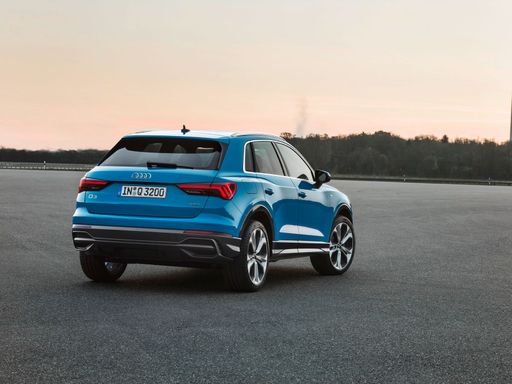
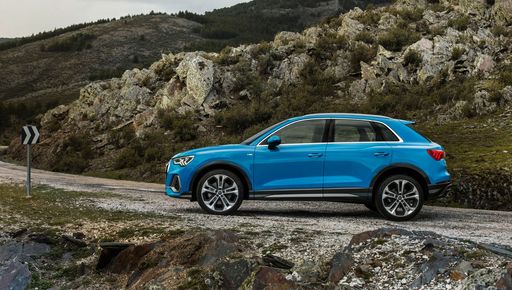
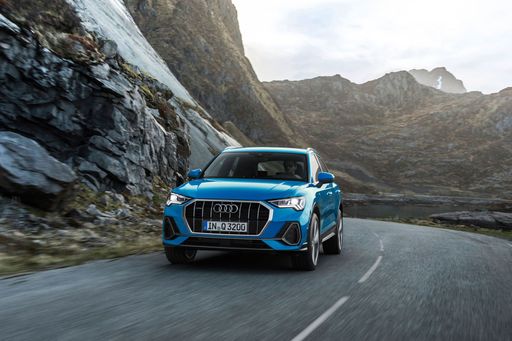
The Audi Q3 dons the mantle of an elegant SUV, embodying a robust design with dimensions that speak of power and presence. Its body stretches to a length of 4500 mm, a width of 1843 mm, and a height of 1567 mm, articulating a commanding road presence.

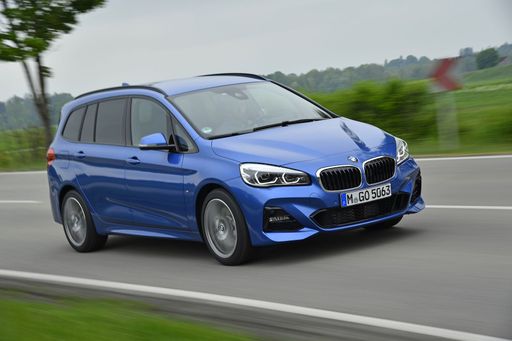
Conversely, the BMW 2er Active Tourer aligns with the MPV (Multi-Purpose Vehicle) philosophy, promising versatility and practicality. At 4386 mm long, 1824 mm wide, and 1576 mm high, it offers a compact and city-friendly structure while maintaining a spacious interior.

2 Series Active Tourer

Engine and Performance

The Audi Q3 caters to diverse customer needs with its range of petrol and diesel engines, offering a power spectrum from 150 to 245 HP. The choice of manual or dual-clutch automatic transmission coupled with front or all-wheel drive ensures a tailored driving experience. It accelerates from 0 to 100 km/h in as little as 5.8 seconds, typifying the spirited performance expected of an Audi.

In contrast, the BMW 2er Active Tourer introduces a blend of petrol, diesel, mild-hybrid, and plug-in hybrid options, with power ranging from 122 to an impressive 326 HP. With a top speed potential up to 241 km/h, the Active Tourer doesn't shy away from showcasing performance enthusiasts will admire. Its plug-in hybrid variant particularly stands out with an electric range of 88 km, augmenting efficiency with eco-friendliness.

Q3

Efficiency and Environmental Consciousness

The Audi Q3's fuel consumption lies between 5.5 and 8.5 L/100 km, with CO2 emissions ranging from 143 to 193 g/km. The model's focus balances performance with moderate environmental impact, exemplified by its variety of efficiency classes E, F, and G.

The BMW 2er Active Tourer leans heavily towards improvement in environmental efficiency with a CO2 range as low as 19 g/km in its plug-in hybrid variant. Fuel consumptions vary from 0.8 L/100 km for its hybrid models to 6.2 L/100 km for traditional engines, aligning with eco-conscious driving without compromising on versatility.

2 Series Active Tourer

Interior and Comfort

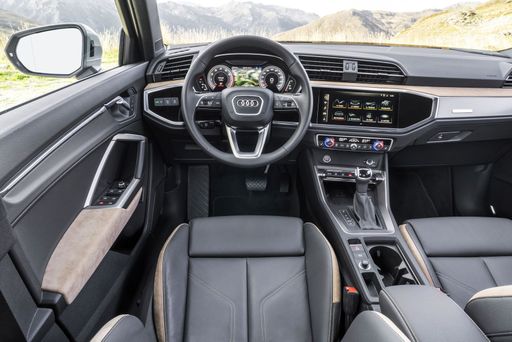
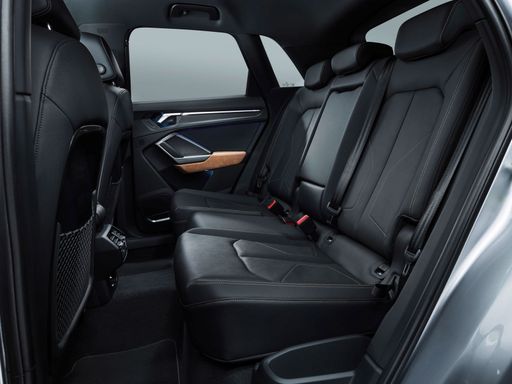
Both models embrace comfort with five-seater configurations. The Audi Q3 offers a spacious 530 L trunk, underscoring its utility for family adventures and gear-heavy excursions. The BMW 2er Active Tourer provides up to 470 L of trunk space, emphasizing sufficient room for urban and suburban explorations.

Q3

Conclusion

The Audi Q3 and BMW 2er Active Tourer each present compelling cases to different segments of the car-buying public. The Q3 is a robust, performance-oriented SUV with power and presence, whereas the 2er Active Tourer is an innovation-forward MPV, combining efficiency, and innovative hybrid solutions. Your choice depends on whether you prefer the unmistakable dominance of an SUV or the versatile, tech-infused design of a modern MPV.

Here’s where it gets real: The technical differences in detail

2 Series Active Tourer

Costs and Efficiency:

Price and efficiency are key factors when choosing a car – and this is often where the real differences emerge.

BMW 2 Series Active Tourer is visibly cheaper – starting at 31,500 £ , while the Audi Q3 costs 38,200 £ . That’s a price difference of around 6,728 £.

Fuel consumption also shows a difference: the Audi Q3 uses 1.7 L/100km and is considerably more efficient than the BMW 2 Series Active Tourer with 2.9 L/100km. The difference is about 1.2 L/100km.

As for electric range, the Audi Q3 offers clearly more range – reaching up to 119 km, about 37 km more than the BMW 2 Series Active Tourer.

Q3

Engine and Performance:

Power, torque and acceleration are the classic benchmarks for car enthusiasts – and here, some clear differences start to show.

When it comes to engine power, the BMW 2 Series Active Tourer offers moderately more power – delivering 326 HP compared to 272 HP. That’s roughly 54 HP more horsepower.

When accelerating from 0 to 100 km/h, the BMW 2 Series Active Tourer is barely quicker – completing the sprint in 5.5 s, while the Audi Q3 takes 5.7 s. That’s about 0.2 s quicker.

There’s also a difference in torque: the BMW 2 Series Active Tourer delivers a bit more torque with 477 Nm compared to 400 Nm. That’s about 77 Nm more.

2 Series Active Tourer

Space and Everyday Use:

Cabin size, boot volume and payload all play a role in everyday practicality. Here, comfort and flexibility make the difference.

Both vehicles offer seating for 5 people.

In terms of curb weight, BMW 2 Series Active Tourer is very slightly lighter – 1,545 kg compared to 1,635 kg. The difference is around 90 kg.

Looking at boot space, the Audi Q3 offers only slightly more boot space – 488 L compared to 470 L. That’s a difference of about 18 L.

When it comes to payload, the Audi Q3 carries barely more – 535 kg compared to 505 kg. That’s a difference of about 30 kg.

Who wins the race in the data check?

The Audi Q3 stands well ahead of its rival in the objective data comparison.
This result only shows which model scores more points on paper – not which of the two cars feels right for you.

from £38,200
Q3

Audi Q3

  • Engine Type : Petrol MHEV, Petrol, Plugin Hybrid, Diesel
  • Transmission : Automatic
  • Drive Type : Front-Wheel Drive, All-Wheel Drive
  • Power HP : 150 - 272 HP
  • Consumption L/100km : 1.7 - 8.6 L/100km
  • Electric Range : 118 - 119 km
BMW 2 Series Active Tourer
Audi Q3

Costs and Consumption

View detailed analysis

Engine and Performance

View detailed analysis

Dimensions and Body

View detailed analysis

BMW 2 Series Active Tourer

The BMW 2 Series Active Tourer turns the family MPV into something you’d actually want to park outside a café, pairing compact practicality with surprisingly premium cabin flair. It won’t thrill like a sports car, but it drives with the composed poise you expect from the badge and keeps daily life easy and un-fussy.

details

Audi Q3

The Audi Q3 feels like a grown-up compact SUV with premium polish and city-friendly agility, the sort of car that makes weekend escapes and daily commutes equally satisfying. Inside, you get quality materials and smart packaging that keep things practical without skimping on style, so it’s an easy pick for buyers who want luxury without the drama.

details
BMW 2 Series Active Tourer
Audi Q3

Costs and Consumption

Price
31,500 - 48,000 £
Price
38,200 - 52,900 £
Consumption L/100km
2.9 - 6.2 L/100km
Consumption L/100km
1.7 - 8.6 L/100km
Consumption kWh/100km
-
Consumption kWh/100km
-
Electric Range
82 km
Electric Range
118 - 119 km
Battery Capacity
14.2 kWh
Battery Capacity
-
co2
65 - 140 g/km
co2
39 - 195 g/km
Fuel tank capacity
47 L
Fuel tank capacity
-

Dimensions and Body

Body Type
MPV
Body Type
SUV
Seats
5
Seats
5
Doors
5
Doors
-
Curb weight
1,545 - 1,920 kg
Curb weight
1,635 - 1,900 kg
Trunk capacity
406 - 470 L
Trunk capacity
375 - 488 L
Length
4,386 mm
Length
-
Width
1,824 mm
Width
1,859 mm
Height
1,576 mm
Height
-
Max trunk capacity
1,370 L
Max trunk capacity
-
Payload
465 - 505 kg
Payload
505 - 535 kg

Engine and Performance

Engine Type
Petrol, Petrol MHEV, Diesel, Diesel MHEV, Plugin Hybrid
Engine Type
Petrol MHEV, Petrol, Plugin Hybrid, Diesel
Transmission
Automatic
Transmission
Automatic
Transmission Detail
Dual-Clutch Automatic
Transmission Detail
Dual-Clutch Automatic
Drive Type
Front-Wheel Drive, All-Wheel Drive
Drive Type
Front-Wheel Drive, All-Wheel Drive
Power HP
122 - 326 HP
Power HP
150 - 272 HP
Acceleration 0-100km/h
5.5 - 10.3 s
Acceleration 0-100km/h
5.7 - 9.2 s
Max Speed
195 - 205 km/h
Max Speed
-
Torque
230 - 477 Nm
Torque
250 - 400 Nm
Number of Cylinders
3 - 4
Number of Cylinders
4
Power kW
90 - 240 kW
Power kW
110 - 200 kW
Engine capacity
1,499 - 1,998 cm3
Engine capacity
1,498 - 1,984 cm3

General

Model Year
2,024 - 2,025
Model Year
2,025 - 2,026
CO2 Efficiency Class
E, D, B
CO2 Efficiency Class
E, G, B, F
Brand
BMW
Brand
Audi
DriveDuel uses data analysis and artificial intelligence to evaluate vehicle data and create content. Content is regularly reviewed and improved. The displayed prices are estimates based on German list prices, adjusted to the respective country’s VAT. Country-specific registration taxes are not included. This information is not legally binding.