VS

BMW 3 Series Saloon vs Volvo XC40 comparison

Compare performance (530 HP vs 197 HP), boot space and price (39,900 £ vs 36,800 £ ) at a glance. Find out which car is the better choice for you – BMW 3 Series Saloon or Volvo XC40?

BMW 3 Series Saloon vs Volvo XC40: Key differences

BMW 3 Series Saloon

  • clearly more power
  • substantially more efficient
  • significantly quicker 0–100 km/h
  • marginally lighter
  • only slightly more trunk space

Volvo XC40

5 (4 Reviews)
rate
  • marginally cheaper

By Achim Sedelmaier

3 Series Saloon

BMW 3er Limousine vs. Volvo XC40: A Clash of German Precision and Scandinavian Ingenuity

When it comes to luxury vehicles, both BMW and Volvo stand tall with stellar reputations for creating high-quality, reliable vehicles. But how do these industry stalwarts stack up against each other in the compact luxury segment? This article throws the spotlight on the sophisticated BMW 3er Limousine and the practical Volvo XC40 to discern which one emerges triumphant in this head-to-head car comparison.
XC40

Design and Body Type: Sedan vs SUV

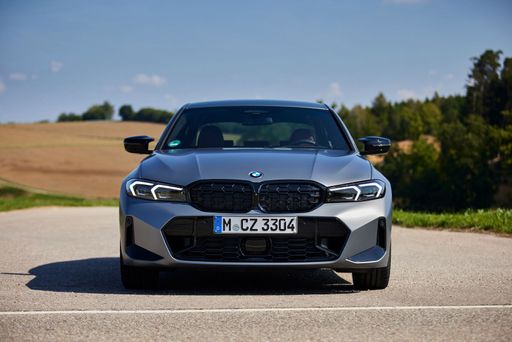
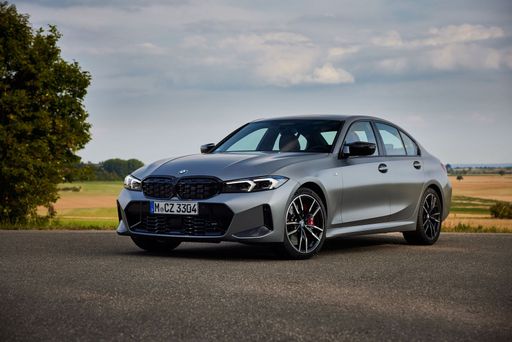
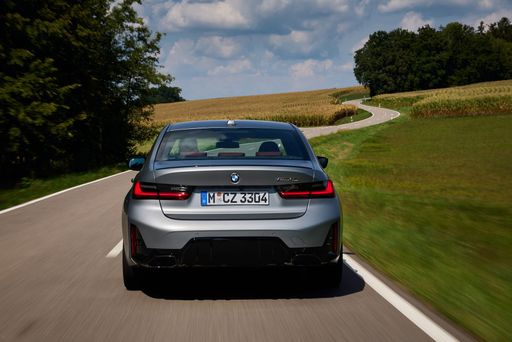
The BMW 3er Limousine is quintessentially a luxury sedan. Known for its sleek aesthetics, it measures between 4713 to 4801 mm in length and 1827 to 1903 mm in width, with a height that varies around 1437 to 1446 mm. Its sedan body type promises a refined look that is both contemporary and mature.

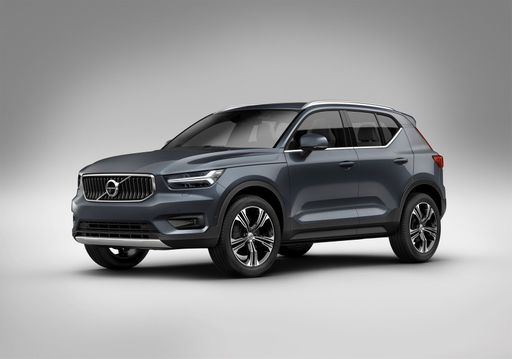
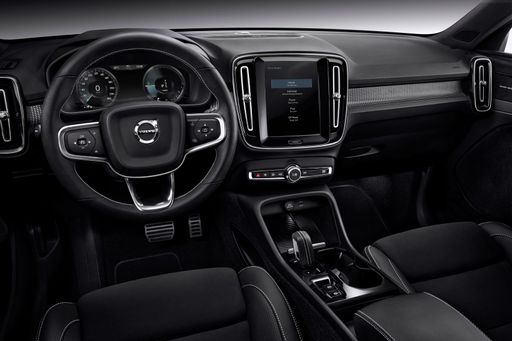
In contrast, the Volvo XC40 boasts an SUV body. It's shorter and taller with a length of 4425 mm, a width of 1863 mm, and a height of 1652 mm. The XC40 is designed with a more rugged, sporty appearance that suits the crossover segment, appealing to those who prefer a more commanding driving position and adaptable space.

3 Series Saloon

Engine and Performance

Under the hood, the BMW 3er Limousine offers an array of powertrains, including diesel, petrol, plug-in hybrid, and petrol mild-hybrid variants. The power spectrum spans from 150 HP in the lower end up to a staggering 530 HP on the performance-focused models, achieved via either a 4-cylinder or 6-cylinder engine. With a top speed stretching from 218 km/h to 250 km/h, and acceleration from 0-100 km/h as swift as 3.9 seconds, it’s engineered for performance enthusiasts.

The Volvo XC40, on the other hand, offers a straightforward petrol mild-hybrid engine choice with a power output of either 163 HP or 197 HP. The torque peaks at 300 Nm, facilitating an adequate punchy drive, while the maximum speed taps out at 180 km/h, and a 0-100 km/h sprint in a moderate 7.6 to 8.6 seconds. Its appeal lies in its efficient use of fuel with a consumption of 6.5 L/100km.

XC40

Transmission and Drive Type

Both BMW and Volvo incorporate automatic transmission into their models. The BMW 3er offers the liberty of selecting between automatic and manual transmission options, catering to a broader range of driving preferences. Rear-wheel drive and all-wheel drive options provide enthusiasts with a dynamic driving experience.

Conversely, the Volvo XC40 is equipped with a dual-clutch automatic transmission paired with front-wheel drive. This setup is optimized for a balance of efficiency and performance but does not offer the diversity of drivetrain options found in the BMW.

3 Series Saloon

Interior, Capacity, and Practicality

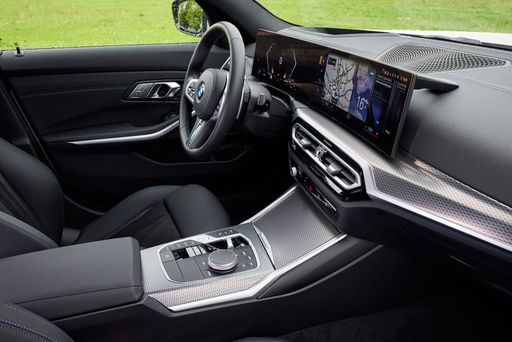
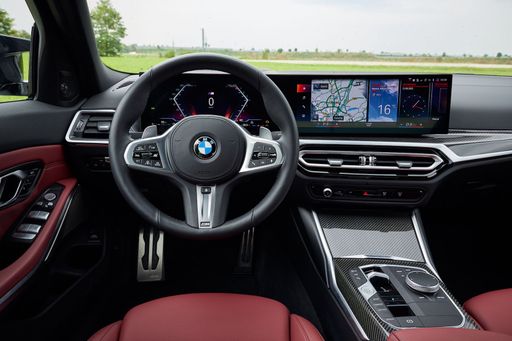
Both vehicles accommodate five passengers. Inside the BMW 3er Limousine, expect luxurious interiors with a trunk capacity oscillating between 375 to 480 L, depending on the variant. It’s designed with both aesthetics and functionality in mind.

The Volvo XC40 offers a slightly smaller luggage capacity of 452 L, but it compensates with its SUV architecture, offering better versatility and a payload capacity of 532 kg, making it a more practical choice for active lifestyles.

XC40

Environmental and Efficiency Metrics

For those conscious of their carbon footprint, the BMW 3er's hybrid models dominate with impressive CO2 efficiency, releasing as low as 19 g/km. However, traditional combustion options start from 129 g/km. It also includes an electric range of up to 101 km for plug-in hybrids.

The Volvo XC40 maintains a CO2 emission of around 147 g/km, indicating a respectable performance for a vehicle of its class, albeit without the hybrid or electric capabilities that BMW offers.

3 Series Saloon

Conclusion: A Decision of Preference

Ultimately, the choice between the BMW 3er Limousine and the Volvo XC40 depends significantly on personal preferences. The BMW promises an exhilarating driving experience steeped in German engineering excellence, with a range of powertrains and high-performance capabilities. The Volvo XC40, meanwhile, leans towards practicality, Scandinavian simplicity, and comfort, appealing to those who value versatility and robust design.

Both cars represent their brands' core values remarkably well, with innovation and quality reflecting in every facet. Whether it's adrenaline or adaptability you desire, these two contenders have something valuable to offer.

Here’s where it gets real: The technical differences in detail

3 Series Saloon

Costs and Efficiency:

Price and efficiency are often the first things buyers look at. Here it becomes clear which model has the long-term edge – whether at the pump, the plug, or in purchase price.

Volvo XC40 is marginally cheaper – starting at 36,800 £ , while the BMW 3 Series Saloon costs 39,900 £ . That’s a price difference of around 3,180 £.

Fuel consumption also shows a difference: the BMW 3 Series Saloon uses 2.4 L/100km and is substantially more efficient than the Volvo XC40 with 6.5 L/100km. The difference is about 4.1 L/100km.

XC40

Engine and Performance:

Under the bonnet, it becomes clear which model is tuned for sportiness and which one takes the lead when you hit the accelerator.

When it comes to engine power, the BMW 3 Series Saloon offers clearly more power – delivering 530 HP compared to 197 HP. That’s roughly 333 HP more horsepower.

When accelerating from 0 to 100 km/h, the BMW 3 Series Saloon is significantly quicker – completing the sprint in 3.5 s, while the Volvo XC40 takes 7.6 s. That’s about 4.1 s quicker.

Looking at top speed, the BMW 3 Series Saloon is visibly faster – reaching 250 km/h, while the Volvo XC40 tops out at 180 km/h. The difference is around 70 km/h.

There’s also a difference in torque: the BMW 3 Series Saloon delivers clearly more torque with 700 Nm compared to 300 Nm. That’s about 400 Nm more.

3 Series Saloon

Space and Everyday Use:

Whether family car or daily driver – which one offers more room, flexibility and comfort?

Both vehicles offer seating for 5 people.

In terms of curb weight, BMW 3 Series Saloon is marginally lighter – 1,575 kg compared to 1,688 kg. The difference is around 113 kg.

Looking at boot space, the BMW 3 Series Saloon offers only slightly more boot space – 480 L compared to 452 L. That’s a difference of about 28 L.

When it comes to payload, the Volvo XC40 carries very slightly more – 532 kg compared to 495 kg. That’s a difference of about 37 kg.

Who wins the race in the data check?

The BMW 3 Series Saloon is far ahead overall in the objective data comparison.
This result only shows which model scores more points on paper – not which of the two cars feels right for you.

from £39,900
3 Series Saloon

BMW 3 Series Saloon

  • Engine Type : Diesel MHEV, Petrol, Petrol MHEV, Plugin Hybrid
  • Transmission : Automatic, Manuel
  • Drive Type : Rear-Wheel Drive, All-Wheel Drive
  • Power HP : 150 - 530 HP
  • Consumption L/100km : 2.4 - 10.1 L/100km
  • Electric Range : 96 - 101 km
BMW 3 Series Saloon
Volvo XC40

Costs and Consumption

View detailed analysis

Engine and Performance

View detailed analysis

Dimensions and Body

View detailed analysis

BMW 3 Series Saloon

The BMW 3 Series saloon is a driver's car in a suit, blending poised handling with a cabin that feels more premium than its practicality suggests. It’s composed enough for daily duties yet playful enough to keep weekend drives interesting, making it a sensible choice for buyers who still want to have fun.

details

Volvo XC40

The Volvo XC40 wraps Scandinavian minimalism into a compact, city-ready SUV with a premium cabin that feels both practical and grown-up. It will suit buyers who prize safety, clever storage and a composed ride, proving that small dimensions don't mean small personality.

details
BMW 3 Series Saloon
Volvo XC40

Costs and Consumption

Price
39,900 - 91,000 £
Price
36,800 - 47,200 £
Consumption L/100km
2.4 - 10.1 L/100km
Consumption L/100km
6.5 L/100km
Consumption kWh/100km
-
Consumption kWh/100km
-
Electric Range
96 - 101 km
Electric Range
-
Battery Capacity
19.5 kWh
Battery Capacity
-
co2
54 - 227 g/km
co2
147 - 148 g/km
Fuel tank capacity
40 - 59 L
Fuel tank capacity
54 L

Dimensions and Body

Body Type
Sedan
Body Type
SUV
Seats
5
Seats
5
Doors
4
Doors
5
Curb weight
1,575 - 1,960 kg
Curb weight
1,688 kg
Trunk capacity
375 - 480 L
Trunk capacity
452 L
Length
4,713 mm
Length
4,425 mm
Width
1,827 - 1,903 mm
Width
1,863 mm
Height
1,440 - 1,446 mm
Height
1,652 mm
Max trunk capacity
-
Max trunk capacity
1,328 L
Payload
405 - 495 kg
Payload
532 kg

Engine and Performance

Engine Type
Diesel MHEV, Petrol, Petrol MHEV, Plugin Hybrid
Engine Type
Petrol MHEV
Transmission
Automatic, Manuel
Transmission
Automatic
Transmission Detail
Automatic Gearbox, Manual Gearbox
Transmission Detail
Dual-Clutch Automatic
Drive Type
Rear-Wheel Drive, All-Wheel Drive
Drive Type
Front-Wheel Drive
Power HP
150 - 530 HP
Power HP
163 - 197 HP
Acceleration 0-100km/h
3.5 - 8.6 s
Acceleration 0-100km/h
7.6 - 8.6 s
Max Speed
218 - 250 km/h
Max Speed
180 km/h
Torque
250 - 700 Nm
Torque
265 - 300 Nm
Number of Cylinders
4 - 6
Number of Cylinders
4
Power kW
110 - 390 kW
Power kW
120 - 145 kW
Engine capacity
1,995 - 2,998 cm3
Engine capacity
1,969 cm3

General

Model Year
2,024 - 2,025
Model Year
2,024
CO2 Efficiency Class
D, E, F, G, B
CO2 Efficiency Class
E
Brand
BMW
Brand
Volvo
DriveDuel uses data analysis and artificial intelligence to evaluate vehicle data and create content. Content is regularly reviewed and improved. The displayed prices are estimates based on German list prices, adjusted to the respective country’s VAT. Country-specific registration taxes are not included. This information is not legally binding.