VS

BMW 3 Series Touring vs Mercedes A Class comparison

Compare performance (530 HP vs 421 HP), boot space and price (41,100 £ vs 32,600 £ ) at a glance. Find out which car is the better choice for you – BMW 3 Series Touring or Mercedes A Class?

BMW 3 Series Touring vs Mercedes A Class: Key differences

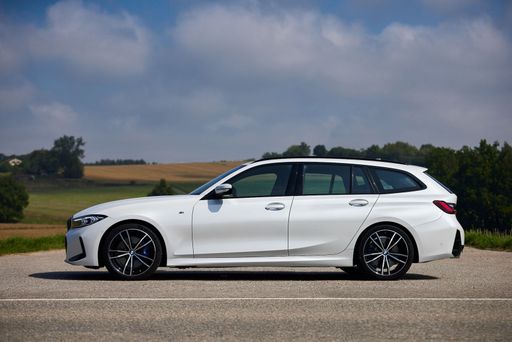
BMW 3 Series Touring

4.3 (1 Reviews)
rate
  • noticeably more power
  • somewhat more electric range
  • only slightly quicker 0–100 km/h
  • clearly more trunk space
details

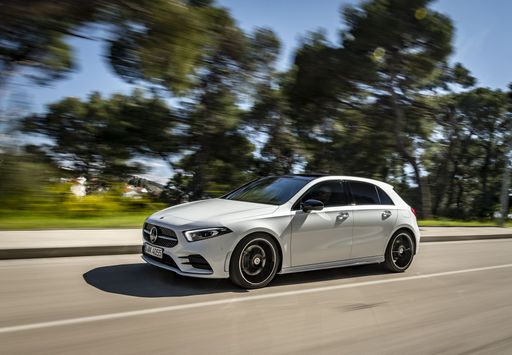
Mercedes A Class

2.7 (1 Reviews)
rate
  • noticeably cheaper
  • only slightly more efficient
  • somewhat lighter
details

By Achim Sedelmaier

3 Series Touring

BMW 3er Touring vs Mercedes A-Klasse: A Comprehensive Comparison

The automotive market has consistently seen fierce competition, especially in the segment of compact luxury vehicles. Among the most notable contenders are the BMW 3er Touring and the Mercedes A-Klasse. In this comparison, we will delve into various aspects including performance, technology, and design to help potential buyers in their decision-making process.
A Class

Performance and Engine Options

The BMW 3er Touring offers a versatile range of engine types including diesel MHEV, petrol, petrol MHEV, and plug-in hybrids. The power output ranges significantly from 150 to an impressive 550 HP across its extensive lineup. Its 0-100 km/h acceleration times vary, with some trims completing this in as little as 3.5 seconds, showcasing its high-performance capability.

In contrast, the Mercedes A-Klasse primarily features petrol MHEV, diesel, and plug-in hybrid options. Although it leads with a maximum output of 421 HP, it falls slightly behind in acceleration, with the best times around 4.7 seconds. The A-Klasse offers a slightly more economical range of engines, with initial power outputs starting at 116 HP.

3 Series Touring

Transmission and Drive Dynamics

The BMW 3er Touring utilizes an automatic gearbox and provides options for rear-wheel drive or all-wheel drive, enhancing driving dynamics and offering engaging handling characteristics. Its fuel consumption is reasonably efficient, ranging from 5.1 to 10.5 liters per 100 km, depending on the engine choice.

On the other hand, the Mercedes A-Klasse features a dual-clutch automatic transmission, known for providing swift gear shifts and improved fuel efficiency. With fuel consumption figures ranging from 4.9 to 9 liters per 100 km, it presents an attractive option for those conscious about fuel economy.

A Class

Dimensions and Storage Capacity

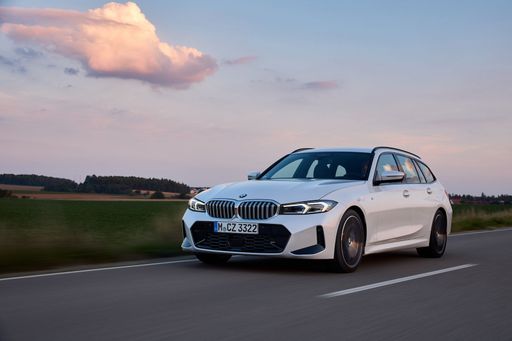
Dimensionally, the BMW 3er Touring has a broader appeal with a length of 4,713 mm to 4,801 mm and a trunk capacity reaching up to 500 liters, which is ideal for families or those who require additional storage space.

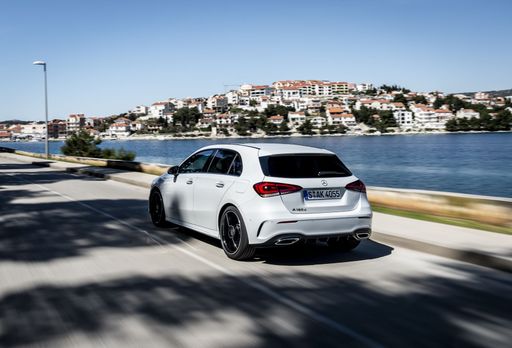
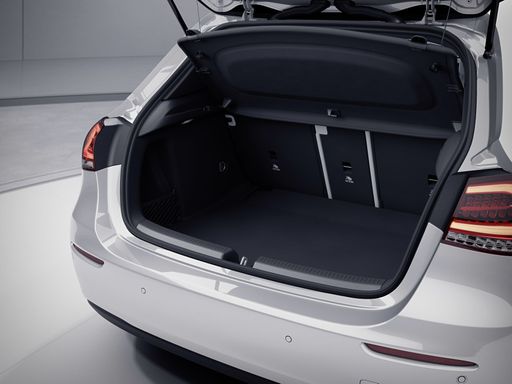
The Mercedes A-Klasse, while compact and sportier in appearance, measures between 4,428 mm to 4,453 mm in length with a trunk capacity of 350 liters. While it may sacrifice some space for design aesthetics, it still comfortably accommodates five passengers.

3 Series Touring

Innovative Technology and Interior Features

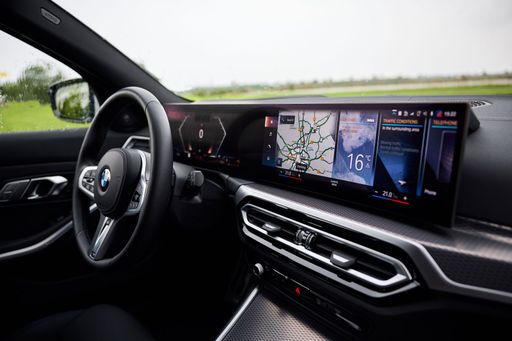
Both vehicles are equipped with advanced technology features, enhancing the driving experience. The BMW 3er Touring comes with a high-resolution digital display, navigation systems, and various driver-assistance features that aim to provide a seamless and connected experience. BMW's iDrive system is well-regarded for its user-friendly interface and intuitive controls.

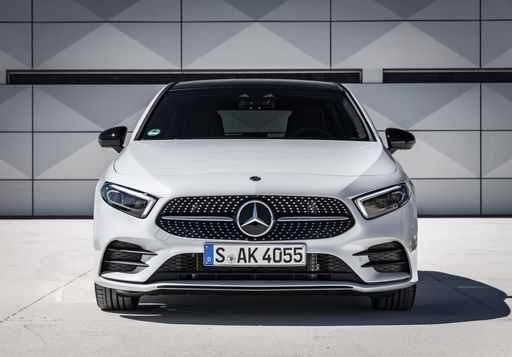
The Mercedes A-Klasse highlights its MBUX (Mercedes-Benz User Experience) system, which allows voice-activated commands and adjusts the vehicle's settings according to user preferences. It also features a dual-screen setup that combines the instrument cluster with the infotainment system, providing a futuristic touch to the interior.

A Class

Conclusion: Which One is Right for You?

Choosing between the BMW 3er Touring and the Mercedes A-Klasse ultimately comes down to personal preferences and priorities. The BMW 3er Touring is perfect for those seeking performance, generous storage, and driving engagement, while the Mercedes A-Klasse appeals more to tech-savvy drivers who appreciate modern design and fuel efficiency.

In a segment where every detail matters, both vehicles represent the best of what their manufacturers can offer. Regardless of your choice, you're guaranteed a premium experience that embodies luxury and cutting-edge technology.

Here’s where it gets real: The technical differences in detail

3 Series Touring

Costs and Efficiency:

Looking at overall running costs, both models reveal some interesting differences in everyday economy.

Mercedes A Class is noticeably cheaper – starting at 32,600 £ , while the BMW 3 Series Touring costs 41,100 £ . That’s a price difference of around 8,489 £.

Fuel consumption also shows a difference: the Mercedes A Class uses 2.3 L/100km and is only slightly more efficient than the BMW 3 Series Touring with 2.5 L/100km. The difference is about 0.2 L/100km.

As for electric range, the BMW 3 Series Touring offers somewhat more range – reaching up to 97 km, about 12 km more than the Mercedes A Class.

A Class

Engine and Performance:

Power, torque and acceleration say a lot about how a car feels on the road. This is where you see which model delivers more driving dynamics.

When it comes to engine power, the BMW 3 Series Touring offers noticeably more power – delivering 530 HP compared to 421 HP. That’s roughly 109 HP more horsepower.

When accelerating from 0 to 100 km/h, the BMW 3 Series Touring is only slightly quicker – completing the sprint in 3.6 s, while the Mercedes A Class takes 3.9 s. That’s about 0.3 s quicker.

There’s also a difference in torque: the BMW 3 Series Touring delivers visibly more torque with 700 Nm compared to 500 Nm. That’s about 200 Nm more.

3 Series Touring

Space and Everyday Use:

Cabin size, boot volume and payload all play a role in everyday practicality. Here, comfort and flexibility make the difference.

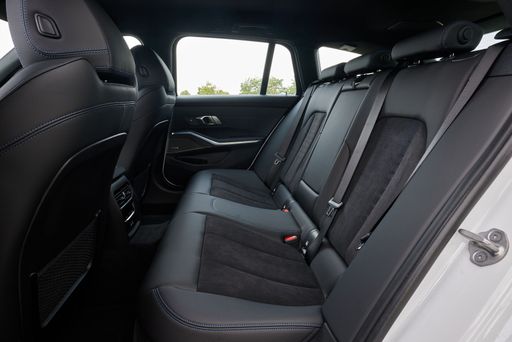
Both vehicles offer seating for 5 people.

In terms of curb weight, Mercedes A Class is somewhat lighter – 1,440 kg compared to 1,650 kg. The difference is around 210 kg.

Looking at boot space, the BMW 3 Series Touring offers clearly more boot space – 500 L compared to 350 L. That’s a difference of about 150 L.

When it comes to payload, the BMW 3 Series Touring carries barely more – 520 kg compared to 485 kg. That’s a difference of about 35 kg.

Who wins the race in the data check?

The BMW 3 Series Touring is far ahead overall in the objective data comparison.
This result only shows which model scores more points on paper – not which of the two cars feels right for you.

from £41,100
3 Series Touring

BMW 3 Series Touring

  • Engine Type : Diesel MHEV, Petrol, Petrol MHEV, Plugin Hybrid
  • Transmission : Automatic
  • Drive Type : Rear-Wheel Drive, All-Wheel Drive
  • Power HP : 150 - 530 HP
  • Consumption L/100km : 2.5 - 10.3 L/100km
  • Electric Range : 91 - 97 km
BMW 3 Series Touring
Mercedes A Class

Costs and Consumption

View detailed analysis

Engine and Performance

View detailed analysis

Dimensions and Body

View detailed analysis

BMW 3 Series Touring

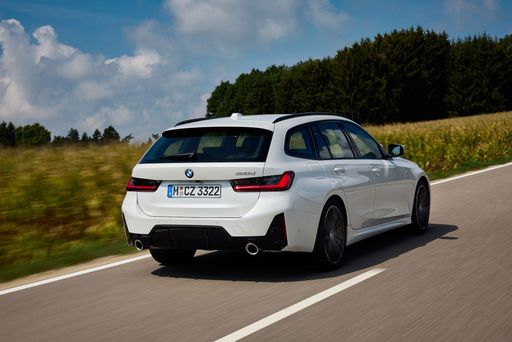
The BMW 3 Series Touring blends sporting poise with everyday practicality, wrapping sharp handling and a premium cabin into a wagon that actually makes errands feel enjoyable. It’s the kind of car that hides a family-hauler’s sense of duty beneath a driver's-car attitude — useful, classy, and just cheeky enough to make you smile on the open road.

details

Mercedes A Class

The Mercedes A‑Class arrives as a compact charmer that dresses premium materials and a cockpit full of screens in a tidy, city-friendly package, delivering surprising agility and poise. For buyers who want a luxury badge, clever tech and a car that's equally happy in tight streets or on a spirited country run, the A‑Class offers a grown-up feel with a cheeky streak.

details
BMW 3 Series Touring
Mercedes A Class

Costs and Consumption

Price
41,100 - 91,900 £
Price
32,600 - 66,500 £
Consumption L/100km
2.5 - 10.3 L/100km
Consumption L/100km
2.3 - 9 L/100km
Consumption kWh/100km
-
Consumption kWh/100km
-
Electric Range
91 - 97 km
Electric Range
85 km
Battery Capacity
-
Battery Capacity
-
co2
57 - 233 g/km
co2
53 - 205 g/km
Fuel tank capacity
-
Fuel tank capacity
-

Dimensions and Body

Body Type
Estate
Body Type
Hatchback
Seats
5
Seats
5
Doors
-
Doors
-
Curb weight
1,650 - 2,025 kg
Curb weight
1,440 - 1,695 kg
Trunk capacity
410 - 500 L
Trunk capacity
310 - 350 L
Length
-
Length
-
Width
1,827 - 1,903 mm
Width
1,796 - 1,850 mm
Height
-
Height
-
Max trunk capacity
-
Max trunk capacity
-
Payload
430 - 520 kg
Payload
450 - 485 kg

Engine and Performance

Engine Type
Diesel MHEV, Petrol, Petrol MHEV, Plugin Hybrid
Engine Type
Petrol MHEV, Diesel, Plugin Hybrid, Petrol
Transmission
Automatic
Transmission
Automatic
Transmission Detail
Automatic Gearbox
Transmission Detail
Dual-Clutch Automatic
Drive Type
Rear-Wheel Drive, All-Wheel Drive
Drive Type
Front-Wheel Drive, All-Wheel Drive
Power HP
150 - 530 HP
Power HP
116 - 421 HP
Acceleration 0-100km/h
3.6 - 8.8 s
Acceleration 0-100km/h
3.9 - 9.7 s
Max Speed
-
Max Speed
-
Torque
250 - 700 Nm
Torque
200 - 500 Nm
Number of Cylinders
4 - 6
Number of Cylinders
4
Power kW
110 - 390 kW
Power kW
85 - 310 kW
Engine capacity
1,995 - 2,998 cm3
Engine capacity
1,332 - 1,991 cm3

General

Model Year
2,024 - 2,025
Model Year
2025
CO2 Efficiency Class
D, E, F, G, B
CO2 Efficiency Class
D, E, B, G
Brand
BMW
Brand
Mercedes-Benz
DriveDuel uses data analysis and artificial intelligence to evaluate vehicle data and create content. Content is regularly reviewed and improved. The displayed prices are estimates based on German list prices, adjusted to the respective country’s VAT. Country-specific registration taxes are not included. This information is not legally binding.