VS

BMW i5 Touring vs Audi Q6 e-tron comparison

Compare performance (601 HP vs 490 HP), boot space and price (62,500 £ vs 54,400 £ ) at a glance. Find out which car is the better choice for you – BMW i5 Touring or Audi Q6 e-tron?

BMW i5 Touring vs Audi Q6 e-tron: Key differences

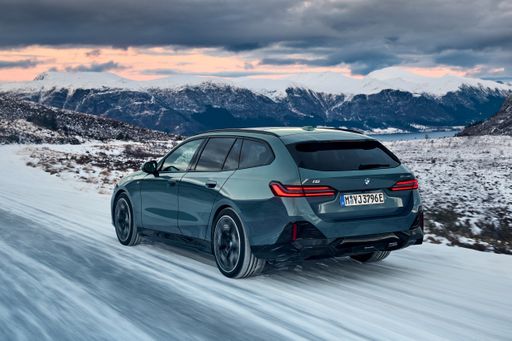
BMW i5 Touring

4.4 (1 Reviews)
rate
  • slightly more power
  • very slightly more efficient
  • slightly quicker 0–100 km/h
  • marginally more trunk space
details

Audi Q6 e-tron

4.6 (4 Reviews)
rate
  • slightly cheaper
  • very slightly more electric range
  • barely lighter
details

All details on performance, efficiency, range and trunk space can be found in the technical comparison below – including user reviews for both models.

By Achim Sedelmaier

i5 Touring

Head-to-Head: Audi Q6 e-tron vs. BMW i5 Touring

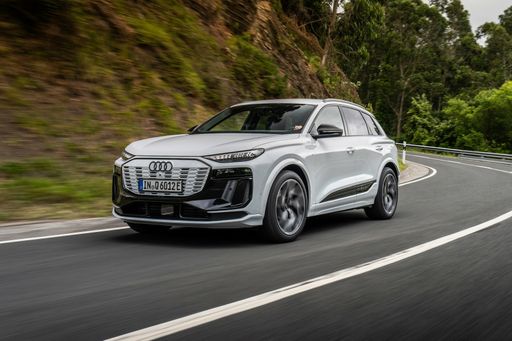
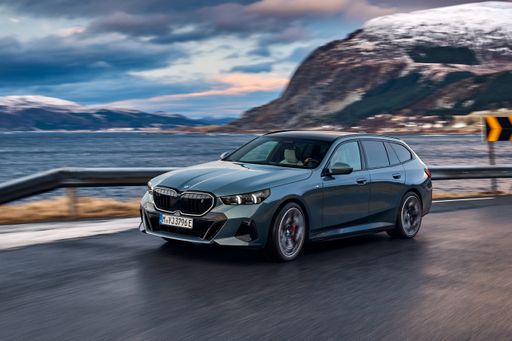
As electric vehicles continue to gain traction in the automotive market, two contenders stand out for their blend of performance, innovation, and luxury: the Audi Q6 e-tron and the BMW i5 Touring. While both are electric, they cater to different segments, with the Q6 e-tron presenting itself as an SUV and the i5 Touring positioned as a luxurious wagon. Let's dive into their technical specifications and innovations to see how they compare.
Q6 e-tron

Design and Dimensions

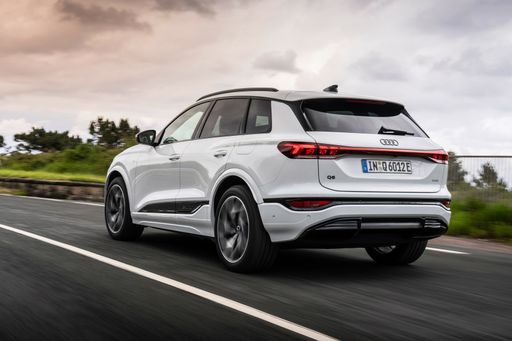
The Audi Q6 e-tron boasts a robust SUV design with dimensions measuring 4771mm in length, 1939mm in width, and 1685mm in height. In contrast, the BMW i5 Touring stretches out to 5060mm in length, 1900mm in width, and a more ground-hugging height of 1505mm. Both vehicles cater to five passengers yet possess distinctive styling relevant to their segments. The Q6 e-tron offers a substantial trunk space ranging from 499 to 526 liters, compared to the i5 Touring's generous 570 liters, ideal for family trips or adventurous outings.

i5 Touring

Performance Breakdown

When it comes to powertrains, both electric vehicles showcase impressive capabilities. The Audi Q6 e-tron is available in various configurations, offering power outputs ranging from 292 to a staggering 516 HP, alongside torque figures from 450 to 855 Nm. In terms of acceleration, it can sprint from 0-100 km/h in as little as 4.3 seconds, giving it a solid edge in raw performance.

On the other hand, the BMW i5 Touring features a more consistently high-performance profile, with options beginning at 340 HP and scaling up to 601 HP with torque figures between 430 Nm and 820 Nm. Its quickest variant completes the 0-100 km/h run in just 3.9 seconds, appealing to those who prioritize speed and thrill while driving.

Q6 e-tron

Electric Range and Efficiency

Range and efficiency have become paramount considerations in the EV market, and both models deliver commendably. The Q6 e-tron showcases a range from 529 km to an impressive 656 km, depending on the battery configuration, while its consumption rates vary between 15.6 and 18.9 kWh/100km. The BMW i5 Touring, while slightly less impressive in range, still maintains solid numbers with figures between 500 km and 560 km, along with consumption rates of 16.5 to 18.5 kWh/100 km.

Battery and Charging Technology

The Audi Q6 e-tron offers battery capacities of 75.8 kWh and 94.9 kWh, allowing for different range and performance combinations suitable for various user needs. Notably, it maintains a CO2 efficiency class of A, indicating its environmentally friendly operation.

Conversely, the BMW i5 Touring is equipped with an 81.2 kWh battery that contributes to its overall performance and efficiency profile. Both vehicles can be charged conveniently, utilizing fast-charging capabilities to minimize downtime.

Driving Experience and Technological Innovations

Both vehicles come equipped with automatic transmissions featuring reduction gearboxes, ensuring a smooth and efficient driving experience. The Q6 e-tron emphasizes a sporty yet comfortable ride, perfect for urban and off-road scenarios. Its all-wheel-drive option adds an element of control in varied driving conditions, making it a versatile choice.

In contrast, the BMW i5 Touring champions a blend of agility and luxury, offering advanced driving assists and cutting-edge infotainment systems that enhance the driving experience. Its architecture emphasizes not just performance, but also passenger comfort with premium materials and spacious interiors.

Conclusion: Choosing Your Champion

In conclusion, both the Audi Q6 e-tron and BMW i5 Touring present compelling cases for potential EV buyers. The Q6 e-tron appeals with its robust SUV styling, excellent range, and versatile configurations, while the i5 Touring shines through its high-performance metrics, elegant design, and spaciousness. Ultimately, the choice between these two premier electric vehicles will depend on individual preferences regarding style, performance, and utility.

Here’s where it gets real: The technical differences in detail

i5 Touring

Costs and Efficiency:

Looking at overall running costs, both models reveal some interesting differences in everyday economy.

Audi Q6 e-tron is slightly cheaper – starting at 54,400 £ , while the BMW i5 Touring costs 62,500 £ . That’s a price difference of around 8,057 £.

In terms of energy consumption, the BMW i5 Touring is very slightly more efficient: consuming 15.4 kWh/100km compared to 15.6 kWh/100km for the Audi Q6 e-tron. That’s a difference of about 0.2 kWh/100km.

As for electric range, the Audi Q6 e-tron offers very slightly more range – reaching up to 656 km, about 54 km more than the BMW i5 Touring.

Q6 e-tron

Engine and Performance:

Power, torque and acceleration are the classic benchmarks for car enthusiasts – and here, some clear differences start to show.

When it comes to engine power, the BMW i5 Touring offers slightly more power – delivering 601 HP compared to 490 HP. That’s roughly 111 HP more horsepower.

When accelerating from 0 to 100 km/h, the BMW i5 Touring is slightly quicker – completing the sprint in 3.9 s, while the Audi Q6 e-tron takes 4.4 s. That’s about 0.5 s quicker.

Looking at top speed, the Audi Q6 e-tron is very slightly faster – reaching 230 km/h, while the BMW i5 Touring tops out at 215 km/h. The difference is around 15 km/h.

There’s also a difference in torque: the Audi Q6 e-tron delivers only slightly more torque with 855 Nm compared to 820 Nm. That’s about 35 Nm more.

i5 Touring

Space and Everyday Use:

Whether family car or daily driver – which one offers more room, flexibility and comfort?

Both vehicles offer seating for 5 people.

In terms of curb weight, Audi Q6 e-tron is barely lighter – 2,200 kg compared to 2,255 kg. The difference is around 55 kg.

Looking at boot space, the BMW i5 Touring offers marginally more boot space – 570 L compared to 526 L. That’s a difference of about 44 L.

For maximum load capacity, the BMW i5 Touring offers a bit more capacity – up to 1,700 L, about 327 L more than the Audi Q6 e-tron.

When it comes to payload, the BMW i5 Touring carries very slightly more – 560 kg compared to 540 kg. That’s a difference of about 20 kg.

Who wins the race in the data check?

The BMW i5 Touring is slightly ahead in the objective data comparison.
This result only shows which model scores more points on paper – not which of the two cars feels right for you.

from £62,500
i5 Touring

BMW i5 Touring

  • Engine Type : Electric
  • Transmission : Automatic
  • Drive Type : All-Wheel Drive, Rear-Wheel Drive
  • Power HP : 340 - 601 HP
  • Consumption kWh/100km : 15.4 - 17.7 kWh/100km
  • Electric Range : 522 - 602 km
BMW i5 Touring
Audi Q6 e-tron

Costs and Consumption

View detailed analysis

Engine and Performance

View detailed analysis

Dimensions and Body

View detailed analysis

BMW i5 Touring

The BMW i5 Touring marries the everyday usefulness of a roomy estate with the hushed, premium feel of a modern electric BMW. It’s an appealing choice for buyers who want confident, relaxed driving and executive poise without sacrificing weekend practicality — and it even makes loading skis feel slightly glamorous.

details

Audi Q6 e-tron

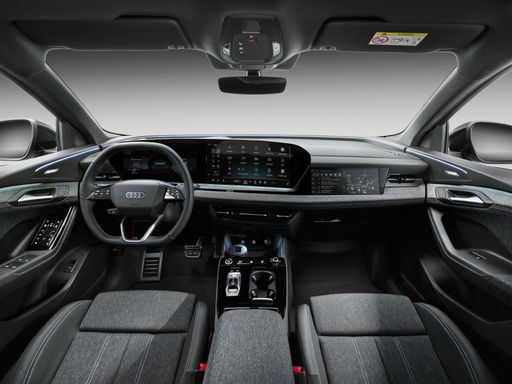
The Audi Q6 e-tron balances sleek, coupe-like styling with a roomy, upscale interior that feels modern without being showy. It delivers refined electric performance and smart tech that make daily driving effortless — the sort of EV that might make petrolheads grudgingly admit they fancy the future.

details
BMW i5 Touring
Audi Q6 e-tron

Costs and Consumption

Price
62,500 - 87,600 £
Price
54,400 - 82,500 £
Consumption L/100km
-
Consumption L/100km
-
Consumption kWh/100km
15.4 - 17.7 kWh/100km
Consumption kWh/100km
15.6 - 18.4 kWh/100km
Electric Range
522 - 602 km
Electric Range
535 - 656 km
Battery Capacity
81.2 kWh
Battery Capacity
75.8 - 94.9 kWh
co2
0 g/km
co2
0 g/km
Fuel tank capacity
-
Fuel tank capacity
-

Dimensions and Body

Body Type
Estate
Body Type
SUV
Seats
5
Seats
5
Doors
4
Doors
5
Curb weight
2,255 - 2,425 kg
Curb weight
2,200 - 2,425 kg
Trunk capacity
570 L
Trunk capacity
499 - 526 L
Length
5,060 mm
Length
4,771 mm
Width
1,900 mm
Width
1,939 - 1,965 mm
Height
1,515 mm
Height
1,665 - 1,685 mm
Max trunk capacity
1,700 L
Max trunk capacity
1,361 - 1,373 L
Payload
535 - 560 kg
Payload
540 kg

Engine and Performance

Engine Type
Electric
Engine Type
Electric
Transmission
Automatic
Transmission
Automatic
Transmission Detail
Reduction Gearbox
Transmission Detail
Reduction Gearbox
Drive Type
All-Wheel Drive, Rear-Wheel Drive
Drive Type
Rear-Wheel Drive, All-Wheel Drive
Power HP
340 - 601 HP
Power HP
252 - 490 HP
Acceleration 0-100km/h
3.9 - 6.1 s
Acceleration 0-100km/h
4.4 - 7.6 s
Max Speed
215 km/h
Max Speed
210 - 230 km/h
Torque
430 - 820 Nm
Torque
450 - 855 Nm
Number of Cylinders
-
Number of Cylinders
-
Power kW
250 - 442 kW
Power kW
185 - 360 kW
Engine capacity
-
Engine capacity
-

General

Model Year
2024
Model Year
2,024 - 2,025
CO2 Efficiency Class
A
CO2 Efficiency Class
A
Brand
BMW
Brand
Audi
DriveDuel uses data analysis and artificial intelligence to evaluate vehicle data and create content. Content is regularly reviewed and improved. The displayed prices are estimates based on German list prices, adjusted to the respective country’s VAT. Country-specific registration taxes are not included. This information is not legally binding.