VS

BMW iX vs BMW X7 comparison

Compare performance (659 HP vs 530 HP), boot space and price (71,600 £ vs 91,300 £ ) at a glance. Find out which car is the better choice for you – BMW iX or BMW X7?

BMW iX vs BMW X7: Key differences

BMW iX

4.1 (2 Reviews)
rate
  • visibly cheaper
  • moderately more power
  • clearly quicker 0–100 km/h
details

BMW X7

5 (1 Reviews)
rate
  • only slightly lighter
  • visibly more trunk space
details

All details on performance, efficiency, range and trunk space can be found in the technical comparison below – including user reviews for both models.

By Achim Sedelmaier

iX

The Electric Innovator: BMW iX

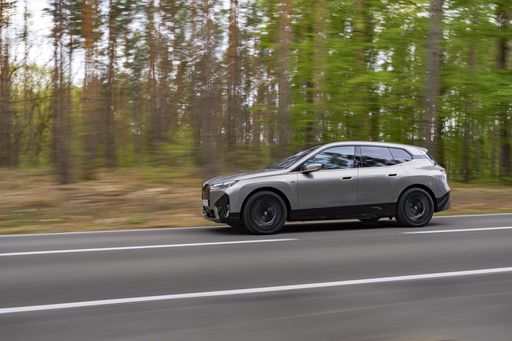
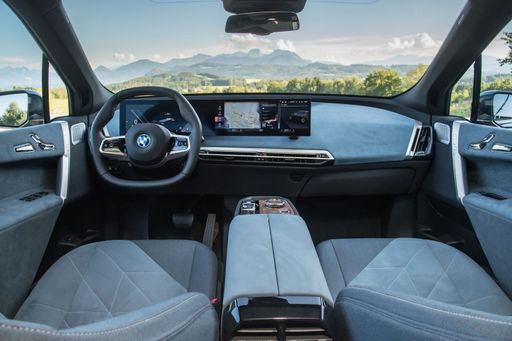
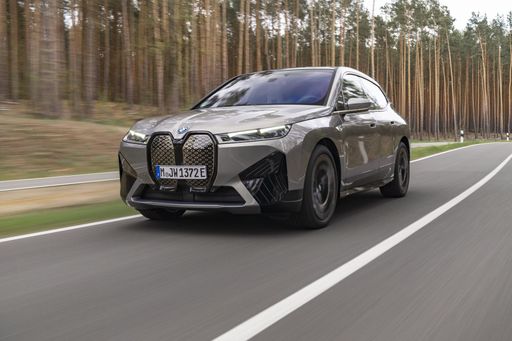
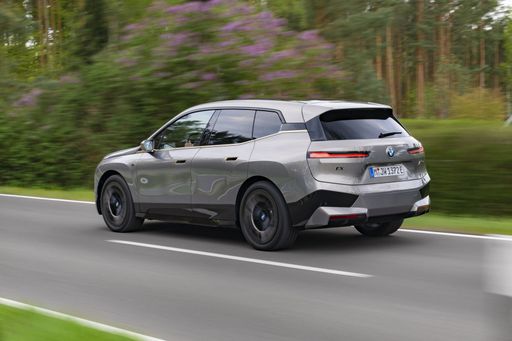
The BMW iX is not just an SUV; it's a vision into the future of automotive engineering with its all-electric powerhouse. From the moment you engage the minimalist, yet futuristic buttons, the iX promises an exhilarating drive with its electric motors delivering between 240 kW (326 HP) and 485 kW (659 HP) depending on the variant. It's available with a battery capacity up to 108.9 kWh which supplies an impressive range of up to 701 km per charge, making range anxiety a thing of the past.

One of the standout features of the iX is its efficiency. With an energy consumption of just 17.8 kWh/100 km in the most efficient model, combined with its CO2 efficiency class A rating, the iX is both a dramatic step toward reducing carbon footprints and a symbol of sophisticated sustainability. Plus, with its sleek design at 4965 mm in length and 1970 mm in width, the iX boasts a modern appeal while accommodating five seats comfortably.

Performance enthusiasts won't be disappointed either. With acceleration from 0 to 100 km/h in as little as 3.8 seconds, coupled with a maximum speed of 250 km/h, the iX excels in delivering dynamic driving thrills. Furthermore, the iX's all-wheel drive and torque up to 1015 Nm ensure agile handling and superior grip, making every drive an adventure.
X7

The Versatile Marvel: BMW X7

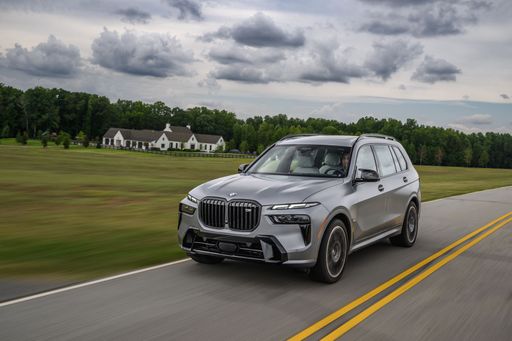
In contrast, the BMW X7 represents traditional SUV luxury with its muscular engine choices and spacious credentials. While it may not be an all-electric vehicle like the iX, its diesel and petrol MHEV options provide potent power from 259 kW (352 HP) up to 390 kW (530 HP), catering to petrolheads who cherish the classic roar of combustion engines.

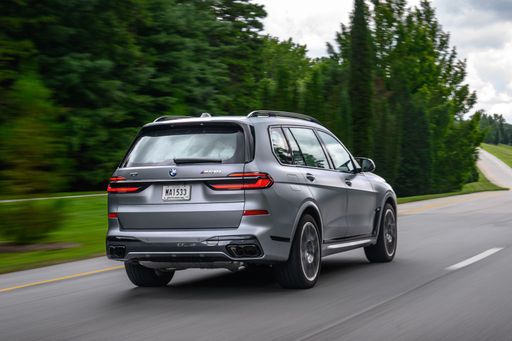
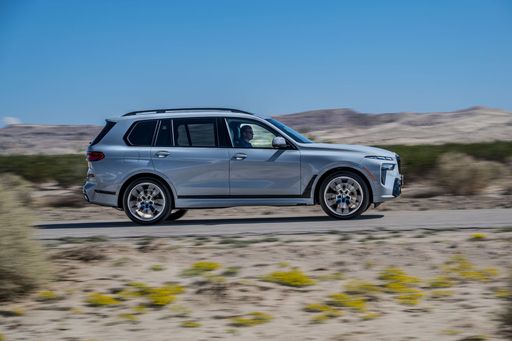
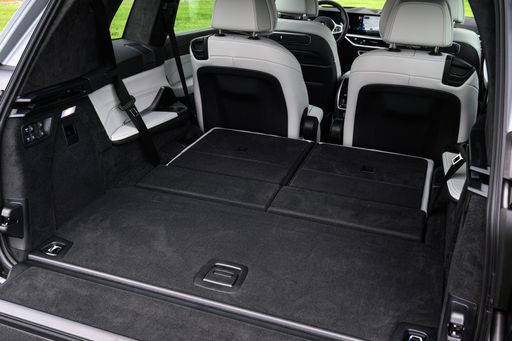
The X7's real strength lies in its versatility and capacity, with seating for seven passengers and a substantial trunk capacity of 750 liters to accommodate all your gear. Its dimensions — 5181 mm in length and 2000 mm in width — indicate a commanding presence that’s ready to dominate both urban and off-road landscapes.

Although not as efficient as the iX, the X7 offers competitive consumption rates for its class, with figures starting from 7.9 L/100 km for the diesel variant. Its CO2 efficiency class G stands in stark contrast to the iX, but this is expected in a vehicle prioritizing power and luxury over emissions.

Performance-wise, the X7 does not disappoint. It can accelerate from 0 to 100 km/h in as swift as 4.7 seconds, hitting a top speed of 250 km/h, thanks to its all-wheel drive system and torque reaching up to 750 Nm, assuring that power meets precision effortlessly.

iX

Which One to Choose?

Both the BMW iX and X7 reflect BMW's excellence in engineering and design, yet cater to different audiences. The iX is ideal for those prioritizing sustainability, cutting-edge technology, and a modern electric driving experience. Meanwhile, the X7 offers traditionalists the robust luxury, power, and versatility they've come to expect from larger SUVs.

Ultimately, your choice will depend on your preference for electric innovation or traditional luxury, but whatever direction you choose, BMW assures a premium ride.

Here’s where it gets real: The technical differences in detail

iX

Costs and Efficiency:

When it comes to price and running costs, the biggest differences usually appear. This is often where you see which car fits your budget better in the long run.

BMW iX is visibly cheaper – starting at 71,600 £ , while the BMW X7 costs 91,300 £ . That’s a price difference of around 19,714 £.

X7

Engine and Performance:

Power, torque and acceleration are the classic benchmarks for car enthusiasts – and here, some clear differences start to show.

When it comes to engine power, the BMW iX offers moderately more power – delivering 659 HP compared to 530 HP. That’s roughly 129 HP more horsepower.

When accelerating from 0 to 100 km/h, the BMW iX is clearly quicker – completing the sprint in 3.8 s, while the BMW X7 takes 4.7 s. That’s about 0.9 s quicker.

There’s also a difference in torque: the BMW iX delivers noticeably more torque with 1,015 Nm compared to 750 Nm. That’s about 265 Nm more.

iX

Space and Everyday Use:

Beyond pure performance, interior space and usability matter most in daily life. This is where you see which car is more practical and versatile.

Seats: BMW X7 offers more seats – 7 vs 5.

In terms of curb weight, BMW X7 is only slightly lighter – 2,490 kg compared to 2,525 kg. The difference is around 35 kg.

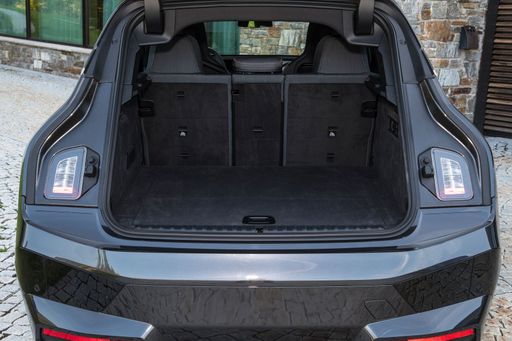
Looking at boot space, the BMW X7 offers visibly more boot space – 750 L compared to 500 L. That’s a difference of about 250 L.

When it comes to payload, the BMW X7 carries noticeably more – 760 kg compared to 575 kg. That’s a difference of about 185 kg.

Who wins the race in the data check?

The BMW iX is far ahead overall in the objective data comparison.
This result only shows which model scores more points on paper – not which of the two cars feels right for you.

from £71,600
iX

BMW iX

  • Engine Type : Electric
  • Transmission : Automatic
  • Drive Type : All-Wheel Drive
  • Power HP : 408 - 659 HP
  • Consumption kWh/100km : 17.8 - 20.6 kWh/100km
  • Electric Range : 600 - 701 km
BMW iX
BMW X7

Costs and Consumption

View detailed analysis

Engine and Performance

View detailed analysis

Dimensions and Body

View detailed analysis

BMW iX

The BMW iX arrives like a tech-rich luxury SUV that refuses to shout, offering a serene yet authoritative road presence that suits both city commutes and long-distance cruising. Inside, its minimalist cabin wraps high-quality materials and clever interfaces around a driver-focused layout, making it feel more like a forward-thinking lounge than just another electric appliance — and yes, it still delivers the dynamic driving character you'd expect from a BMW.

details

BMW X7

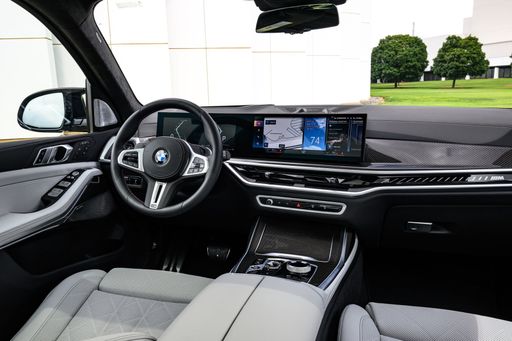
The BMW X7 sits at the top of BMW’s SUV range, wrapping executive-level luxury and a cavernous cabin in a bold, road-commanding package. It’s ideal for buyers who want first-class comfort and presence on the road — think chauffeur-level refinement without hiring one, though you’ll need a confident approach to parking.

details
BMW iX
BMW X7

Costs and Consumption

Price
71,600 - 108,400 £
Price
91,300 - 118,300 £
Consumption L/100km
-
Consumption L/100km
8 - 12.1 L/100km
Consumption kWh/100km
17.8 - 20.6 kWh/100km
Consumption kWh/100km
-
Electric Range
600 - 701 km
Electric Range
-
Battery Capacity
-
Battery Capacity
-
co2
0 g/km
co2
210 - 274 g/km
Fuel tank capacity
-
Fuel tank capacity
-

Dimensions and Body

Body Type
SUV
Body Type
SUV
Seats
5
Seats
7
Doors
-
Doors
-
Curb weight
2,525 - 2,655 kg
Curb weight
2,490 - 2,675 kg
Trunk capacity
500 L
Trunk capacity
750 L
Length
-
Length
-
Width
1,970 mm
Width
2,000 mm
Height
-
Height
-
Max trunk capacity
-
Max trunk capacity
-
Payload
505 - 575 kg
Payload
680 - 760 kg

Engine and Performance

Engine Type
Electric
Engine Type
Petrol MHEV, Diesel MHEV
Transmission
Automatic
Transmission
Automatic
Transmission Detail
Reduction Gearbox
Transmission Detail
Automatic Gearbox
Drive Type
All-Wheel Drive
Drive Type
All-Wheel Drive
Power HP
408 - 659 HP
Power HP
352 - 530 HP
Acceleration 0-100km/h
3.8 - 5.1 s
Acceleration 0-100km/h
4.7 - 5.9 s
Max Speed
-
Max Speed
-
Torque
700 - 1,015 Nm
Torque
520 - 750 Nm
Number of Cylinders
-
Number of Cylinders
6 - 8
Power kW
300 - 485 kW
Power kW
259 - 390 kW
Engine capacity
-
Engine capacity
2,993 - 4,395 cm3

General

Model Year
2025
Model Year
2025
CO2 Efficiency Class
A
CO2 Efficiency Class
G
Brand
BMW
Brand
BMW
DriveDuel uses data analysis and artificial intelligence to evaluate vehicle data and create content. Content is regularly reviewed and improved. The displayed prices are estimates based on German list prices, adjusted to the respective country’s VAT. Country-specific registration taxes are not included. This information is not legally binding.