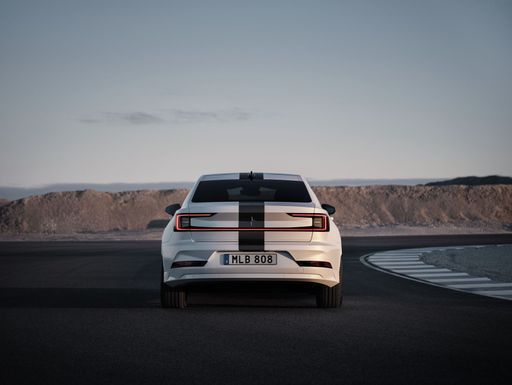
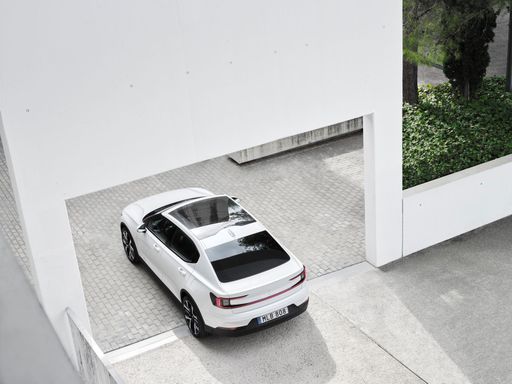
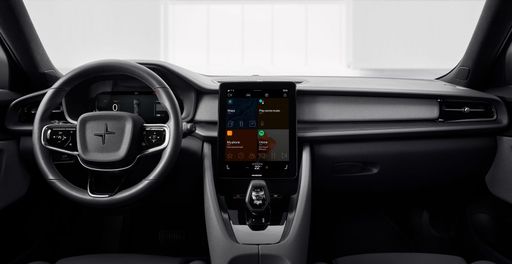
@ BMW Group Press
@ Polestar Automotive Holding
VS

BMW iX1 vs Polestar 2 – Differences & prices compared

Both models have their strengths – but which one suits you more?
Compare performance, efficiency, price and space directly: BMW iX1 or Polestar 2?

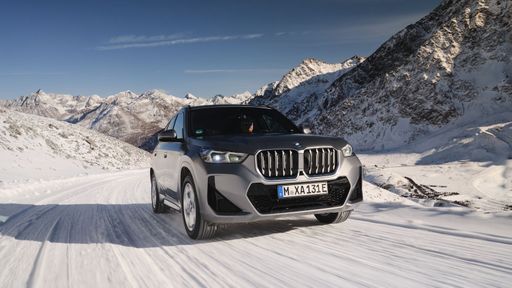
iX1 @ BMW Group Press

Electrifying Dynamics: The BMW iX1 vs. Polestar 2

The automotive industry is undergoing a revolution, with electric powertrains playing a pivotal role in shaping the future of mobility. Among the heralds of this new era are the BMW iX1 and the Polestar 2 — two stellar examples of modern electric vehicles (EVs), each bringing unique attributes to the fore. In this comparison, we delve into the intricacies of these vehicles, focusing on technical specifications and innovative features that set them apart.
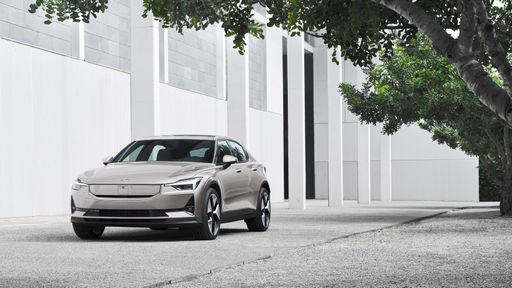
2 @ Polestar Automotive Holding

Performance and Powertrain

The BMW iX1 shows incredible versatility with its two primary powertrain options, offering up to 313 HP and a torque of 494 Nm for the all-wheel drive model. It can accelerate from 0-100 km/h in a swift 5.6 seconds, making it a formidable presence on the road. It has a top speed of 180 km/h, making it a competitive player among electric SUVs.

In contrast, the Polestar 2 pushes the envelope with its robust power output, ranging up to 476 HP and a torque of 740 Nm for its all-wheel drive variant. It delivers sports car-like acceleration with a 0-100 km/h time as low as 4.2 seconds and displays a top speed of 205 km/h. Such performance credentials make the Polestar 2 a thrilling option for enthusiasts who seek a dynamic driving experience.

iX1 @ BMW Group Press

Range and Efficiency

Both vehicles shine brightly in terms of range, catering to those wary of range anxiety. The BMW iX1 offers a respectable electric range between 436 and 463 km, powered by a 64.8 kWh battery. It ensures efficiency with a consumption rate ranging from 15.8 to 17.1 kWh/100 km, placing it well within the competitive landscape of electric SUVs.

The Polestar 2, with its larger 78 kWh battery, provides an impressive range between 554 and 659 km, with consumption rates as low as 14.7 kWh/100 km. This range ensures longer journeys without needing frequent recharges, capturing the interest of tech-savvy travelers and endowing it with an appealing edge over the iX1.

2 @ Polestar Automotive Holding

Design and Dimensions

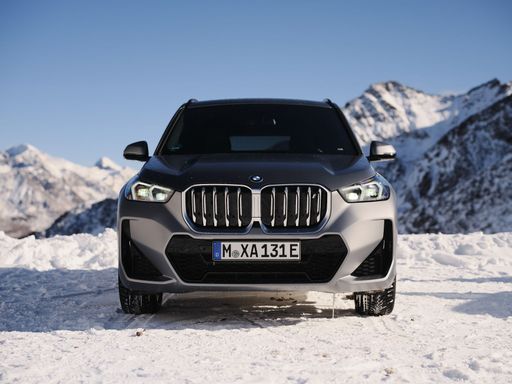
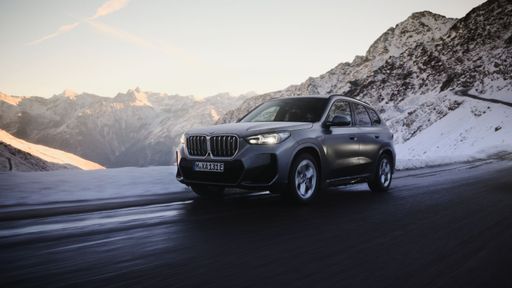
SUV aesthetics meet modern elegance in the BMW iX1, with dimensions of 4500 mm in length, 1845 mm in width, and 1616 mm in height. Its substantial trunk capacity of 490 liters highlights practicality alongside beauty, catering to those who desire space within a compact exterior.

Polestar 2's design language skews towards a sleek hatchback form with minimalistic Scandinavian design cues. Measuring 4606 mm in length, 1859 mm in width, and 1479 mm in height, it possesses a lower stance compared to the iX1, which contributes to improved aerodynamics. However, it compensates with a trunk capacity of 405 liters that prioritize style over storage.

iX1 @ BMW Group Press

Innovation and Sustainability

Both vehicles excel in exhibiting innovations geared towards sustainability. The BMW iX1 and Polestar 2 boast a zero CO2 emission footprint, representing a step forward in reducing environmental impact. Additionally, the BMW iX1 features a highly efficient drivetrain that suits a variety of driving conditions and terrains.

Polestar’s commitment to sustainability is showcased through its transparency in carbon footprint and supply chain ethics, marking it as a conscientious choice for eco-conscious consumers. Furthermore, Polestar 2's software first approach, with regular over-the-air updates, keeps the vehicle's systems cutting-edge.

2 @ Polestar Automotive Holding

Conclusion

The BMW iX1 and Polestar 2 highlight a juxtaposition of luxury and sustainability in the electric vehicle domain. The BMW iX1 emphasizes versatility and practicality, while the Polestar 2 focuses on performance and range. Choosing between them ultimately depends on whether your priority leans towards the familial comfort of an SUV or the exhilarating prowess of a performance hatchback.

Here’s where it gets real: The technical differences in detail

iX1 @ BMW Group Press

Costs and Efficiency:

Price and efficiency are often the first things buyers look at. Here it becomes clear which model has the long-term edge – whether at the pump, the plug, or in purchase price.

BMW iX1 has a slight advantage in terms of price – it starts at 41800 £, while the Polestar 2 costs 42000 £. That’s a price difference of around 163 £.

In terms of energy consumption, the advantage goes to the Polestar 2: with 14.80 kWh per 100 km, it’s barely noticeable more efficient than the BMW iX1 with 15.80 kWh. That’s a difference of about 1 kWh.

As for range, the Polestar 2 performs clearly perceptible better – achieving up to 659 km, about 196 km more than the BMW iX1.

2 @ Polestar Automotive Holding

Engine and Performance:

Under the bonnet, it becomes clear which model is tuned for sportiness and which one takes the lead when you hit the accelerator.

When it comes to engine power, the Polestar 2 has a noticeable edge – offering 476 HP compared to 313 HP. That’s roughly 163 HP more horsepower.

In acceleration from 0 to 100 km/h, the Polestar 2 is evident quicker – completing the sprint in 4.20 s, while the BMW iX1 takes 5.60 s. That’s about 1.40 s faster.

In terms of top speed, the Polestar 2 performs slightly better – reaching 205 km/h, while the BMW iX1 tops out at 180 km/h. The difference is around 25 km/h.

There’s also a difference in torque: Polestar 2 pulls clearly perceptible stronger with 740 Nm compared to 494 Nm. That’s about 246 Nm difference.

iX1 @ BMW Group Press

Space and Everyday Use:

Beyond pure performance, interior space and usability matter most in daily life. This is where you see which car is more practical and versatile.

Both vehicles offer seating for 5 people.

In curb weight, BMW iX1 is minimal lighter – 1940 kg compared to 2015 kg. The difference is around 75 kg.

In terms of boot space, the BMW iX1 offers slightly more room – 490 L compared to 405 L. That’s a difference of about 85 L.

In maximum load capacity, the BMW iX1 performs noticeable better – up to 1495 L, which is about 400 L more than the Polestar 2.

When it comes to payload, BMW iX1 somewhat takes the win – 495 kg compared to 421 kg. That’s a difference of about 74 kg.

Who wins the race?

The Polestar 2 proves to be outperforms in nearly all aspects and therefore becomes our DriveDuel Champion!
Polestar 2 is the better all-rounder in this comparison.

from about £42,000
2 @ Polestar Automotive Holding

Polestar 2

  • Engine Type : Electric
  • Transmission : Automatic
  • Drive Type : All-Wheel Drive, Rear-Wheel Drive
  • Power HP : 272 - 476 HP
  • Consumption kWh/100km : 14.8 - 16.8 kWh
  • Electric Range : 554 - 659 km

BMW iX1

5 (2)
rate

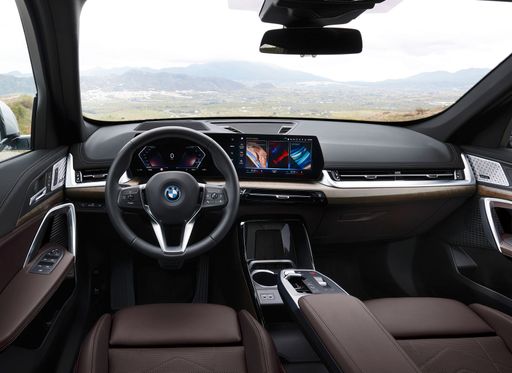
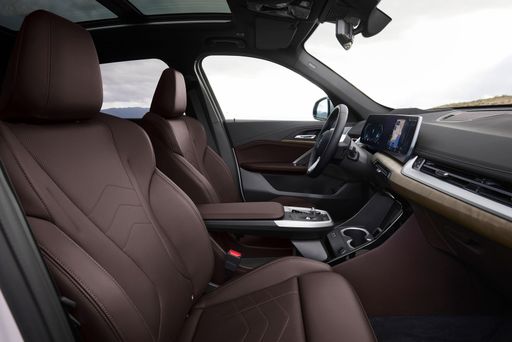
The BMW iX1 wraps BMW's electric ambition into a compact SUV package that feels unexpectedly premium, with sharp handling and a crisp, modern cabin that keeps the driver in charge. It's ideal for buyers who want a stylish, quiet daily driver with useful practicality and tech-savvy touches — plus enough character to make the commute feel less like a chore and more like a short joyride.

details

Polestar 2

5 (1)
rate

The Polestar 2 is a crisp, Scandinavian-styled electric liftback that pairs minimalist luxury with a focused, driver's attitude. It feels agile and composed whether you’re commuting or heading out for the weekend, with a tech-forward cabin and enough personality to make everyday driving a bit more fun.

details
BMW iX1
Polestar 2
iX1 @ BMW Group Press
2 @ Polestar Automotive Holding

Costs and Consumption

Price
41800 - 54600 £
Price
42000 - 57400 £
Consumption L/100km
-
Consumption L/100km
-
Consumption kWh/100km
15.8 - 17.1 kWh
Consumption kWh/100km
14.8 - 16.8 kWh
Electric Range
436 - 463 km
Electric Range
554 - 659 km
Battery Capacity
64.80 kWh
Battery Capacity
78 kWh
co2
0 g/km
co2
0 g/km
Fuel tank capacity
-
Fuel tank capacity
-

Dimensions and Body

Body Type
SUV
Body Type
Sedan
Seats
5
Seats
5
Doors
5
Doors
5
Curb weight
1940 - 2085 kg
Curb weight
2015 - 2188 kg
Trunk capacity
490 L
Trunk capacity
405 L
Length
4500 mm
Length
4606 mm
Width
1845 mm
Width
1859 mm
Height
1616 mm
Height
1473 - 1479 mm
Max trunk capacity
1495 L
Max trunk capacity
1095 L
Payload
495 kg
Payload
375 - 421 kg

Engine and Performance

Engine Type
Electric
Engine Type
Electric
Transmission
Automatic
Transmission
Automatic
Transmission Detail
Reduction Gearbox
Transmission Detail
Reduction Gearbox
Drive Type
Front-Wheel Drive, All-Wheel Drive
Drive Type
All-Wheel Drive, Rear-Wheel Drive
Power HP
204 - 313 HP
Power HP
272 - 476 HP
Acceleration 0-100km/h
5.6 - 8.6 s
Acceleration 0-100km/h
4.2 - 6.4 s
Max Speed
170 - 180 km/h
Max Speed
205 km/h
Torque
250 - 494 Nm
Torque
490 - 740 Nm
Number of Cylinders
-
Number of Cylinders
-
Power kW
150 - 230 kW
Power kW
200 - 350 kW
Engine capacity
-
Engine capacity
-

General

Model Year
2022 - 2023
Model Year
2024
CO2 Efficiency Class
A
CO2 Efficiency Class
A
Brand
BMW
Brand
Polestar
Is the BMW iX1 offered with different drivetrains?

The BMW iX1 is available as Front-Wheel Drive or All-Wheel Drive.

The prices and data displayed are estimates based on German list prices and may vary by country. This information is not legally binding.